
For about the price of two coffees you can get a bath, a sauna, a change of clothes, unlimited hot rooms, a snack bar and, if you want, a place to sleep until morning. That’s a jjimjilbang, and it’s one of the few things in Korea with no real equivalent anywhere else. It’s also the single most intimidating thing for a first-timer, because you have to get naked in front of strangers and nobody explains the rules. Here’s the whole thing, in order.
What a jjimjilbang actually is
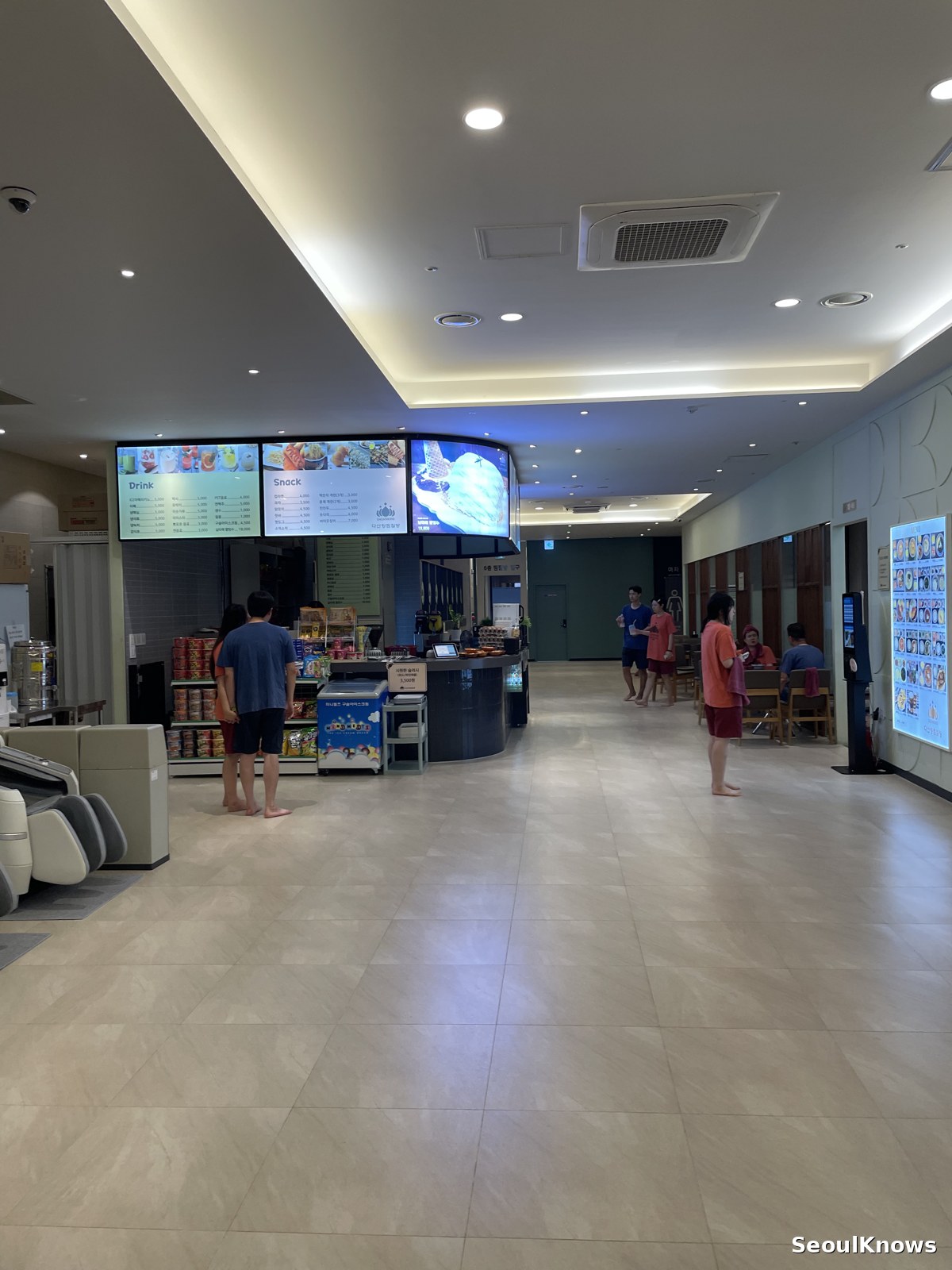
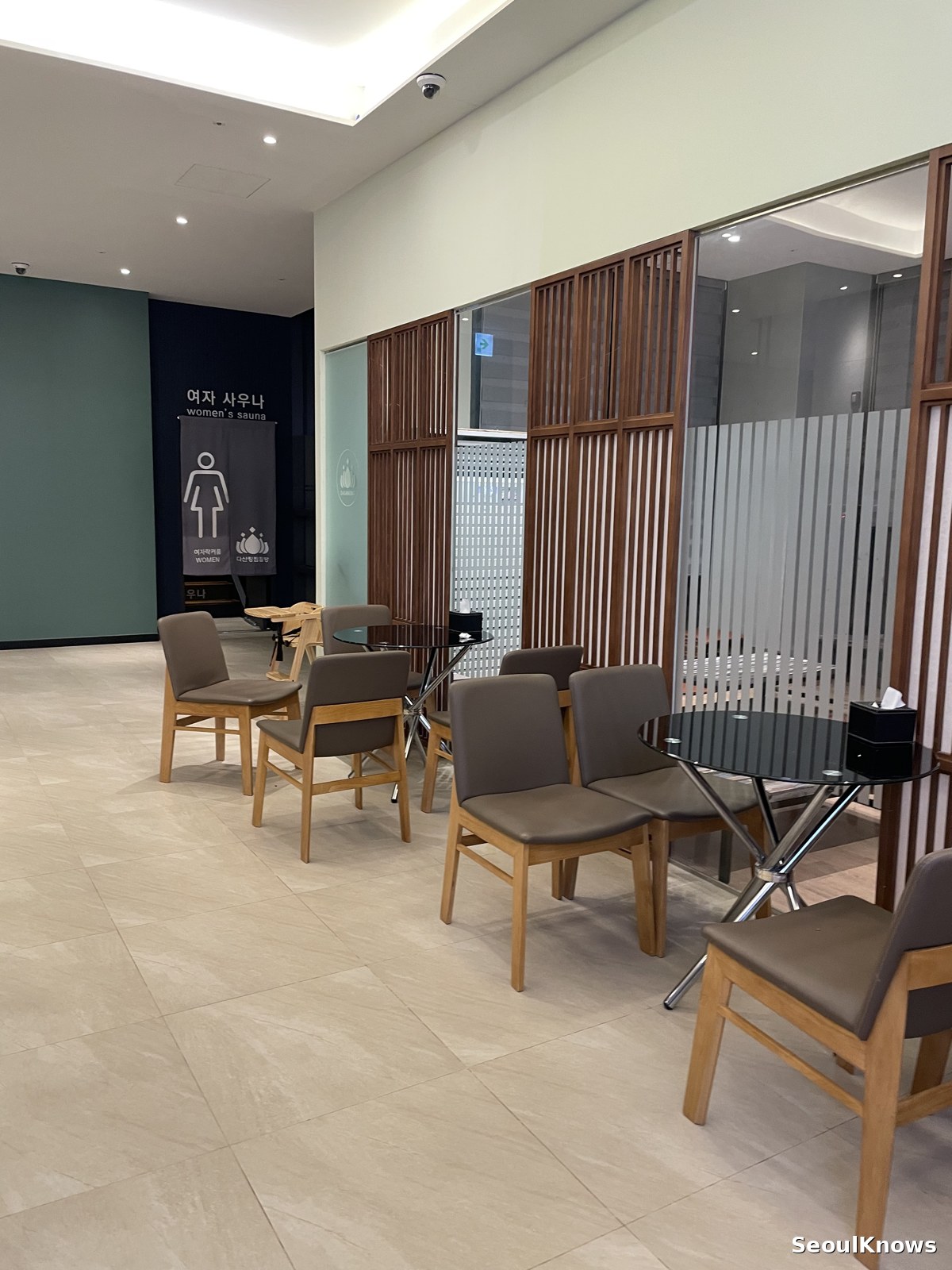
Two things stacked in one building. Downstairs, or on its own floor, is the bathhouse: hot tubs, cold plunge, showers, sauna, strictly separated by gender and strictly naked. Upstairs is the jjimjilbang proper: a mixed-gender floor where everyone wears the same cotton uniform, and where you’ll find the heated clay rooms, ice rooms, snack bar, massage chairs, TV lounge and sleeping areas.
You pay one flat entry fee and use both. Many are open 24 hours, which is why they double as the cheapest bed in the country.
What it costs
- Entry: roughly 10,000 to 15,000 won for an adult on a weekday, a little more at weekends. Children are cheaper, and toddlers are often free.
- Overnight surcharge: many places add around 2,000 to 5,000 won if you stay past a certain hour, usually 8pm to 5am.
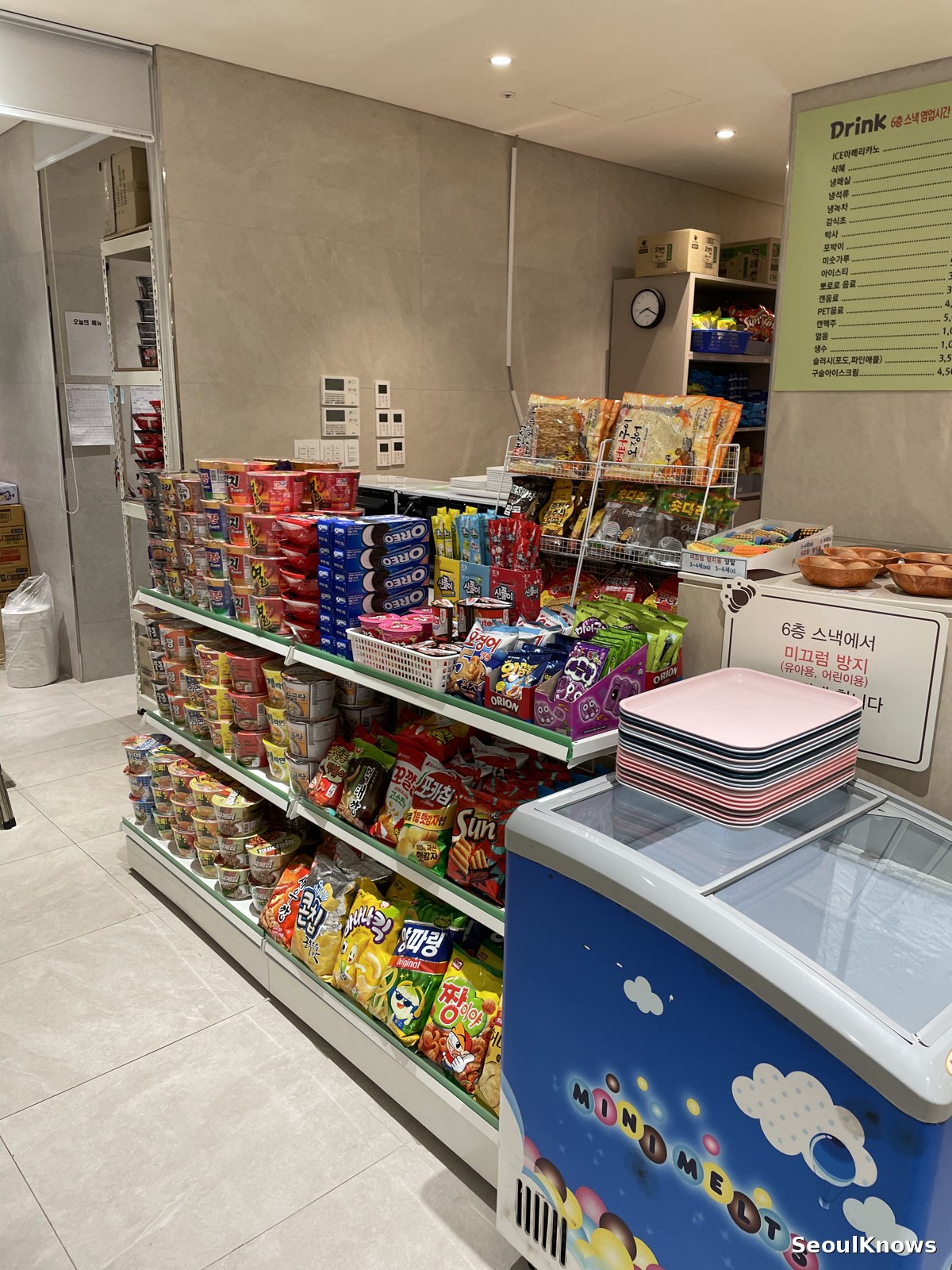
- Extras: the uniform is normally included; a sleeping mat or blanket might be a couple of thousand won. Food, drinks and massage chairs are paid separately, charged to your locker number and settled on the way out.
- Parking: usually free for several hours if you drive.
Nothing is prepaid. You get a wristband or key with a number, everything goes on that number, and you settle at the desk before you leave. Pay first, then the shoe locker opens, which catches people out.
Step by step, the first time
- Shoes off at the entrance. Put them in a small locker, take that key to the desk.
- Pay and collect. You’ll be handed a uniform, usually a T-shirt and shorts in a colour that identifies your gender, plus towels and a locker key.
- Go to your changing room (women’s and men’s are separate). Undress completely. Your clothes and valuables go in the locker.
- Bathe first. Walk into the wet area naked, with a small towel. Sit at one of the low shower stations and wash thoroughly before you get into any pool. This is the one rule nobody bends.
- Soak. Hot pools, a cold plunge, sometimes a sauna and a cold room. Move between them at your own pace.
- Dry off, put on the uniform, and go up to the jjimjilbang floor. From here it’s mixed, fully clothed, and social.
- Work through the rooms, eat something, lie on the heated floor, and leave whenever you like.
The naked part, honestly
This is the bit that stops people, so let’s be plain about it. In the bathing area everybody is naked, there are no swimsuits, and there is no way around it. What surprises most visitors is how quickly it stops registering. Nobody is looking. It’s grandmothers scrubbing, kids splashing, office workers half asleep in a hot pool. The small towel you’re given is for wiping your face and drying off, not for covering yourself, though nobody will mind if you carry it in front of you.
If it’s genuinely a dealbreaker, you can skip the baths entirely and go straight to the uniform floor. You’ll miss the best half, but the option exists.
Why Koreans go together
Here’s the thing that took me longest to explain to visiting friends: a jjimjilbang isn’t really a solo activity. It’s something you do with people, and it does something to the relationship.
Families go together, and a mother scrubbing her grown daughter’s back is completely ordinary. Old friends go on a Saturday and spend four hours drifting between the hot pool and the floor, talking about nothing. And the classic one: the morning after everyone drank too much, somebody says let’s go to the sauna, and a group of hungover adults sweats it out, eats a bowl of haejangguk, and feels human again by lunchtime.
The bathing part is what makes it work. Once you’ve sat in a hot pool with someone with no clothes, no phone and nothing to perform, a certain amount of distance falls away. There’s a word Koreans use for that closeness, and this is one of the places it gets built. It’s why colleagues go, why in-laws go, why old school friends who see each other twice a year still go.
So if a Korean friend invites you, understand what’s being offered. It isn’t a spa appointment, it’s an afternoon with the small talk stripped out.
The hot rooms, and how to survive them
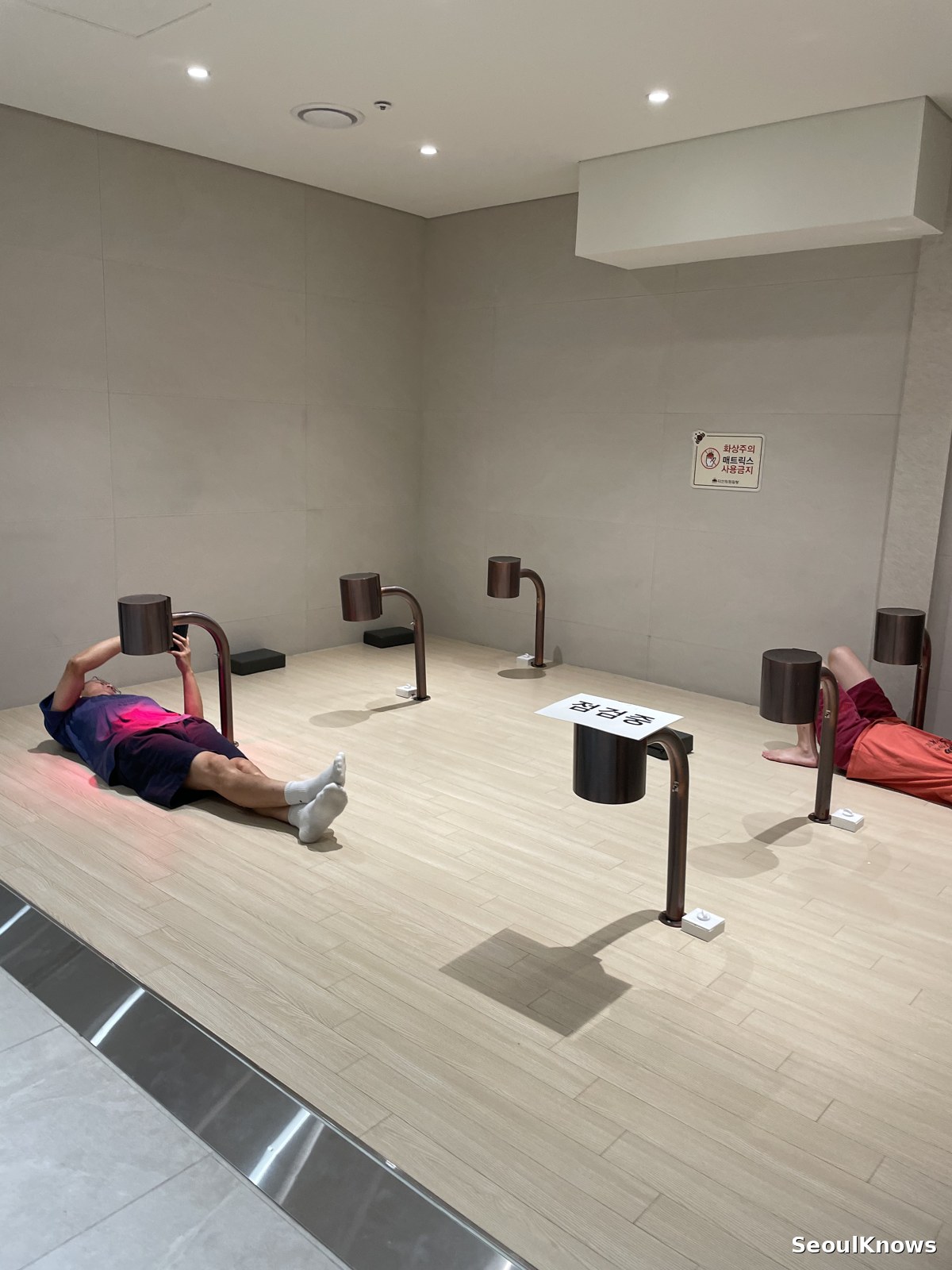
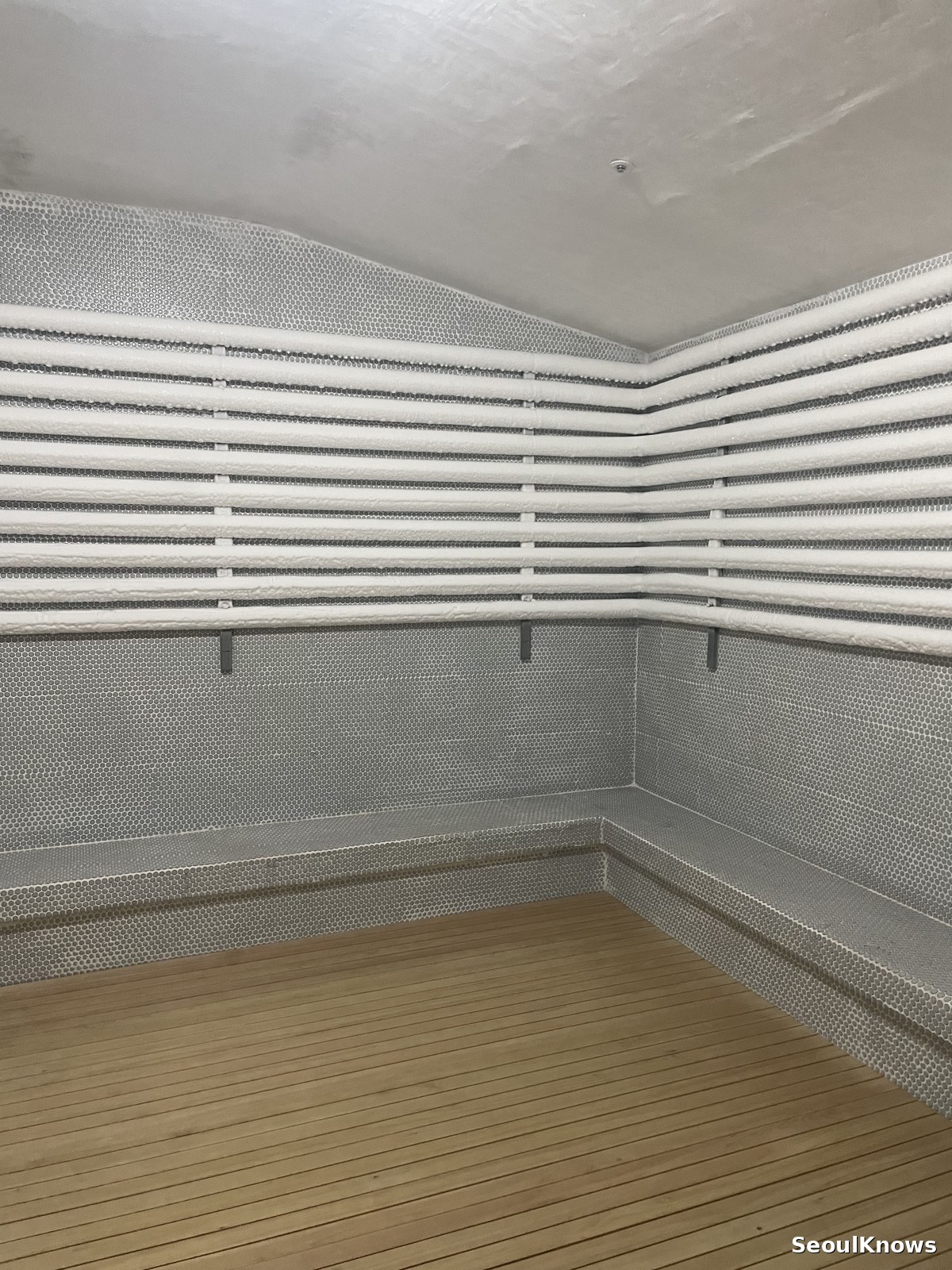
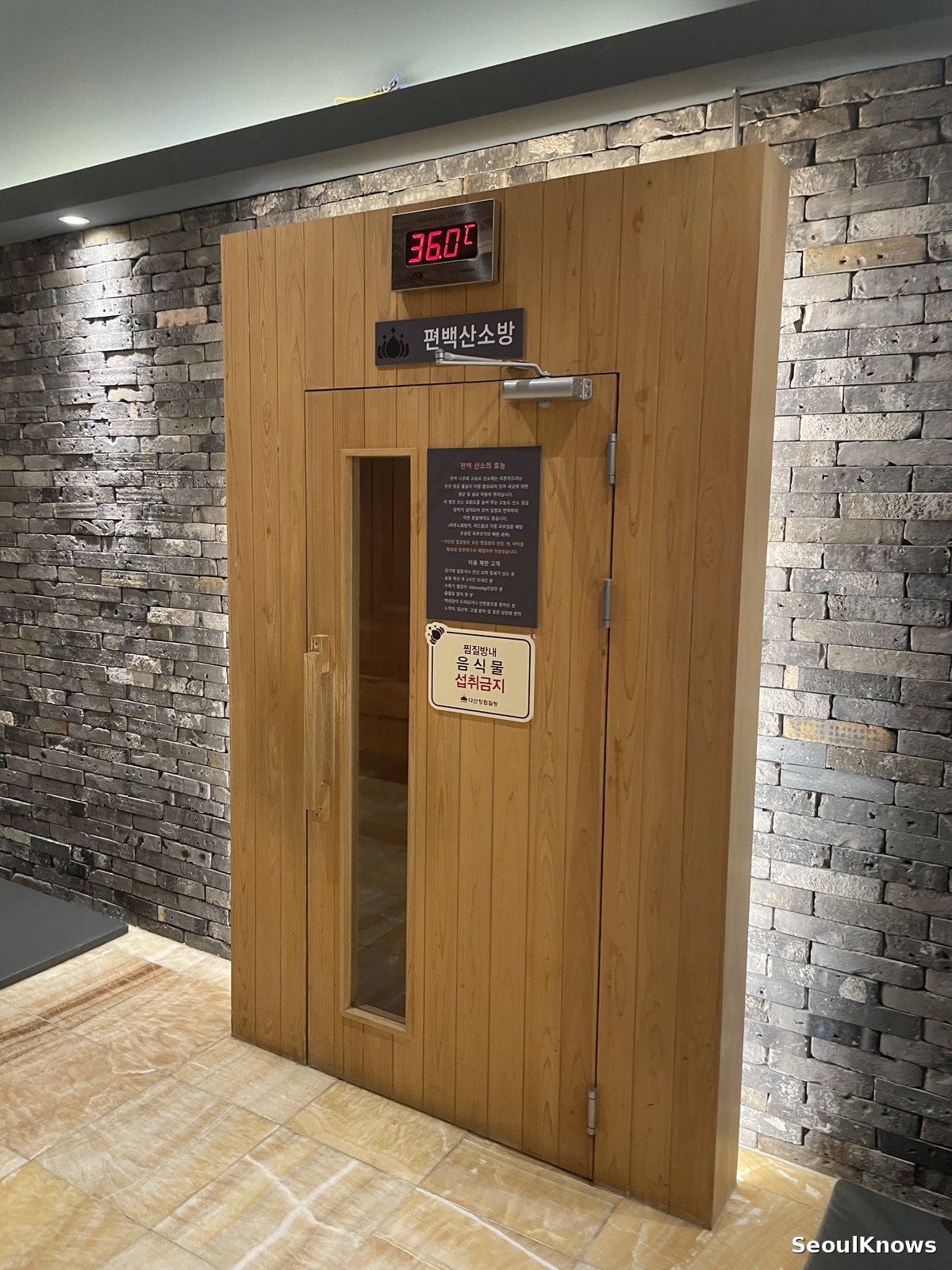
The uniform floor is built around themed rooms, each at a different temperature. Typically you’ll find:
- Clay or charcoal kilns (bulgama), the hottest, sometimes over 80°C. You last minutes, not hours.
- Salt, jade or hwangto (yellow clay) rooms, warm and dry, comfortable for twenty minutes.
- Oxygen or cypress rooms, mild enough to sit and talk in for an hour.
- An ice room, kept near freezing, for cooling down between the hot ones.
The technique locals use: hot room until you’re properly sweating, ice room to cool, water, repeat. Going straight from the hottest kiln to lying down is how you end up dizzy. Drink more than you think you need, and don’t do the hottest room first.
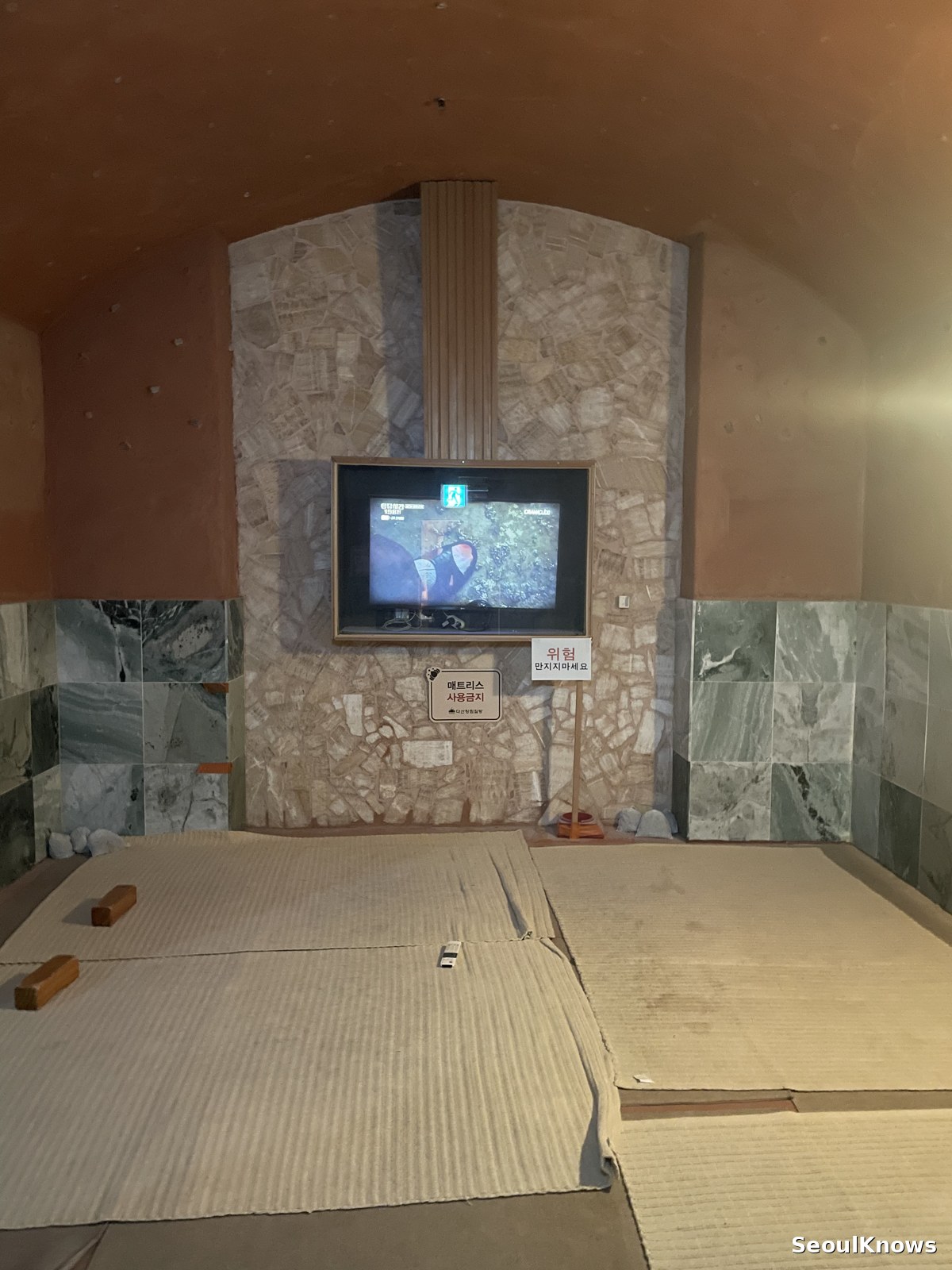
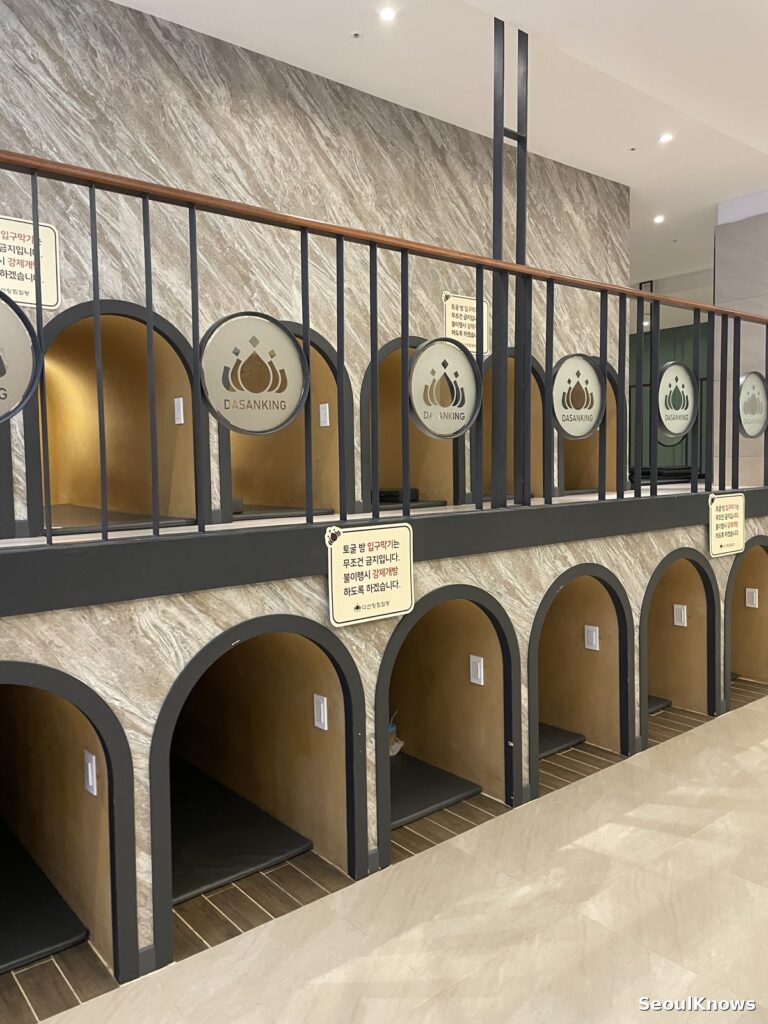
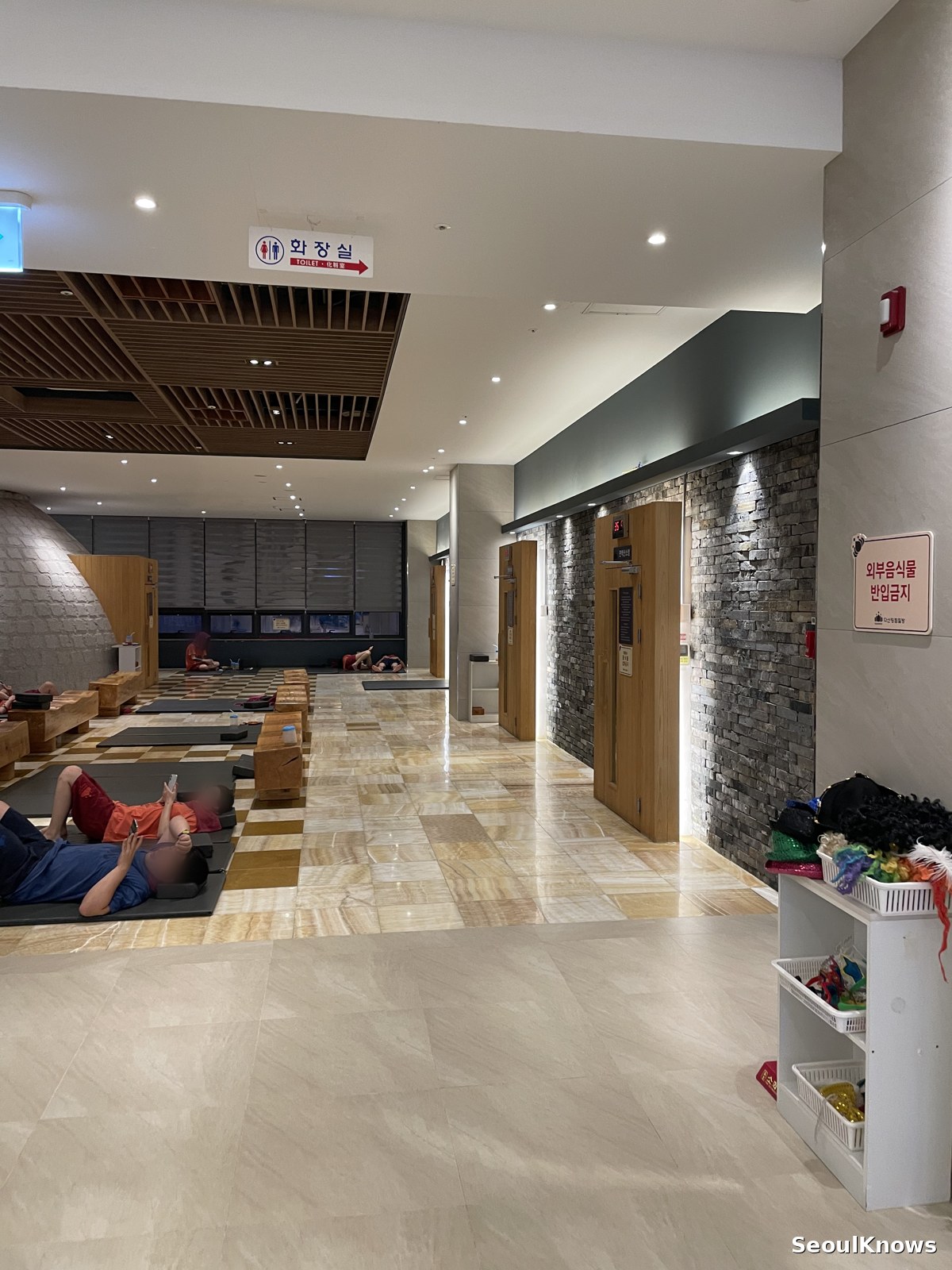
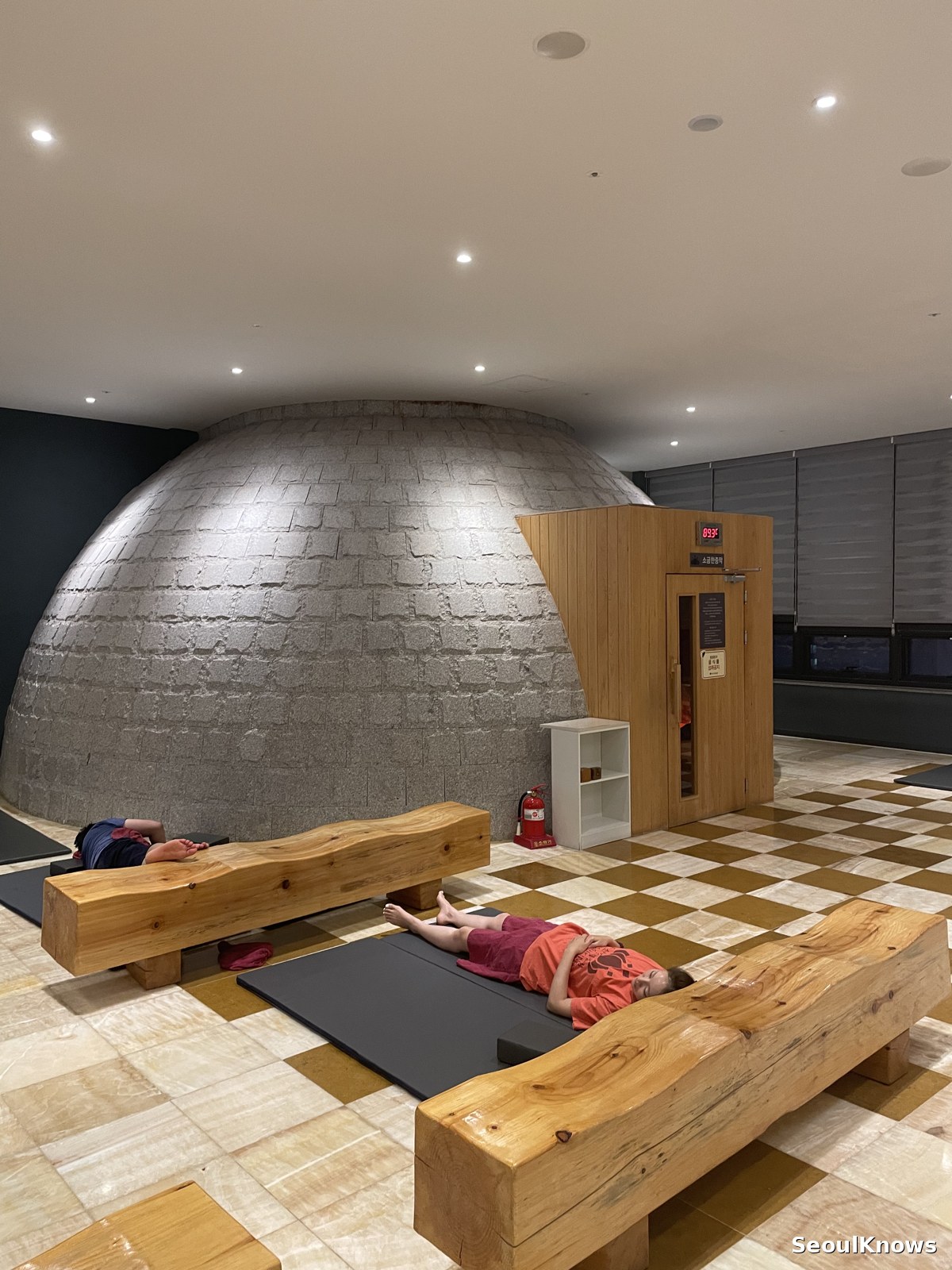
The small arched sleeping caves you’ll see, low tunnels lined with mats, are for lying down inside a gently warm space. Take your shoes off, crawl in, nap.
The food is half the point
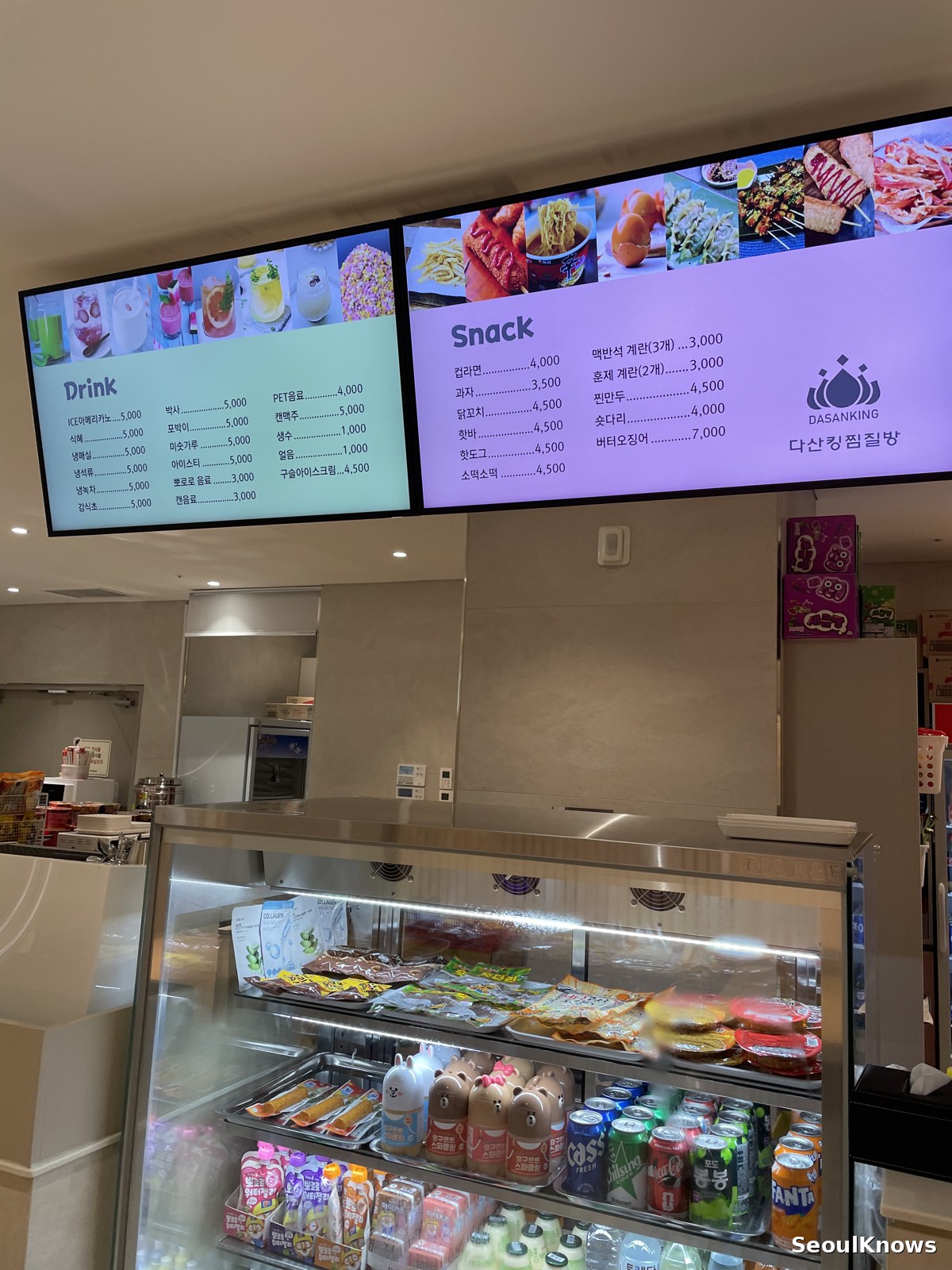
Every jjimjilbang has a snack bar, and there are three things you’re expected to have:
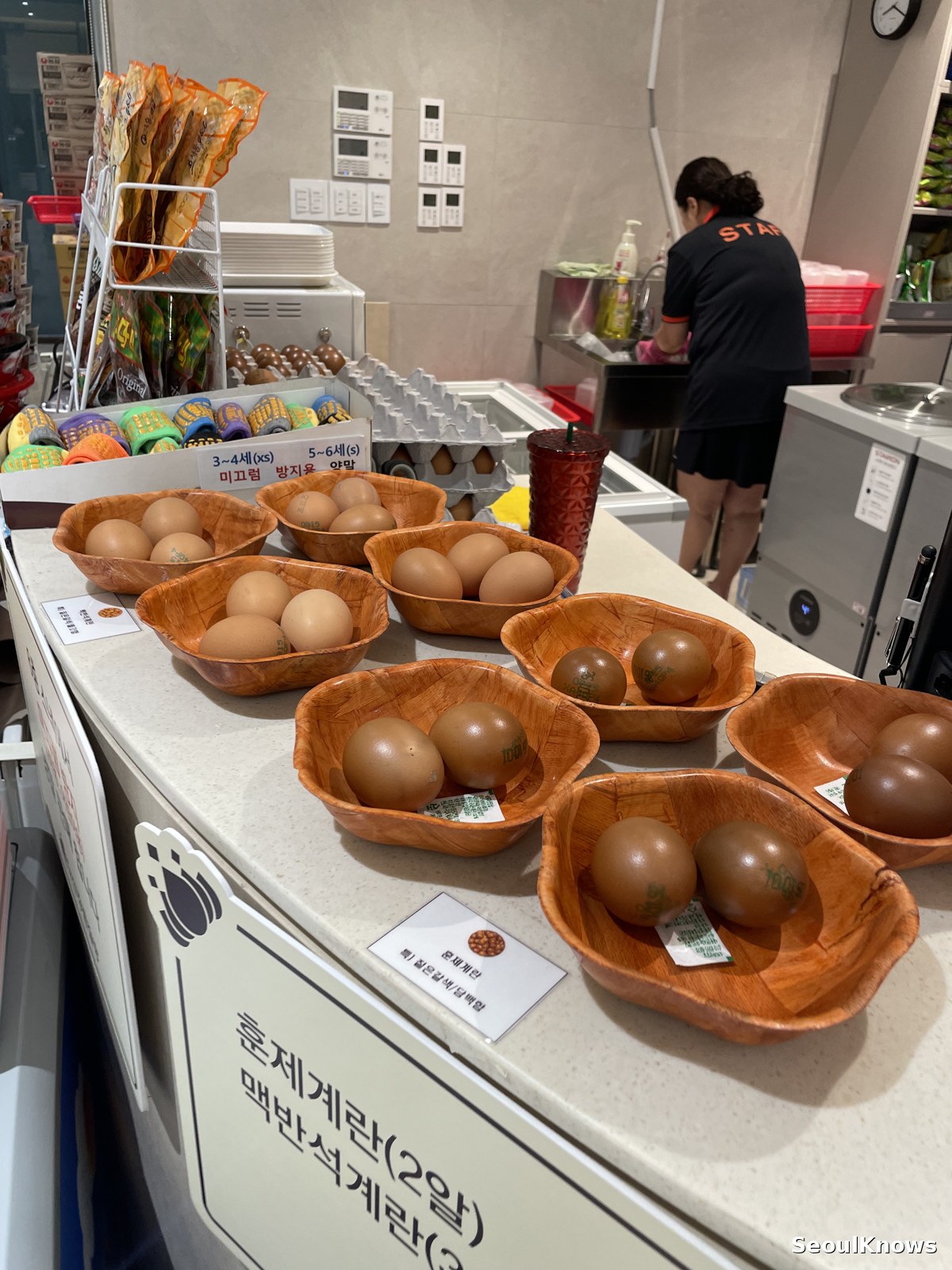
- Baked eggs (maekbanseok gyeran), slow-cooked until brown and slightly nutty. Crack them on your forehead, that’s genuinely how it’s done.
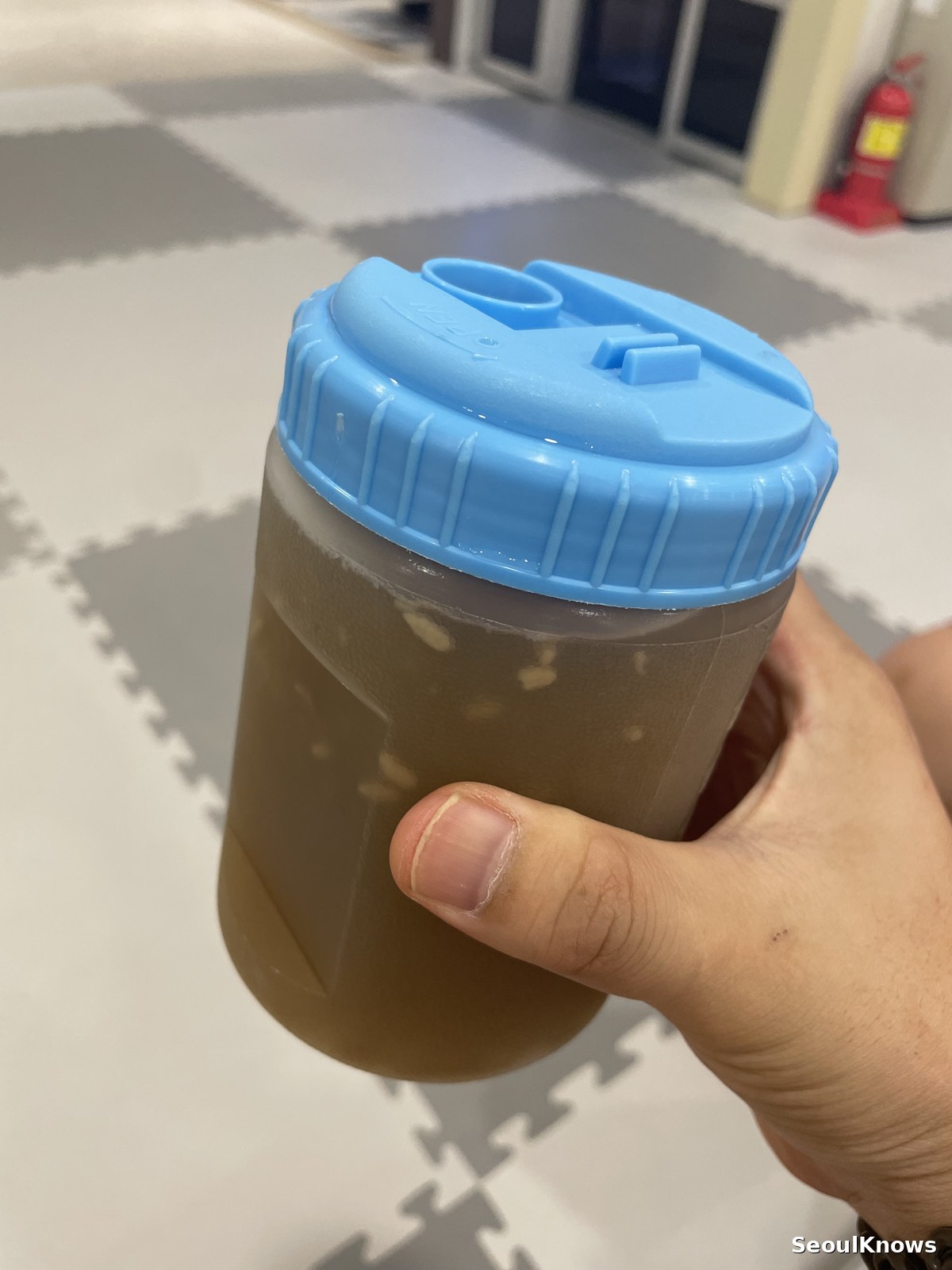
- Sikhye, a sweet cold rice drink, served ice cold in a metal bowl. The classic pairing with the eggs.
- Misugaru, a nutty multigrain shake, if sikhye is too sweet for you.
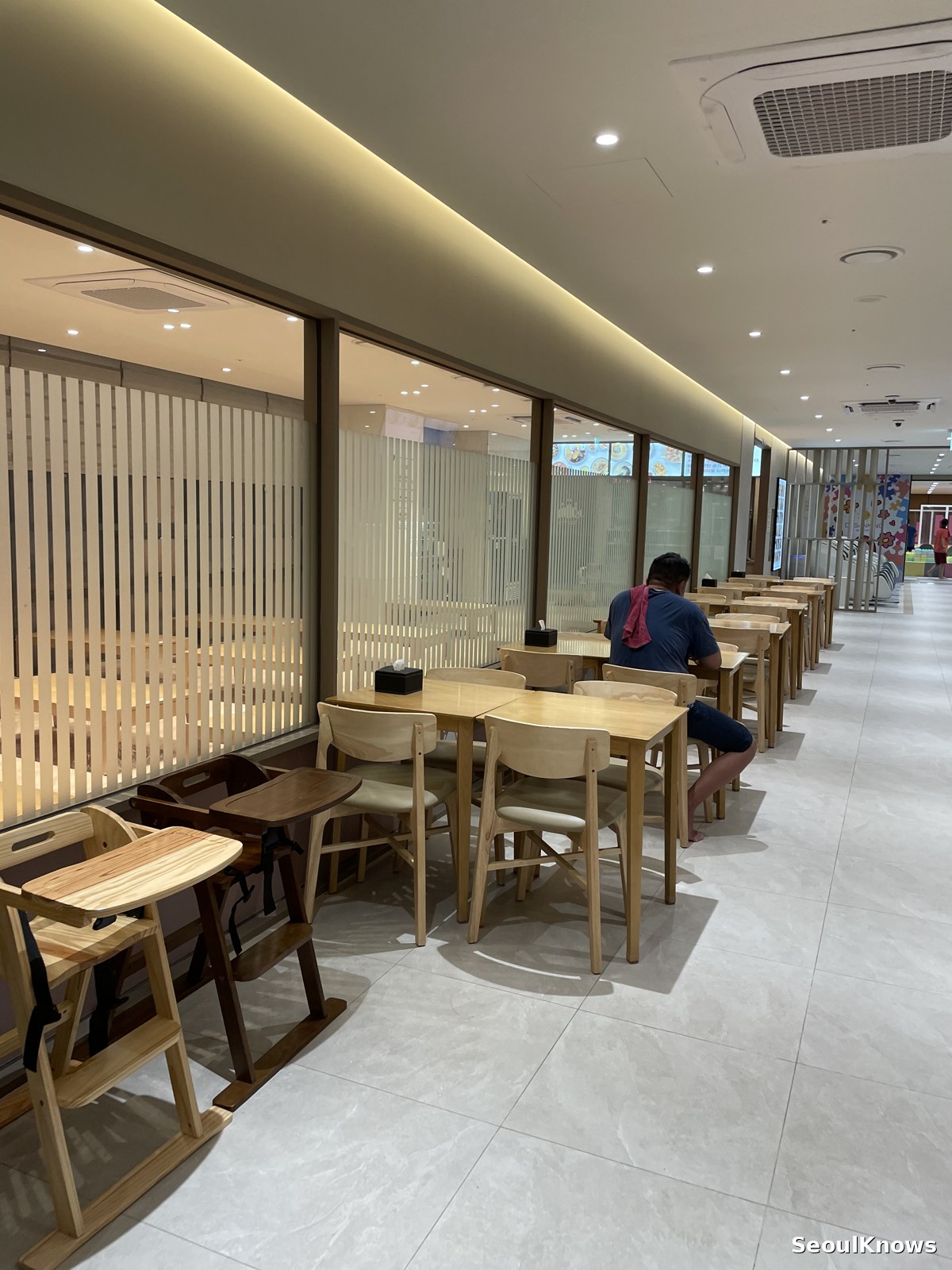
Bigger places also run a full restaurant with noodles, stews and rice dishes, so you can genuinely spend a whole day without leaving.
Sleeping there
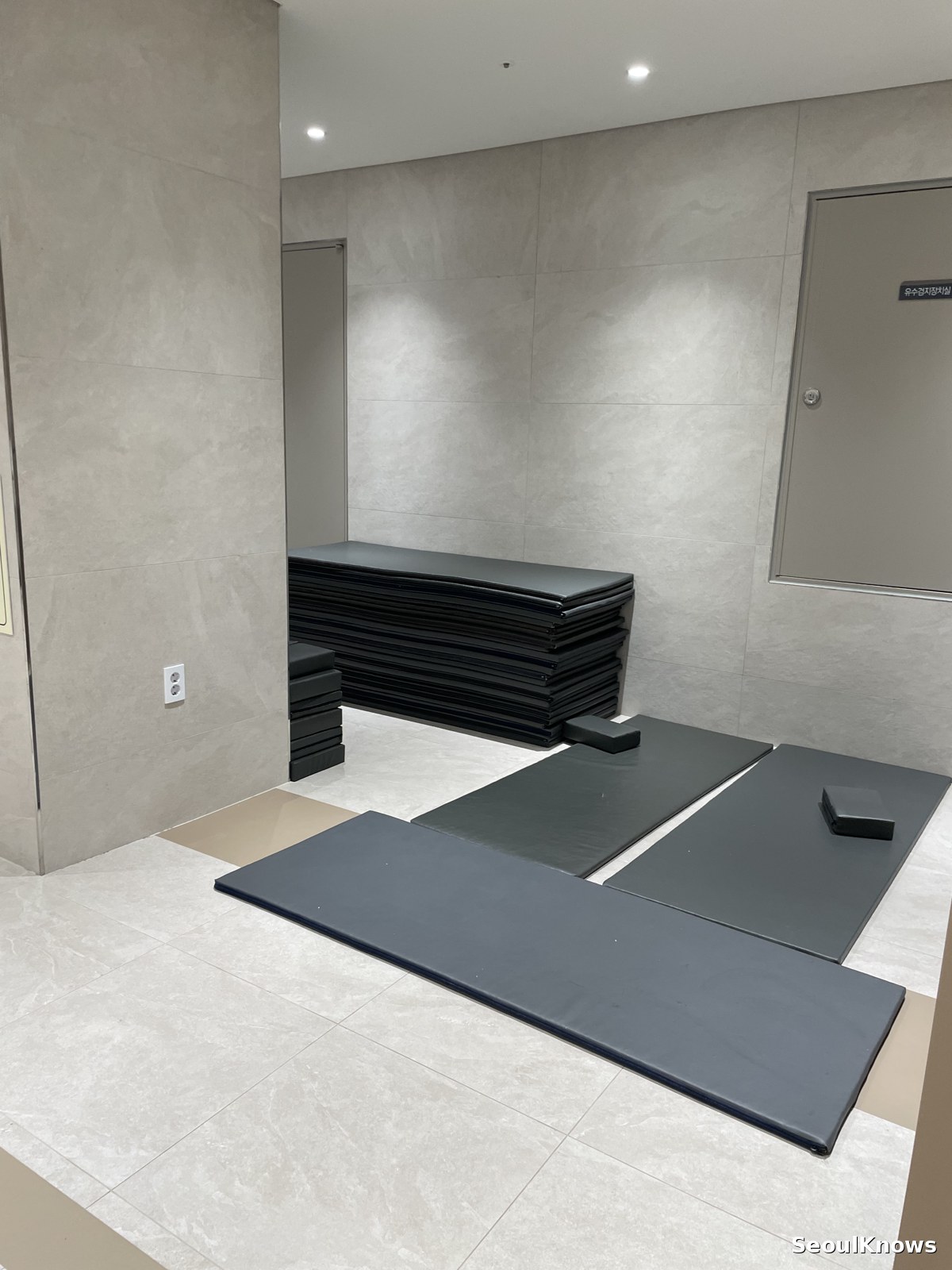
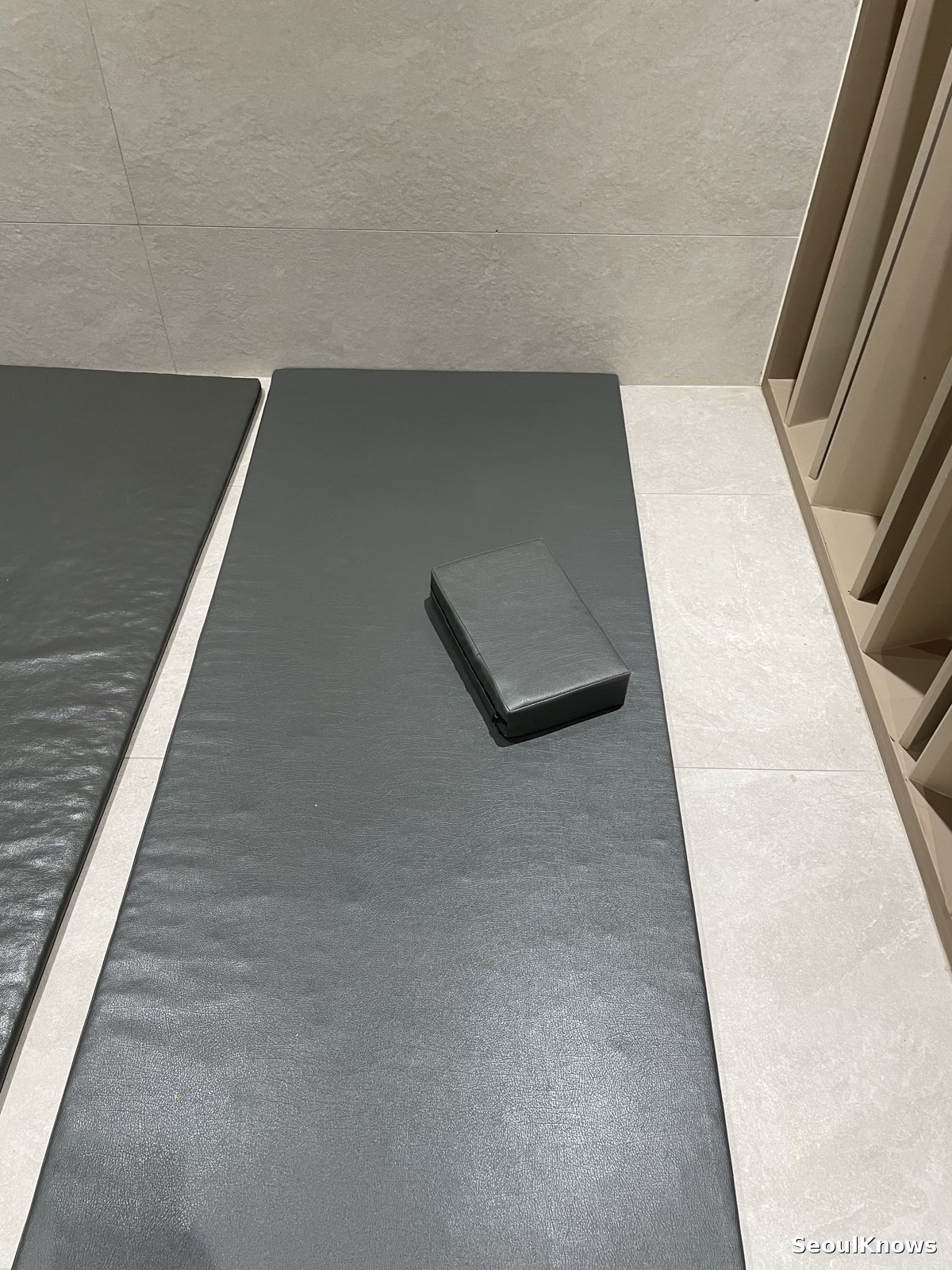
This is why backpackers love them. For the price of entry plus a small night surcharge you can stay until morning. There’s no bed: you take a mat and a hard rectangular pillow, find a spot on the heated floor or in a quiet room, and sleep with the lights dimmed.
Two honest warnings. Bring earplugs, because the snoring in a room of thirty sleeping adults is not a joke. And it is a floor, not a mattress, so one night is an adventure and three nights is a bad back. As an emergency plan after a missed last train, though, it’s unbeatable.
What else is up there
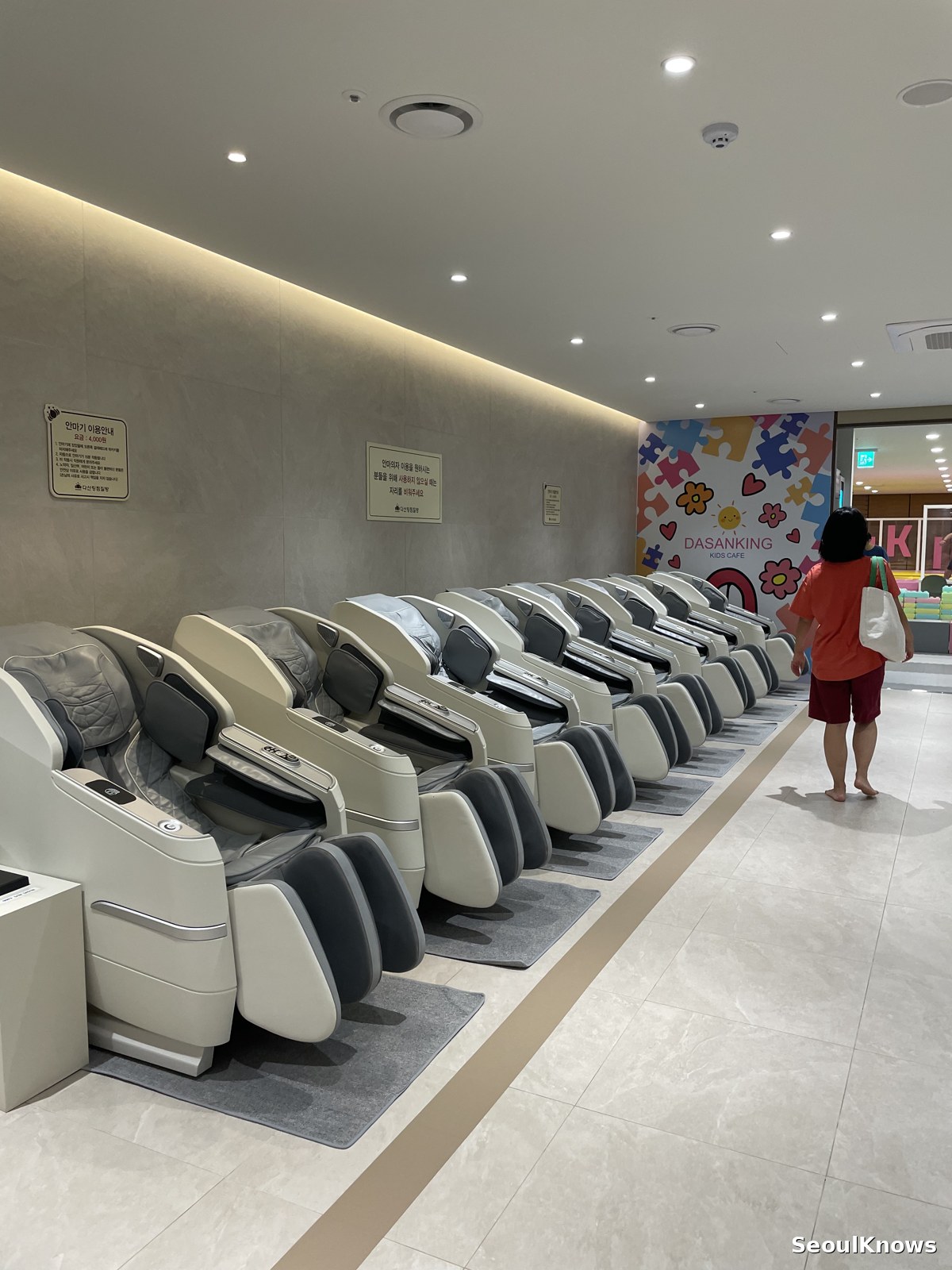
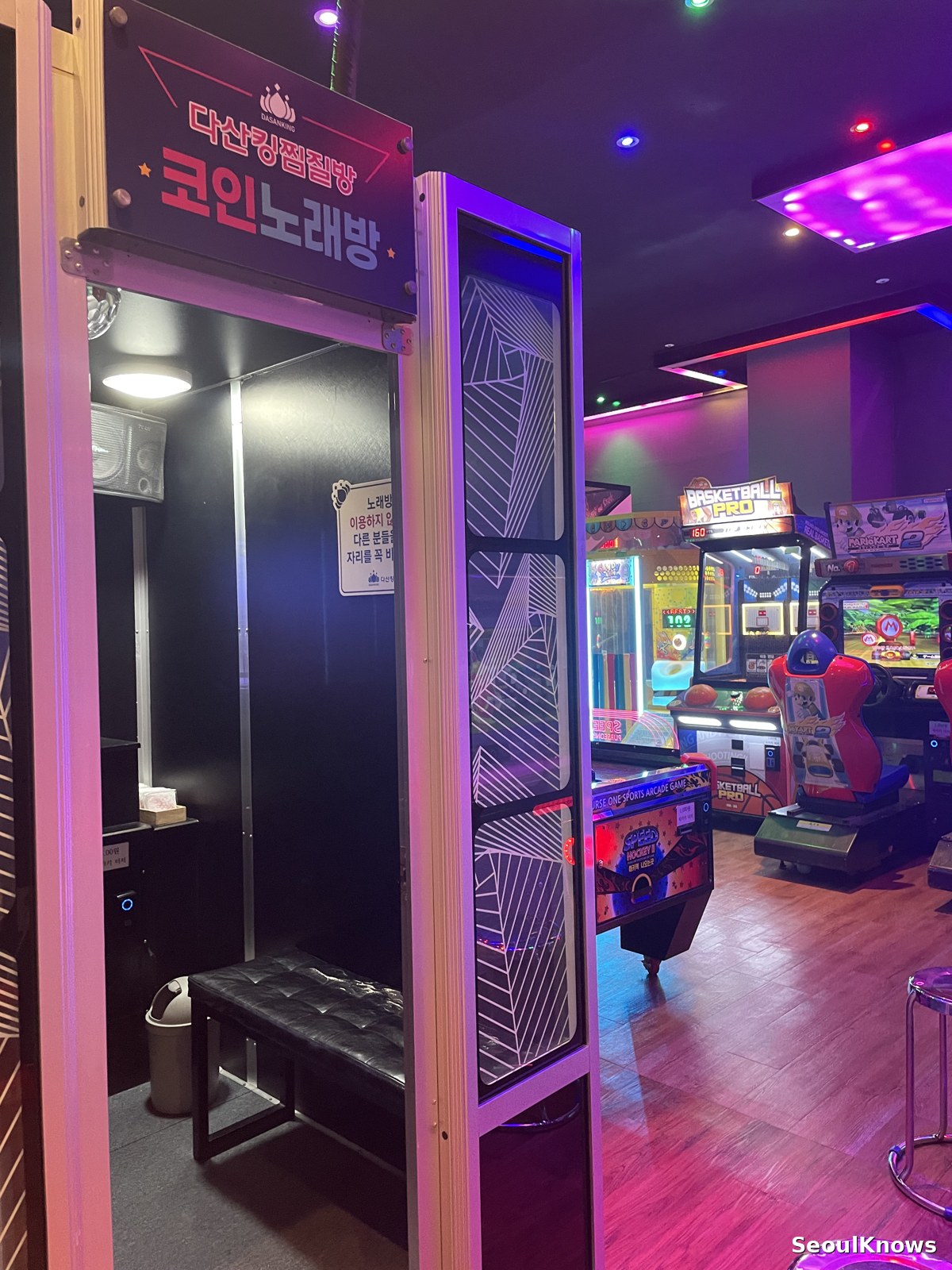
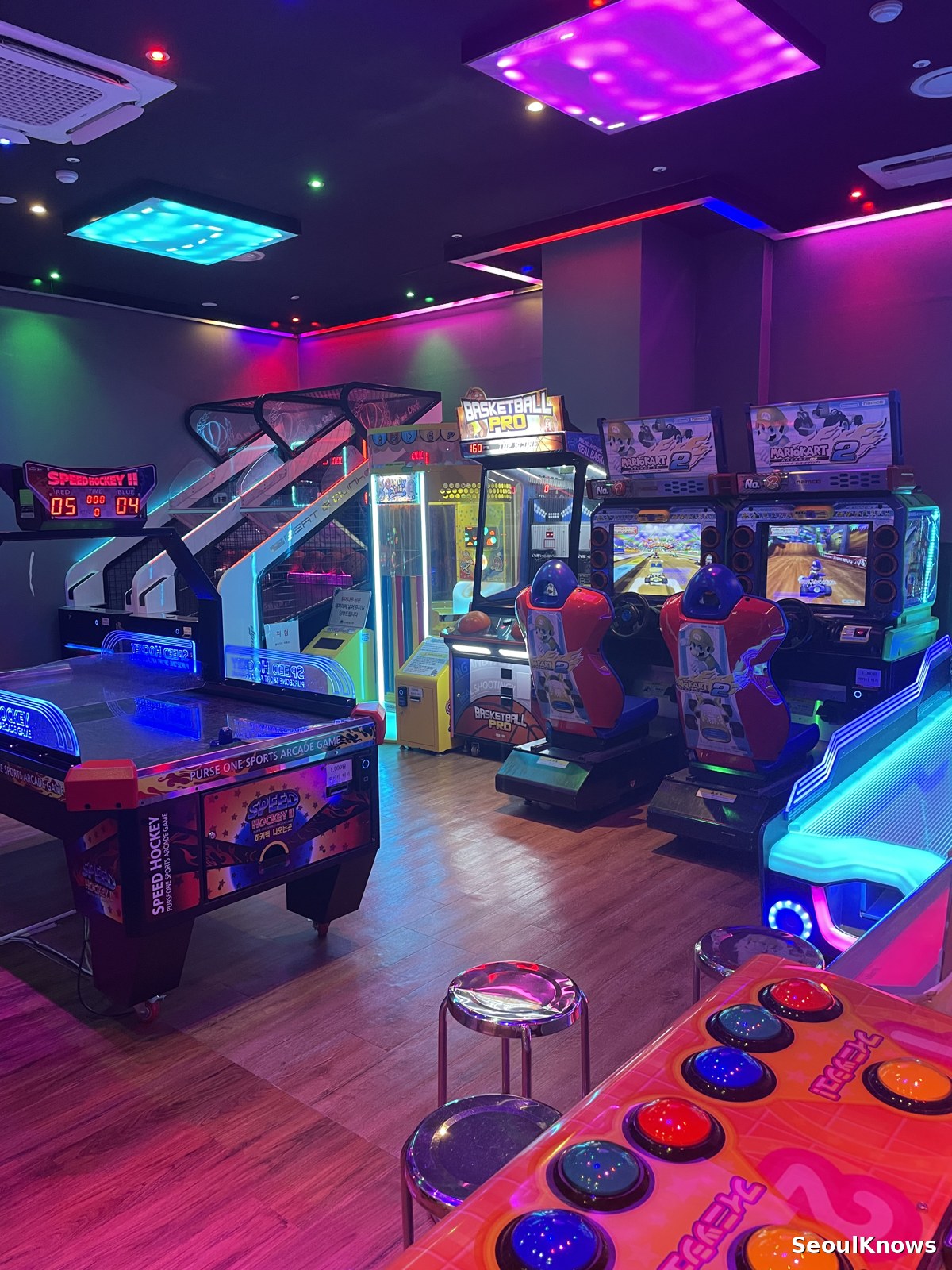
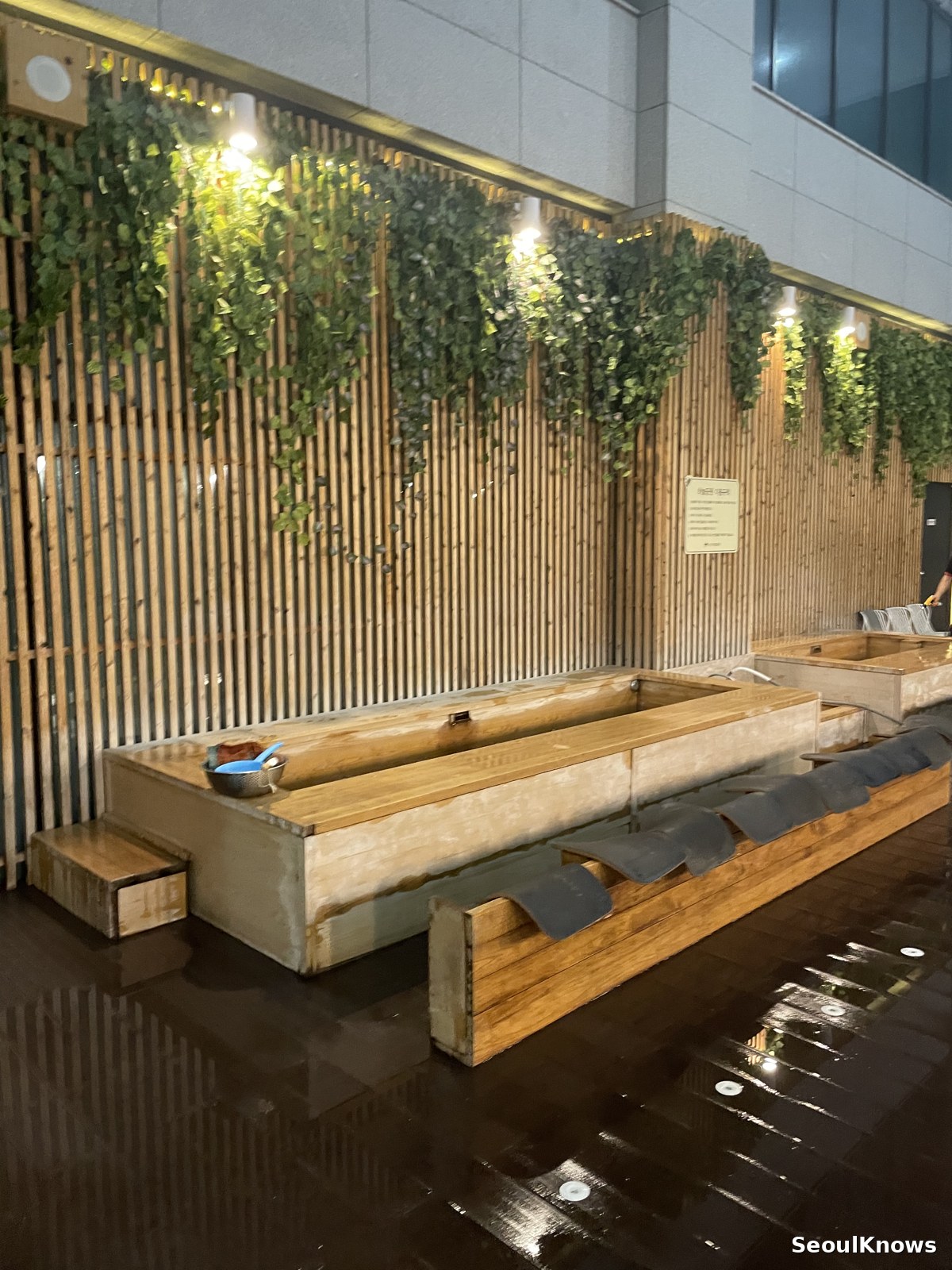
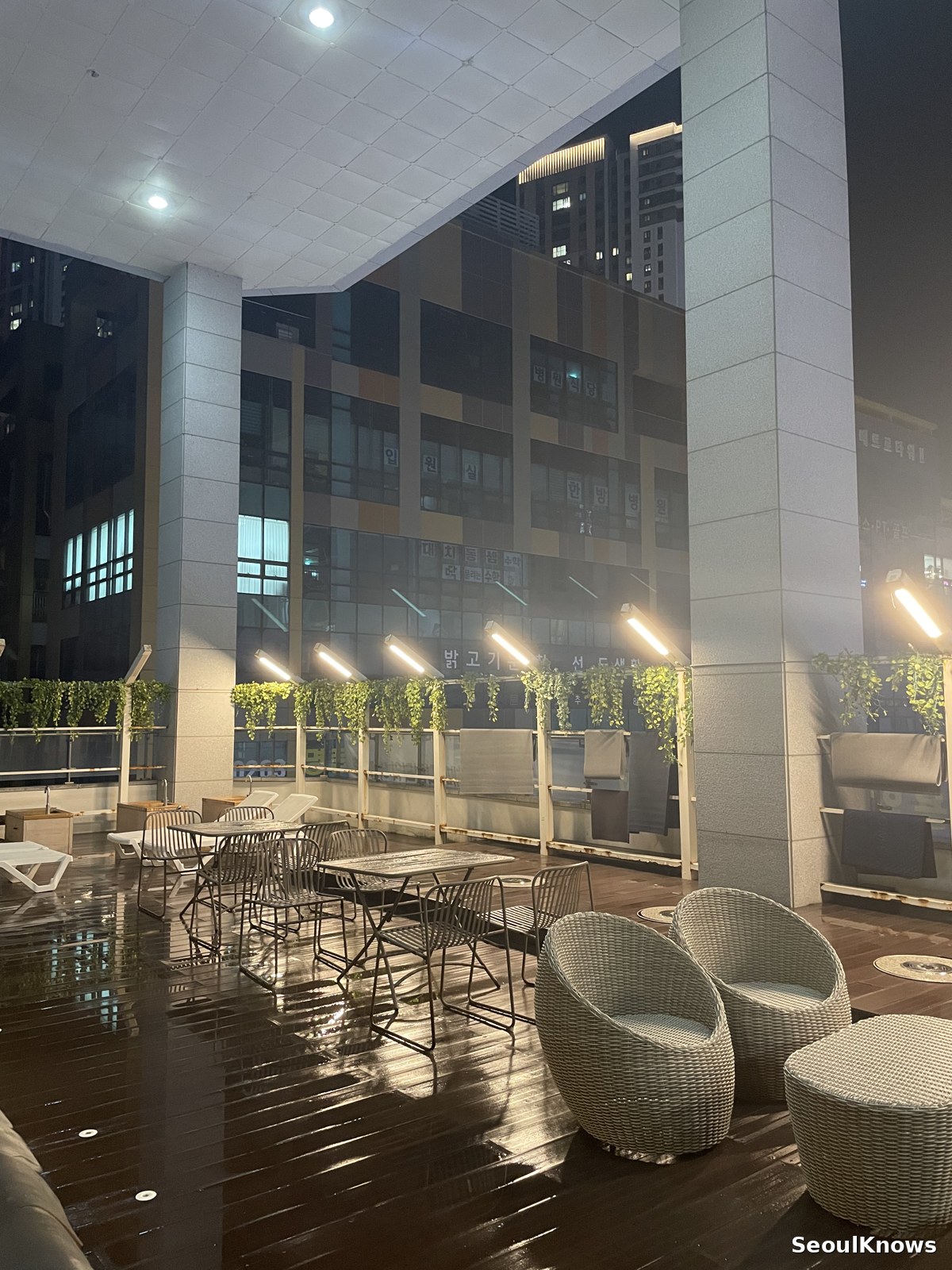
Modern jjimjilbang are closer to indoor theme parks than to bathhouses. Alongside the saunas you’ll commonly find massage chairs charged by the session, a book or comic lounge, an arcade and coin karaoke, a foot-reflexology stone path that genuinely hurts, and increasingly a large kids’ play zone, which is why Korean families treat them as a rainy-Sunday destination. Some have outdoor roof decks with foot baths.
They’re not all the same any more
This is the part most English-language guides haven’t caught up with. The old image of a jjimjilbang, a slightly worn neighbourhood bathhouse with a couple of hot rooms, is now only one end of the market. Over the past several years they’ve been getting bigger and, more interestingly, specialising. Newer venues pick a concept and build the whole building around it.
- Water park jjimjilbang. Some now include full indoor pools, slides and wave areas, so you get a spa and a water park on one ticket. These are the ones families book for a whole day.
- Kids-focused. A growing number have play zones the size of a proper indoor playground, with ball pits, trampolines, slides and climbing frames, plus family sauna rooms big enough for four. Parents rest while children exhaust themselves, which explains their popularity.
- Resort and hotel style. Large complexes with rooftop gardens, outdoor foot baths, restaurants on multiple floors and design closer to a hotel spa than a public bath.
- Wellness and premium. Quieter venues leaning on specific therapies, salt rooms, oxygen rooms, hot-spring water, aimed at adults who want a calm few hours rather than an arcade.
- Classic neighbourhood. Still everywhere, still cheap, still the most authentic version if that’s what you’re after.
Worth knowing before you pick one, because the experience differs enormously. If you want quiet, avoid the ones advertising kids’ zones. If you’re travelling with children, seek exactly those out. Check recent photos on Naver Map or Kakao Map before you go; the listings show what each venue actually has.
Etiquette, condensed
- Wash before entering any pool. Non-negotiable, and it’s why the water stays clean.
- No swimsuits in the bath area. No cameras or phones either, ever.
- Use the shower stations as they’re designed. Bathhouses have both types: low seated stations with a stool and handheld spray, and standing showers. Either is fine. Just use whichever kind you’re at, rather than standing up at a seated row and spraying the person next to you.
- Towels. You’ll see people fold one and rest it on their head in the hot pool. That’s a habit, not a rule, and towels do end up in the water; nobody polices it. One practical difference: the women’s side usually limits you to about two towels, while the men’s side generally has no limit and you can take more as you go.
- Keep your voice down in the sleeping areas, and don’t take a spot near someone who’s already asleep if you can help it.
- Tattoos: policies vary. Newer, family-oriented places are usually relaxed; some older establishments still refuse. If you have large visible work, call ahead.
- Don’t tip. There’s no tipping anywhere in Korea.
And the reassuring part: mistakes read as unfamiliarity, not rudeness. Nobody will scold you. If you’re doing something wrong, someone will usually just gesture.
What to bring
Almost nothing. Uniform, towels and basic soap and shampoo are provided or sold cheaply on site. Worth bringing yourself: your own skincare if you’re particular, a hair tie, earplugs if you’re staying the night, and a card or cash for the snack bar. Contact lenses come out before the hot rooms.
Quick facts
- What: a Korean bathhouse plus a mixed-gender sauna and lounge floor, under one entry fee
- Price: roughly 10,000 to 15,000 won entry, plus a small overnight surcharge at many places
- Hours: many are open 24 hours, year round
- Bathing area: gender separated, fully naked, no phones
- Sauna floor: mixed gender, everyone in the provided uniform
- Payment: charged to your locker number, settled on exit before your shoe locker opens
- Bring: earplugs for an overnight stay; everything else is provided
- Good for: a rainy day, a hangover cure with friends, families, or a night when you’ve missed the last train
- Social note: Koreans mostly go in groups, with family, old friends or colleagues; it’s a bonding activity as much as a bath
- Choosing one: venues now specialise, water parks, big kids’ zones, resort style or quiet wellness, so check the photos on a map app first
Frequently asked questions
What is a jjimjilbang?
A Korean spa complex: gender-separated hot baths downstairs and a mixed-gender floor of heated sauna rooms, snack bars and rest areas upstairs, all for one entry fee. Many run 24 hours.
Do I have to be naked?
In the bathing area, yes, and swimsuits aren’t allowed. On the sauna floor everyone wears the uniform you’re given. You can skip the baths if you prefer.
How much does a jjimjilbang cost?
Usually 10,000 to 15,000 won for adults, a bit more at weekends, with a small extra charge if you stay overnight.
Can I sleep in a jjimjilbang?
Yes. You take a mat and sleep on the heated floor or in a quiet room. Bring earplugs; it’s cheap and communal rather than comfortable.
Are tattoos allowed?
It depends on the venue. Newer family-focused places are generally fine; some traditional ones still refuse entry. Call ahead if your tattoos are large and visible.
Are jjimjilbang family friendly?
Very. Kids come with parents, and many now have sizeable indoor play zones, which is why they’re a standard rainy-day outing for Korean families.
Do some jjimjilbang have water parks?
Yes. Newer large venues increasingly build in indoor pools and slides, and others specialise in big kids’ play zones, resort-style rooftop facilities or quiet wellness treatments. They vary far more than they used to, so check photos on Naver or Kakao Map before choosing.
What do I eat there?
Baked eggs and sikhye, the sweet cold rice drink, are the traditional pairing. Larger venues have a full restaurant too.
Do people go alone or in groups?
Mostly in groups. Families, old friends and colleagues go together, and the morning after a heavy night out is a classic occasion. Going solo is perfectly normal too, but the social version is the real one.
How long should I stay?
Two to three hours is a satisfying visit. Entry often covers up to 12 hours, so you can make a whole day of it.
If you only try one thing in Korea that isn’t food, make it this. Go in the evening, wash properly, work through the hot rooms and the ice room a few times, eat an egg on the floor with a cold sikhye, and see how you feel walking out. It costs less than a cinema ticket and you’ll understand something about the country that no museum will teach you.
Written by WY, a Seoul-based local sharing honest, first-hand guides to Korea. Every guide here is a place I’ve actually been to — written from my own visit, my own photos. More about me →