
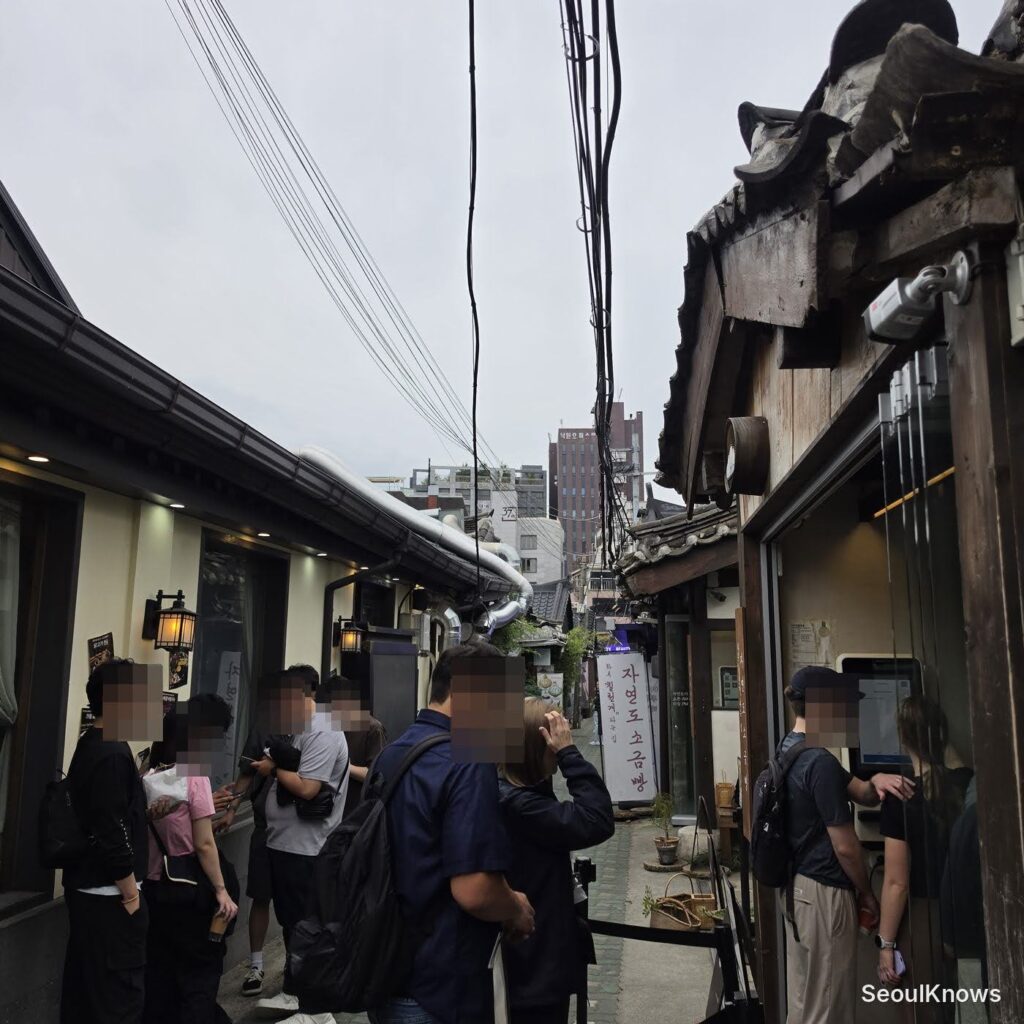
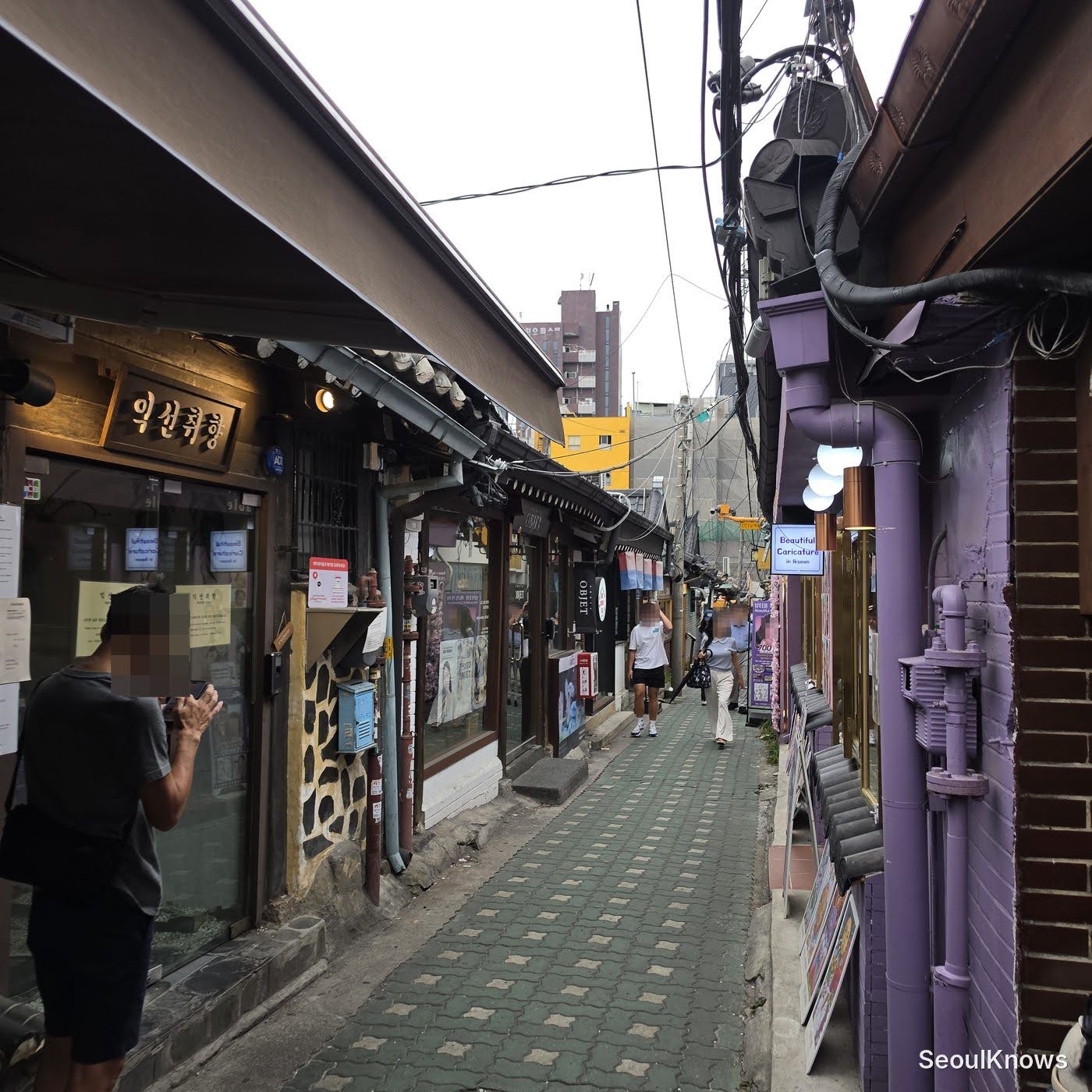
In September 2026 Time Out named Jongno 3-ga the coolest neighbourhood in the world, first out of forty, ahead of Rabat and Athens. If you come to see what that means, the part you will actually walk is Ikseon-dong: a block of 1920s hanok, now almost entirely cafes, restaurants and small shops, laid out on alleys barely wide enough for two people to pass.
We went on Friday 25 September 2026, Chuseok itself, with my nieces and nephews up from the provinces for the holiday. Nine of us. We had been going round the city on a double-decker bus, got off partway and walked in. If you have been to Tianzifang in Shanghai, you already know the shape of this place: old low-rise housing, lanes too narrow for cars, every front room turned into a shop.
Two things from that afternoon are in this guide because nothing else written in English says them. Nine people could not get a table anywhere in Ikseon-dong, and the children spent 7,000 won each on a caricature that took a minute and was the best thing they did all day.
This guide covers what Ikseon-dong is and why it looks the way it does, what to do there, what the Time Out ranking was actually about, and the practical parts: when to come, how group size changes everything, and what is worth walking to next.
What the Time Out ranking actually said
Time Out published its 40 Coolest Neighbourhoods in the World on 15 September 2026, covering forty cities in twenty-six countries. Jongno 3-ga took first place. Second was L’Ocean District in Rabat, third Neos Kosmos in Athens, then Chinatown in Los Angeles and Govanhill in Glasgow.
The list is not a public vote. Neighbourhoods were nominated by Time Out’s local editors and experts, then assessed by a panel on food and drink, nightlife, culture, local businesses, liveability and sense of community.
What they praised is worth knowing, because it is not only Ikseon-dong. Time Out pointed at three things: the hanok of Ikseon-dong, the late-night street food stalls known as pocha, and Seosulla-gil, the lane beside Jongmyo Shrine that has filled with craft workshops, jewellery studios and bars. Jongno 3-ga was third on the same list in 2021, so this is a return rather than a discovery.
What Ikseon-dong is
This is the part most guides get wrong. The hanok here are not palace-era architecture. They were built in the 1920s and 1930s, during the colonial period, as a developer’s housing estate: dozens of small hanok packed onto tiny plots, with the traditional timber frame and tiled roof kept but the scale shrunk to fit a dense city block.
It stayed an ordinary residential quarter for most of a century. The conversion into cafes and restaurants began in the mid-2010s and ran fast. What you walk through now is a 1920s housing layout with 2020s businesses inside it, which is exactly why the alleys feel the way they do: they were never built for crowds.


Walking the alleys
There is no route. The grid is about two hundred metres across and you cover it by turning down whatever looks interesting, which is the correct way to use it.
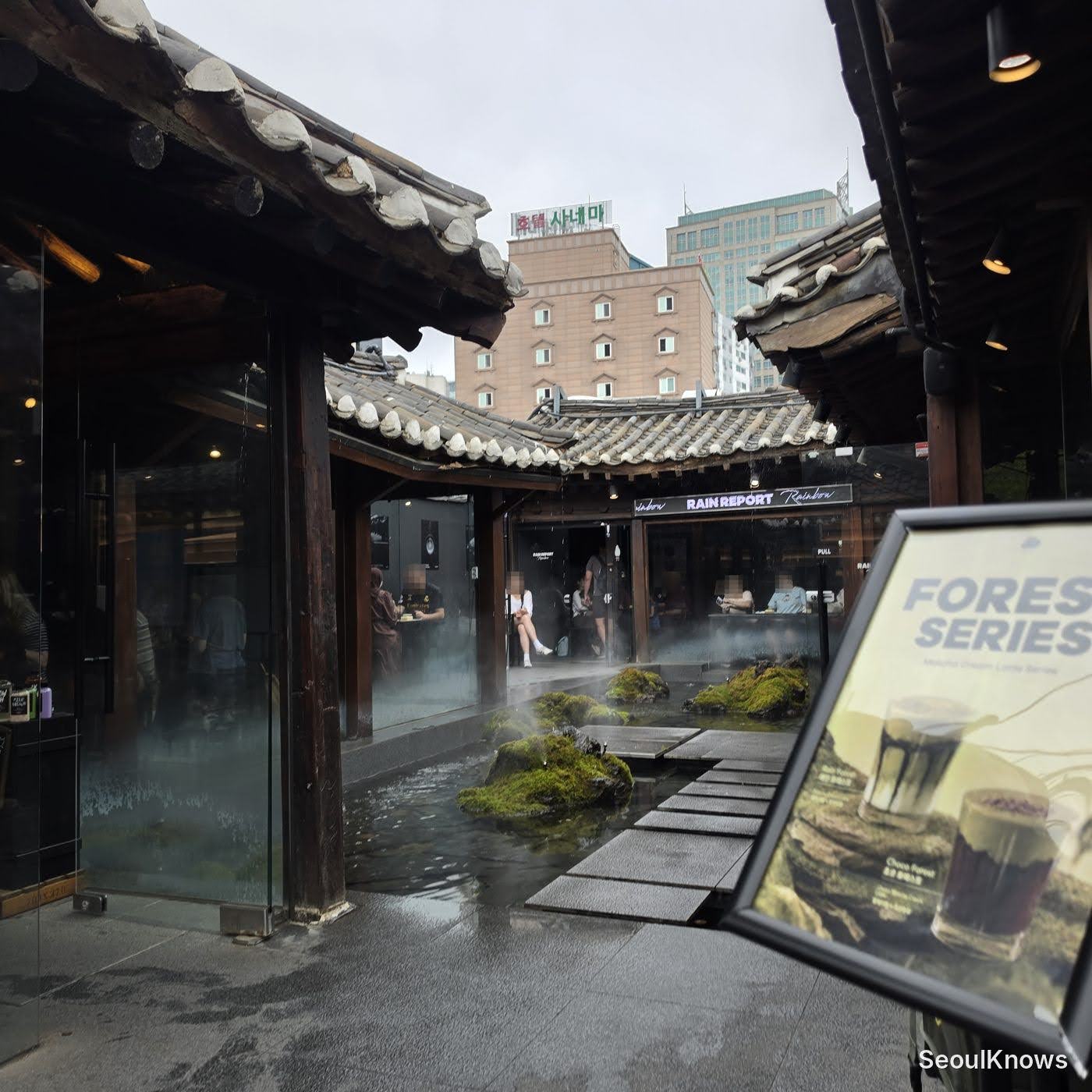
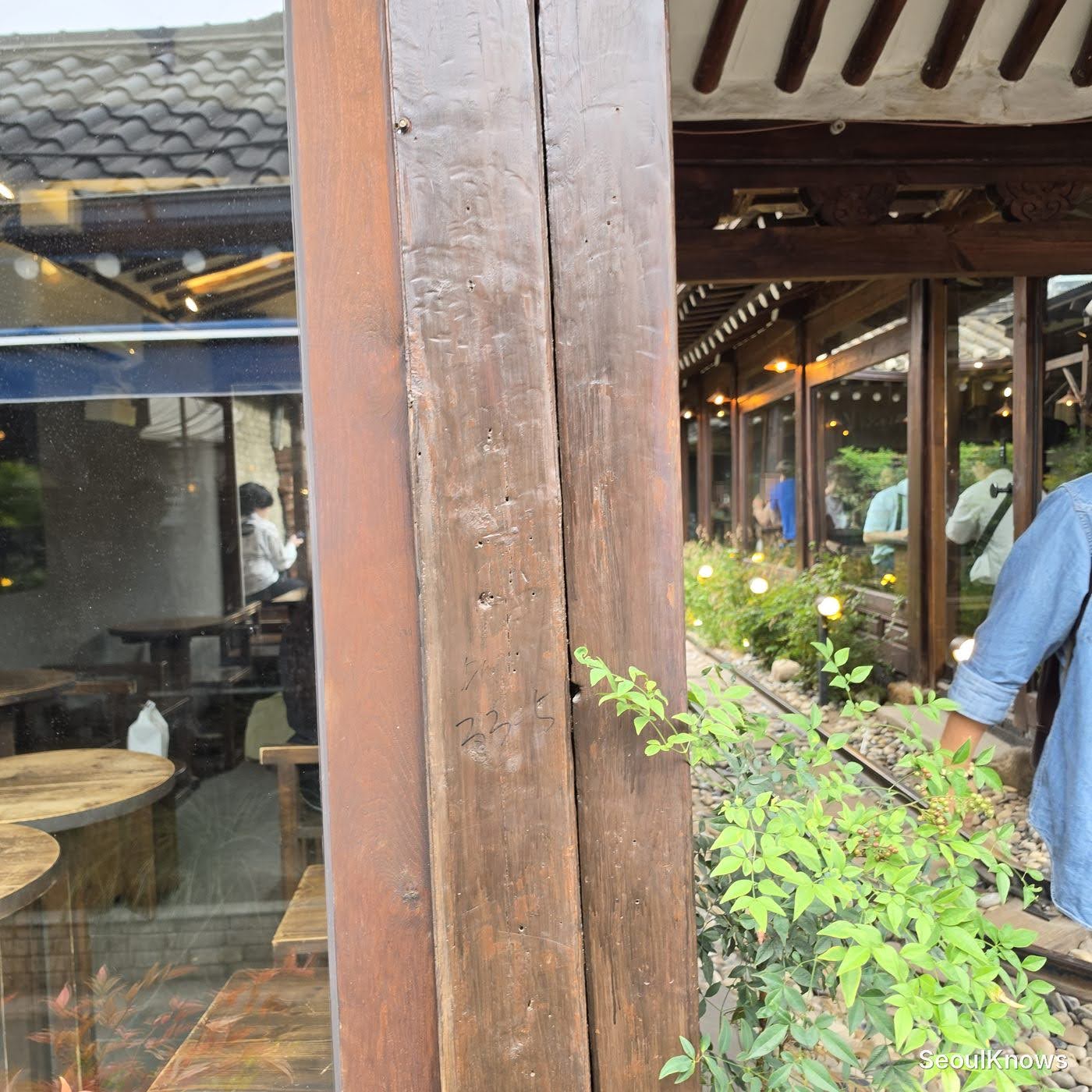
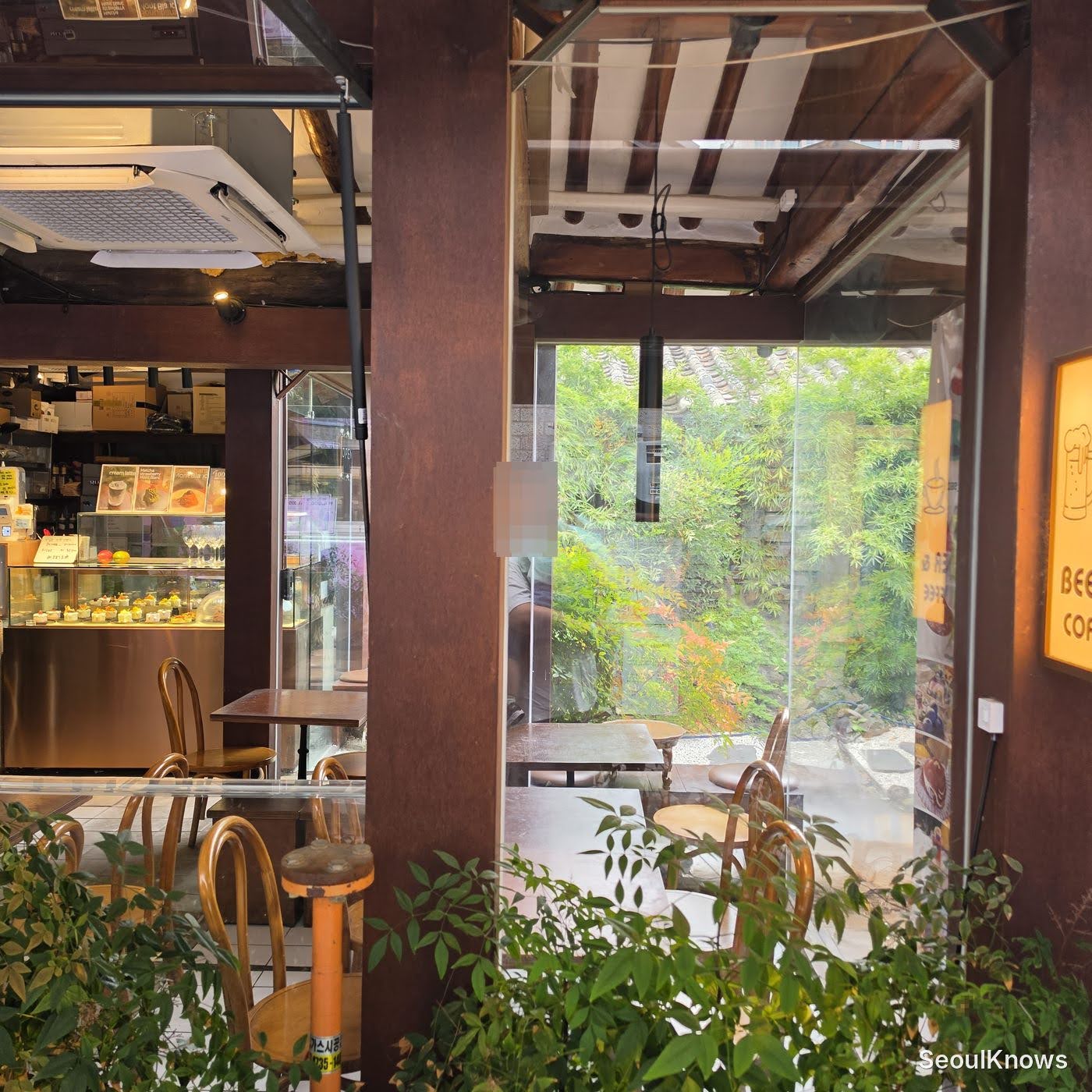
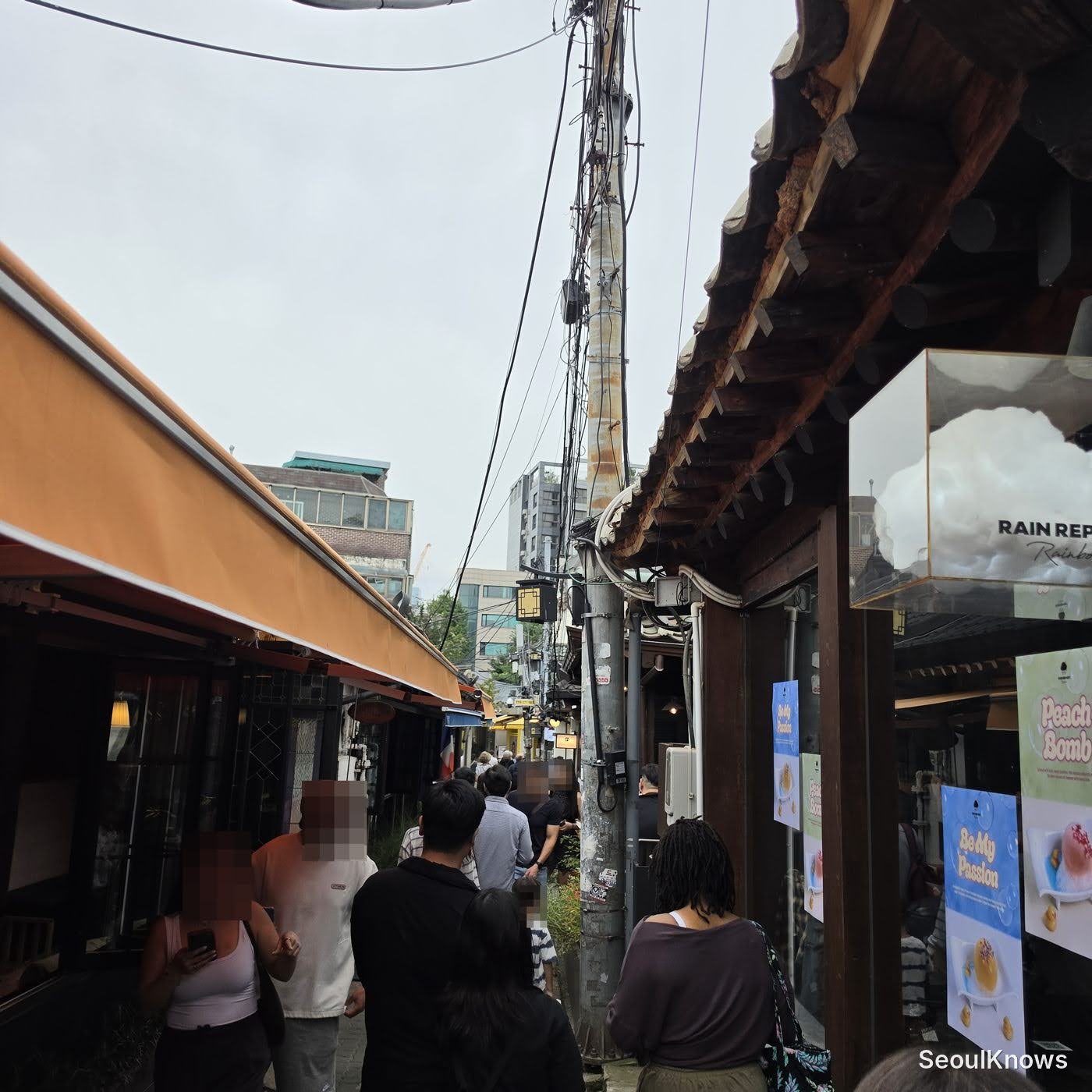
Two things stand out once you are in. First, almost every hanok has been opened up at the front, so you can see straight into the room: diners at a counter, a courtyard with a tree, a bar under a tiled roof. Second, the shopfronts are small and the signs are low, so you look at eye level the whole time rather than up at a facade.


Honest Seoul tips, once a week. Get the newsletter →
The one-minute caricature
Ikseon-dong has a cluster of caricature studios, and they turned out to be the best thing we did there. The one we used is Dotori Caricature (도토리 캐리커처), on a corner with a lit sign and a board on the door reading “1 minute is done, 7,000 won”. The format is the same at most of them: you sit down, an artist draws you, and you leave with a sheet in a paper sleeve.
The minute is not marketing. My nieces sat down one after the other and the drawings were finished before they had properly settled. Each one is dated in the corner, which makes it a better souvenir than anything sold in the shops two streets away.
If you are travelling with children, this is the stop to plan around. It costs less than a coffee, it takes no time, and it gives them something to carry for the rest of the day.


Eating, and why group size decides everything
Almost every restaurant in Ikseon-dong has a wait, and the queues are managed on paper lists at the door rather than by app, so you give a name and stand nearby.
The thing nobody tells you is that these are converted houses. A hanok front room seats maybe twenty people across several small tables, and the tables are built for two to four. We were nine. We walked the whole block, asked in several places, and there was nothing: not a long wait, simply no table that size anywhere.
So we left, crossed the main road and ate at an ordinary Korean restaurant five minutes away, which was fine and took no waiting at all. If your group is six or more, plan to eat outside Ikseon-dong and use the block for walking and coffee instead. Two to four people can eat here easily.
For smaller groups the menus are built for visitors. Boards outside carry photographs with English labels, and the rice-bowl and solbap restaurants are the easiest entry point if you have never ordered Korean food before.


The rest of Jongno 3-ga
Ikseon-dong is about an hour. The ranking was for the wider district, and three things are within a ten minute walk.
- Seosulla-gil runs along the stone wall of Jongmyo Shrine. Craft workshops and jewellery studios by day, bars with outdoor tables by evening. This is the half of the district Time Out singled out and most visitors miss.
- Jongmyo, Changdeokgung and Changgyeonggung are all walkable. Changdeokgung is the one to pick if you choose one: adult admission is 3,000 won, and its Huwon garden needs a separate ticket booked in advance.
- The pocha alleys behind the main hanok streets are the night version of the neighbourhood, and nothing like the cafes. Grills on the pavement, plastic stools, soju. Come back after dark for this rather than trying to fit it into the same walk.
- Insadong is about five minutes on foot to the west, which makes the pair the easiest half day in central Seoul: Insadong for traditional crafts and tea, Ikseon-dong for the alleys and coffee.
If you want to wear hanbok for the palaces, the rental shops cluster around Gyeongbokgung and Bukchon rather than here. Hanbok has meant free palace entry for years, but that policy was under review during 2026, so ask at the ticket office rather than counting on it.


Small practical things
- Cash: not needed. Cards and phone payments work everywhere, including the caricature studios.
- Luggage: Jongno 3-ga station has coin lockers, which makes this an easy stop between a checkout and a train.
- Rain: the alleys are open to the sky and the shopfronts are open at the front, so a wet day is uncomfortable rather than impossible. The cafes fill up fast when it rains.
- Toilets: use the ones in the station or in a cafe you are buying from. The alleys have none.
- Spelling: you will see Ikseon-dong, Ikseondong and Iksun-dong. They are the same place, 익선동 in Korean.
When to come
We went on Chuseok, which is the Korean autumn holiday and one of the busiest travel days of the year, so our crowds were the worst case. The alleys were full by late morning and a large share of the people in them were foreign visitors. These lanes are about two metres wide in places, so “busy” here means single file past a queue, not a crowded street.
Open at 11:00 is the quiet window. Weekend and public-holiday afternoons are the worst. If your main interest is the hanok rather than the food, come at opening, walk it in forty minutes and leave before the lunch queues form.
Quick facts
- Where: Ikseon-dong, Jongno-gu, Seoul. The walkable block is roughly 200 metres across.
- Nearest station: Jongno 3-ga, Lines 1, 3 and 5
- Admission: free, it is a public neighbourhood
- How long to allow: one hour for Ikseon-dong, half a day with Seosulla-gil and one palace
- Caricature: from 7,000 won, about a minute
- Restaurant waits: reported as around twenty minutes at the popular places. We did not queue, so take that as the local consensus rather than our own count.
- Quietest: weekday mornings from 11:00
- Group size: two to four eat easily. Six or more will not find a table. Plan to eat outside the block.
- Good for: architecture, photographs, a date, a short walk with children, a first Korean meal
- Less good for: strollers and wheelchairs. The alleys are narrow, uneven and crowded.
Frequently asked questions
Why is Jongno 3-ga called the world’s coolest neighbourhood?
Time Out ranked it first of forty neighbourhoods in September 2026, citing the hanok of Ikseon-dong, the late-night pocha food stalls and the craft workshops and bars of Seosulla-gil.
Is Ikseon-dong the same as Bukchon Hanok Village?
No. Bukchon is a residential hanok village where people still live and signs ask you to keep quiet. Ikseon-dong is smaller, denser and almost entirely commercial, and its hanok are 1920s urban housing rather than older estates.
Is there an entrance fee?
No. It is an ordinary neighbourhood block and you walk in off the street.
How long do I need?
An hour covers Ikseon-dong itself. Half a day if you add Seosulla-gil and a palace.
Do I need a reservation for restaurants?
Most do not take them. You write your name on a list at the door and wait.
Can a large group eat in Ikseon-dong?
Not easily. These are converted houses and the tables are built for two to four. We were nine and found nothing in the whole block, so we ate across the main road instead. Six or more should plan to eat elsewhere and use Ikseon-dong for walking.
What is Ikseon-dong like compared with Tianzifang in Shanghai?
Very close in feel. Both are old low-rise residential lanes, too narrow for cars, with the ground floors turned into cafes, craft shops and restaurants. Ikseon-dong is smaller and the buildings are Korean hanok rather than shikumen.
Is it good with children?
Yes for school age, and the caricature studios are the reason. It is harder with a stroller: the alleys are narrow, uneven and busy.
Is Ikseon-dong close to Insadong?
Yes, about five minutes on foot, and our Insadong guide covers the walk from this side. Most visitors do the two together, and Jongno 3-ga station connects Lines 1, 3 and 5 so it is easy to reach from anywhere in the city.
What is there to do at night?
The pocha alleys and the bars on Seosulla-gil. The neighbourhood changes character completely after dark, and that is the half Time Out was pointing at.
The bottom line
Ikseon-dong is small, and an hour is enough for the alleys themselves. Come at opening, let the shopfronts rather than a list decide where you turn, and keep 7,000 won for a caricature if anyone in your group is under twelve. Eat somewhere else if there are more than four of you. Then walk ten minutes to Seosulla-gil, which is the part of the world’s coolest neighbourhood that almost nobody photographs.
For a Seoul neighbourhood that works the opposite way, see our guide to Seongsu, the converted-factory district, and Haus Nowhere inside it.
Written by WY, a Seoul-based local sharing honest, first-hand guides to Korea. Every guide here is a place I’ve actually been to, written from my own visit and my own photos. More about me →