
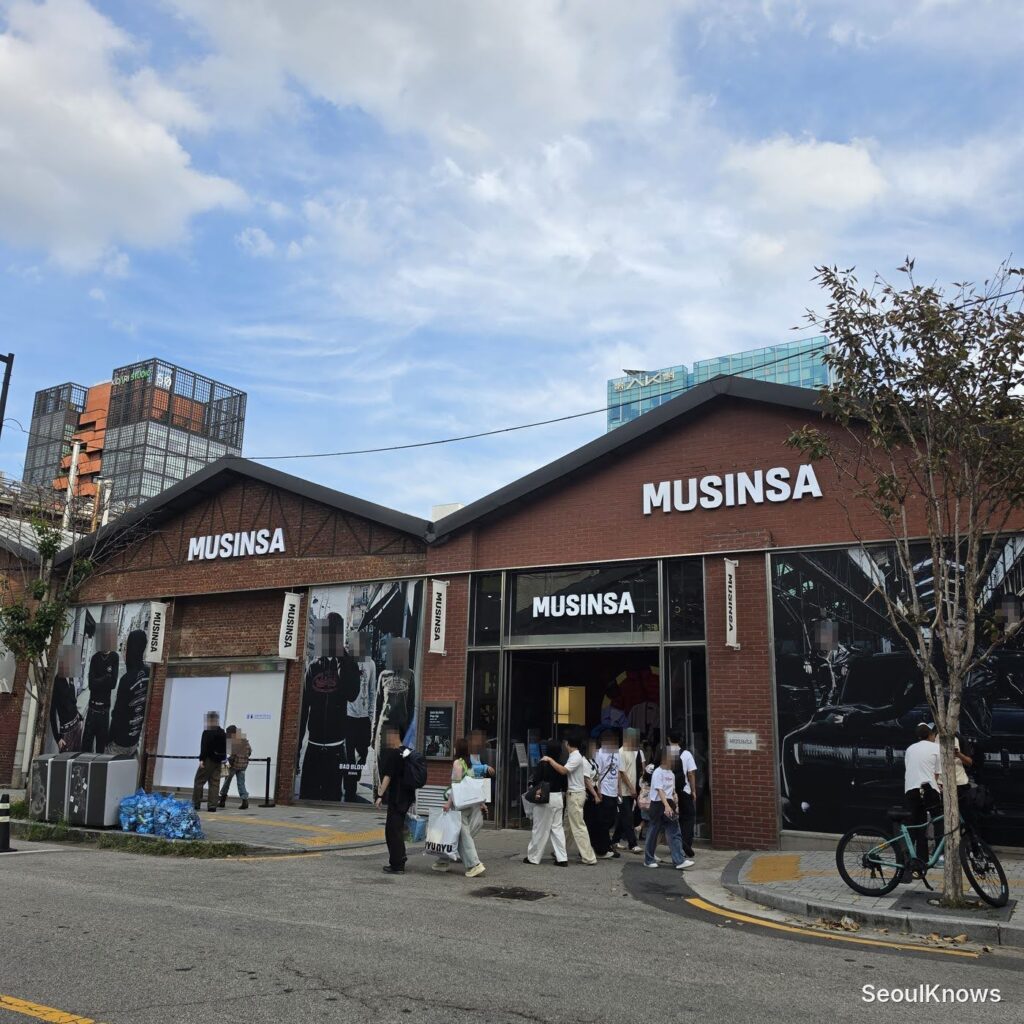
Seongsu-dong is where Seoul put its shoe factories, and then, about fifteen years later, its fashion. The result is a grid of low brick and steel sheds with their saw-tooth roofs still on, occupied by Dior, Chanel, Musinsa, a Gentle Monster tower and roughly forty pop-ups at any given moment. Nothing here was built to look like this. That is the appeal.
We walked it on a Saturday afternoon with my nephews and nieces and a toddler in a stroller, starting at Haus Nowhere at the quiet end and finishing with coffee at Daelim Changgo. This guide covers how the district is laid out, what is worth stopping for, and the practical parts: stations, crowds, strollers and parking.
Why Seongsu looks like this
Through the second half of the twentieth century Seongsu made shoes, printed paper and ran small metal workshops. The buildings that did it were cheap single-storey sheds with north-facing roof lights, built for daylight and deliveries rather than for looks. When the industry thinned out, the sheds stayed, and because they are wide, tall and structurally dull, they turned out to be perfect for a flagship store or a cafe that wants a ceiling.
People call Seongsu the Brooklyn of Seoul. Like Brooklyn in New York, it is a working industrial district that creative businesses moved into without clearing it out. Two layers run at once: global luxury, and a neighbourhood of car repair shops, print houses and old restaurants that never left. Usually on the same block.

How the district is laid out
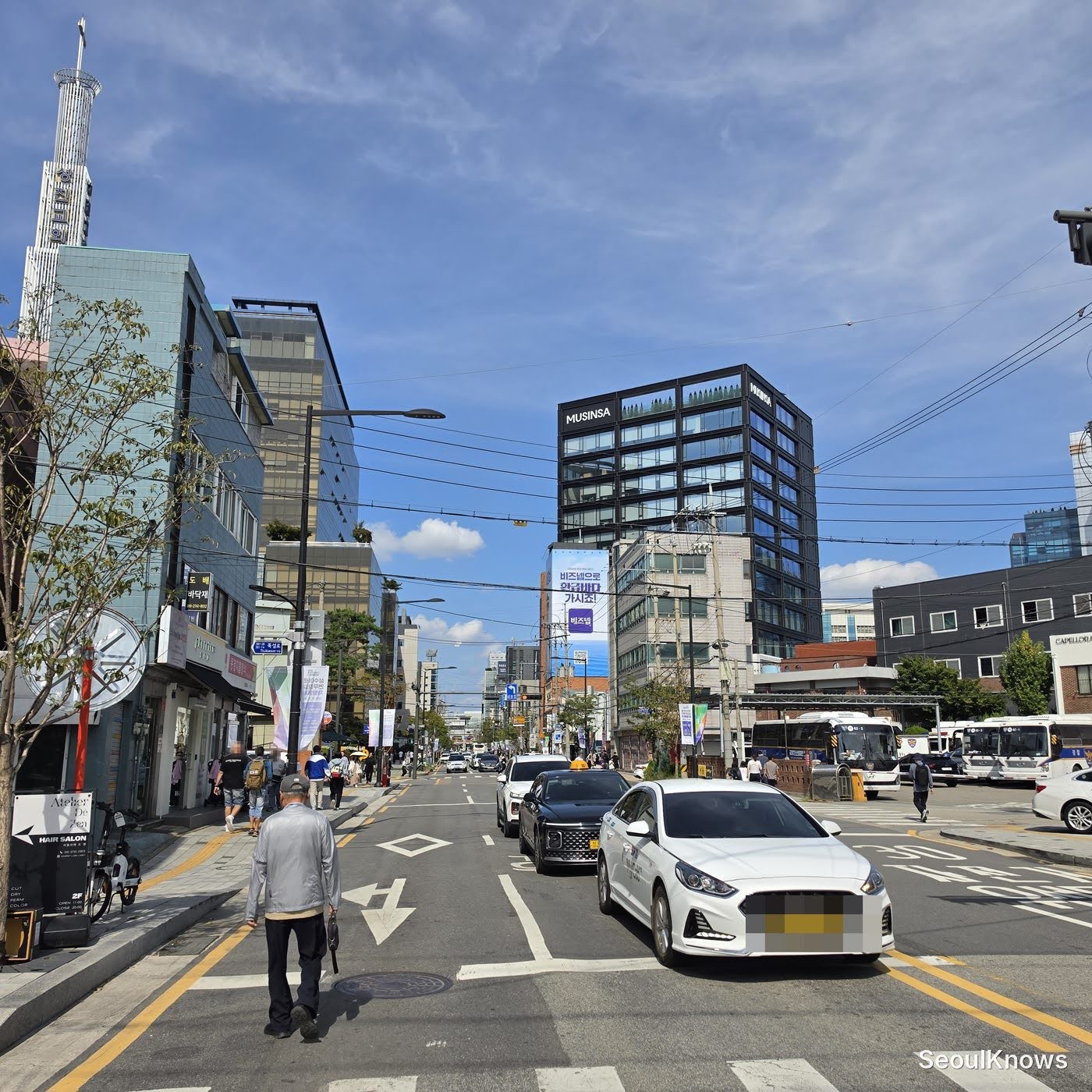
Almost everything a visitor wants sits inside a rectangle about one kilometre across, and you can walk all of it.
- Seongsu Station (Line 2) is the entry point. Most of the shopping is north and east of it.
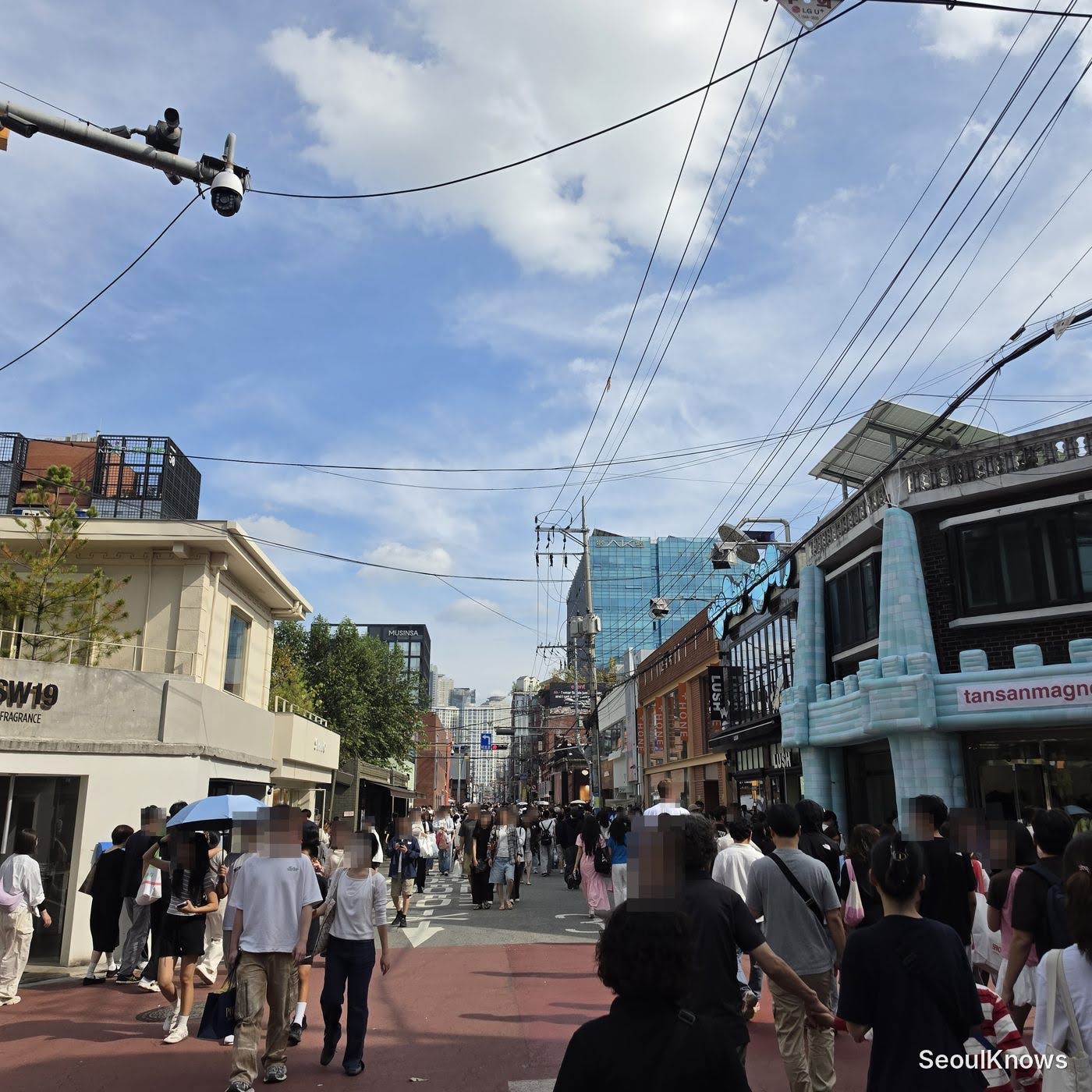
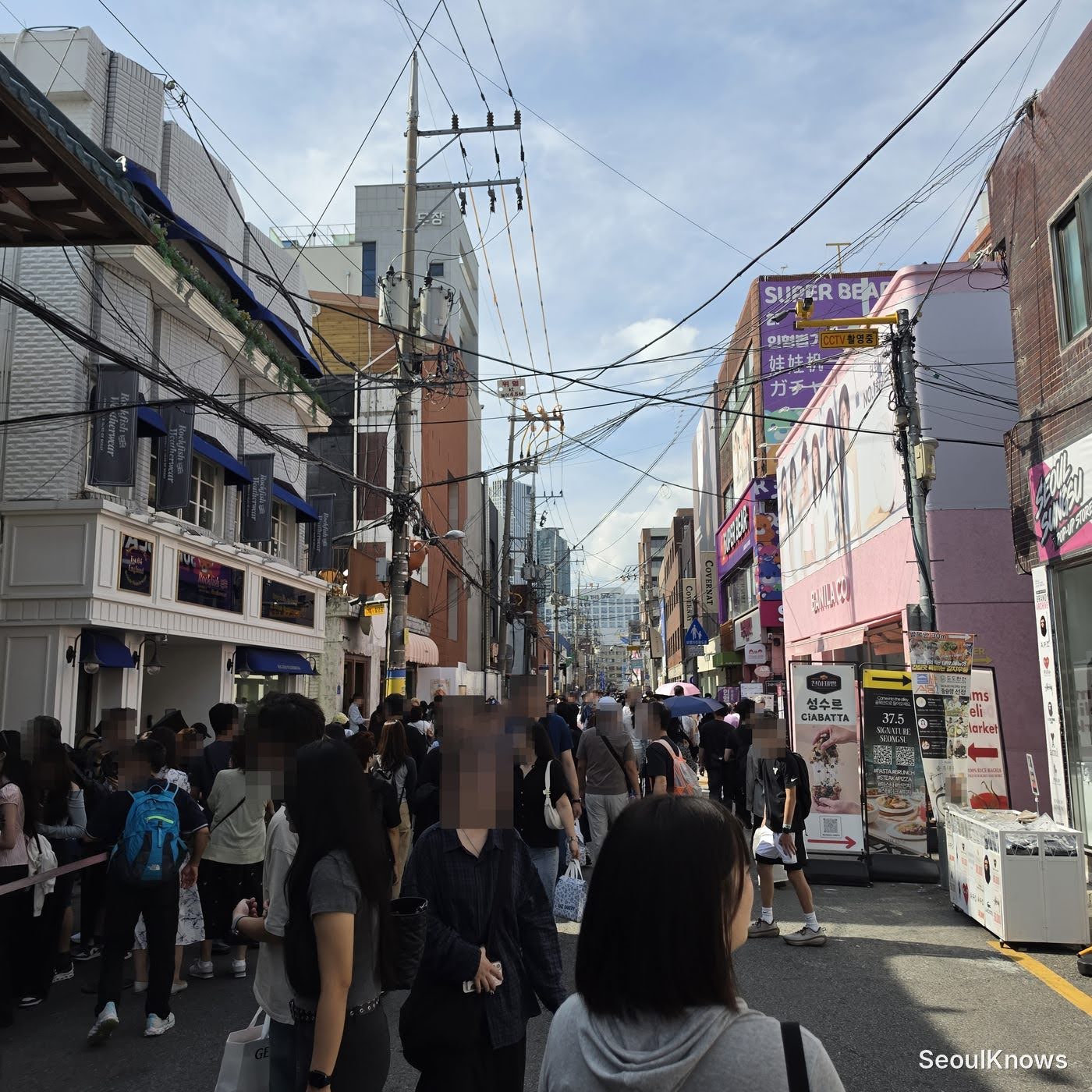
- Yeonmujang-gil is the main spine, and where the flagships and the queues are.
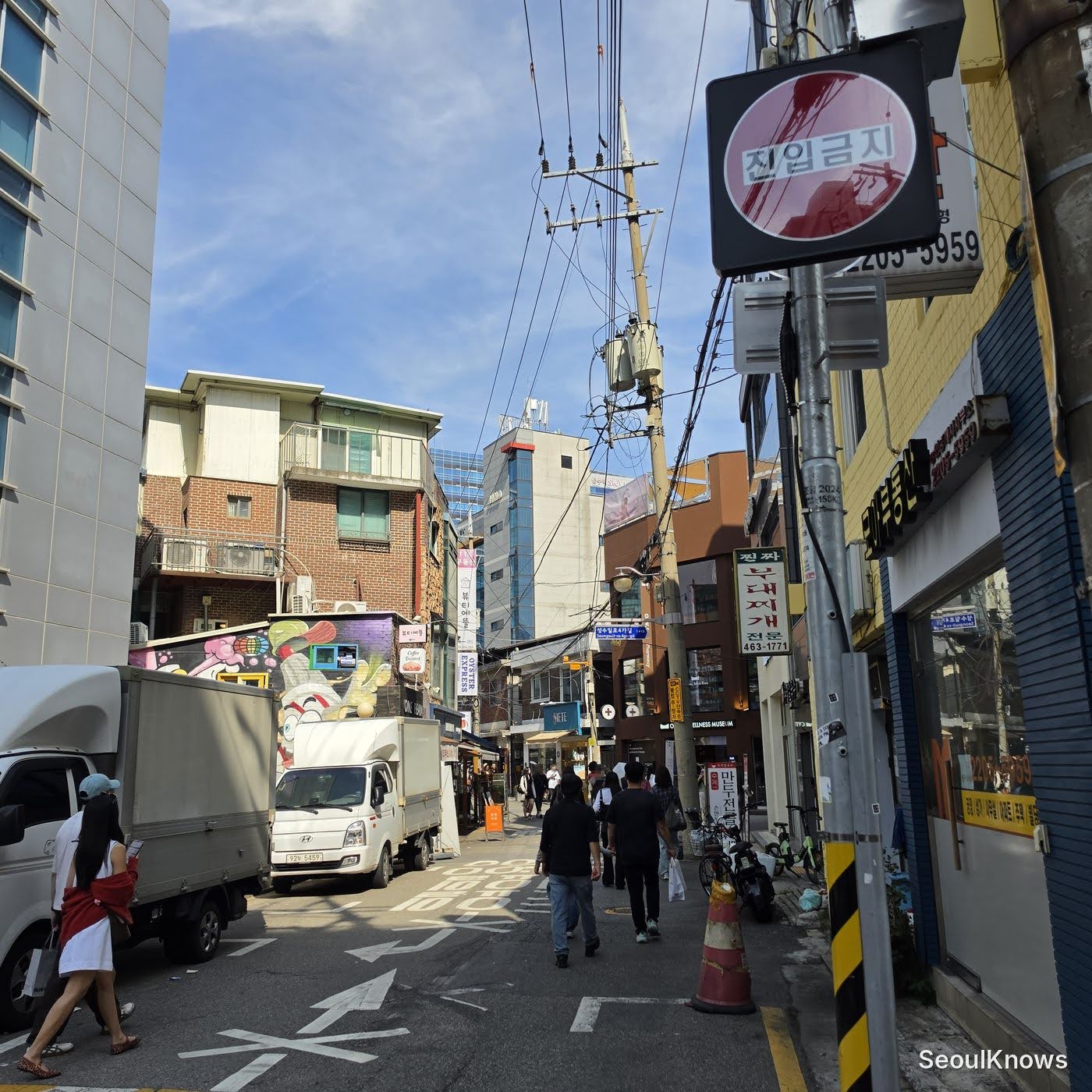
- The side alleys off it are where the older Seongsu survives, and where the crowd thins out within thirty seconds.
- Ttukseom-ro, further north, is quieter and is where Haus Nowhere sits.
We went on a Saturday afternoon, which was a mistake. On Yeonmujang-gil there was no room to step. You move with the crowd rather than through it, and queueing for the pop-ups was not realistic. Come on a weekday morning if you can. If a weekend is all you have, start before noon.


The flagships
Dior, Chanel and the rest did not put up ordinary shopfronts here. Each one treated the building itself as the display, and all of them are free to look at from the street.
Dior Seongsu
A silvered glasshouse of arched windows set behind a clipped garden, with a single enormous upholstered chair on the lawn. It is the most photographed facade in the district and you will not get a clean shot of it on a weekend. It is at 7 Yeonmujang 5-gil, about four minutes from Seongsu Station Exit 4, and it opens 11:00 to 20:00.


Haus Nowhere Seoul
Gentle Monster’s building, up on Ttukseom-ro, stacked concrete rings with a tilted block on top. Free entry, open 11:00 to 21:00, and the only one of the flagships that is genuinely an exhibition rather than a shop with good lighting. It is also the only one with parking, five basement levels of it. We have a full guide to Haus Nowhere Seoul with what is on each floor.
Musinsa, Chanel and the rest
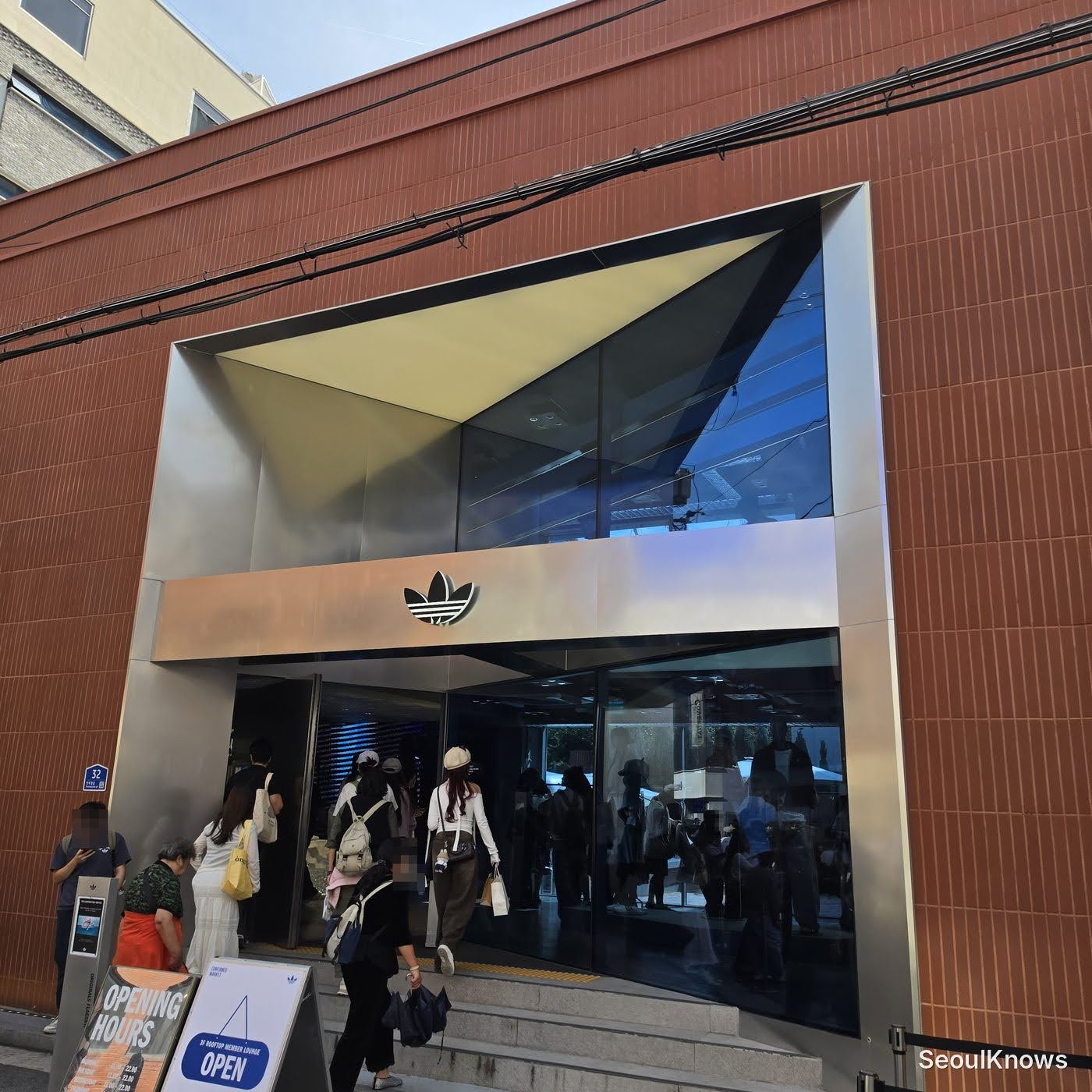
Musinsa, the Korean fashion platform, has its head office tower here and a store in a converted shed on Yeonmujang-gil. Chanel took a brick building and left the brick. Adidas built a mirrored entrance into a plain block. Blue Elephant stacked glass and steel around an old chimney. None of it asks you to come in.

Honest Seoul tips, once a week. Get the newsletter →
The pop-ups, and the one that is about to close
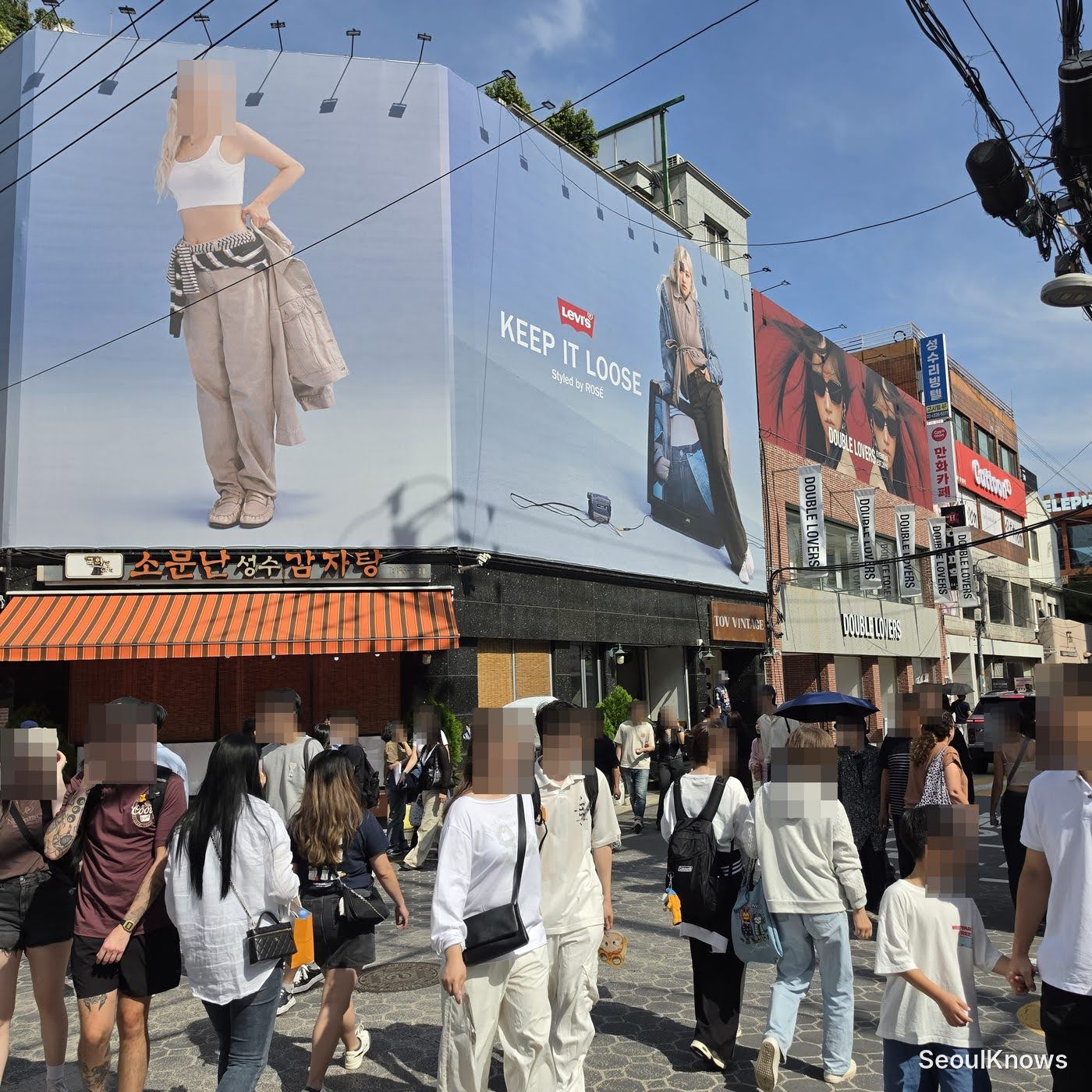
Seongsu’s second industry is the temporary store. On the day we walked it there was a limited-price fashion pop-up, a pink barn full of character goods, a gallery running an Esther Bunny show, and a queue down the pavement for instant noodles.
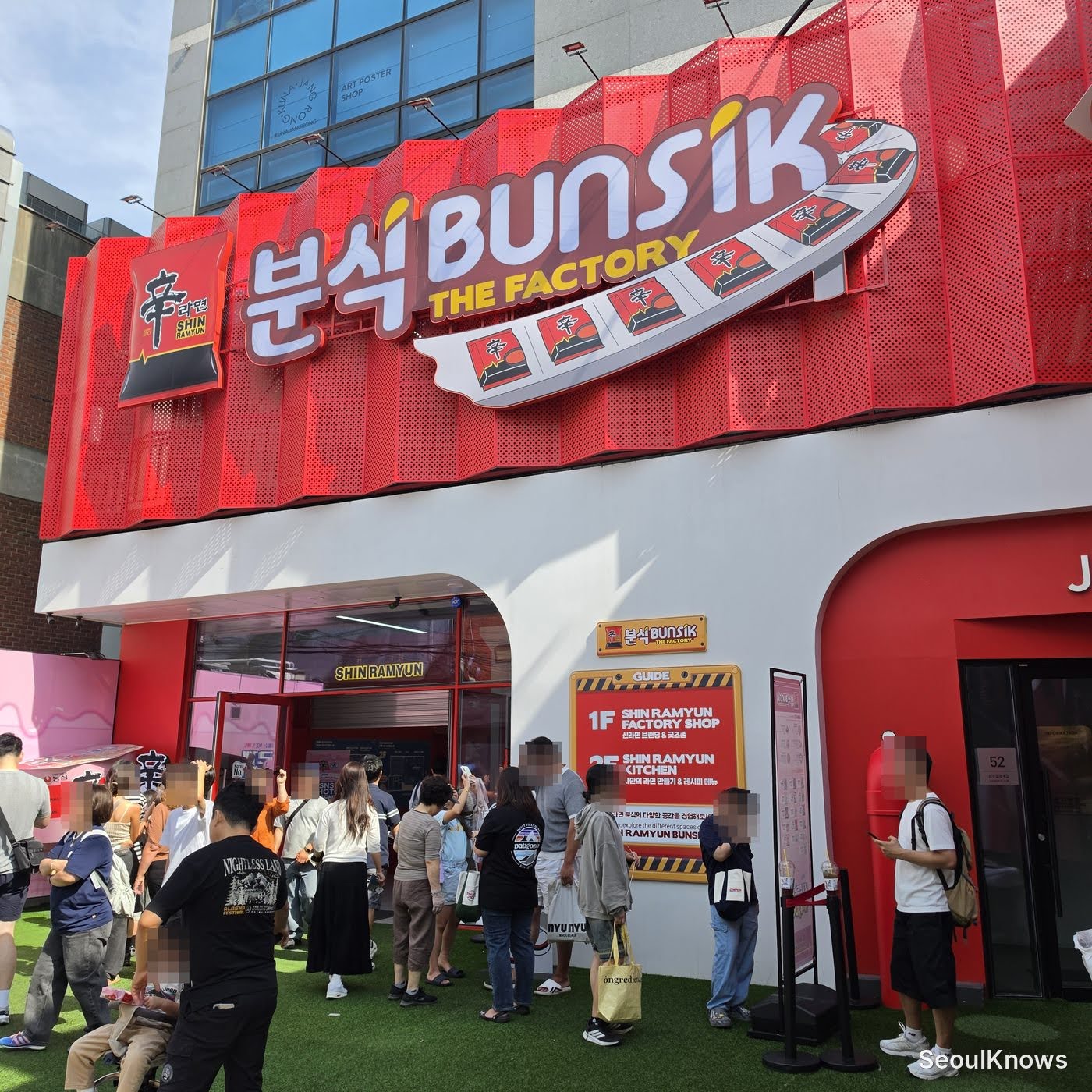

We only saw the ground floor. We had a small child with us, the wait for the second floor was not happening that day, so we looked around and left. It is the one thing on this page we want to go back for.

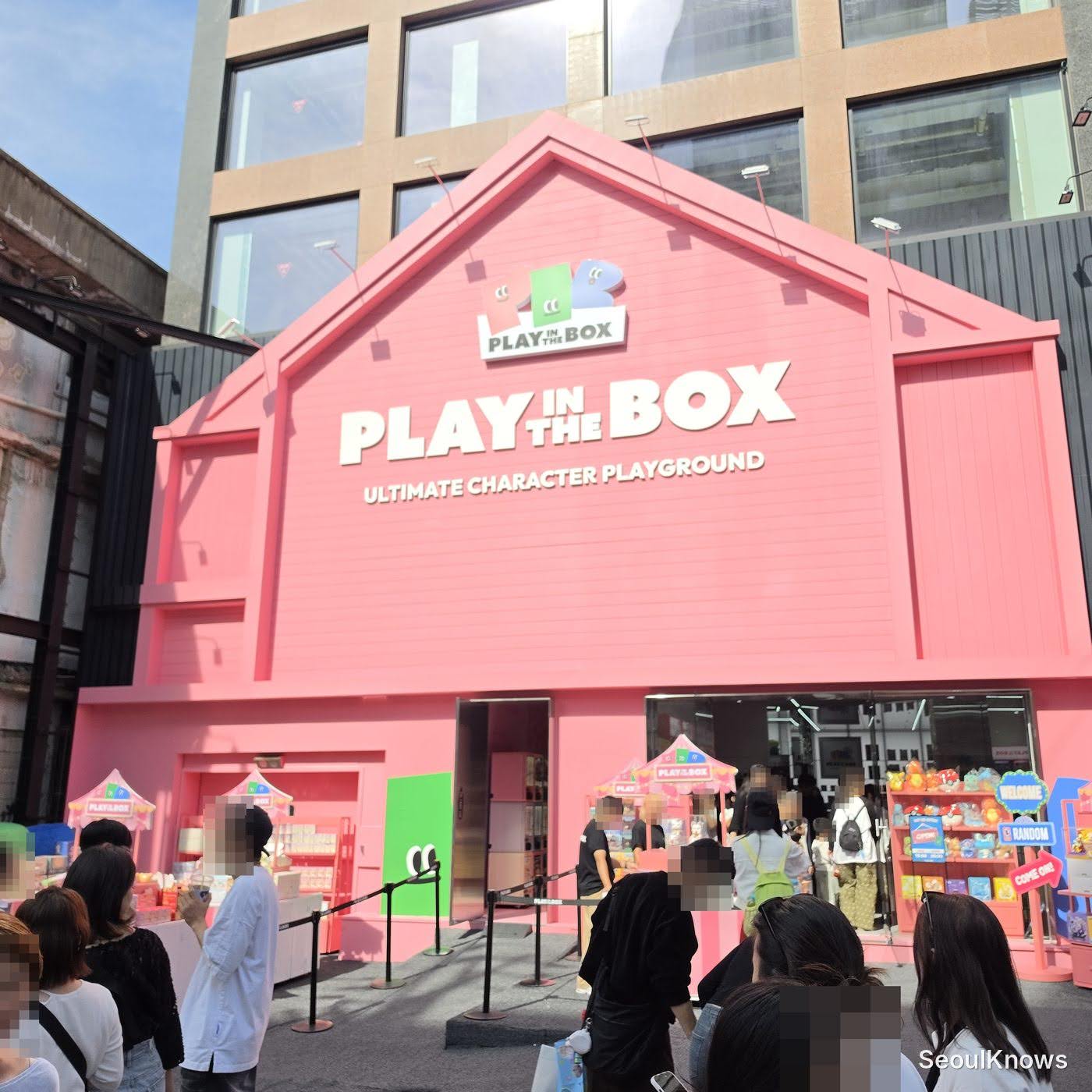
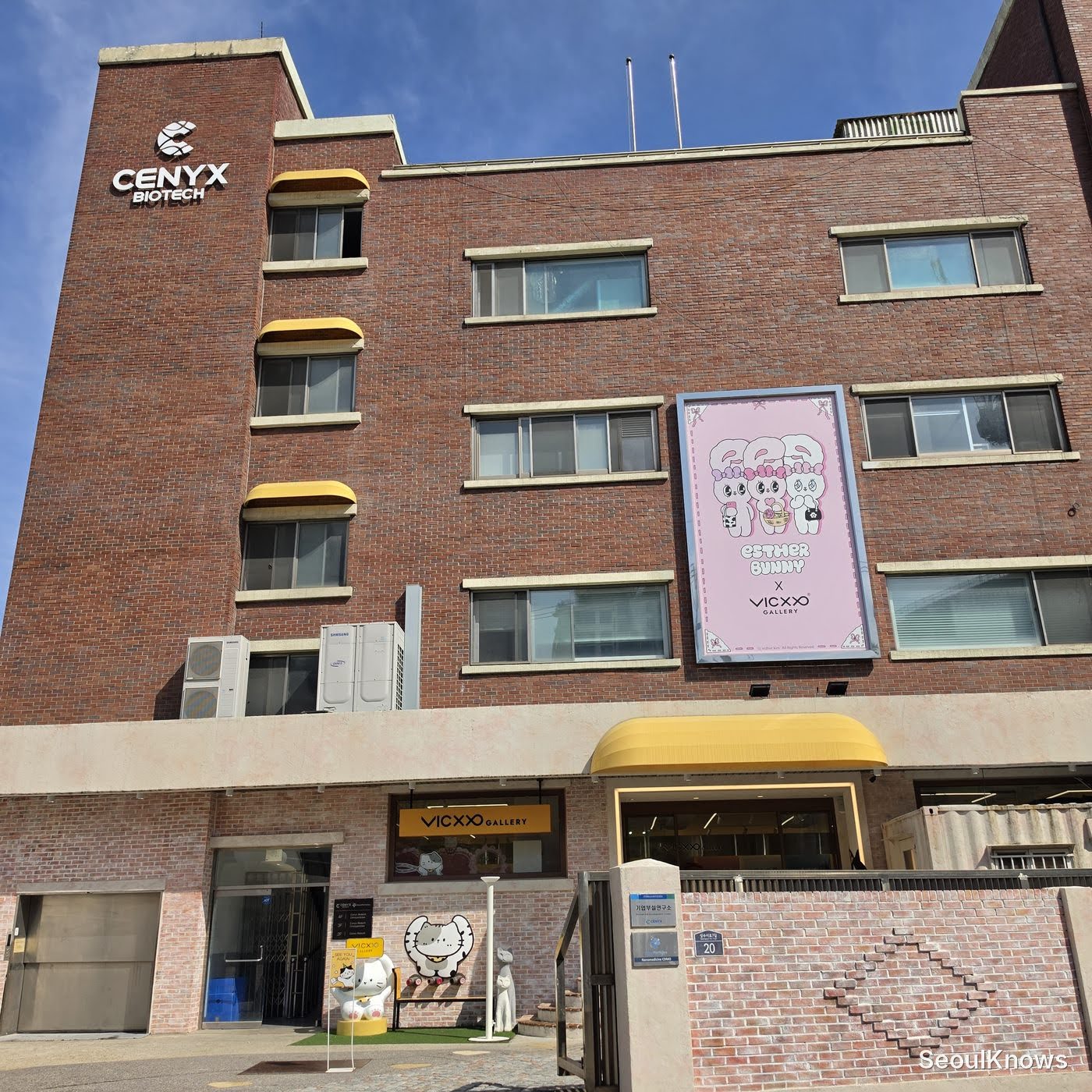

At least half of these will be something else by the time you visit.
The Seongsu that was already there
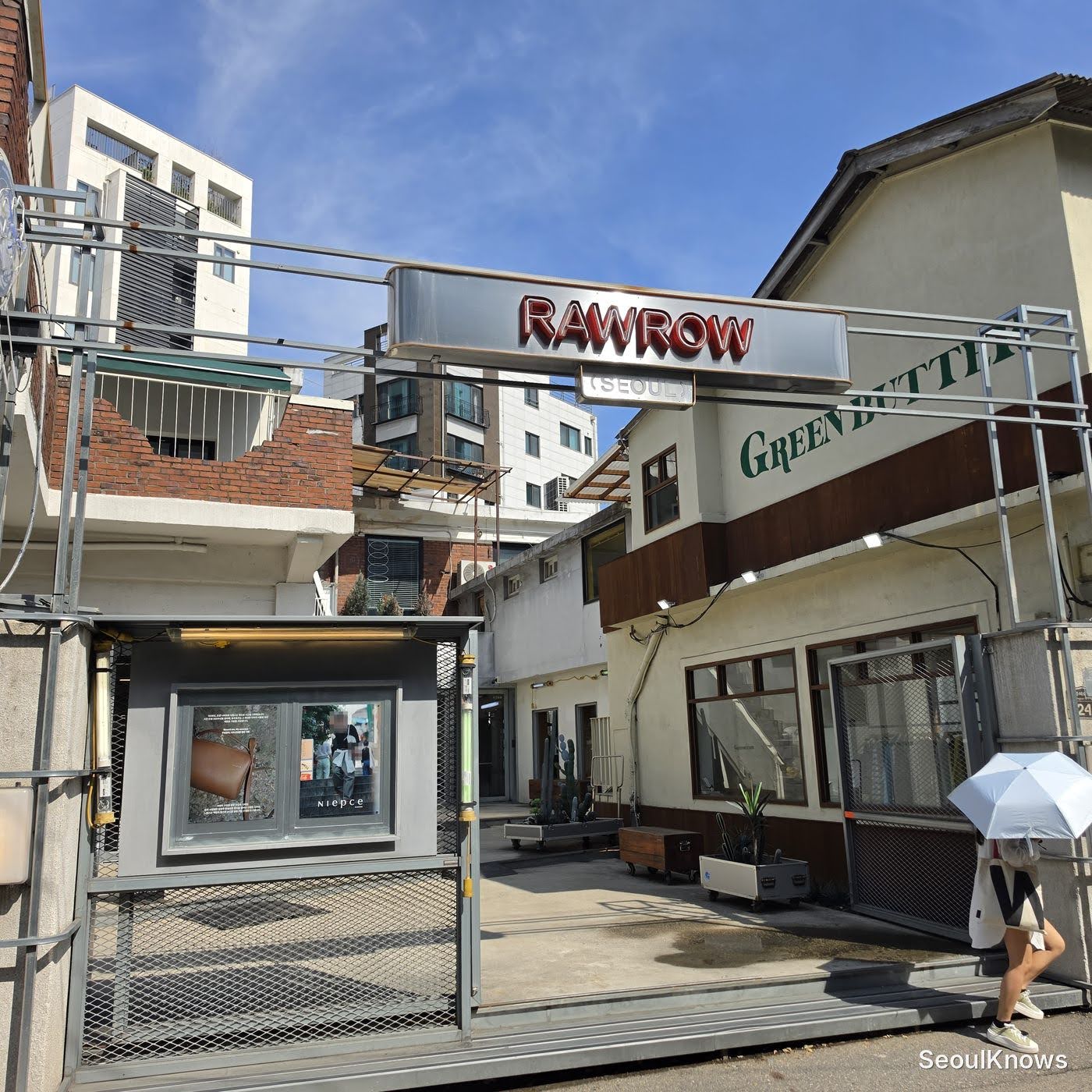
Step one street off the spine and the temperature drops. The alleys still have car workshops, printers, old signage and restaurants with no English menu. A gukbap place and a Korean bag brand can share a wall with a cafe charging 8,000 won for filter coffee.
Follow the crowd and you will see four flagships and a queue. Turn off the main street and you see the district the flagships came for.

Small shopping, which is better than the big shopping
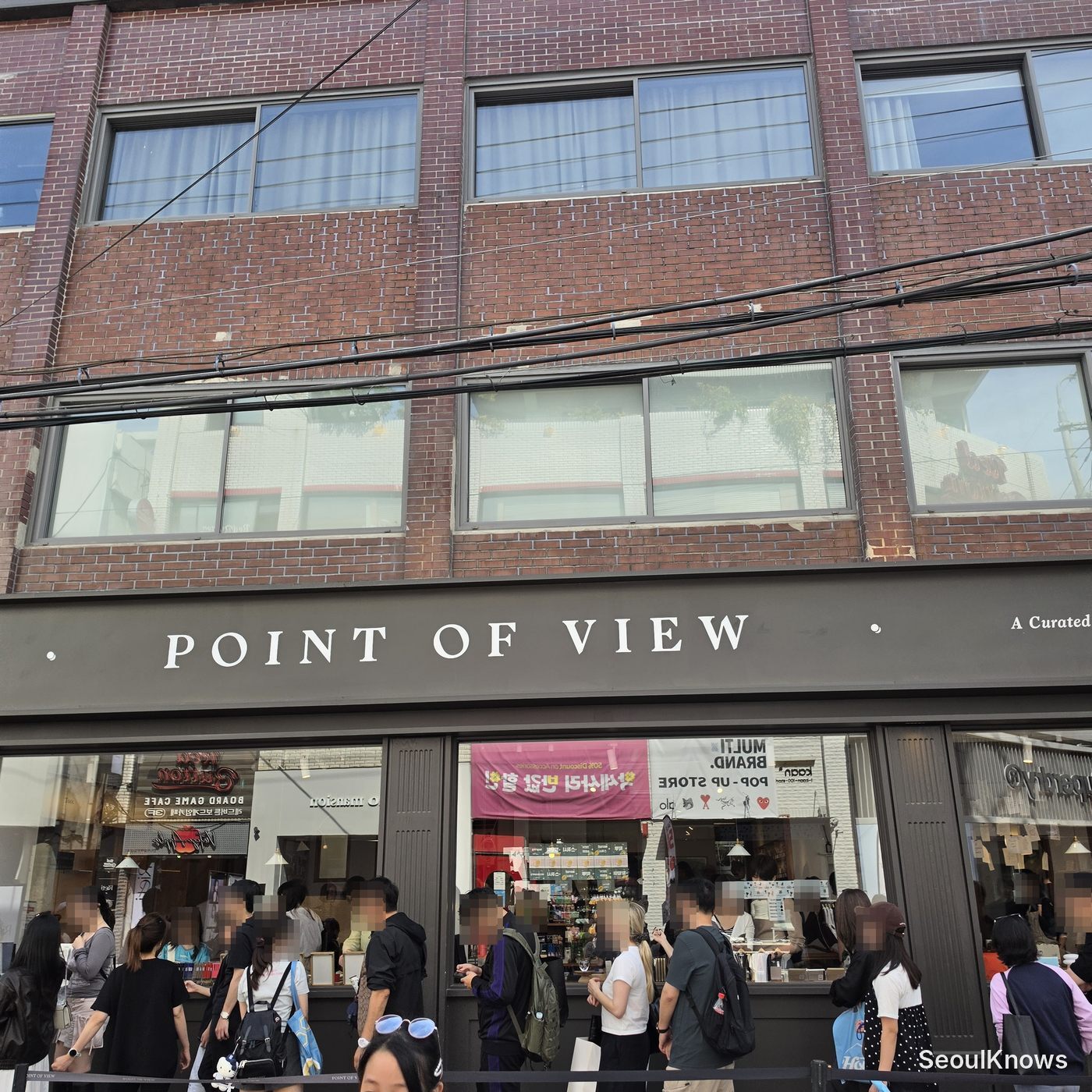
The flagships are the same flagships you have at home. Shop the small stuff instead: Point of View for stationery and homeware, the accessory stalls on the pavement, and the shops selling phone cases, character figures and kitchenware at prices that have nothing to do with the street outside.
Phone cases are the souvenir to buy. Cheap, flat in a suitcase, and not sold at home.


Where we stopped: Daelim Changgo, the cafe that lit the fuse
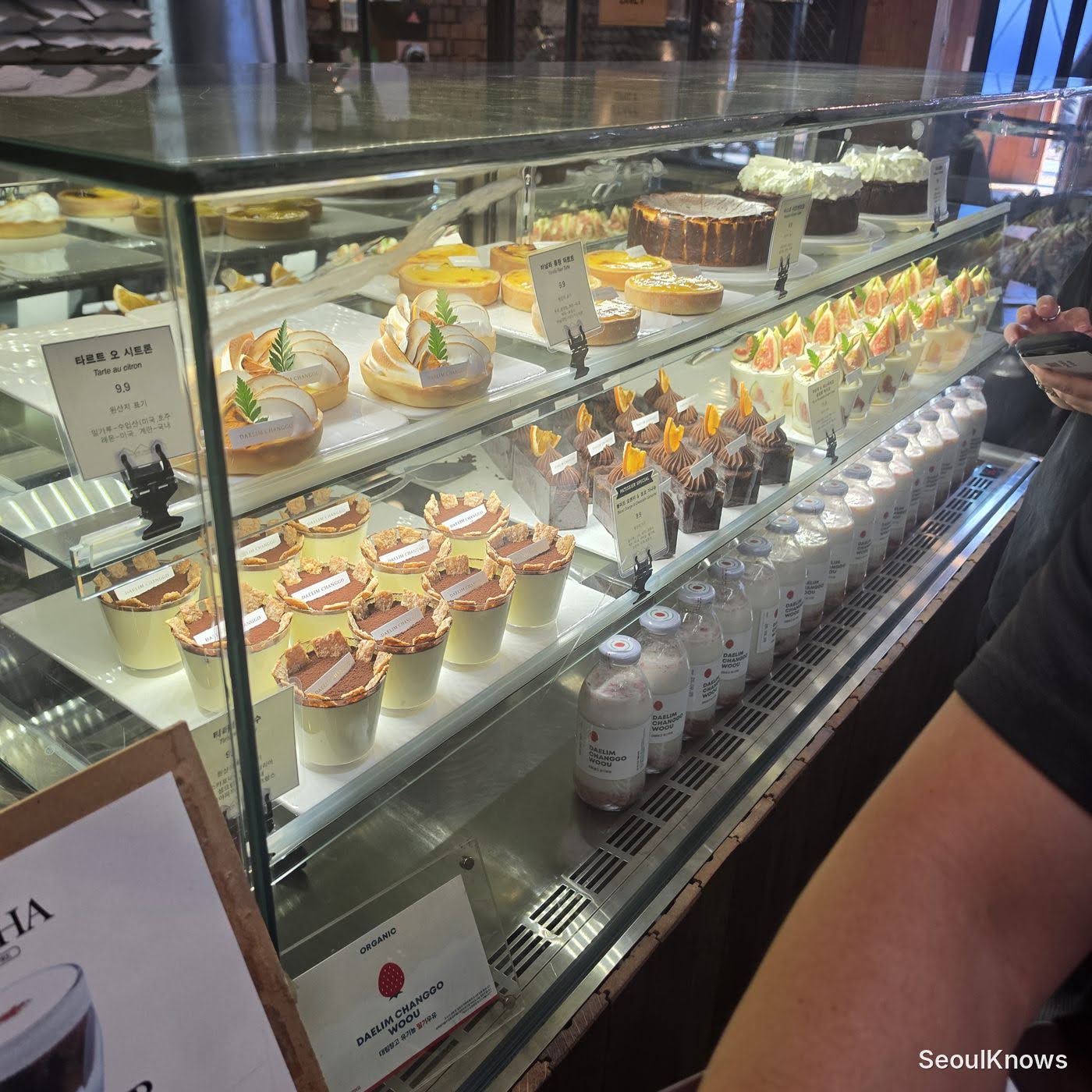
Seongsu as you see it today started in this room. Daelim Changgo is a 1970s rice warehouse, and instead of knocking it down somebody opened a gallery cafe inside it and left the shell alone. It worked, and over the following years other places copied the move one at a time, a cafe here, a studio there, until the whole district was flagships and coffee in old sheds. Every converted warehouse you walk past in Seongsu is downstream of this one.
A brick shell thirty metres long, steel trusses overhead, raw concrete at one end, a bakery counter down the middle.
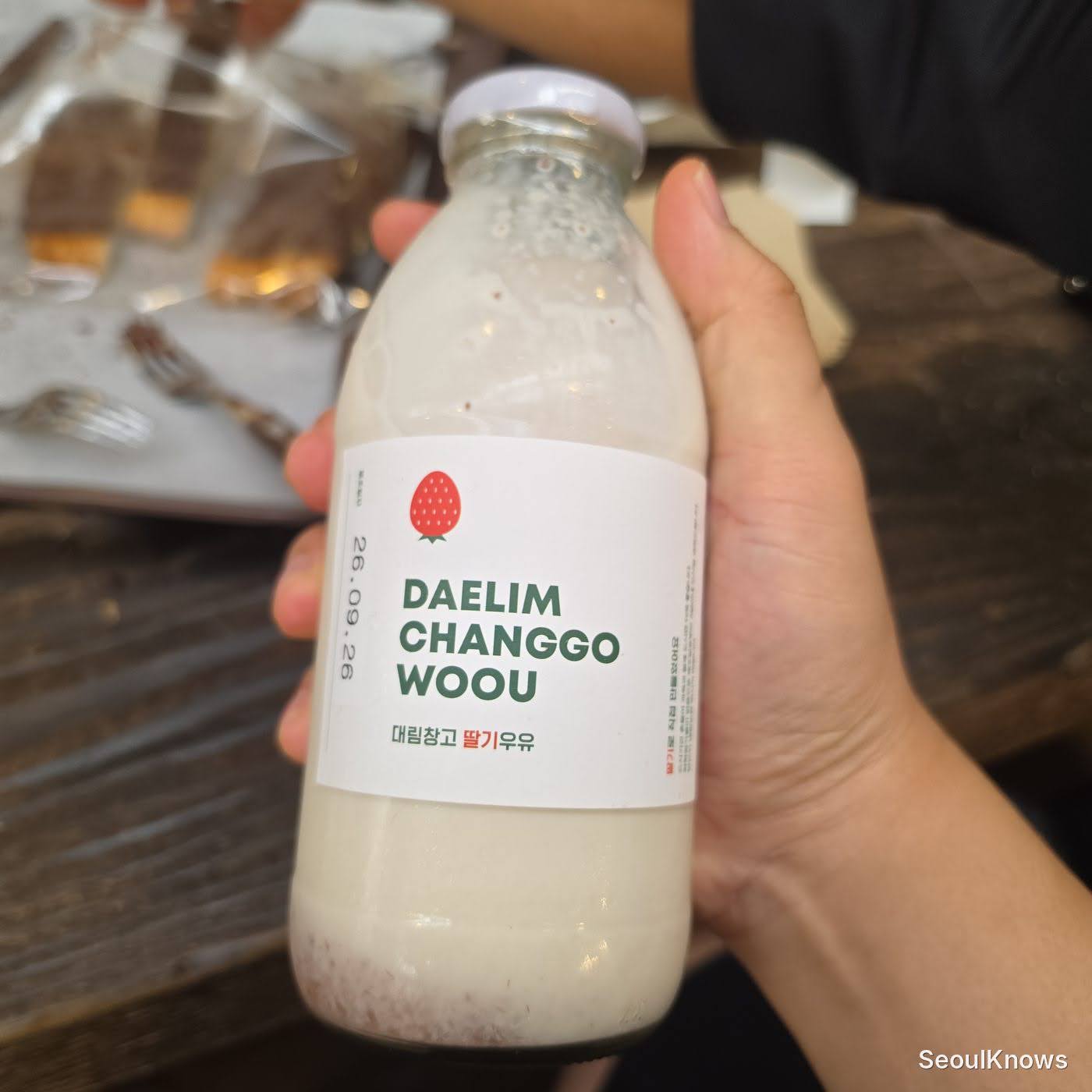
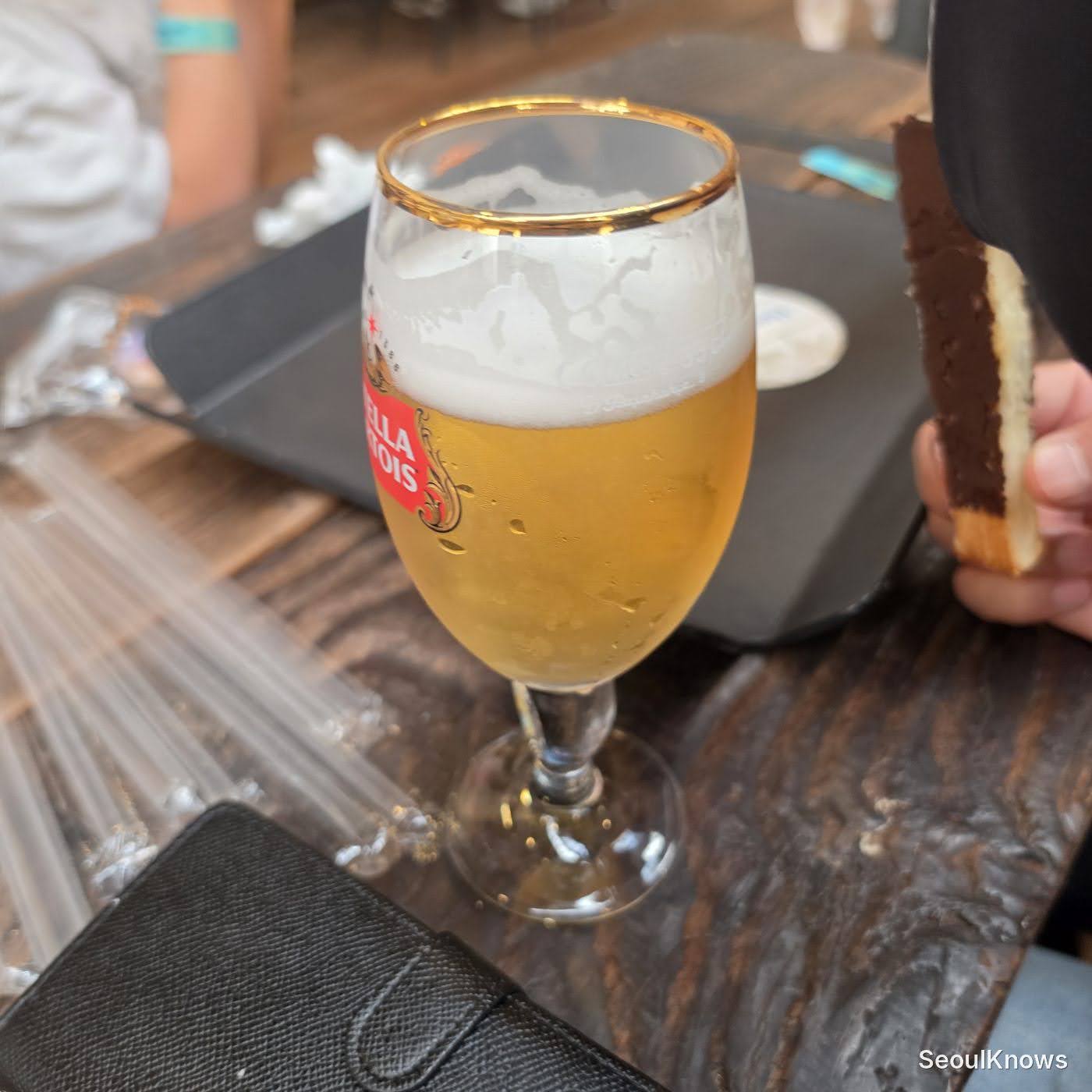
There is a 1,000 won pass at the door. So many people were walking in to photograph the room and walking straight out that the cafe started charging to enter. You get it back: the 1,000 won comes off your bill when you order. Drinks are roughly 7,000 to 8,500 won, there is beer as well as coffee, and the bakery counter is large.
It is loud and full at weekends. Go at opening or go on a weekday. The address is 78 Seongsui-ro.




Doing Seongsu with kids
Pavements are wide on the main streets and uneven in the alleys. Most converted sheds are single storey with level entrances. The obstacle is the crowd, not the surface: on a Saturday afternoon a stroller on Yeonmujang-gil is slow work.
Quick facts
- Getting there: Seongsu Station, Line 2. Exit 4 for Dior and the main shopping street.
- How long: half a day on foot, comfortably
- Busiest: Saturday and Sunday afternoon. Weekday mornings are calm.
- Parking: street parking is effectively impossible at weekends. Haus Nowhere has five basement levels.
- Cash: not needed. Cards work everywhere, including the pavement stalls.
- Good for: architecture, shopping, pop-ups, cafes, photographs
- Less good for: anyone who dislikes crowds, and anyone expecting a historic district. Seongsu is about ten years old in its current form.
Looking for the old Seoul version of this? Ikseon-dong in Jongno 3-ga is a block of 1920s hanok alleys, and Time Out named the district the world’s coolest neighbourhood in 2026.
Frequently asked questions
What is Seongsu-dong known for?
Former shoe factories and warehouses converted into cafes, flagship stores and pop-ups, in Seongdong-gu, on Line 2 just north of the Han River.
Is it worth visiting if I am not shopping?
Yes. The architecture, the conversions and the window installations are the main event. Most of what is interesting is free and on the street.
How do I get to Seongsu from Myeongdong or Hongdae?
Line 2 runs direct from both. From Hongdae it is a straight ride on the same line; from Myeongdong, change at Euljiro 3-ga.
How long do I need?
Half a day covers the main streets, one flagship and one cafe. A full day if you want Seoul Forest as well.
When is the quietest time to go?
Weekday mornings, shortly after shops open at 11:00. Saturday afternoon is the busiest window of the week.
Is Seongsu good with children?
It is walkable and flat, but it is a shopping district rather than a day out for kids. Pair it with one indoor stop and keep the visit to an afternoon.
The bottom line
Seongsu is the best hour of walking in Seoul right now, and it will be a different district in three years. Come for the buildings rather than the brands, turn off the main street at least twice, and put one sit-down stop in the middle. Do not try to see everything.
Written by WY, a Seoul-based local sharing honest, first-hand guides to Korea. Every guide here is a place I’ve actually been to, written from my own visit and my own photos. More about me →