
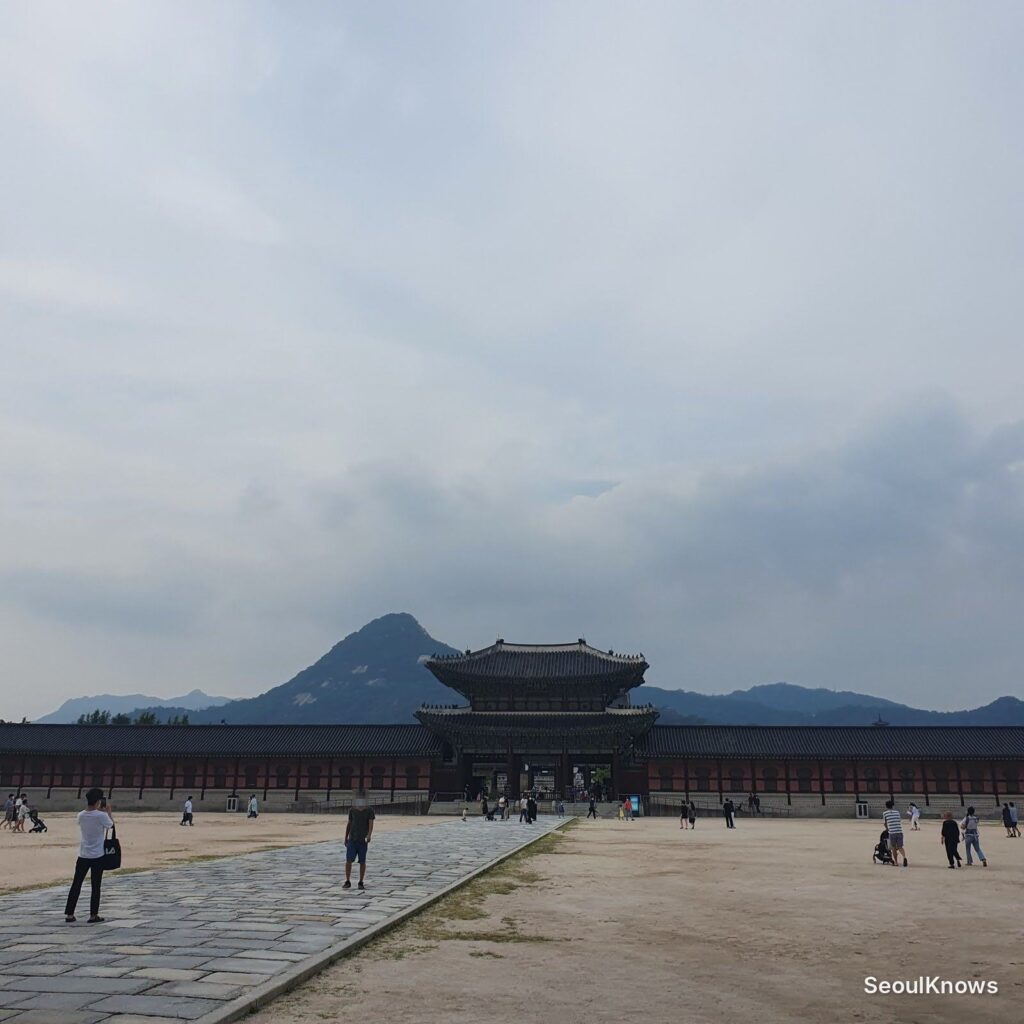
Gyeongbokgung Palace is the biggest of Seoul's five royal palaces and the one most visitors see first. The short version: adult tickets are 3,000 won, entry is free if you wear hanbok, the palace is closed on Tuesdays, and the guard changing ceremony runs at 10:00 and 14:00. Give yourself 90 minutes to two hours inside.
I have been twice: once on a clear summer afternoon, and again this autumn on Chuseok Day with my two nieces, in rented hanbok and in the rain. This guide covers how to get there, tickets and who gets in free, opening hours, the ceremony, a simple route, and what a wet day is like.
Gyeongbokgung at a glance
- Tickets: adults (19 to 64) 3,000 won; free for foreign visitors 18 and under, everyone 65 and over, Korean nationals 24 and under, and anyone in hanbok
- Hours: 09:00 to 17:00 (Nov to Feb), to 18:00 (Mar to May, Sep to Oct), to 18:30 (Jun to Aug); last entry one hour before closing
- Closed: every Tuesday
- Guard ceremony: 10:00 and 14:00, about 20 minutes, free to watch
- Nearest stations: Gyeongbokgung (Line 3) Exit 5, Gwanghwamun (Line 5) Exit 2, Anguk (Line 3) Exit 1
- Time needed: 90 minutes to 2 hours for the main halls
What is Gyeongbokgung?
Gyeongbokgung was built in 1395 as the main palace of the Joseon dynasty, three years after the dynasty was founded. It burned during the Japanese invasions of 1592, stood in ruins for about 270 years, and was rebuilt in the 1860s. Much of it was torn down again in the early 20th century, and restoration has been going on since 1990. What you walk through today is a mix of 19th-century halls and careful reconstructions, set in front of Bugaksan mountain.
The layout runs in a straight line from south to north: Gwanghwamun, the main gate on the street; Heungnyemun, the second gate; Geunjeongjeon, the throne hall; then the king's and queen's quarters, with the Gyeonghoeru banquet pavilion and the Hyangwonjeong pond to the side.
How to get to Gyeongbokgung
Gyeongbokgung Station (Line 3), Exit 5 is the closest. An underground passage takes you toward the west side of the palace, by the National Palace Museum, so you can walk in without crossing a road. This is where we finished our day: the station has a wide, vaulted concourse with seats along the sides.
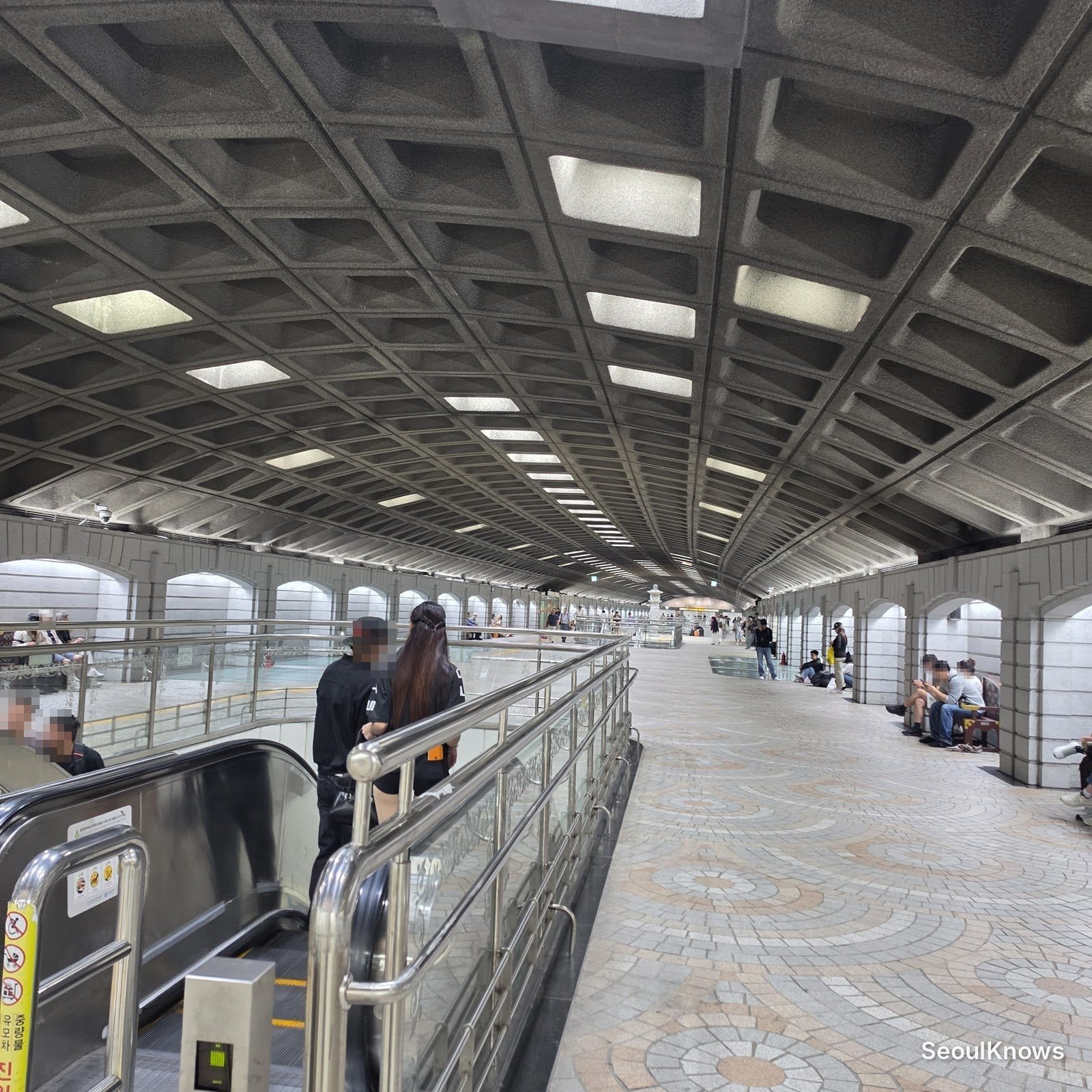
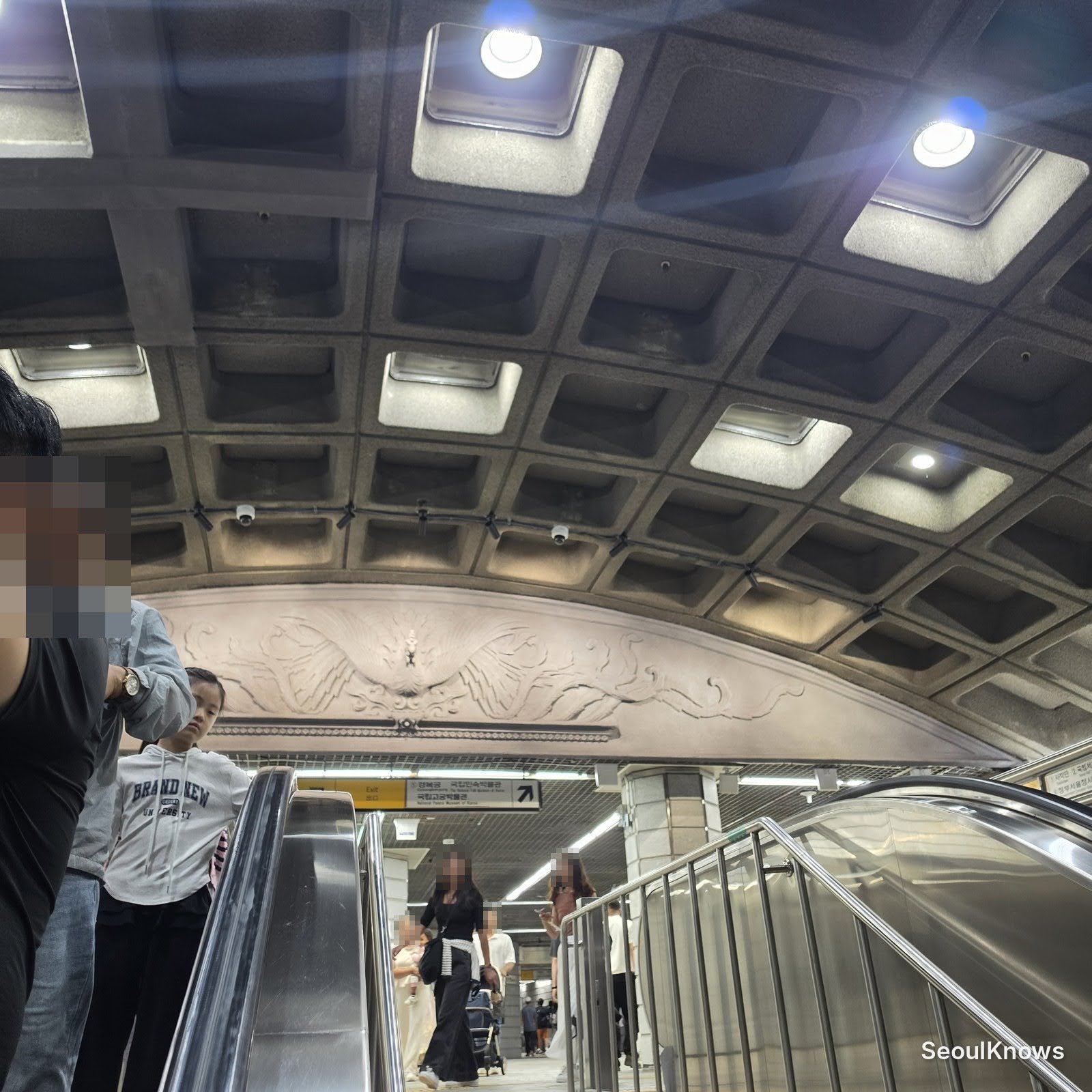
Gwanghwamun Station (Line 5), Exit 2 puts you on Gwanghwamun Square, about 10 minutes' walk north to the main gate. Use it if you want to walk up the square and see the gate head-on.
Anguk Station (Line 3), Exit 1 is on the east side, near Bukchon and Insadong, and it is where most hanbok rental shops are. That is how we came: from Anguk, west along the main road past the Dongsipjagak corner tower to Gwanghwamun, about 10 to 15 minutes on foot.
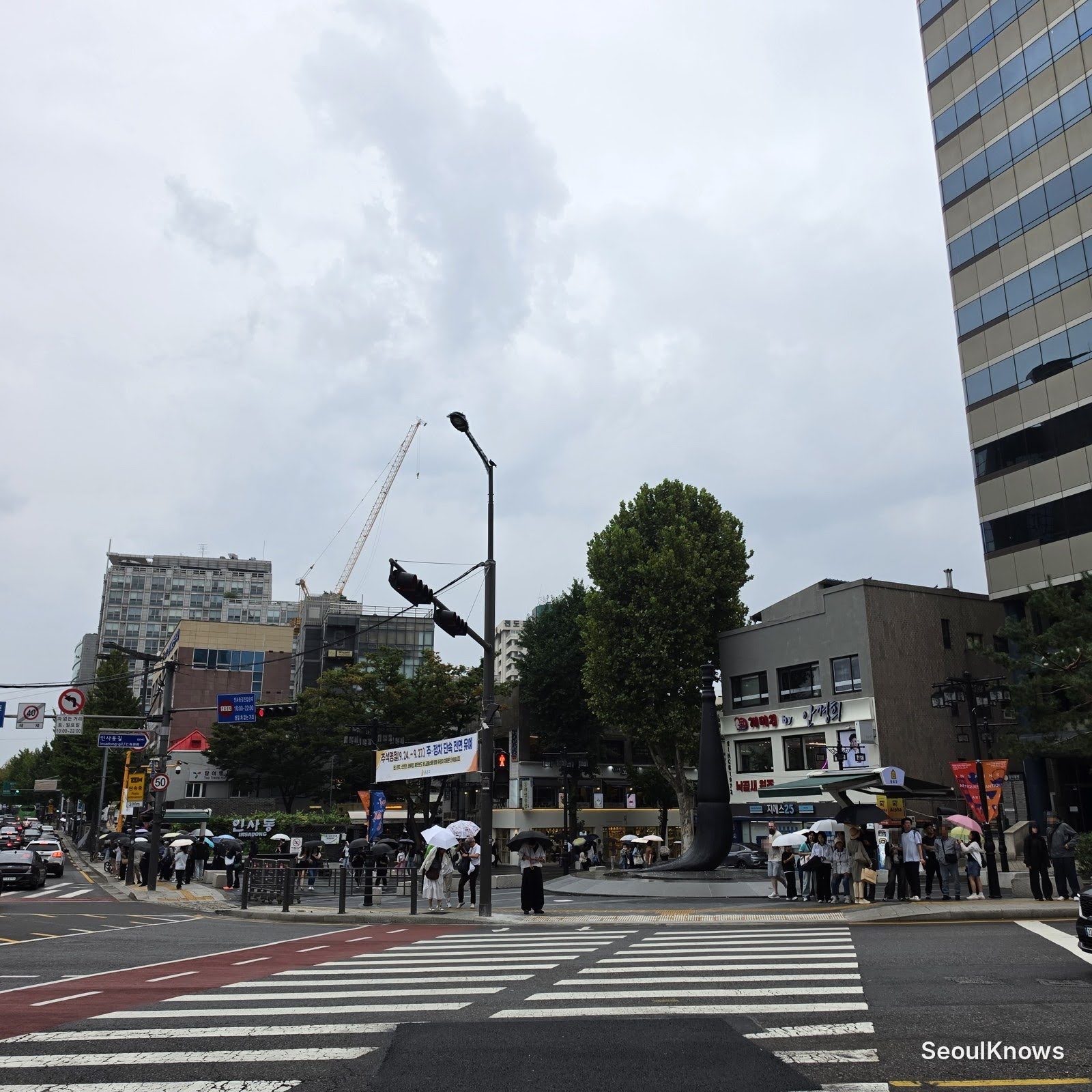
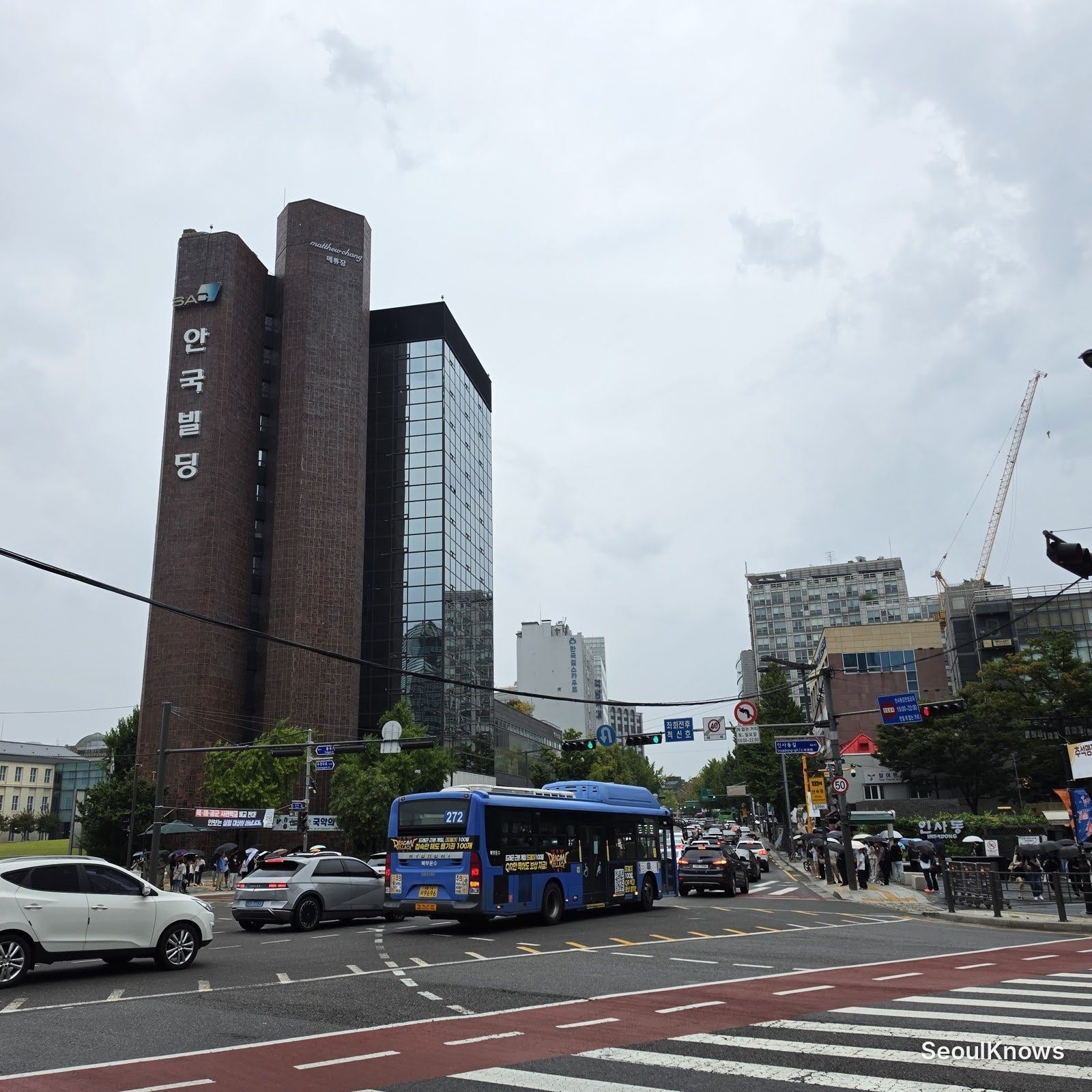
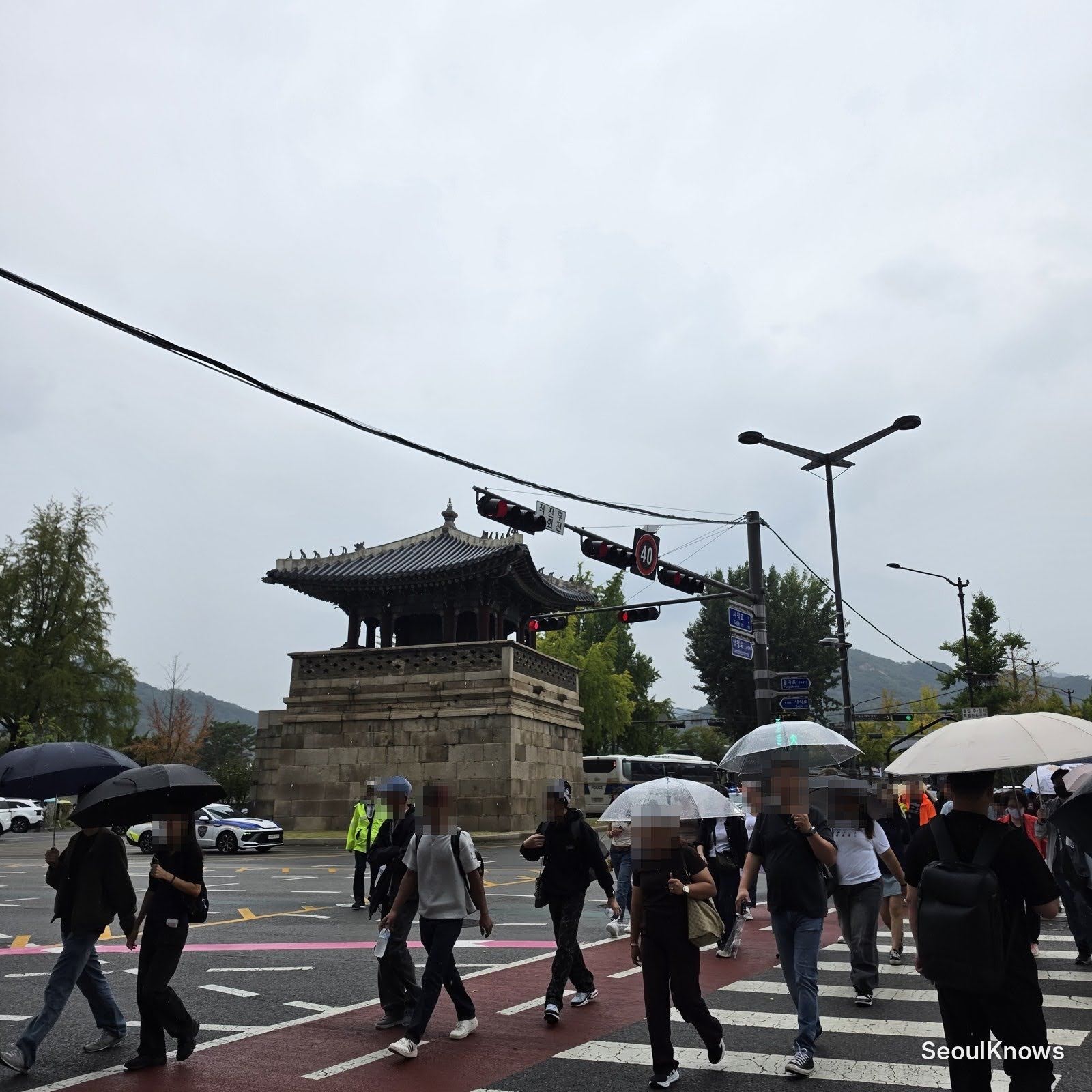
Address: 161 Sajik-ro, Jongno-gu, Seoul (서울 종로구 사직로 161). There is a paid car park on the west side, but the area is busy on weekends and the subway is easier.
Tickets, prices and who gets in free
The gate fee is small: 3,000 won for adults aged 19 to 64. A lot of people pay nothing at all:
- Foreign visitors aged 18 and under, and everyone 65 and over
- Korean nationals aged 24 and under
- Anyone wearing hanbok, Korean or foreign (see the rules below)
- Everyone on the last Wednesday of each month (Culture Day)
- Everyone during free periods, such as the Seollal and Chuseok holidays and the autumn Korea Grand Festival (in 2026 it ran 29 October to 15 November; my free palace admission guide has the details)
We went on Chuseok Day, and the sign at the entrance read "Today is Free Admission". You still go through the gate line; you just skip the ticket office. Our nieces would have been free anyway because of their age, so for children, renting hanbok is about the experience, not the ticket.
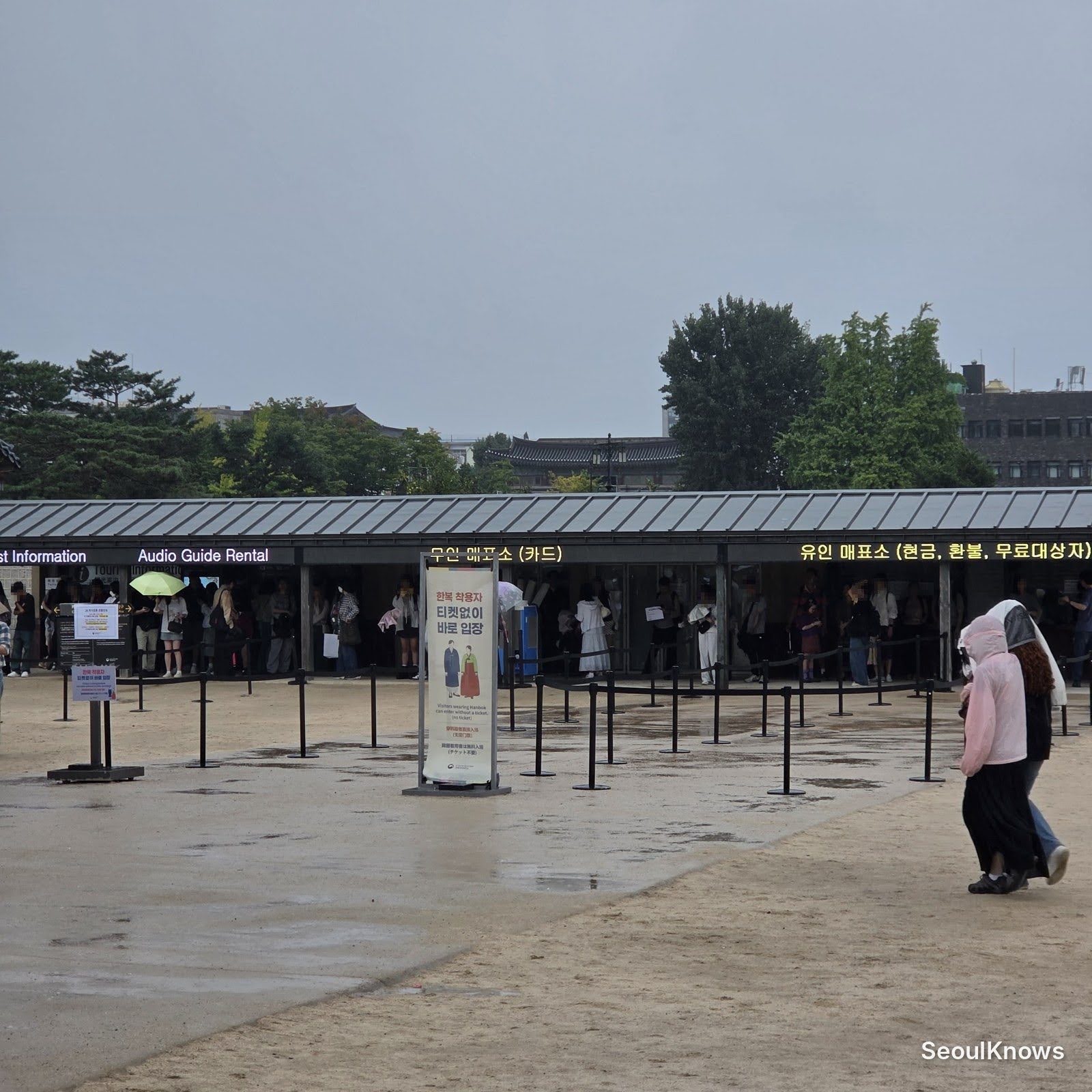
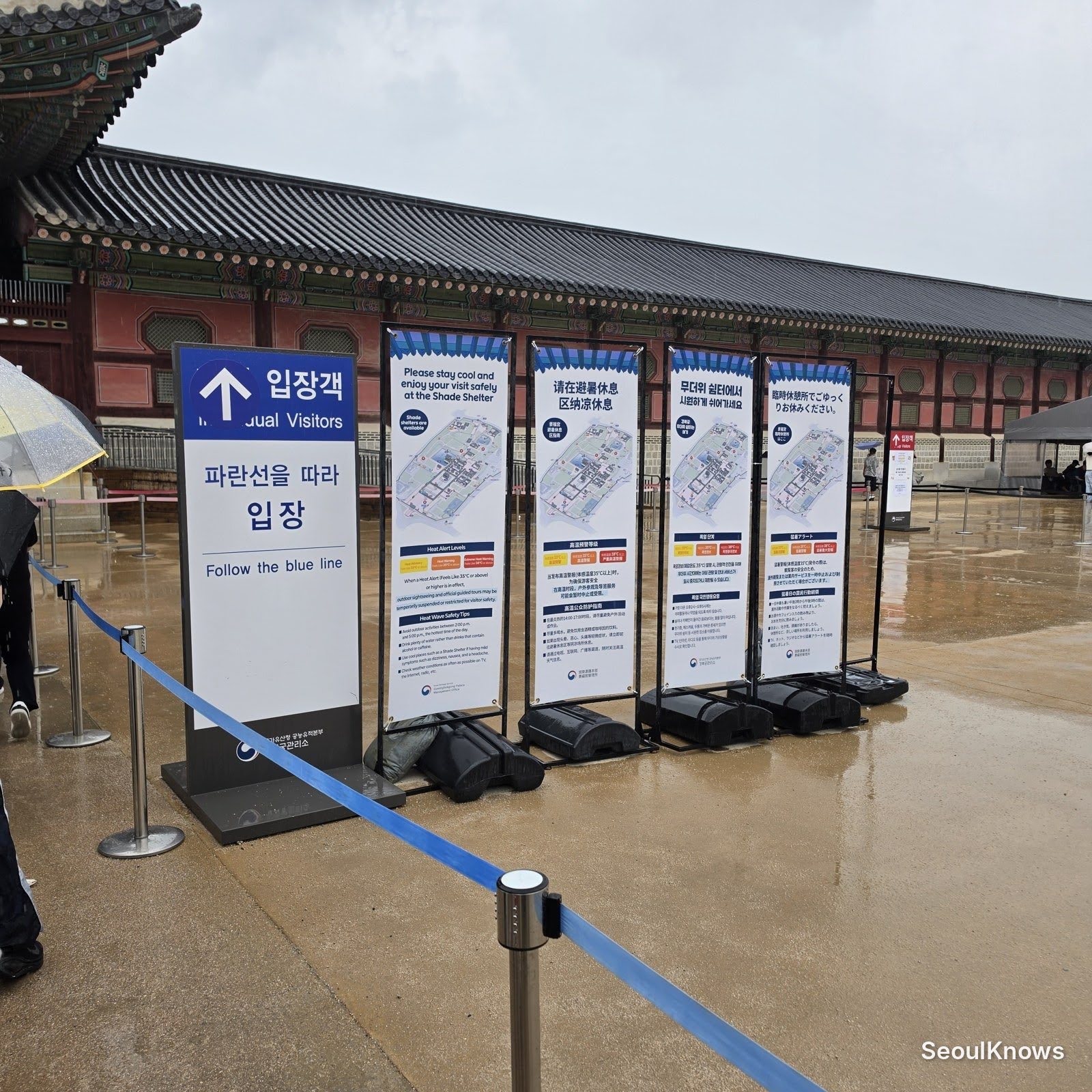
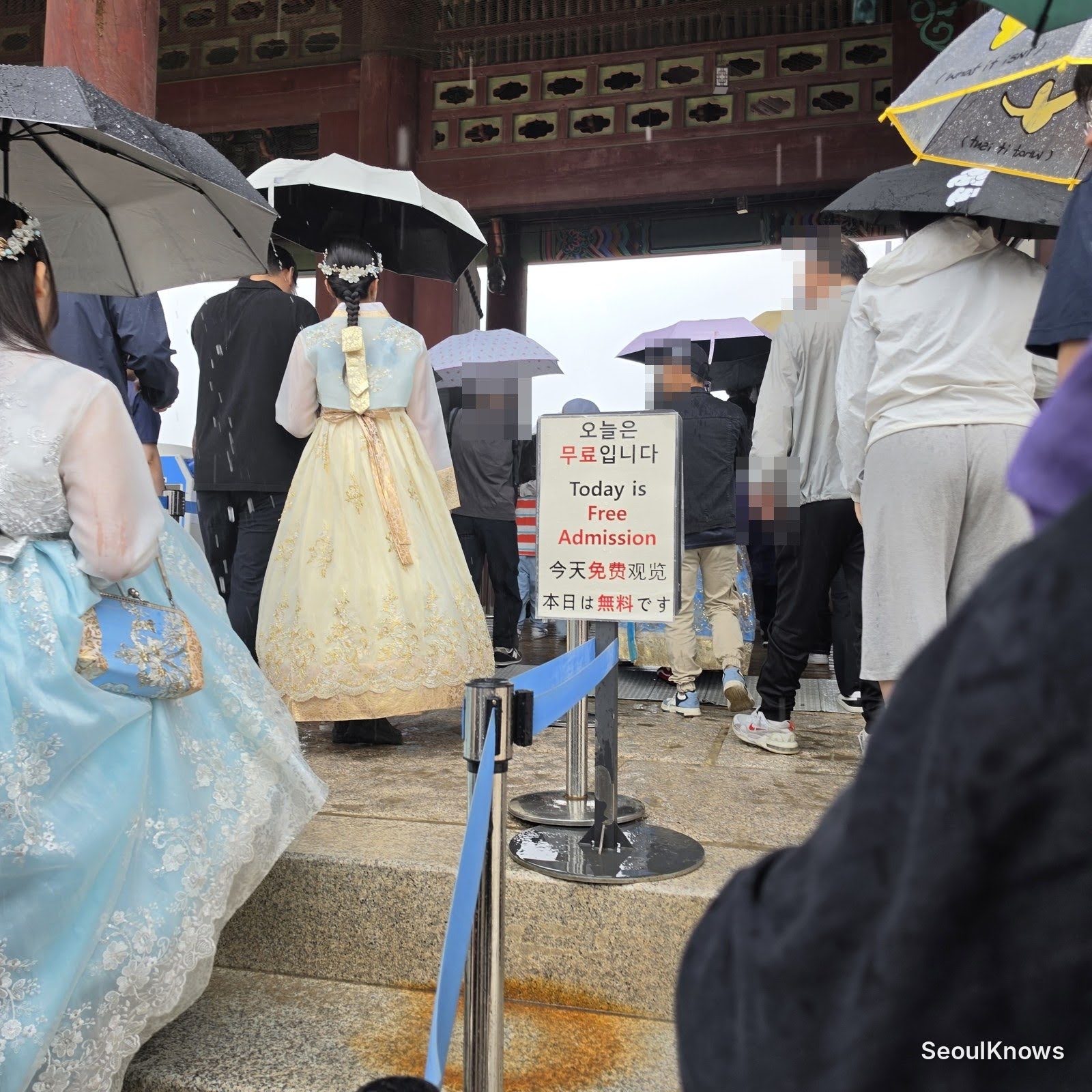
The ticket office is at the west side of the courtyard in front of Heungnyemun, with ticket machines that have an English menu. You can pay by card or cash. The audio guide rental desk is in the same building. Note that a fee increase for the royal palaces has been discussed for 2027, but as of November 2026 no new prices or start date have been announced.
Hanbok free entry: what counts
Hanbok has given free entry to the four palaces, Jongmyo Shrine and the Joseon royal tombs since 2013. The check is simple: you need a jeogori (jacket) plus a skirt or trousers. Traditional and modern everyday hanbok both count, and since 2019 you can wear either men's or women's styles. A hanbok-style one-piece dress counts only if it has a proper overlapping jeogori collar. A jeogori over jeans or a T-shirt, or an outer robe worn alone over normal clothes, does not. Rental shop outfits pass without trouble. I wrote a separate hanbok rental guide with prices and what to expect.
Honest Seoul tips, once a week. Get the newsletter →
Opening hours and closing day
- January, February, November, December: 09:00 to 17:00
- March to May, September, October: 09:00 to 18:00
- June to August: 09:00 to 18:30
- Last entry is one hour before closing. In winter, enter by about 15:00 if you want time for the whole route.
- Closed every Tuesday. On a Tuesday, go to Deoksugung instead, which is open.
The Royal Guard Changing Ceremony
Guards in bright Joseon-era uniforms change shifts at 10:00 and 14:00, for about 20 minutes, in the area between Heungnyemun and the stone terrace in front of Gwanghwamun. There is also a short gate guard routine at Gwanghwamun at 11:00 and 13:00, and an open training session at 09:35 and 13:35. It is free and you do not need a ticket, because it happens outside the ticket gate. There is no ceremony on Tuesdays, and it can be cancelled in heavy rain or extreme heat. Stand along the rope in front of Heungnyemun about 10 minutes early for a clear view.
Gwanghwamun and the first courtyard
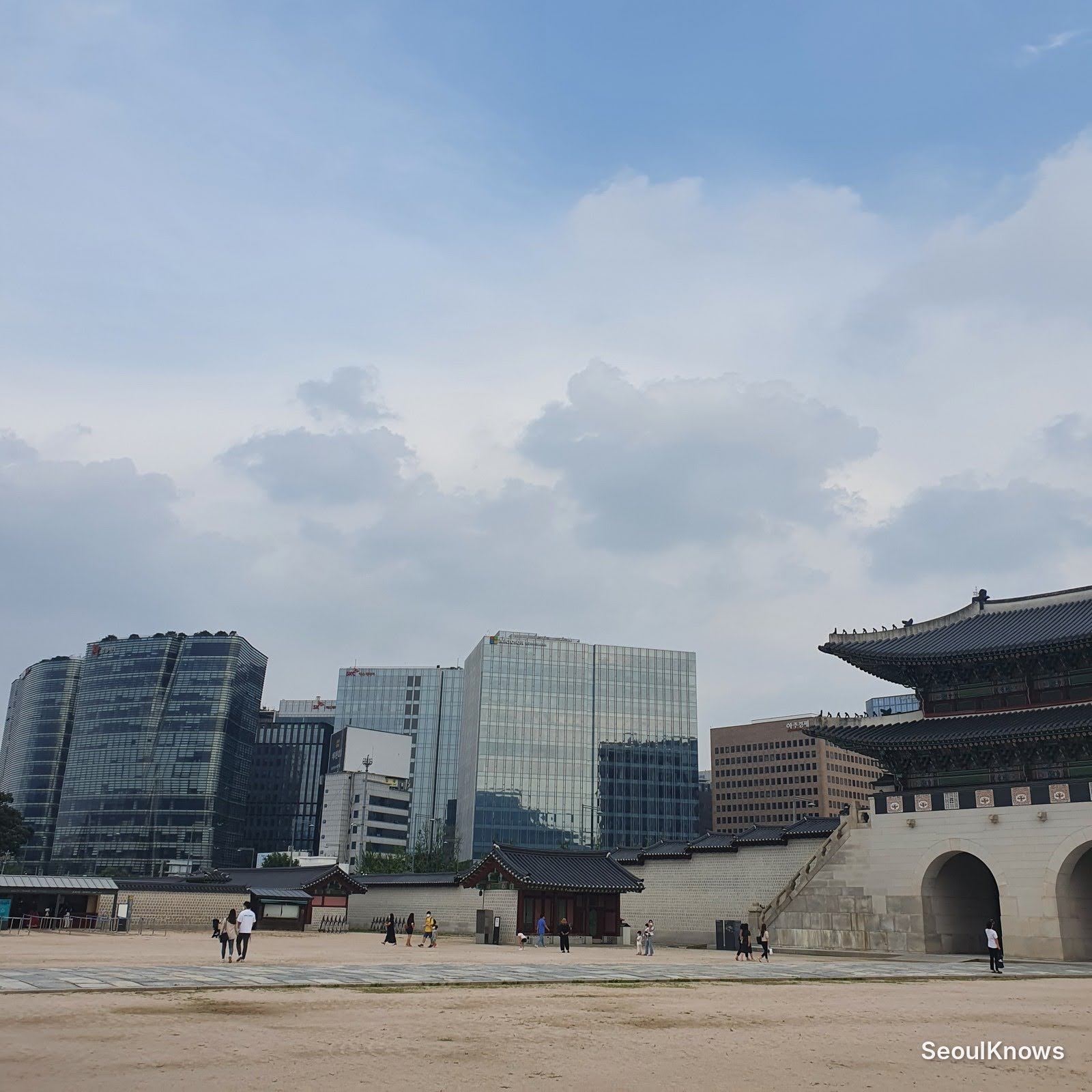
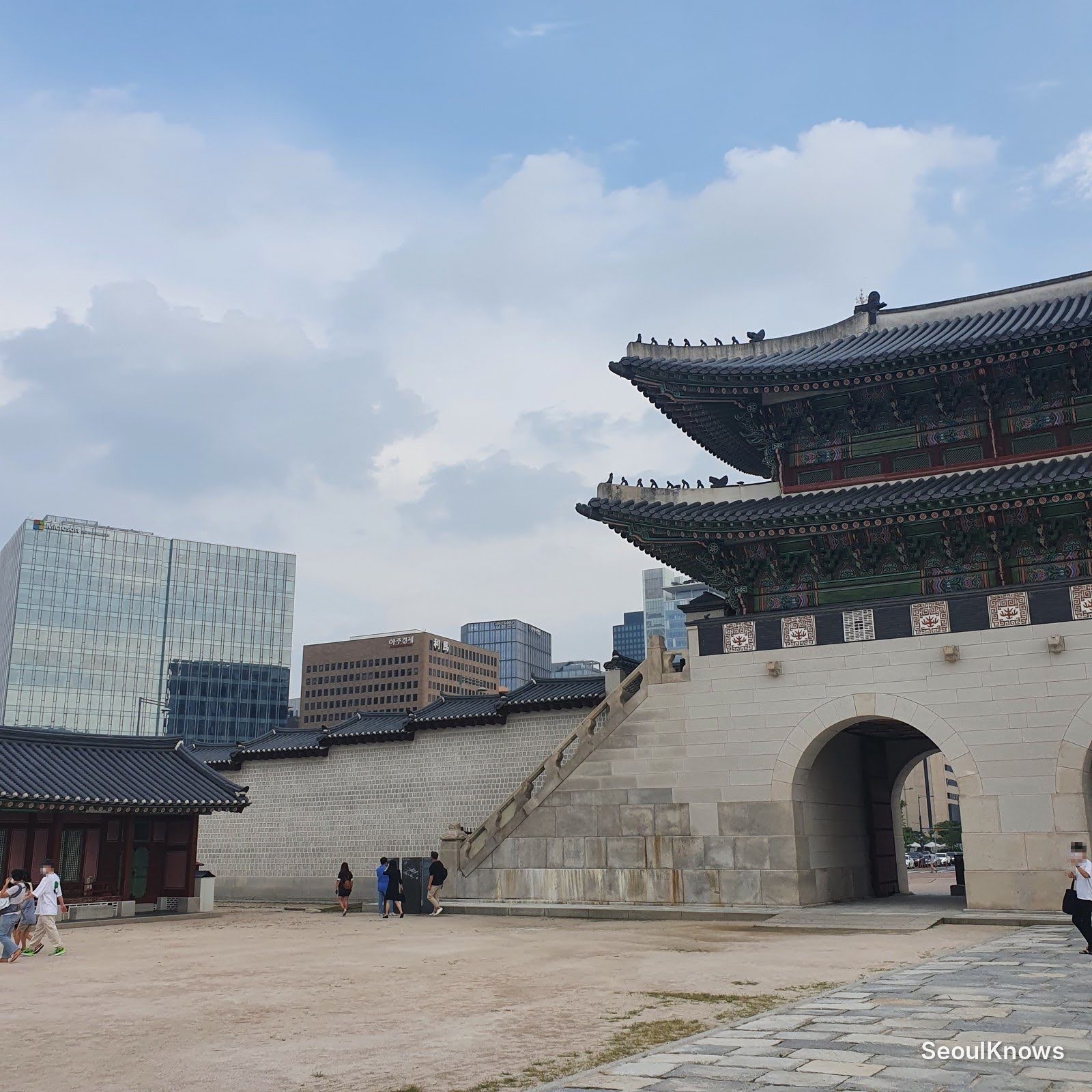
You can walk through Gwanghwamun and into the first courtyard without a ticket; tickets are checked at Heungnyemun. On my summer visit the courtyard was bright and almost empty in the late afternoon, and it is the best place to see the size of the gate from the inside, with the office towers of central Seoul rising just beyond the wall.
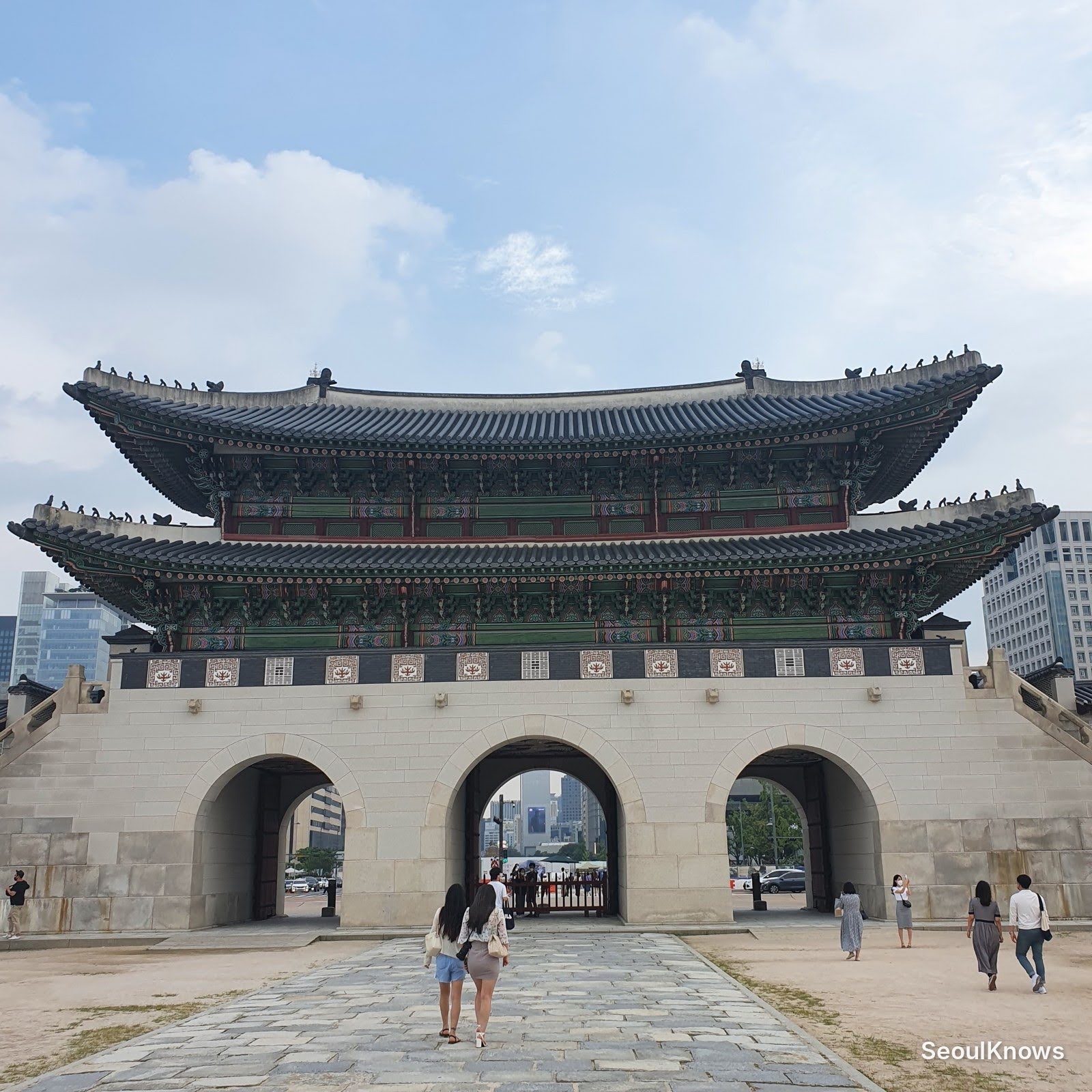
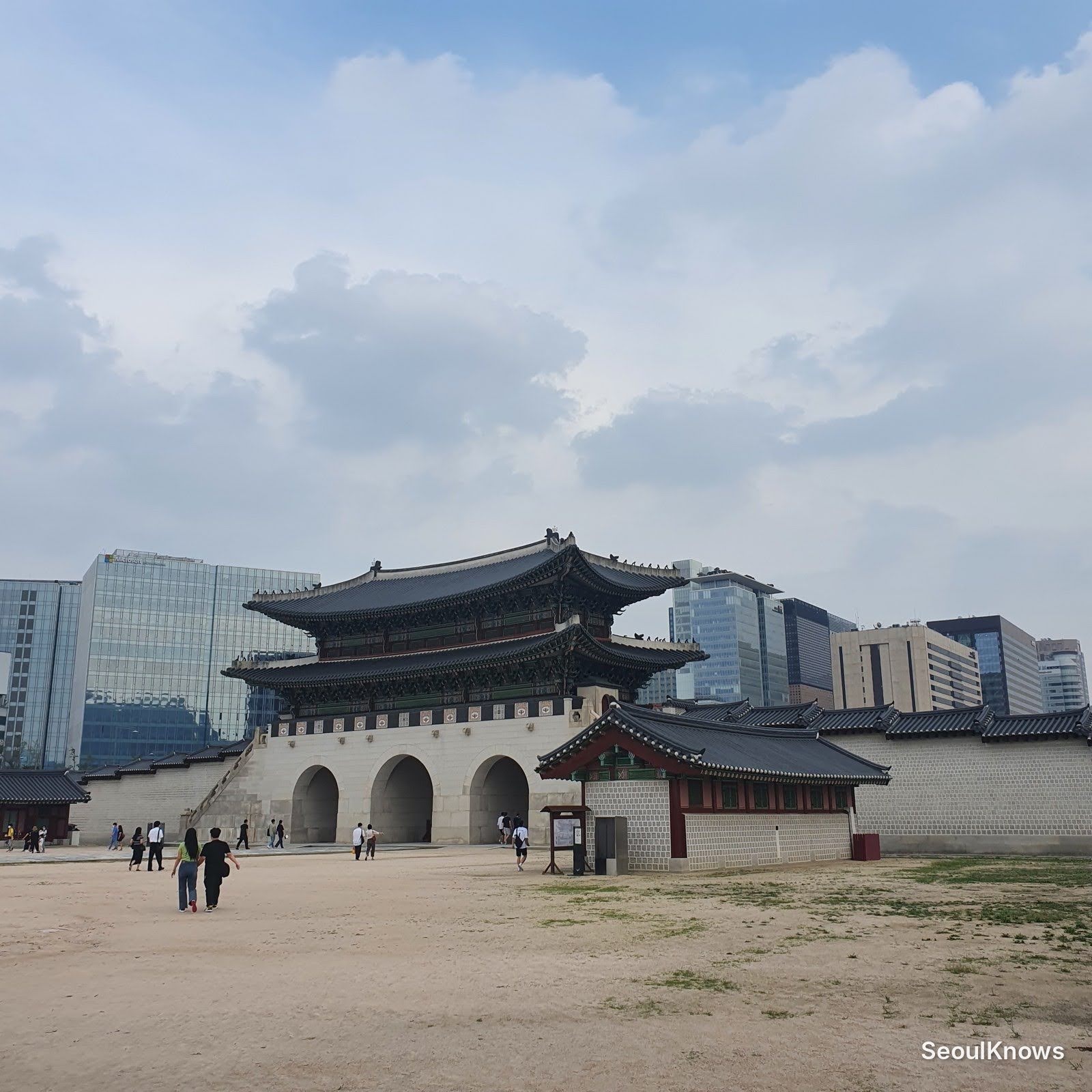
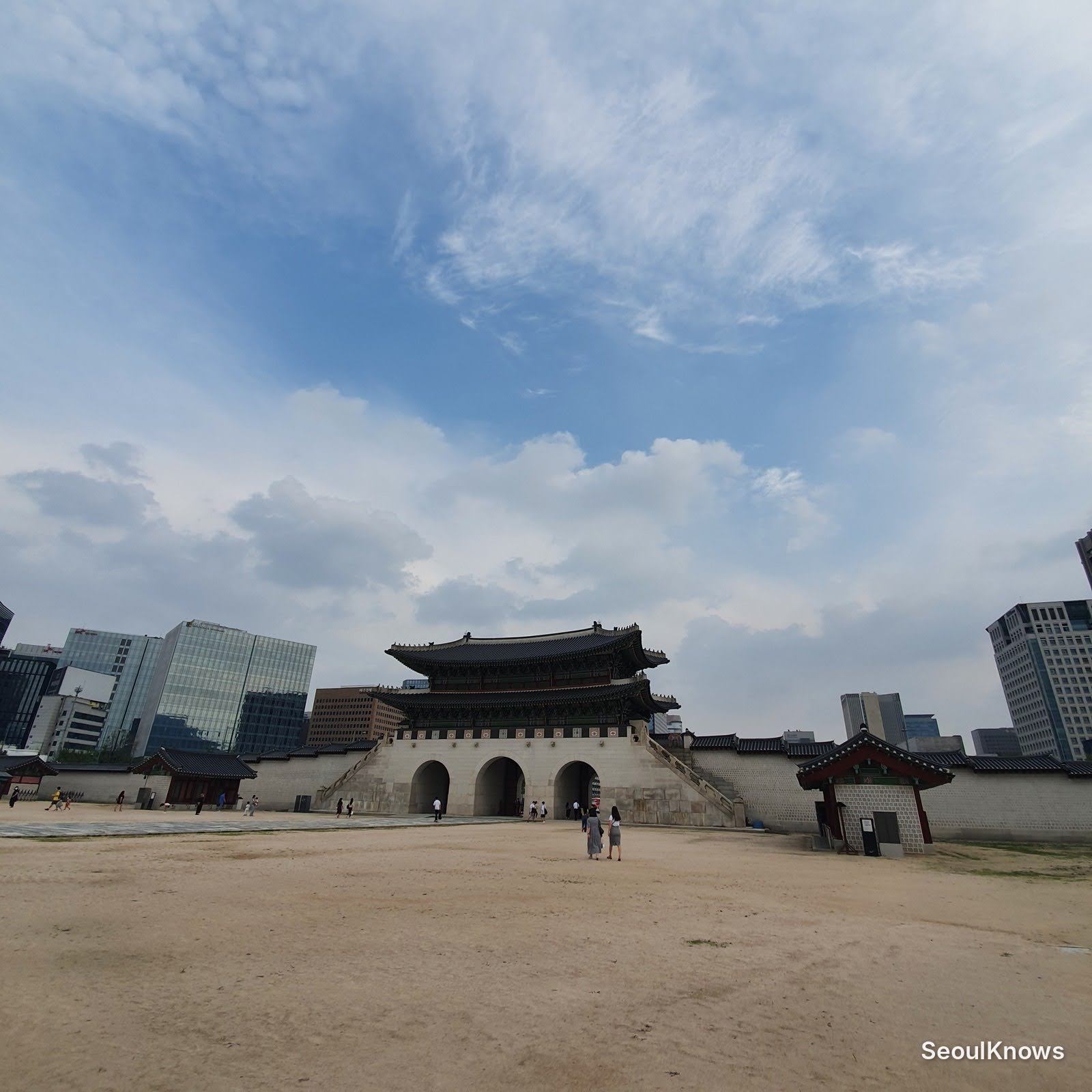
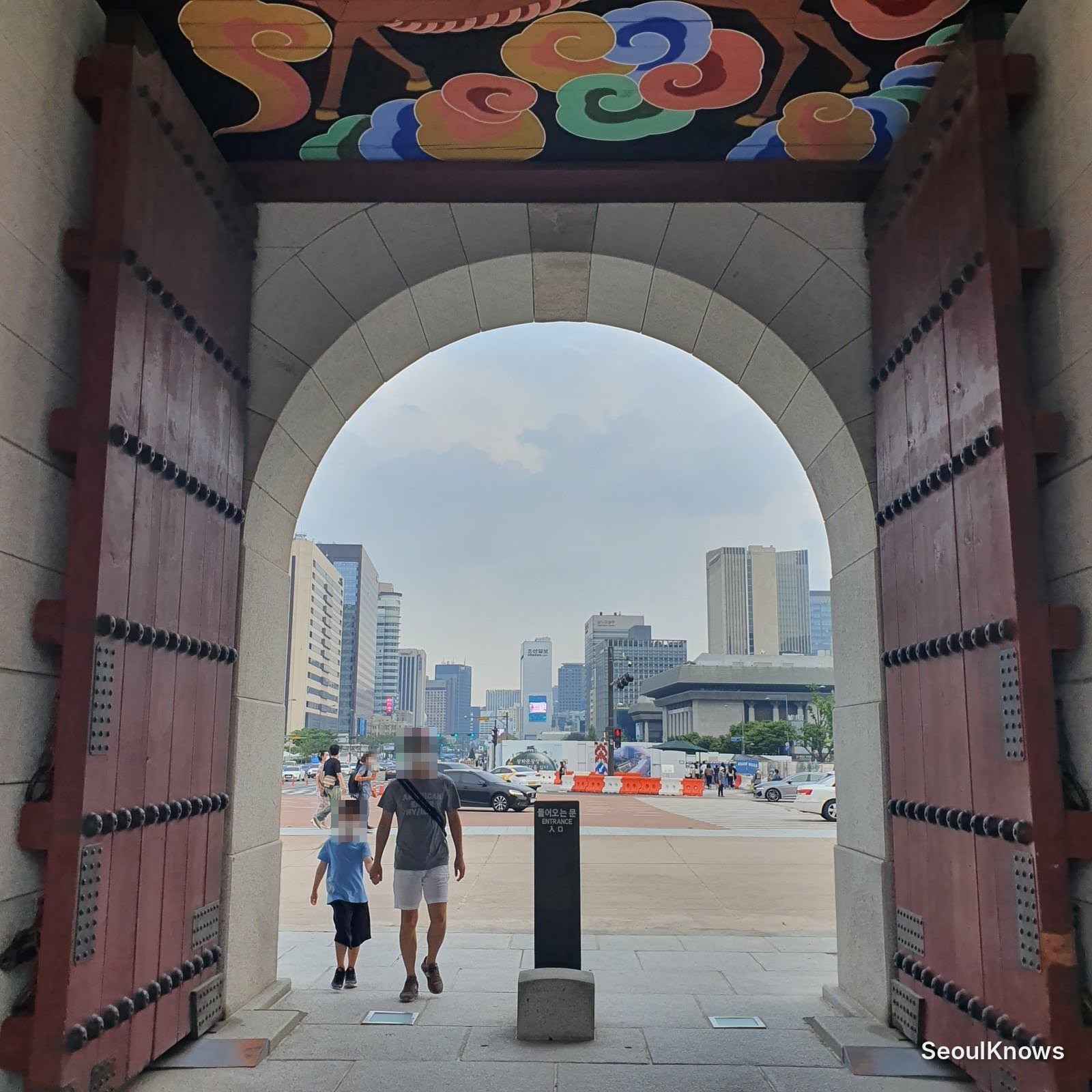
Look back through the middle arch and you see straight down Gwanghwamun Square. The middle arch was for the king; the side arches were for officials.
A simple route through the palace (about 90 minutes)
- Heungnyemun: the second gate, with Bugaksan mountain rising behind the roofs.
- Geunjeongjeon: the two-storey throne hall, where kings held coronations and received envoys. The stone markers in the courtyard show where officials stood by rank. Since 1 June 2026 visitors can again go up onto its stone terrace, which was closed for crowding in April and May.
- Sajeongjeon: the king's office, right behind the throne hall.
- Gangnyeongjeon and Gyotaejeon: the king's and queen's sleeping quarters, with the Amisan terraced garden behind.
- Gyeonghoeru: the banquet pavilion on a square pond, on the west side. The upper floor opens only on special tours in spring and autumn (2026: April to May and September to October, Korean commentary).
- Hyangwonjeong: a small pavilion on an island in a pond to the north, the prettiest corner in autumn.
- National Folk Museum of Korea: inside the palace grounds on the east side, free, good if it starts raining.
On our rainy day with the kids we went as far as Geunjeongjeon and the halls just behind it, which took about half an hour at a slow pace with photos. For the full loop above, plan on 90 minutes to two hours.
Gyeongbokgung on a rainy day
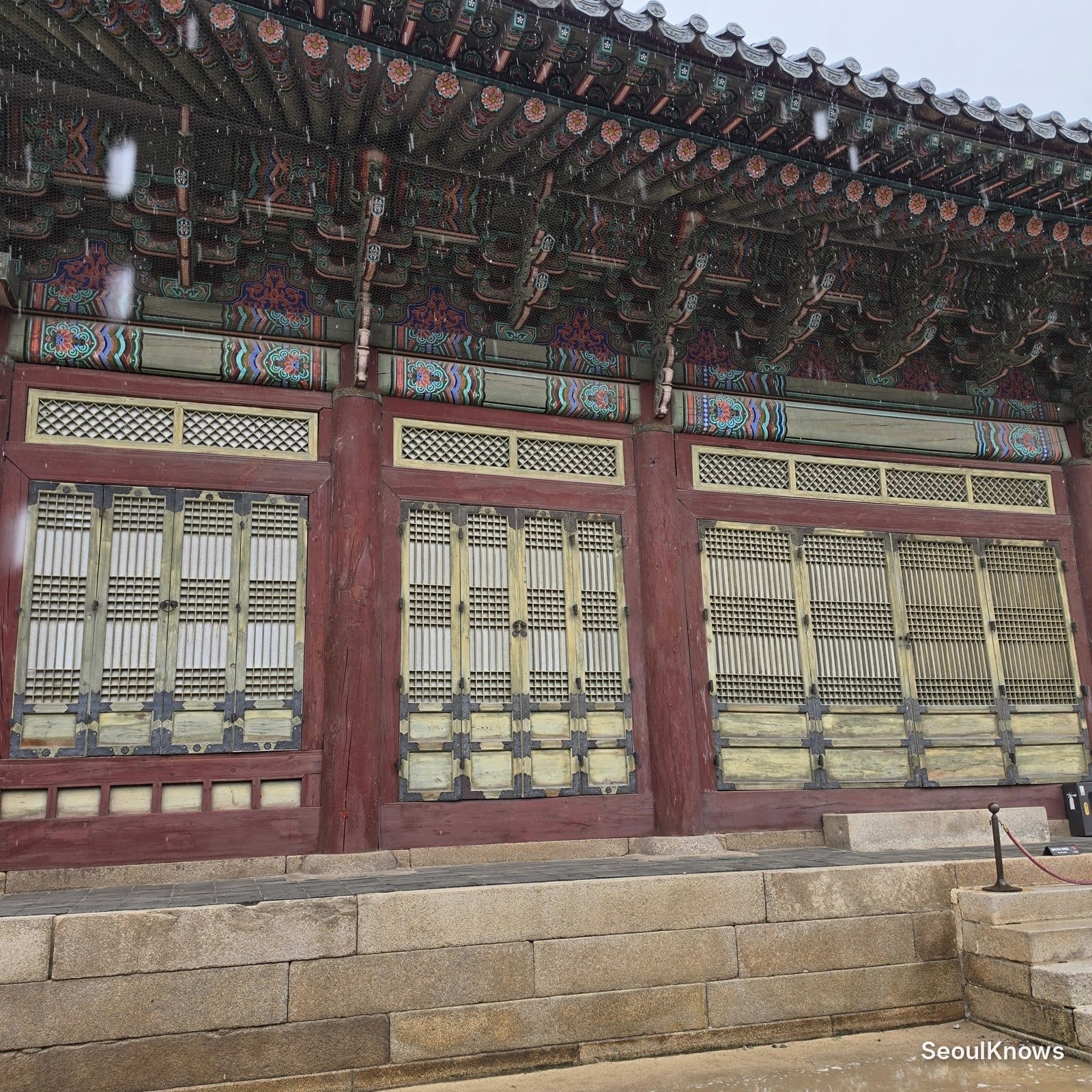
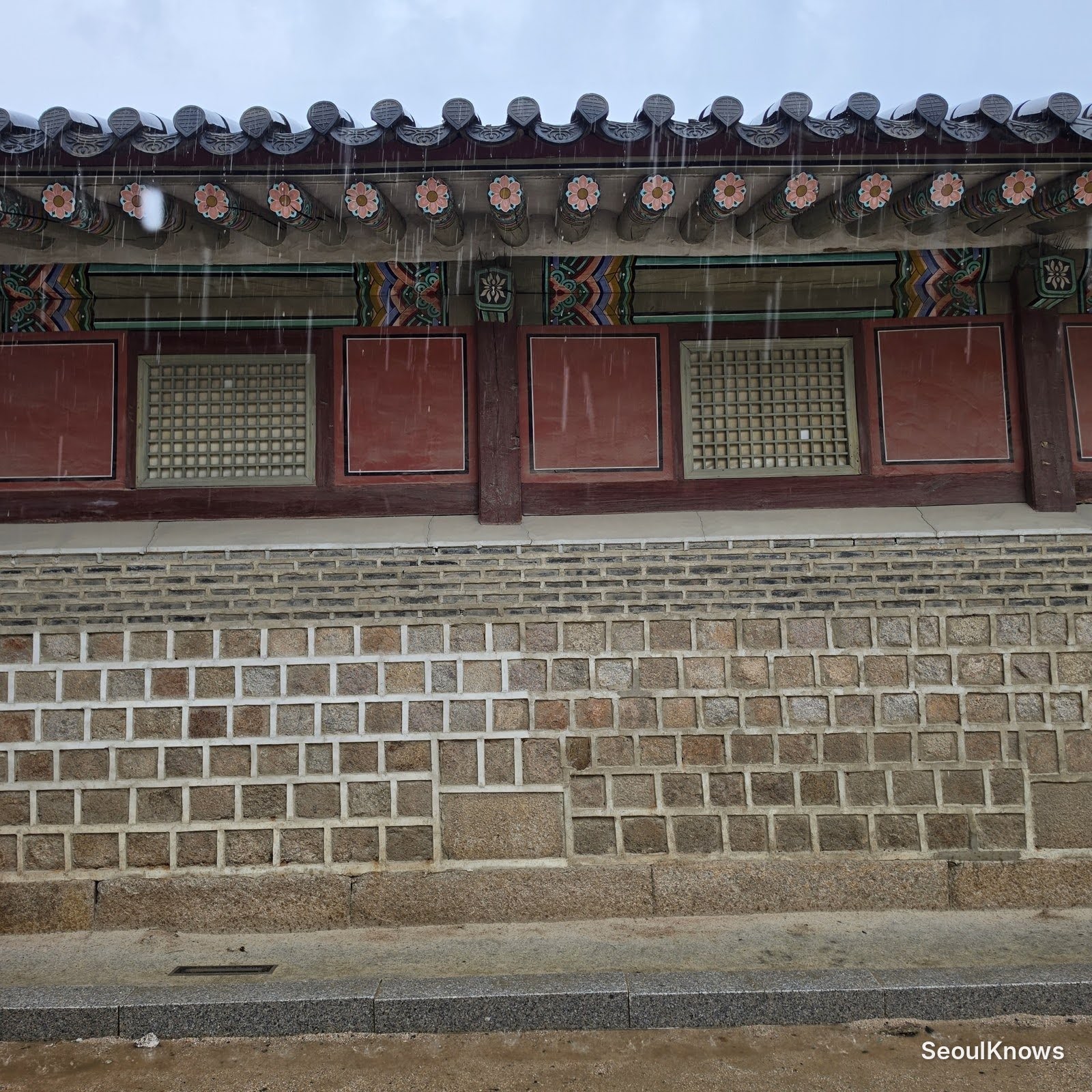
Chuseok Day was wet from start to finish, and the palace was still busy. Umbrellas filled the courtyard in front of Heungnyemun, and half the crowd seemed to be in hanbok.
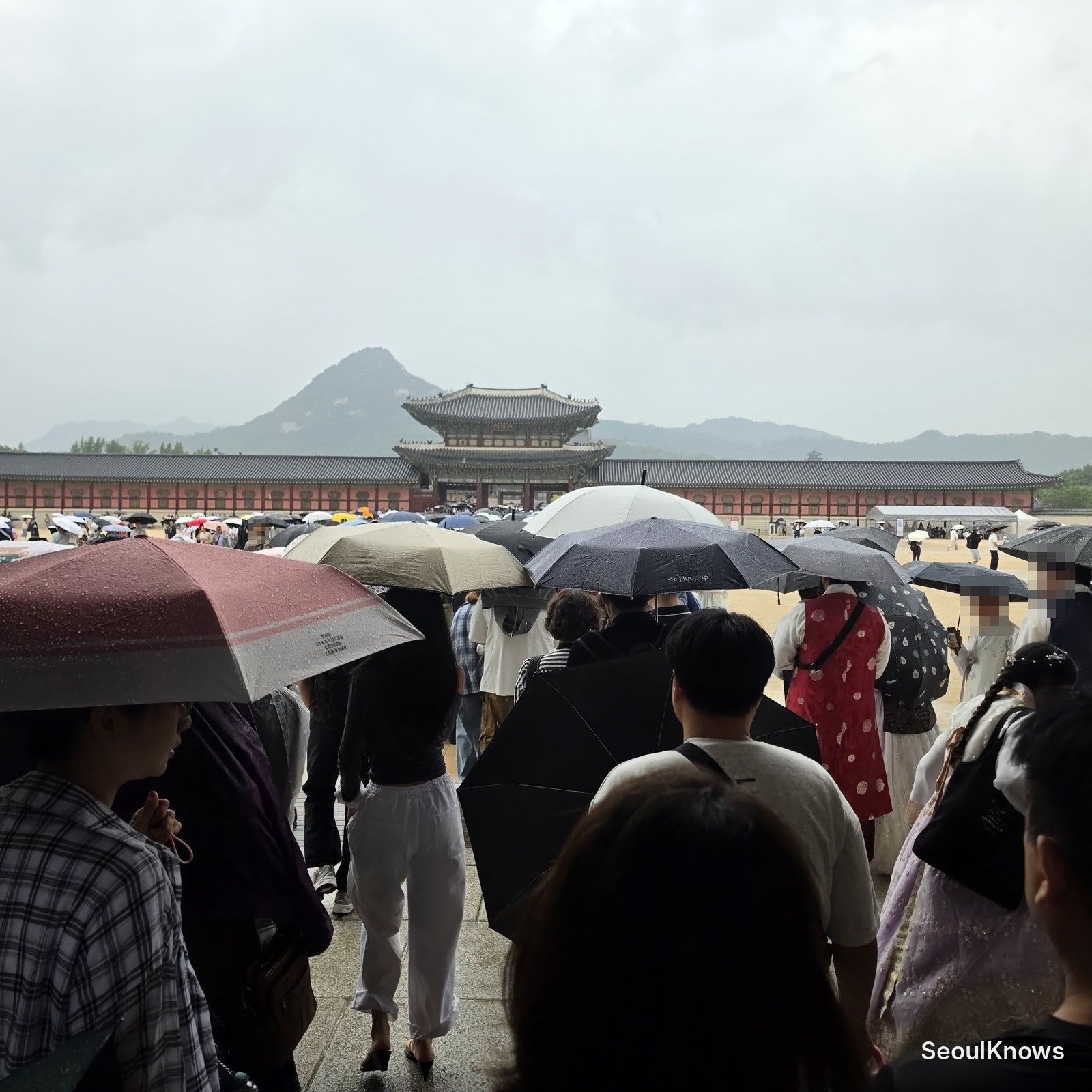
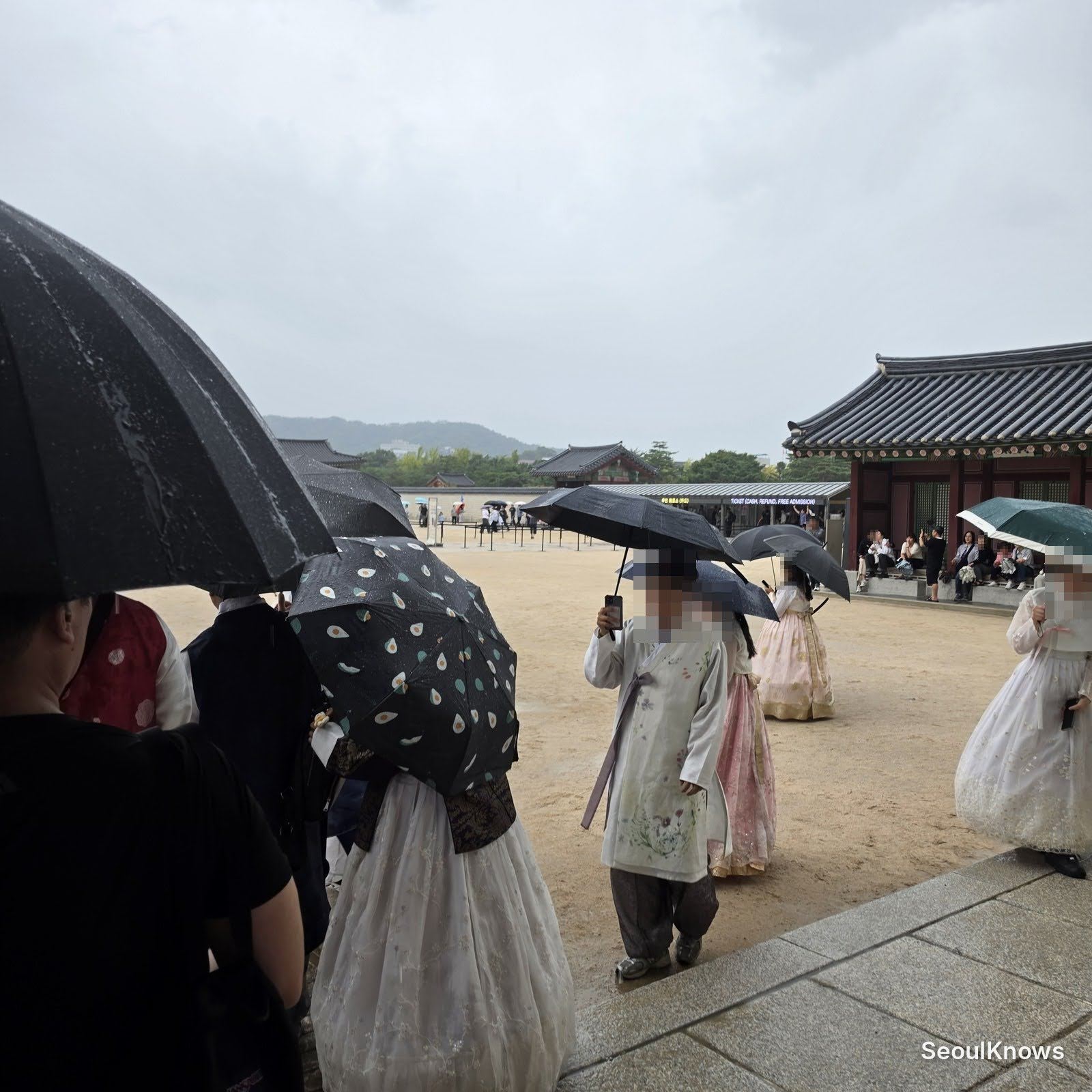
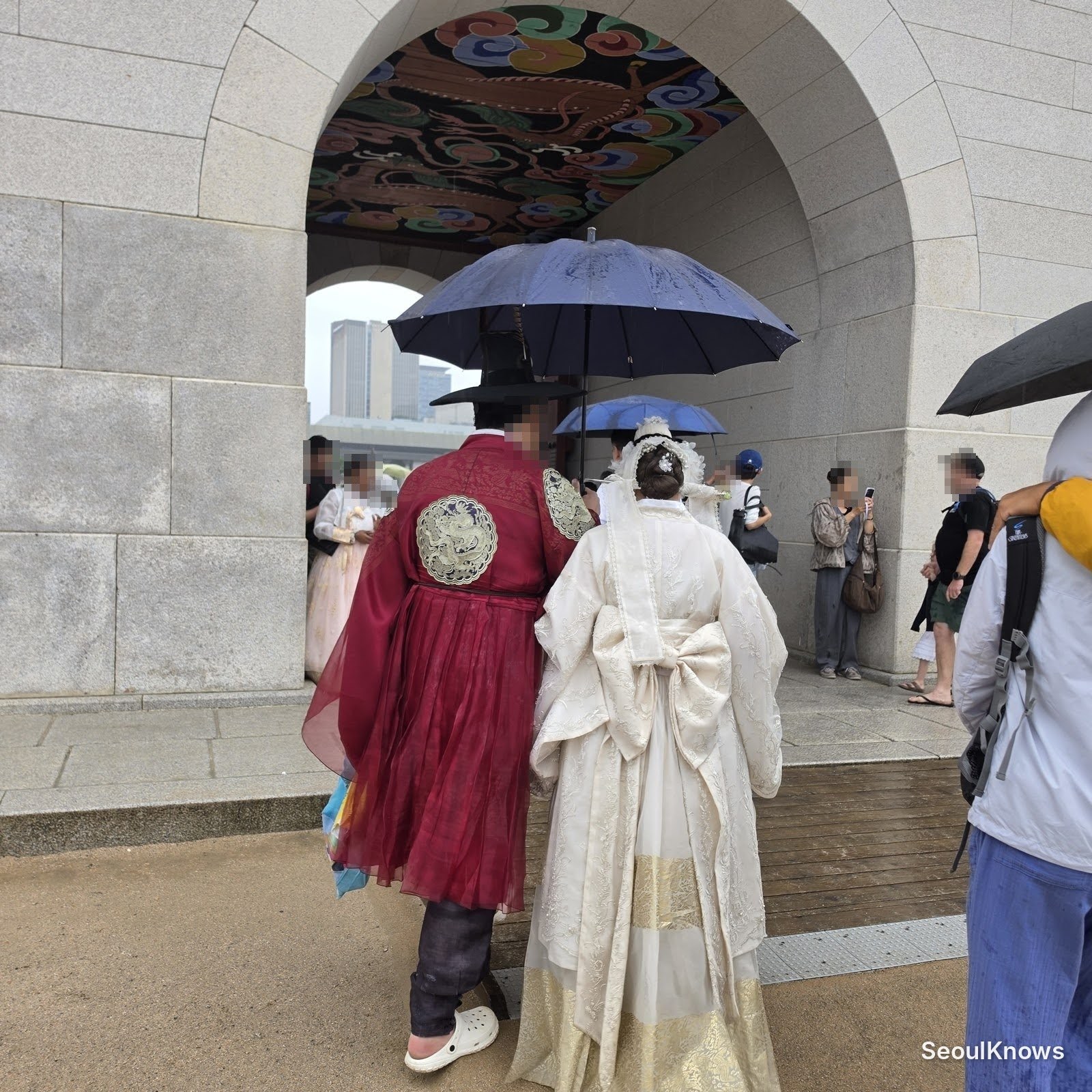
The rain had one upside: the stone courtyard of Geunjeongjeon turned into a mirror, and the painted eaves looked deeper in colour. The downside is the uneven stone underfoot, which is slippery when wet, and long hanbok skirts that soak up puddles. If rain is forecast, wear shoes with grip, keep the hanbok rental short, and save the museums for the heaviest showers.
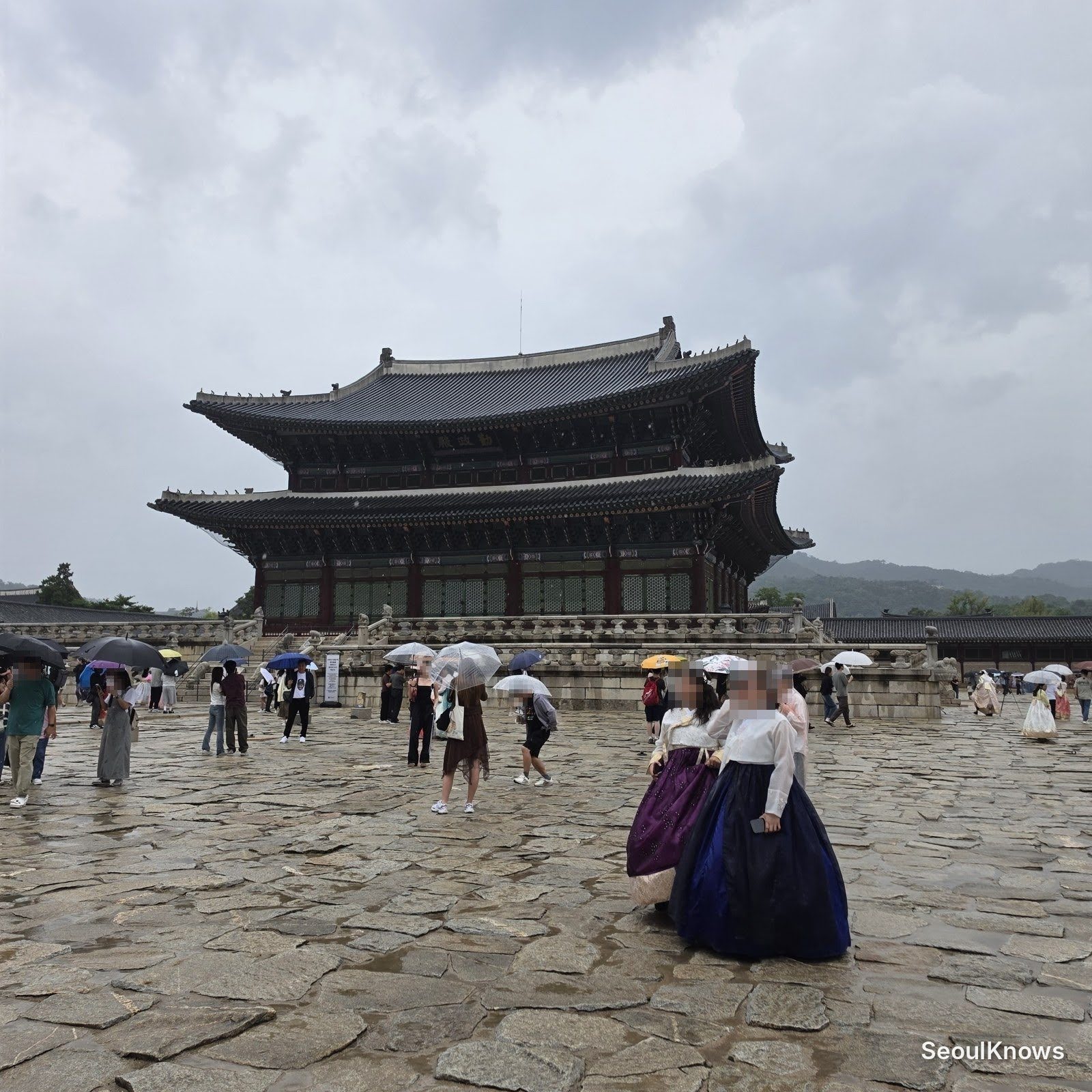
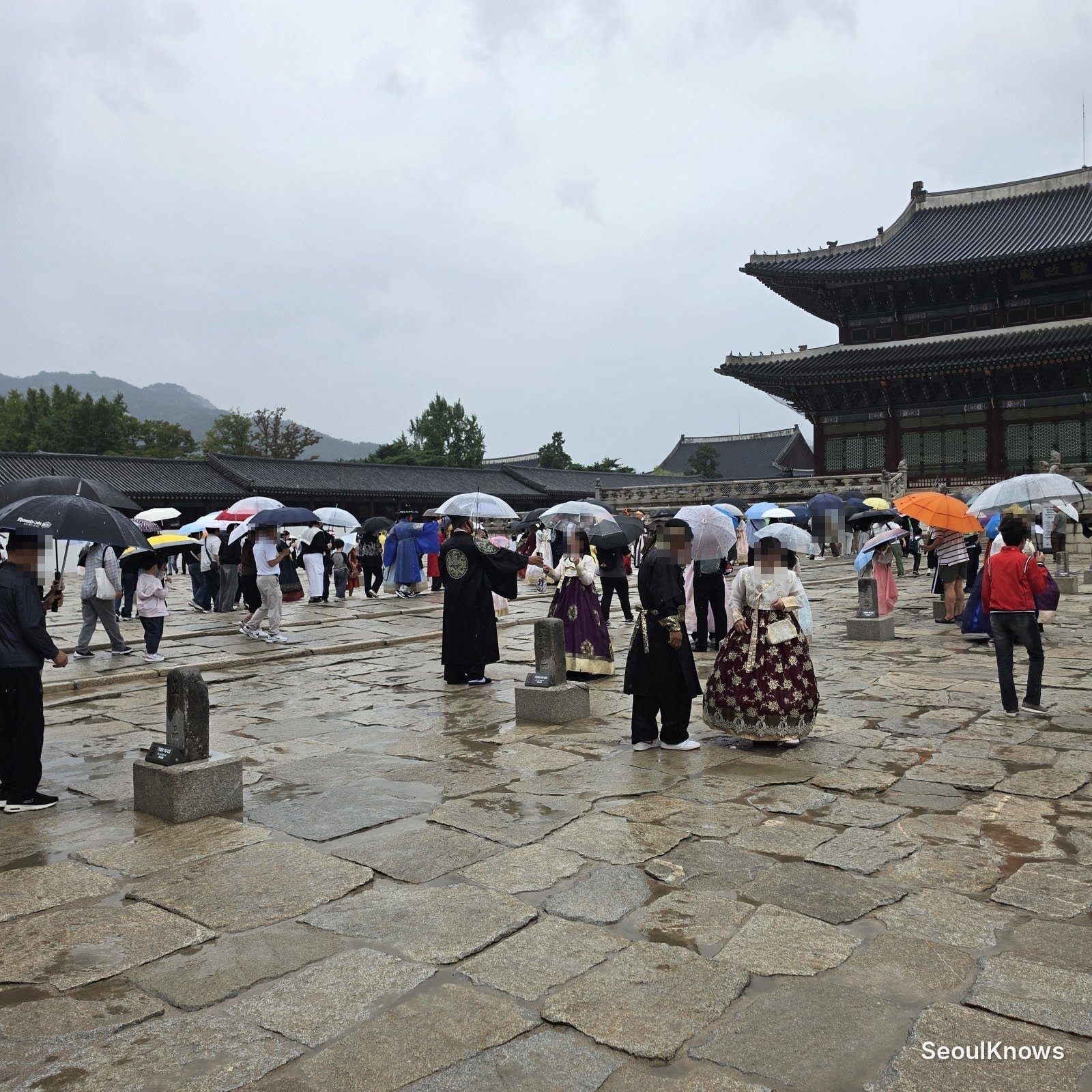
Free English tours, night viewing and special tours
Free guided tours in English leave from in front of the information center just inside Heungnyemun at 11:00 and 13:30, with a third session in the afternoon (check the board, as the time has varied between 15:00 and 15:30). They last 60 to 90 minutes and need no booking for small groups. Closed Tuesdays.
Night viewing runs in spring and autumn. In 2026 the autumn season was 2 September to 2 October, 19:00 to 21:30 (last entry 20:30), closed Mondays and Tuesdays. Tickets sell out online, but there is a daily allowance of on-site tickets for foreign visitors, and hanbok wearers enter free at night too.
Tips for visiting Gyeongbokgung
- Arrive at 09:00 opening for quiet photos; tour groups arrive in waves by late morning.
- Do not plan it for a Tuesday.
- Time your arrival for the 10:00 or 14:00 guard ceremony, then go in.
- Food is not allowed inside the palace; there are cafes around Gwanghwamun and in the National Palace Museum.
- Pair it with a walk east to Ikseon-dong or Insadong, or west to Seochon.
- If you liked it, the quieter Gyeonghuigung and Deoksugung are nearby.
- Travelling with children? See Seoul with kids for more ideas.
Frequently asked questions
How much is a Gyeongbokgung ticket?
3,000 won for adults aged 19 to 64. Foreign visitors 18 and under, everyone 65 and over, Korean nationals 24 and under, and anyone in hanbok enter free.
What day is Gyeongbokgung closed?
Every Tuesday. Deoksugung, Changgyeonggung and Gyeonghuigung are alternatives that day; Changdeokgung and Deoksugung close on Mondays instead.
What time is the changing of the guard at Gyeongbokgung?
10:00 and 14:00, about 20 minutes, in front of Heungnyemun and Gwanghwamun. It is free and not held on Tuesdays.
How long do you need at Gyeongbokgung?
90 minutes to two hours for the main halls, Gyeonghoeru and Hyangwonjeong. Add an hour for the National Folk Museum.
Is Gyeongbokgung free if I wear hanbok?
Yes, for a jeogori plus a skirt or trousers, traditional or modern. Rental shop outfits qualify.
Which subway station is closest?
Gyeongbokgung Station, Line 3, Exit 5. Gwanghwamun Station (Line 5) Exit 2 and Anguk Station (Line 3) Exit 1 are both about 10 minutes' walk.
Is it worth visiting in the rain?
Yes, if you take care on the wet stone. The courtyards reflect the halls and the crowds thin a little. Keep hanbok rental short and bring an umbrella.
Do I need to book Gyeongbokgung tickets in advance?
Not for a daytime visit. Buy on the day at the ticket office or ticket machines in front of Heungnyemun; cards and cash are both accepted. Only night viewing and special tours, such as the upper floor of Gyeonghoeru, need booking.
Is there a combined ticket for Seoul's palaces?
Yes. The integrated palace ticket covers Gyeongbokgung, Changdeokgung, Changgyeonggung, Deoksugung and Jongmyo Shrine once each for 6,000 won and is valid for six months. The Changdeokgung Secret Garden tour is not included. Buy it at the main ticket office in front of Heungnyemun; once you have used it at one palace it cannot be refunded. Prices have been reported differently, so check the board.
Is Gyeongbokgung free on any other days?
Yes. On the last Wednesday of each month (Culture Day), during the Seollal and Chuseok holidays, and in special periods such as the autumn Korea Grand Festival, entry is free for everyone.
Can I borrow a stroller or wheelchair?
Yes, for free. Strollers and wheelchairs are lent at the 2F information desk of the National Palace Museum, which stands in the palace grounds by the Gyeongbokgung Station entrance. They are for young children, older visitors and visitors with disabilities. The palace paths are gravel and uneven stone with a few steps, so expect some bumps. The museum also has a nursing room on 1F.
Can I bring my luggage?
Large suitcases are hard work on the gravel. The National Palace Museum, by the Gyeongbokgung Station entrance, has free lockers behind its 2F information desk during museum hours (09:30 to 17:30, until 21:00 on Saturdays; closed the last Monday of each month), and paid luggage storage services operate around the station.
When is the best time of year to visit?
Spring and autumn. Cherry blossoms usually come in early April, and autumn colour from late October to mid-November; in 2026 it was at its best in the first half of November. Summer is hot with little shade, and winter is quiet but cold, with a 17:00 closing time. In spring, check the fine dust forecast, as it can hide the mountains behind the palace.
The bottom line
Gyeongbokgung is worth the first slot on a Seoul itinerary: it is cheap or free, central, and big enough to feel like a step out of the city. Go early, avoid Tuesdays, catch the guard ceremony, and if you can, wear hanbok.
Photos are from a summer visit and a rainy Chuseok Day visit. Fees, hours and schedules were checked in November 2026 against official notices and recent reports and can change.
Staying nearby? See our picks for where to stay in Insadong, Bukchon & Gwanghwamun, each with the nearest station, a map and what Korean guests say.
Written by WY, a Seoul-based local sharing honest, first-hand guides to Korea. Every guide here is a place I have actually been to: written from my own visit, my own photos. More about me →