
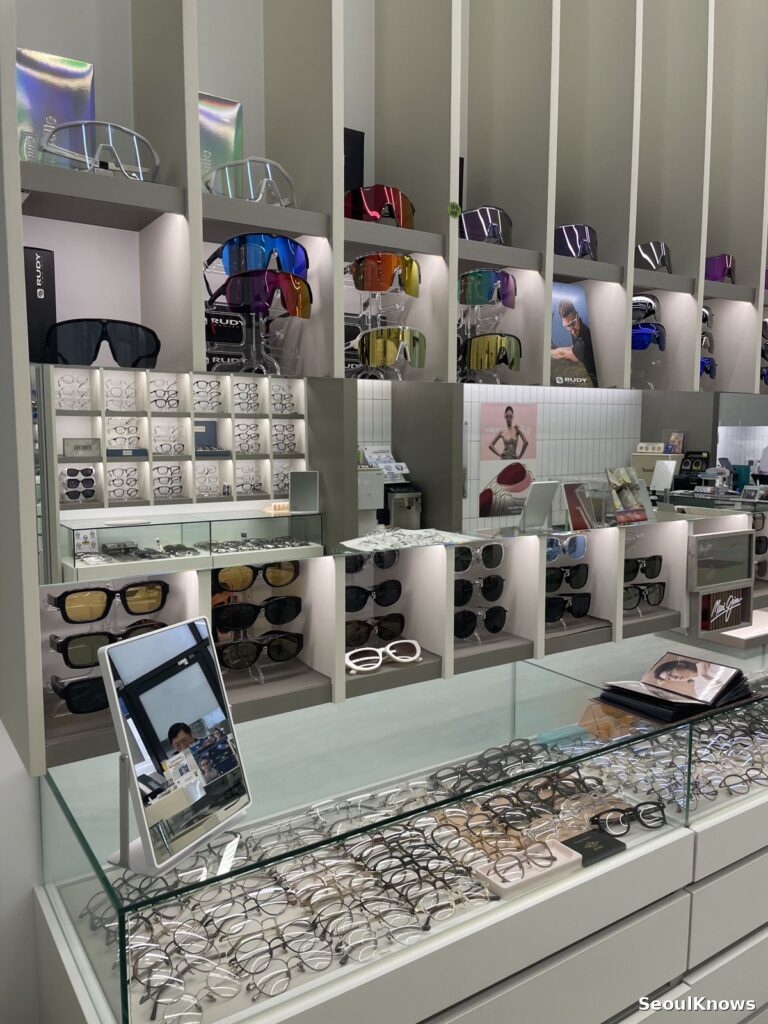
If you wear glasses, put “buy a pair” on your Korea list before you arrive. Not as a souvenir, as a genuine errand. A complete pair with a proper eye test typically runs 100,000 to 200,000 won here, and you can go well below that if you want to, and in a lot of shops you can walk in, get your eyes checked, choose frames and walk out wearing them within 15 to 30 minutes. No appointment, no separate prescription, no coming back tomorrow. If you’ve only ever bought glasses in the US, the UK or Australia, the difference is hard to overstate.
Why it’s so fast
The speed isn’t a gimmick, it’s structural. Three things that are separate steps in most countries happen in one room here.
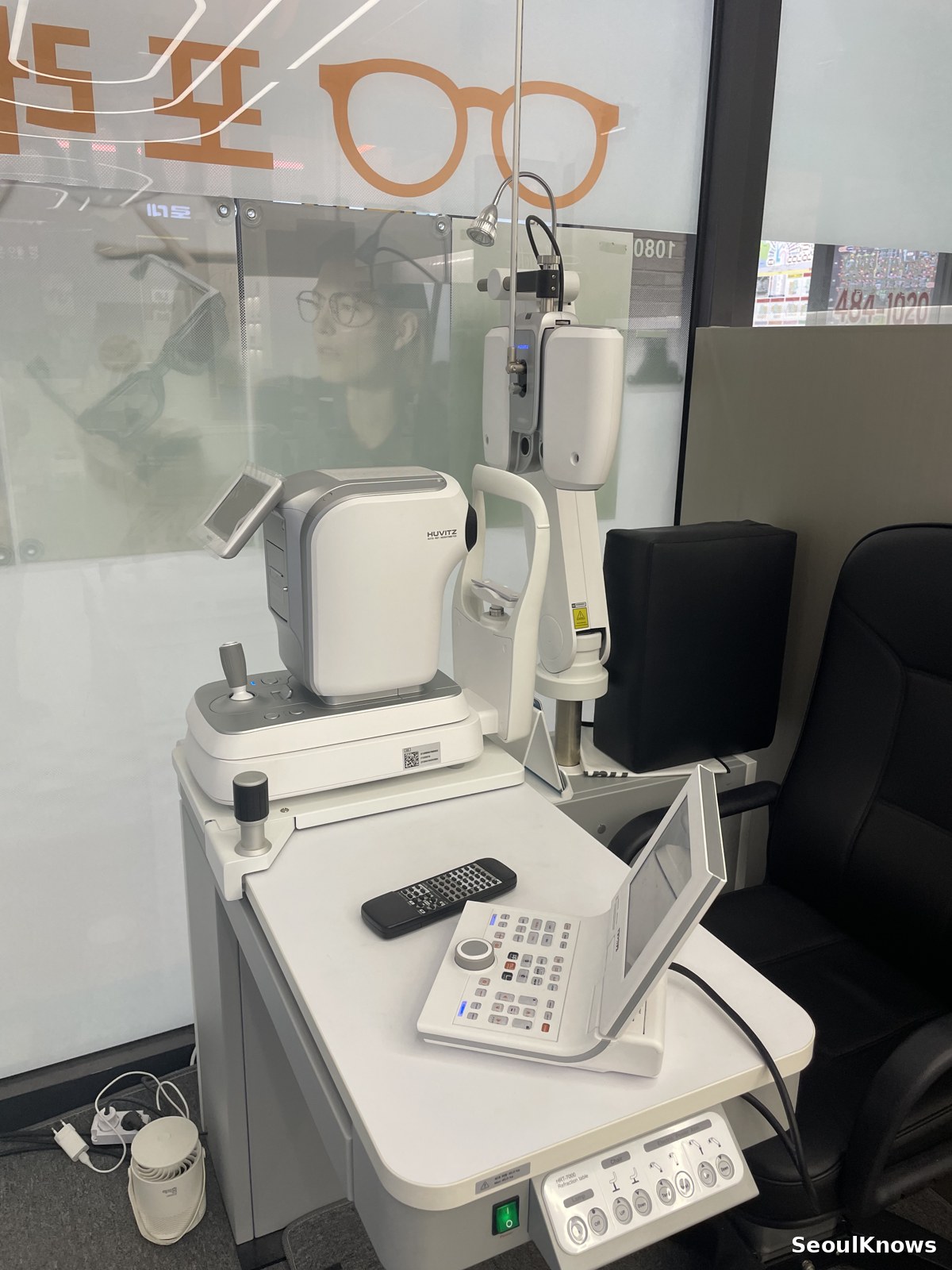
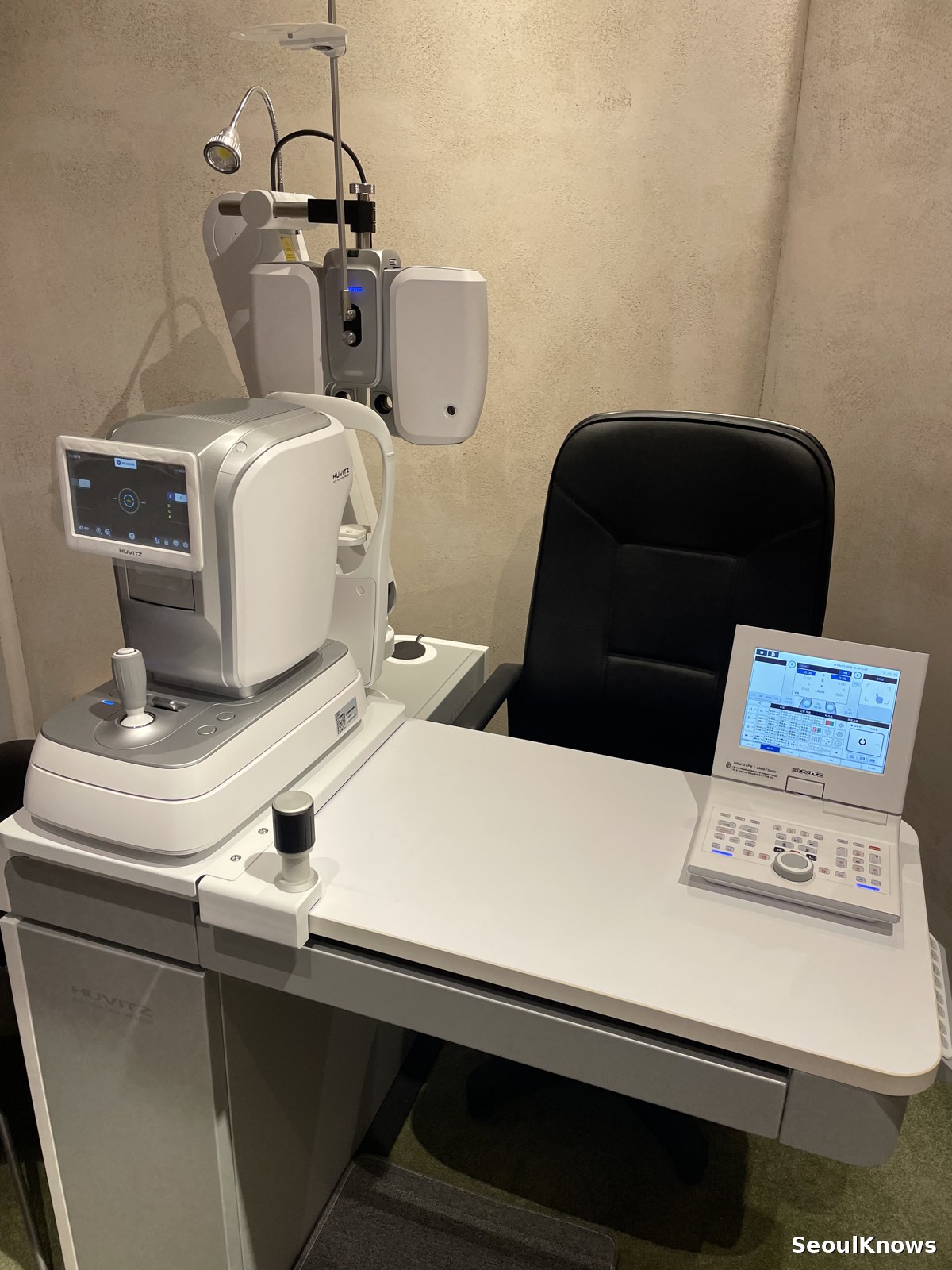
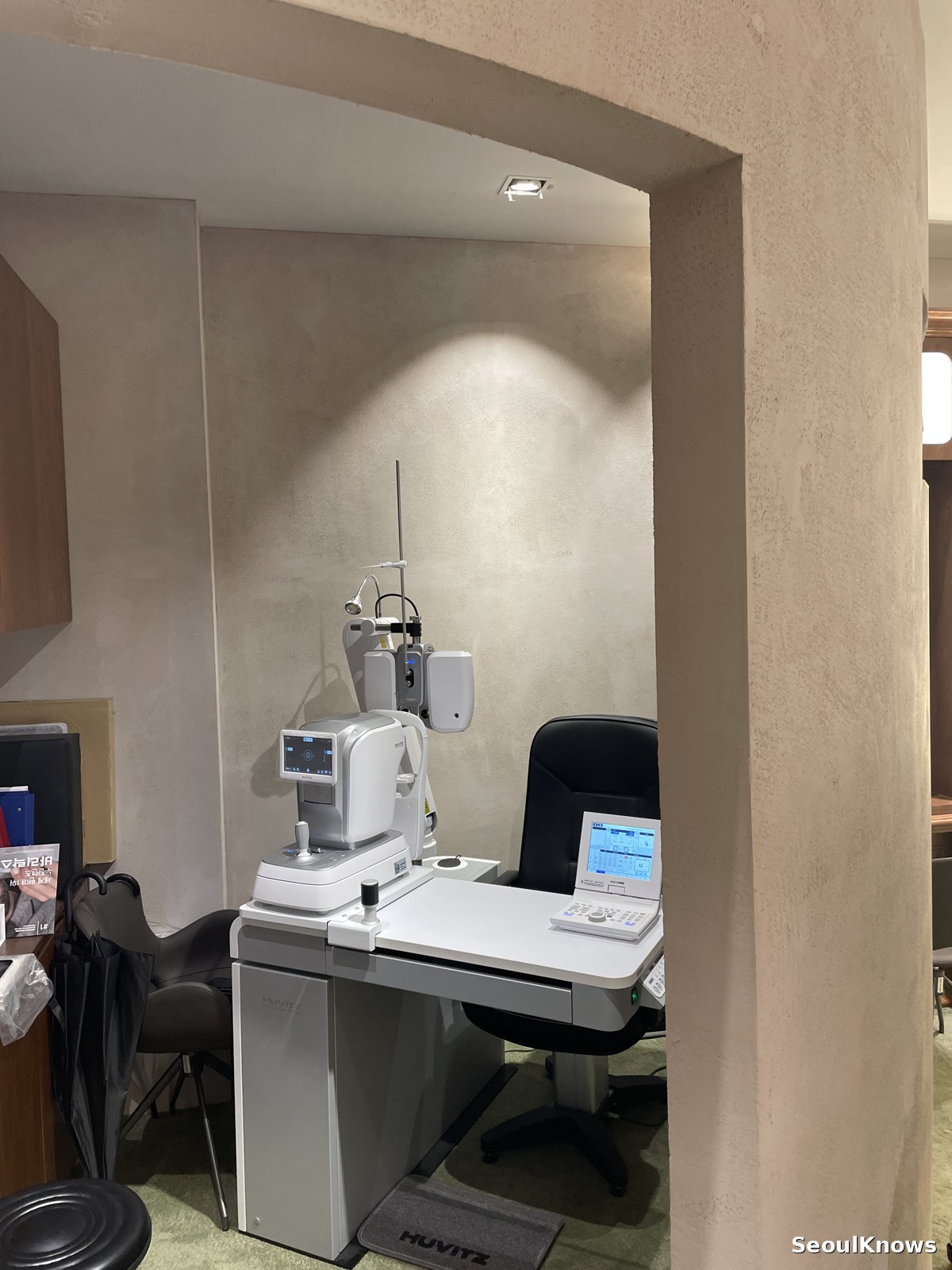
First, Korean opticians are licensed to test your eyes themselves. You don’t need to see an optometrist or a doctor first, and you don’t need a prescription slip to hand over. The person selling you the frames measures your vision, usually free of charge with a purchase.
Second, almost every shop has its own lens-edging machine on site. Standard single-vision lenses are held in stock in a wide range of powers, so the shop isn’t ordering anything; it’s grinding a blank to fit your frame in the back room while you sit there.
Third, one person usually handles the whole thing: test, frame advice, fitting, adjustment. No handoffs, no waiting for another department.
What it actually costs
Here’s the thing to understand first: you’re buying two items, and you choose them separately. A frame, and a set of lenses. Shops quote them apart, which is why a single advertised price rarely tells you what you’ll actually pay.
At an ordinary neighbourhood shop, the ranges look roughly like this:
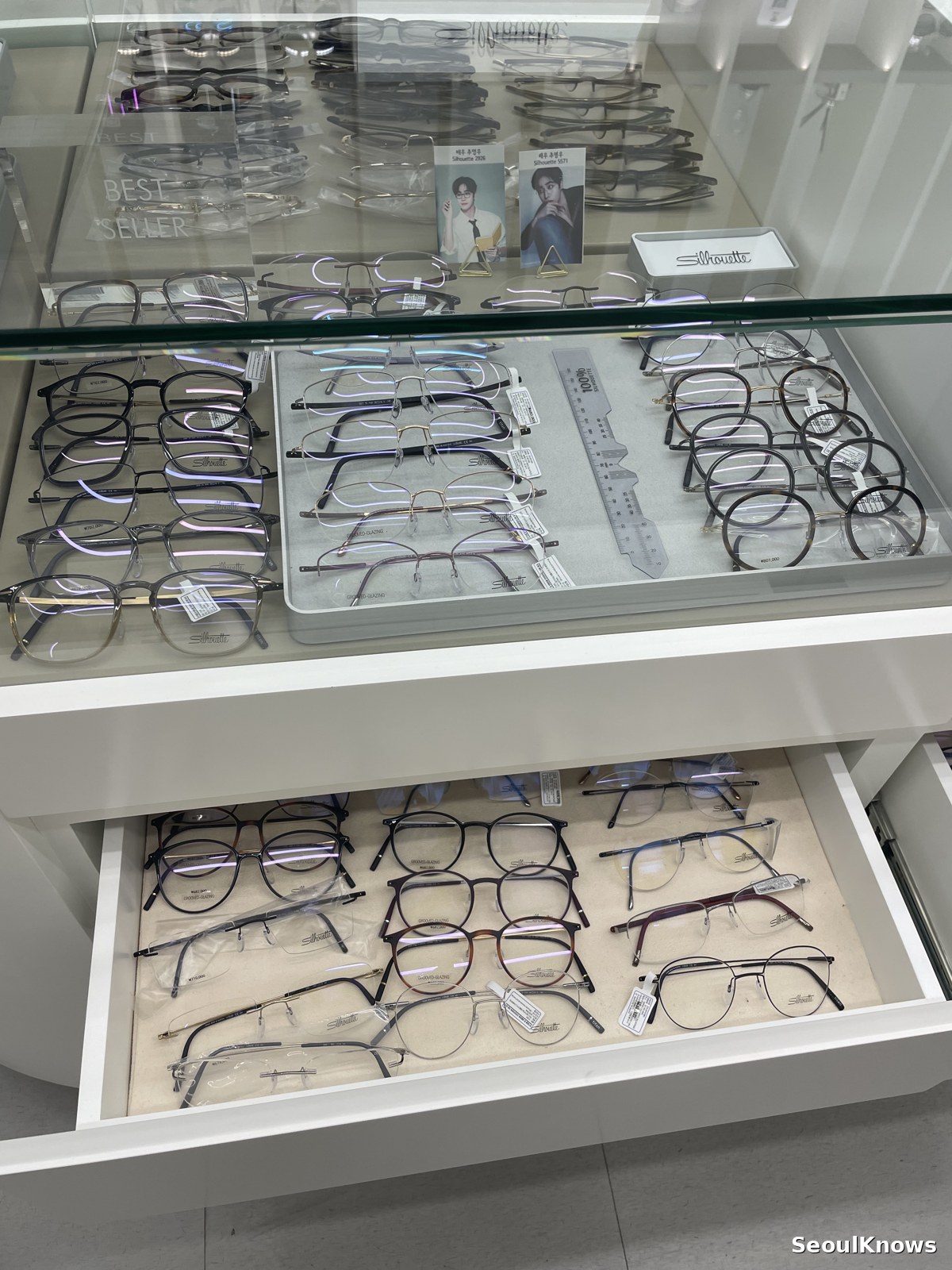
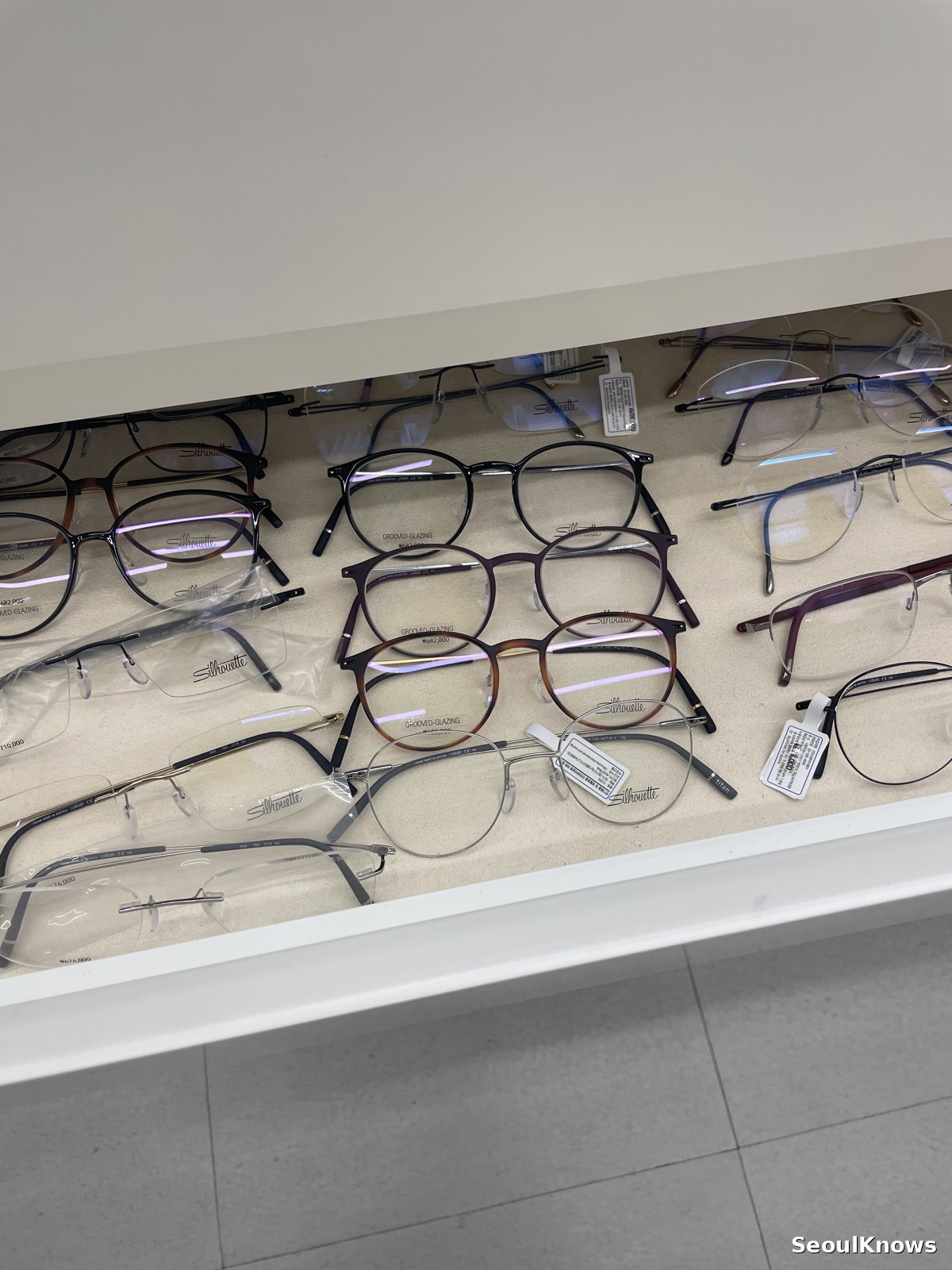
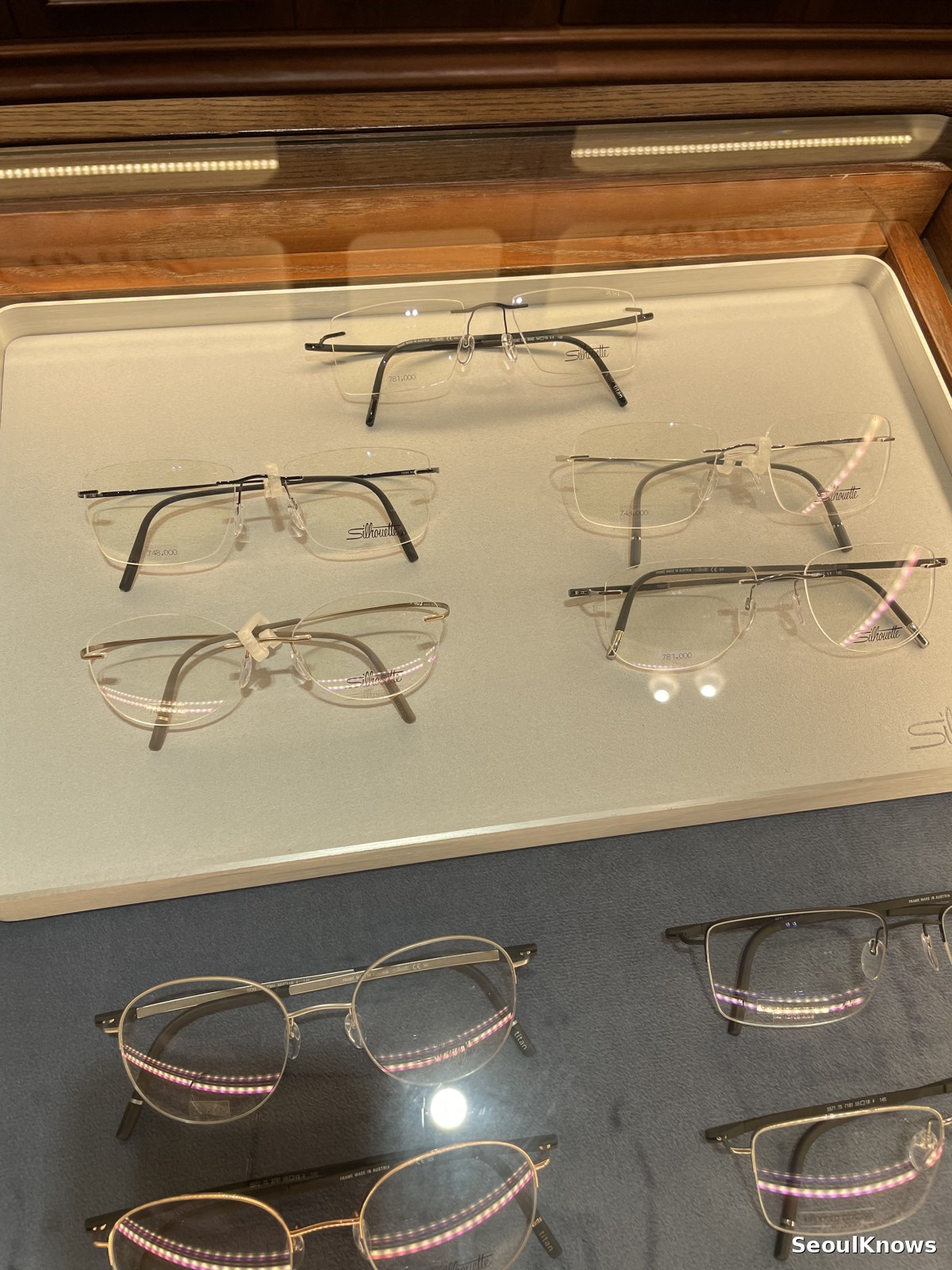
- Frames: from about 20,000 won for a basic one, up to 100,000 won and beyond for better materials or a designer name.
- Lenses: from about 30,000 won for standard single-vision, up to 100,000 won and beyond for thin high-index, premium brands or heavy coatings.
Put together, most people end up in one of three brackets:
- Budget: 50,000 to 100,000 won. A simple frame with standard lenses. Perfectly good for a spare pair or a mild prescription.
- Standard: 100,000 to 200,000 won. Where most people land. A frame you actually like plus thinner lenses and decent coatings.
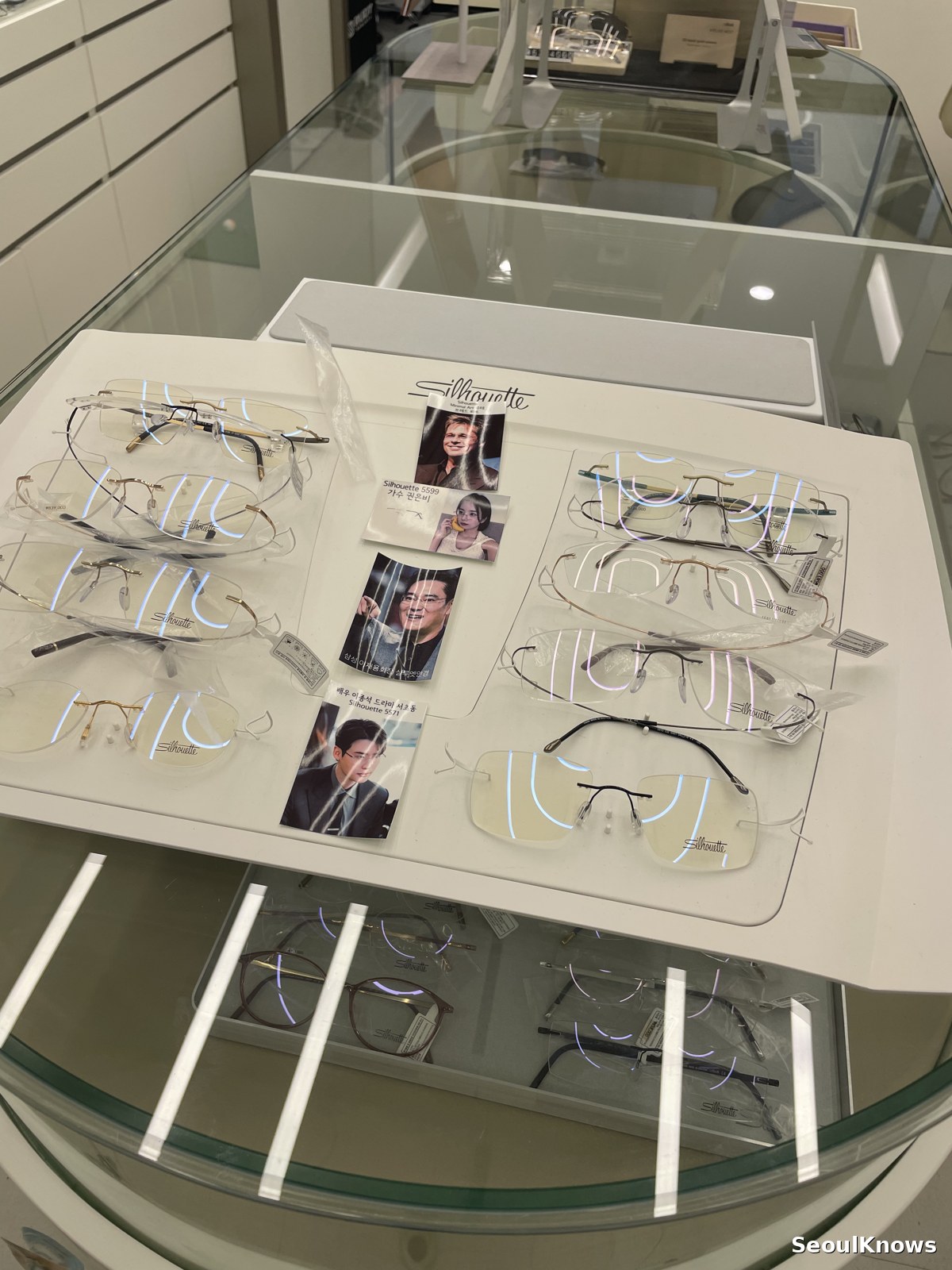
- Premium: 200,000 won and up. Designer frames, titanium, premium lens brands, or progressives.
Even the top bracket usually undercuts what the same combination costs in the US, the UK or Australia, and the eye test is normally free when you buy. The cheap part here isn’t the frames, which are priced much like anywhere; it’s the lenses and the labour.
Progressive (multifocal) lenses are the one category where you should slow down and pay for expertise. They’re still cheaper than at home, but the fitting matters more than the price.
How the visit goes, start to finish
- Walk in. No appointment needed almost anywhere.
- Eye test, about 5 minutes. You’ll look into a machine (an autorefractor) for a first reading, then read a chart while the optician swaps lenses to confirm. Say “I need an eye test” and point at your glasses; this part needs almost no language.
- Choose frames, as long as you like. This is the slow step and the fun one. Shops expect you to try on a dozen.
- Choose lenses. Thickness, coatings, brand. Ask what’s included in the quoted price.
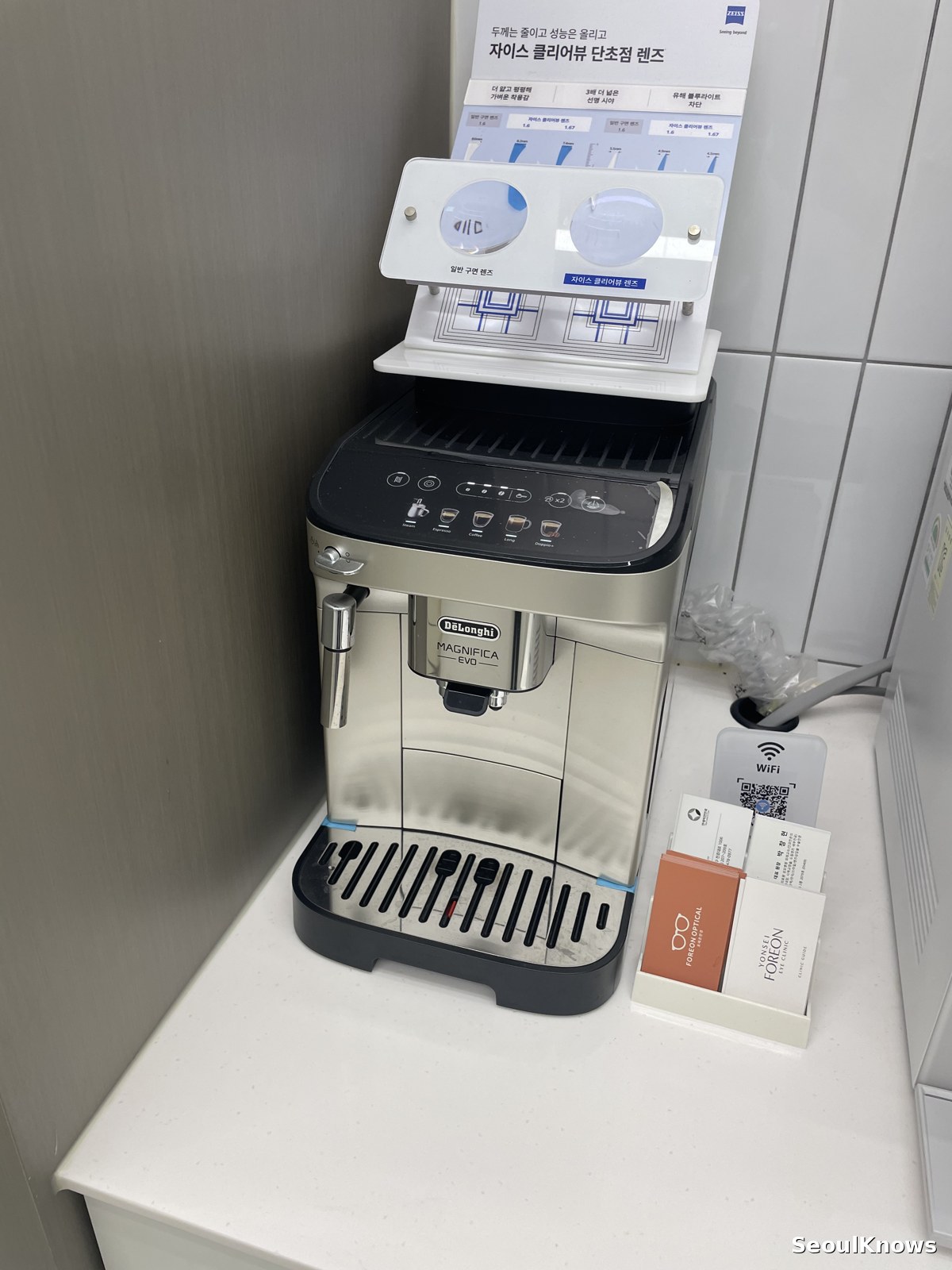
- Wait 15 to 30 minutes. Many shops will hand you a coffee. Some have a whole drinks and snack counter for waiting customers.
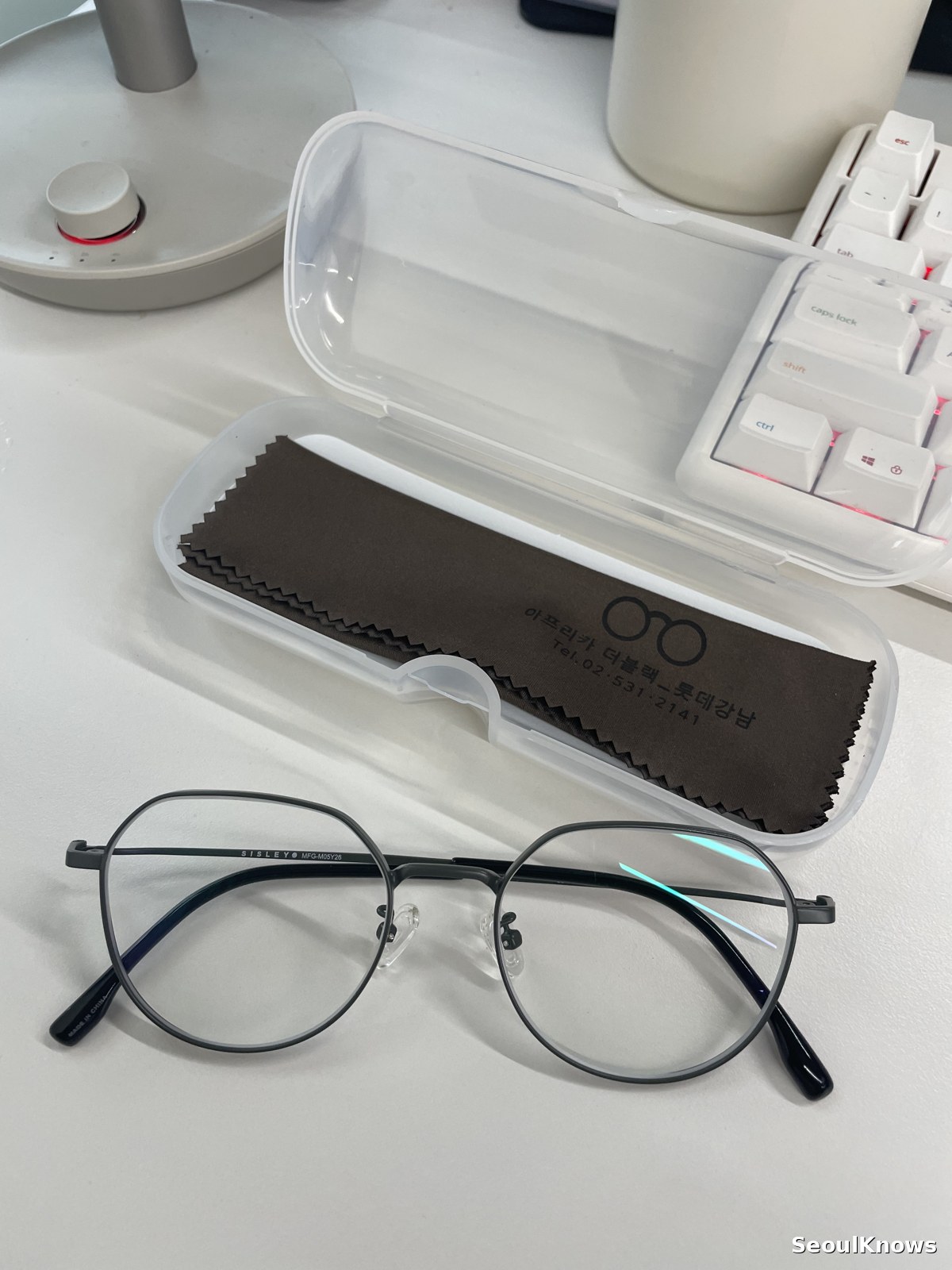
- Fitting. They’ll heat and bend the frame to your face, check the alignment, and adjust again if it sits wrong. This is included, and it’s the part people skip at home.
Where to go
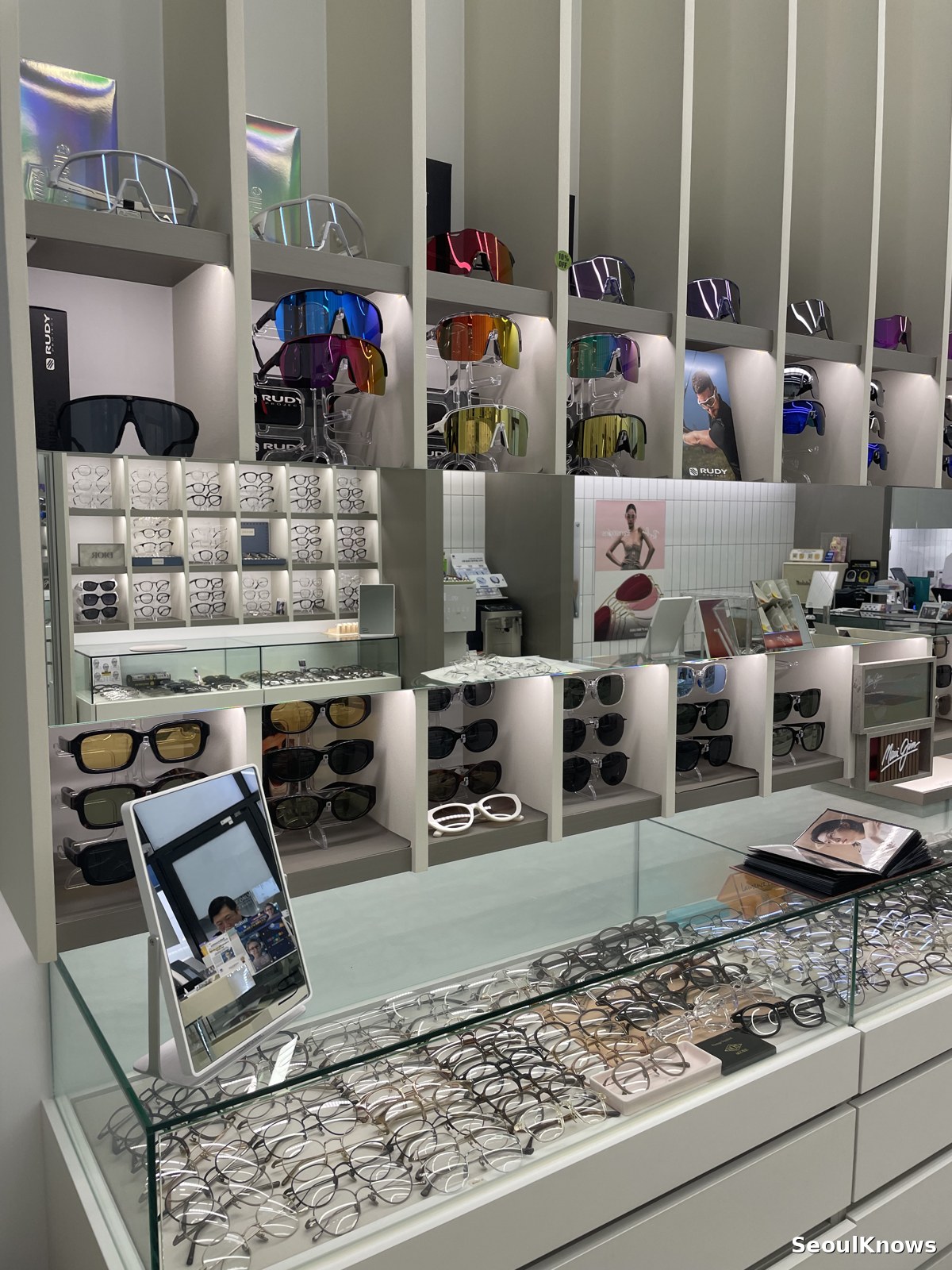
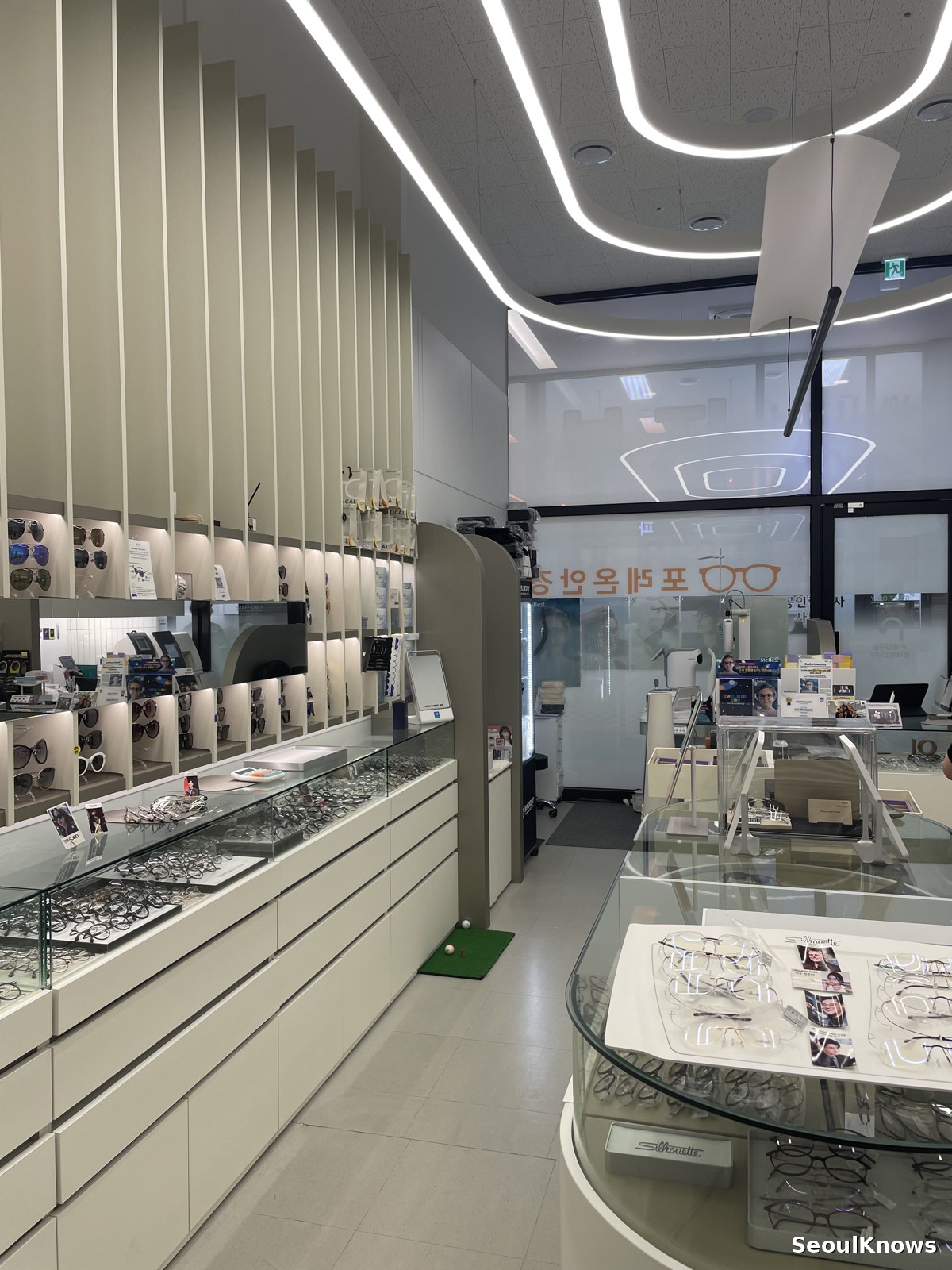
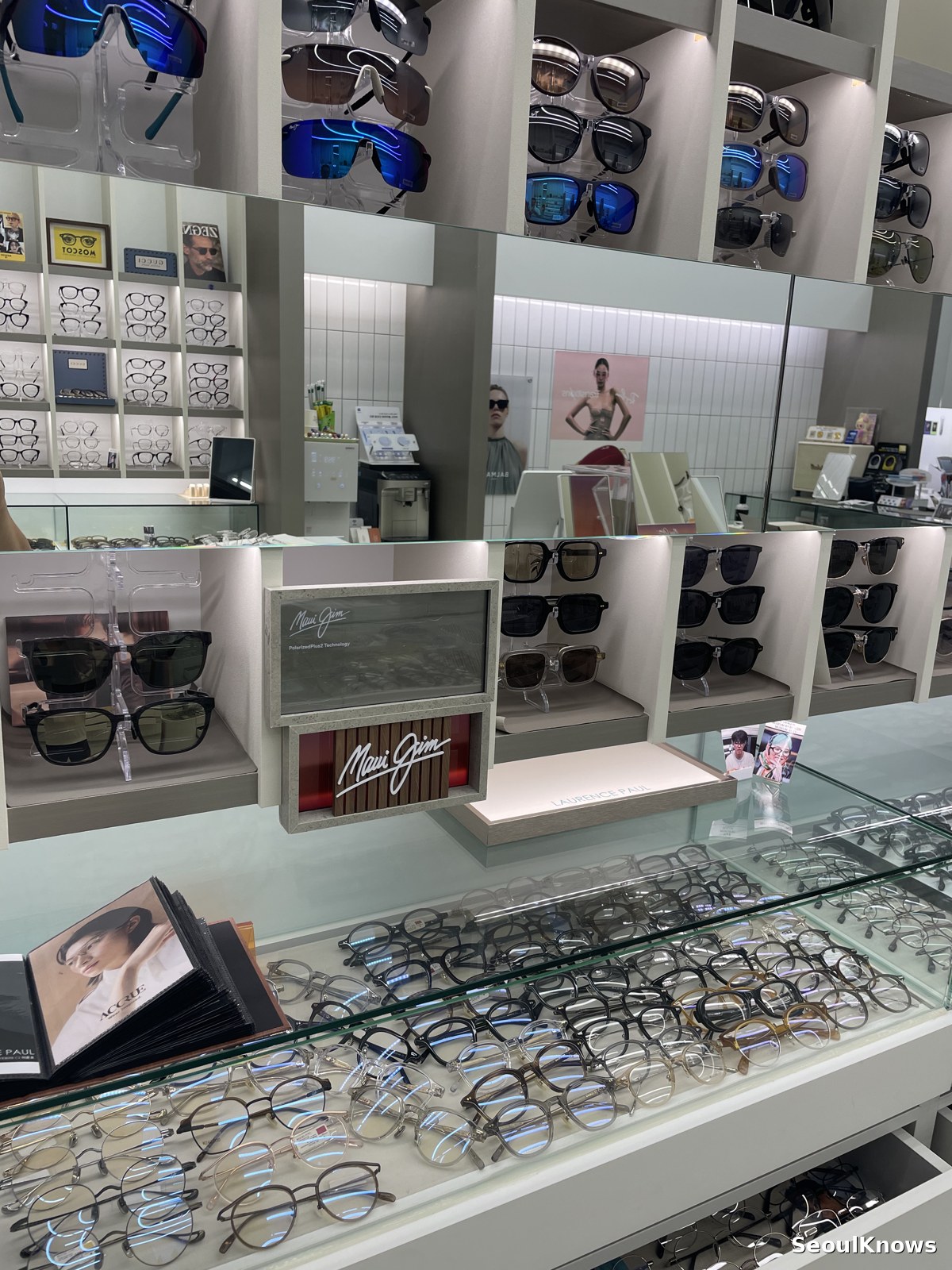
You don’t need to hunt for a special shop. Optical stores are on practically every block in Seoul, and standards are high across the board. That said, the choice roughly splits three ways.
- Namdaemun Market. Around 150 optical shops sit clustered together here, and the district handles a large share of the country’s eyewear trade, so it has a reputation as the cheap place to buy. Worth knowing about, but manage expectations: opinions among Koreans are genuinely mixed. Some find real bargains on imported frames; others report prices no better than their local shop, plus crowds and brisk service. Go if you enjoy a market and want to compare a lot of frames in one trip, not because you assume it will automatically be cheapest.
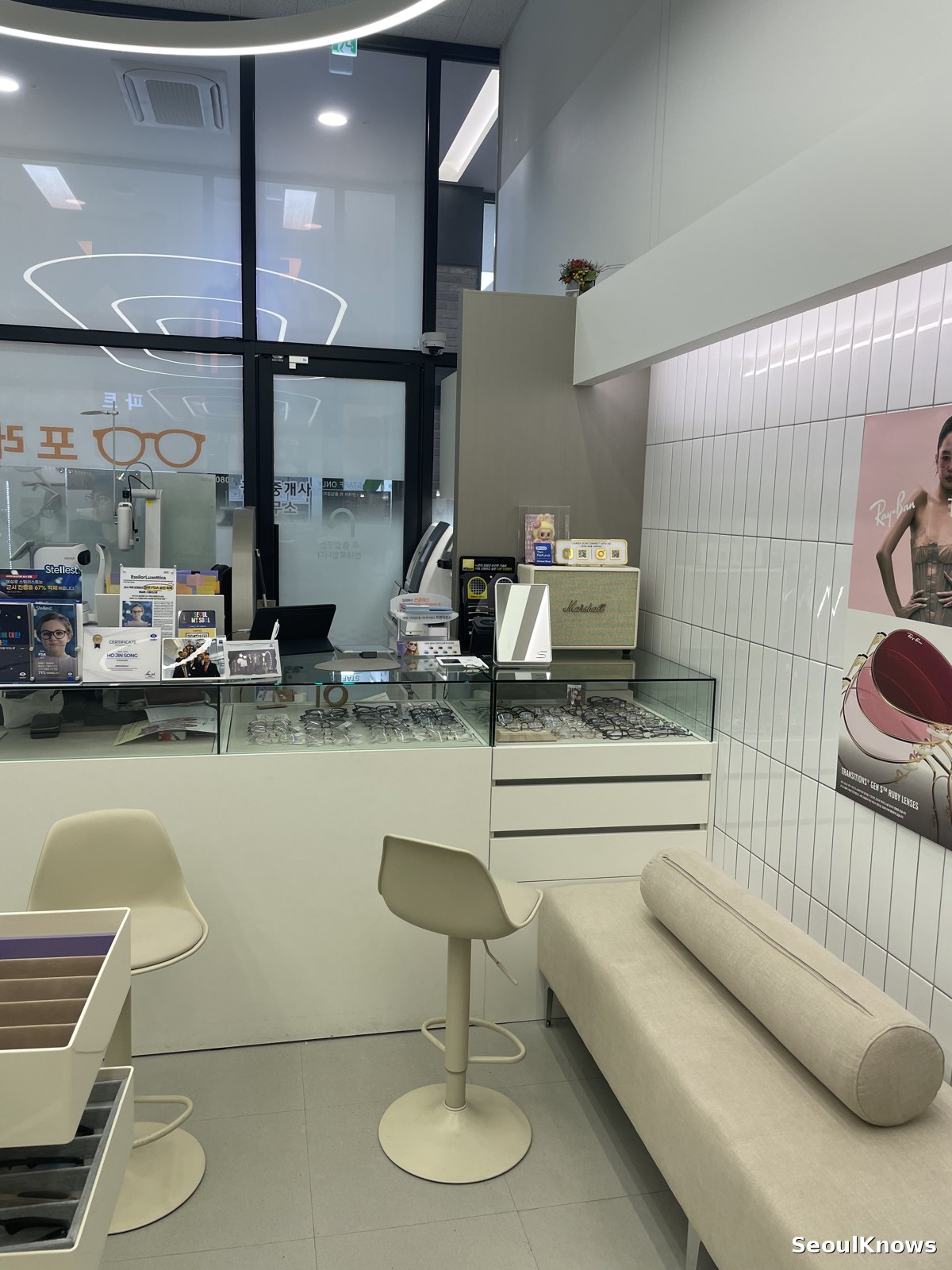
- Neighbourhood opticians. The one near your hotel will do a perfectly good job. Quieter, more personal, and often the most patient with a customer who doesn’t speak Korean.
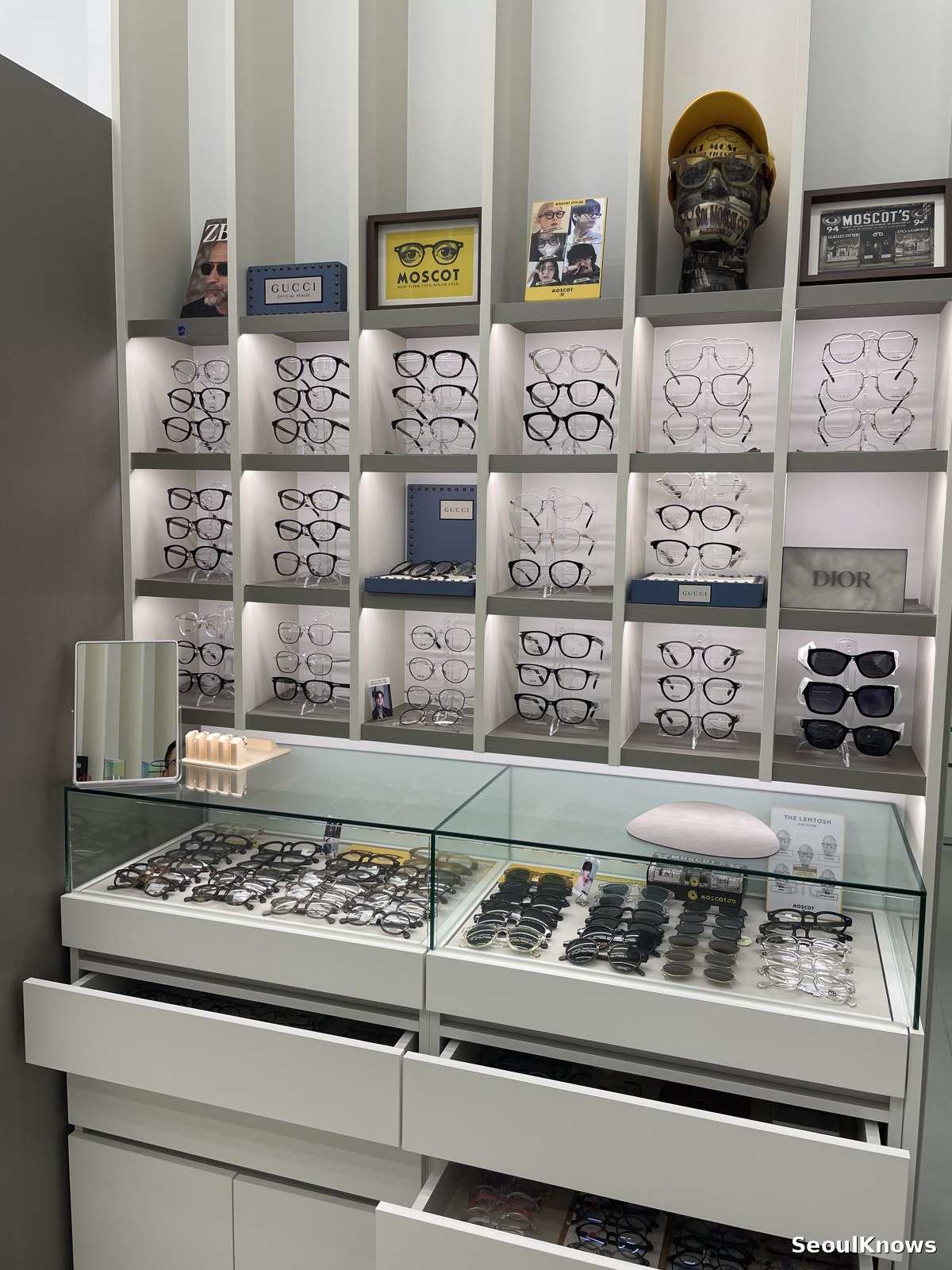
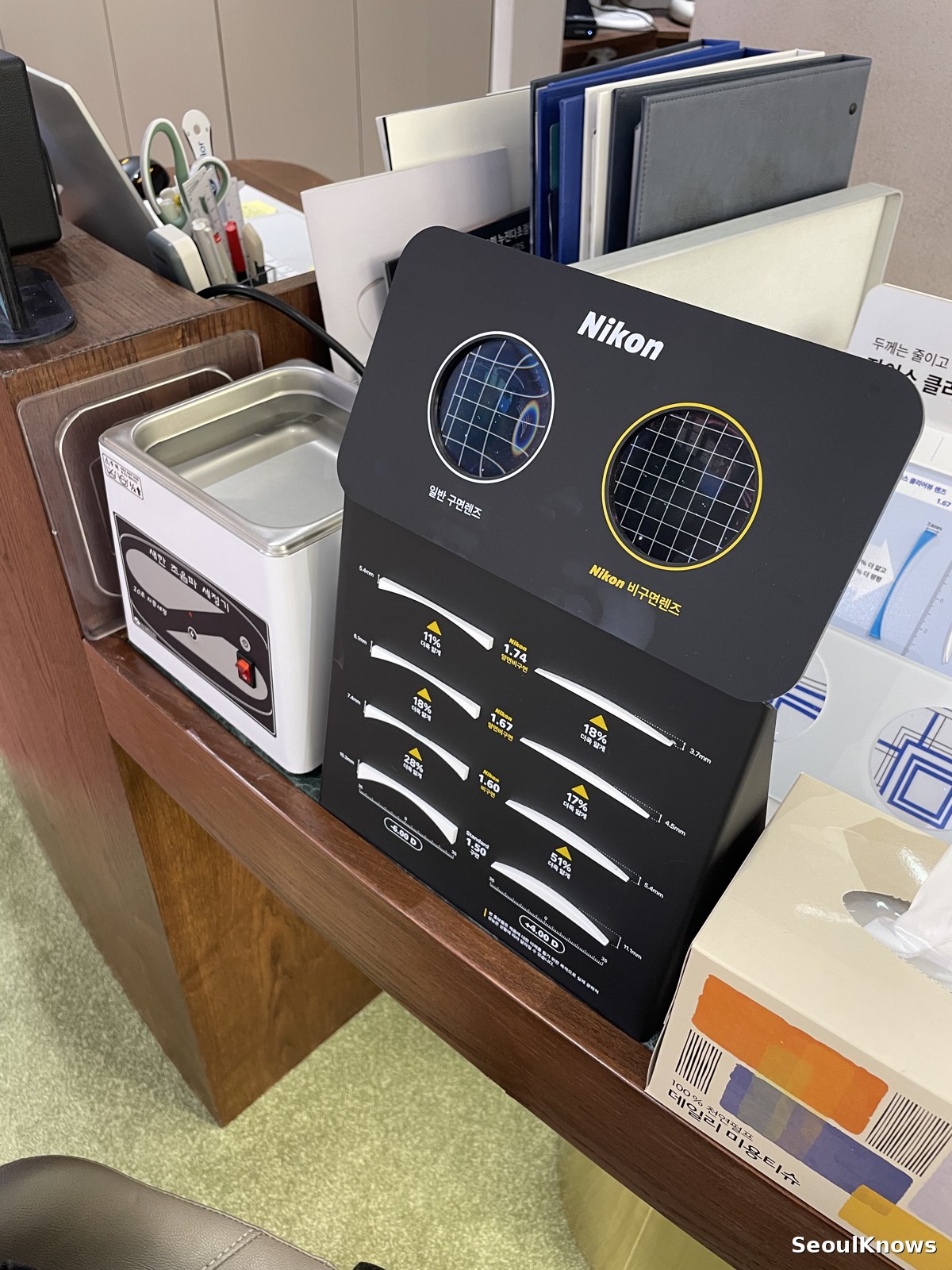
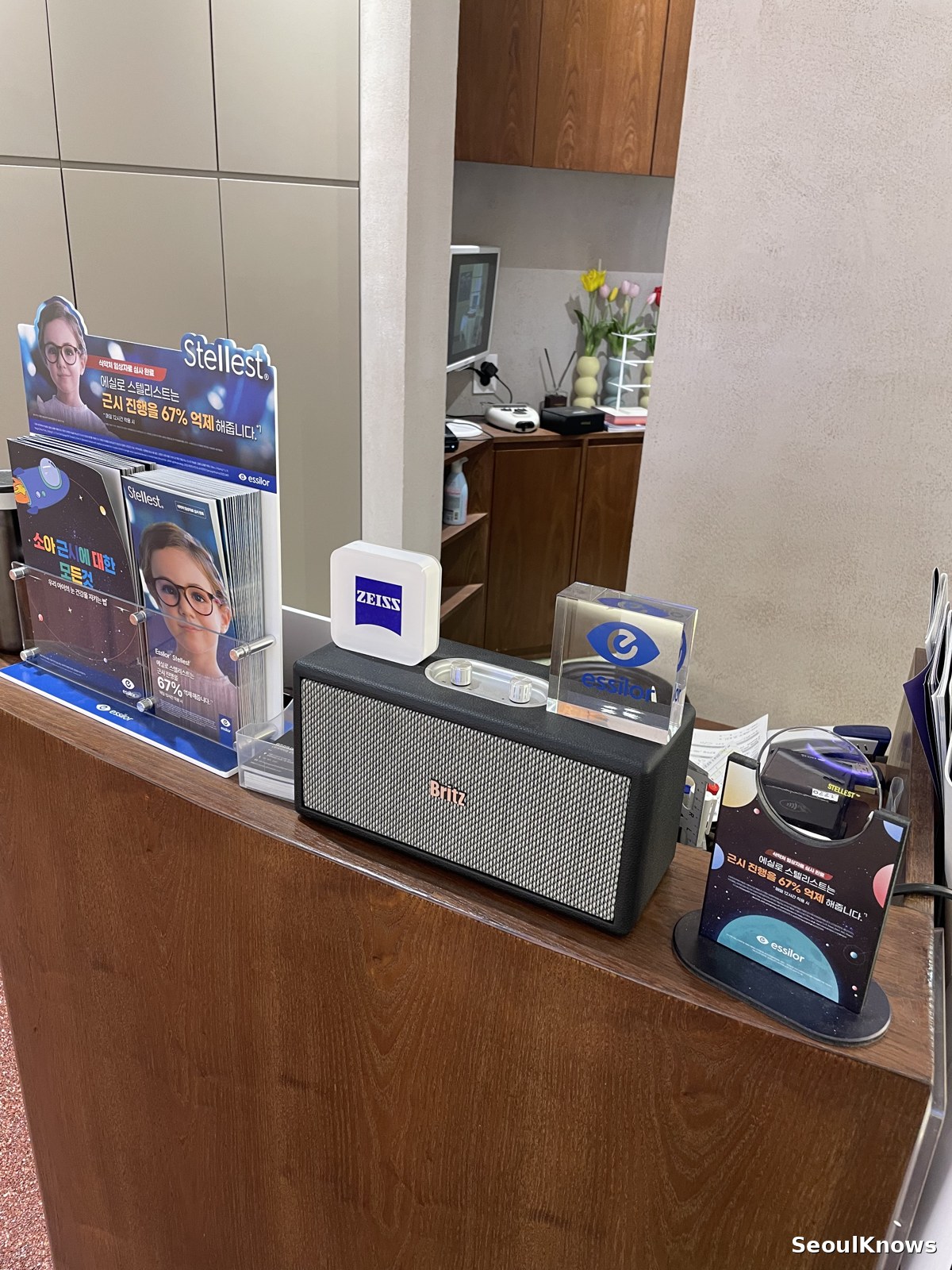
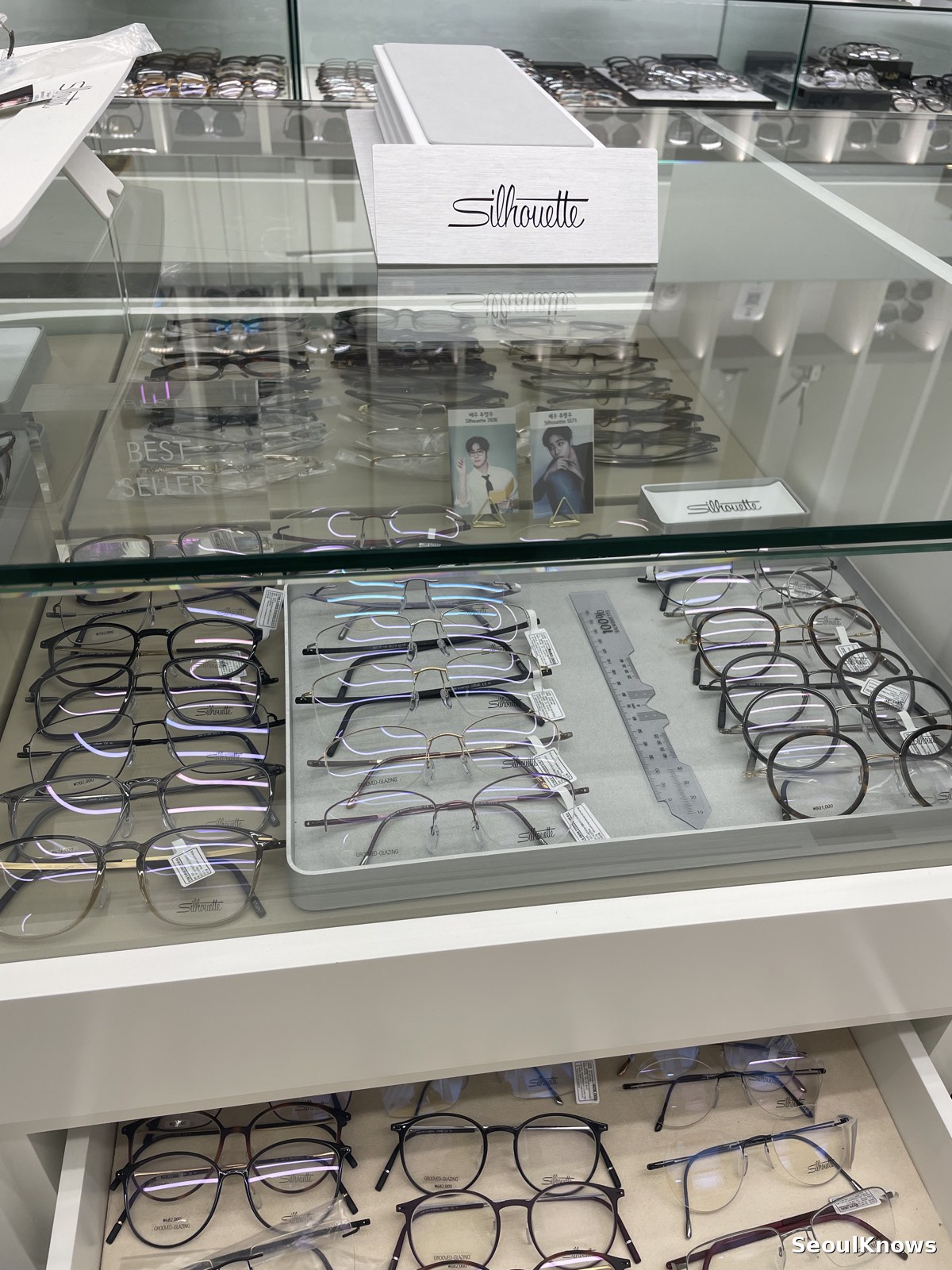
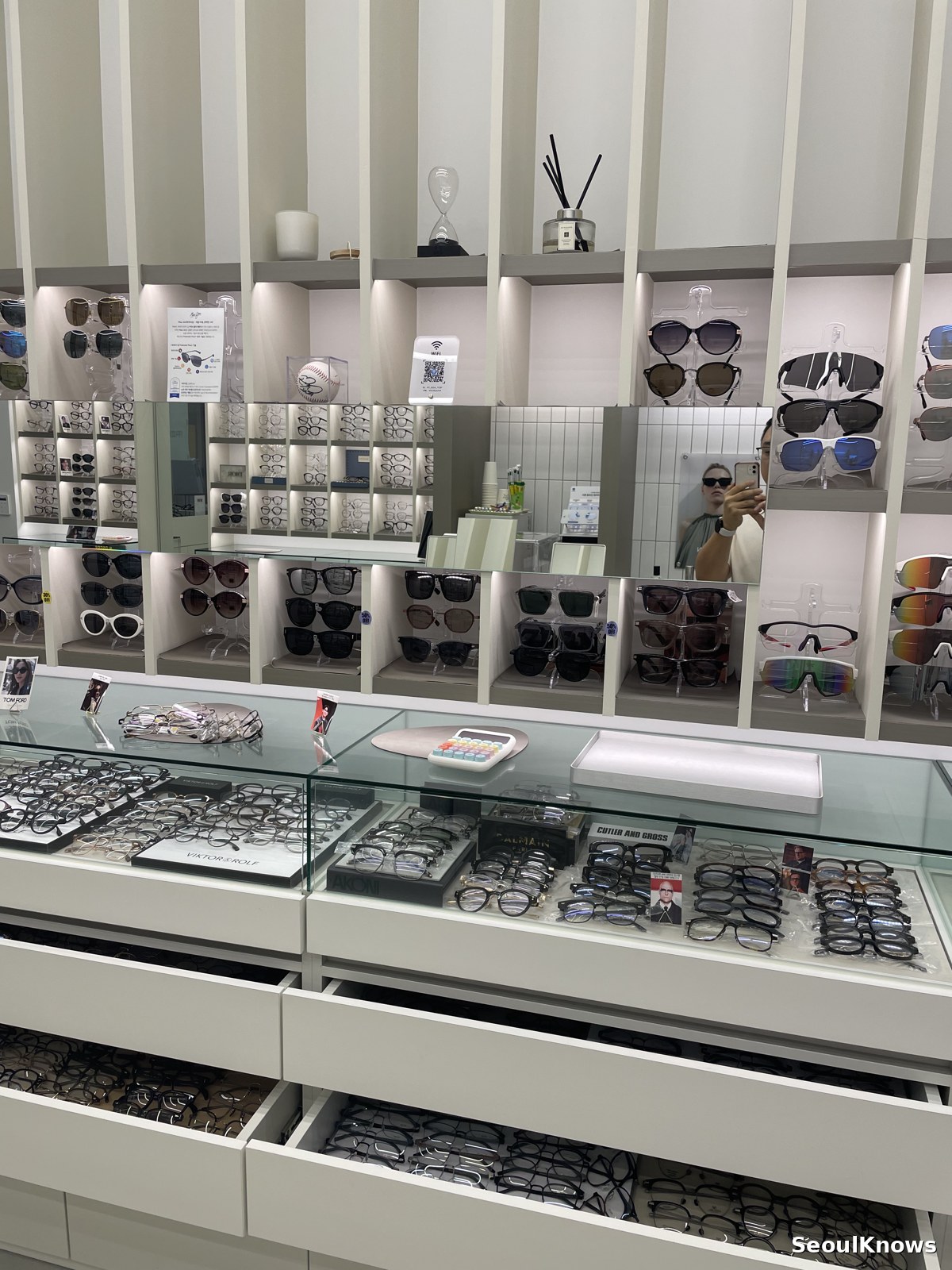
- Department store and mall optical shops. The most comfortable environment, the widest designer selection, and the best bet if you want progressives, high-end lens brands like Zeiss or Nikon, or a careful fitting rather than a fast one.
Sunglasses are worth a look too
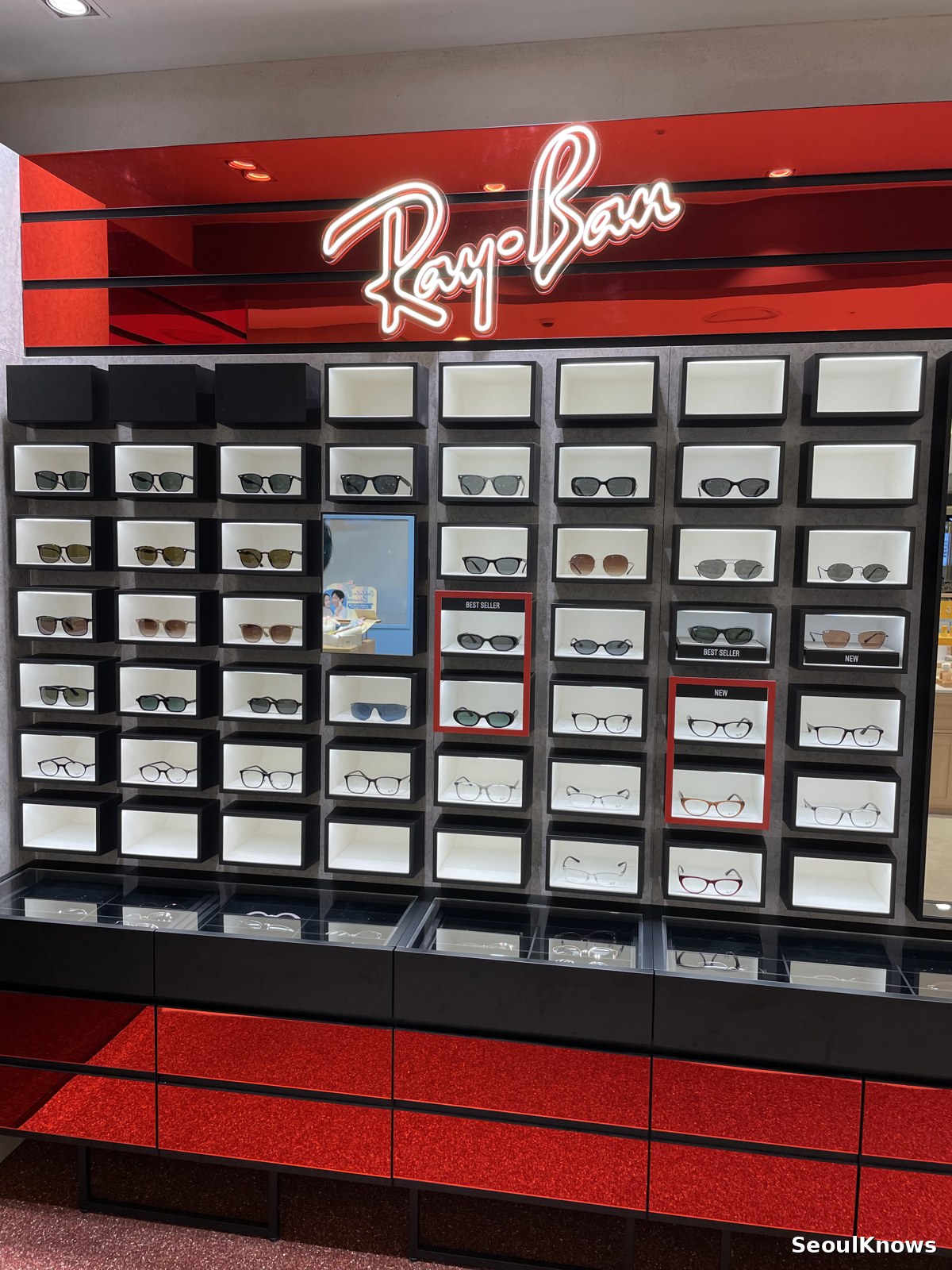
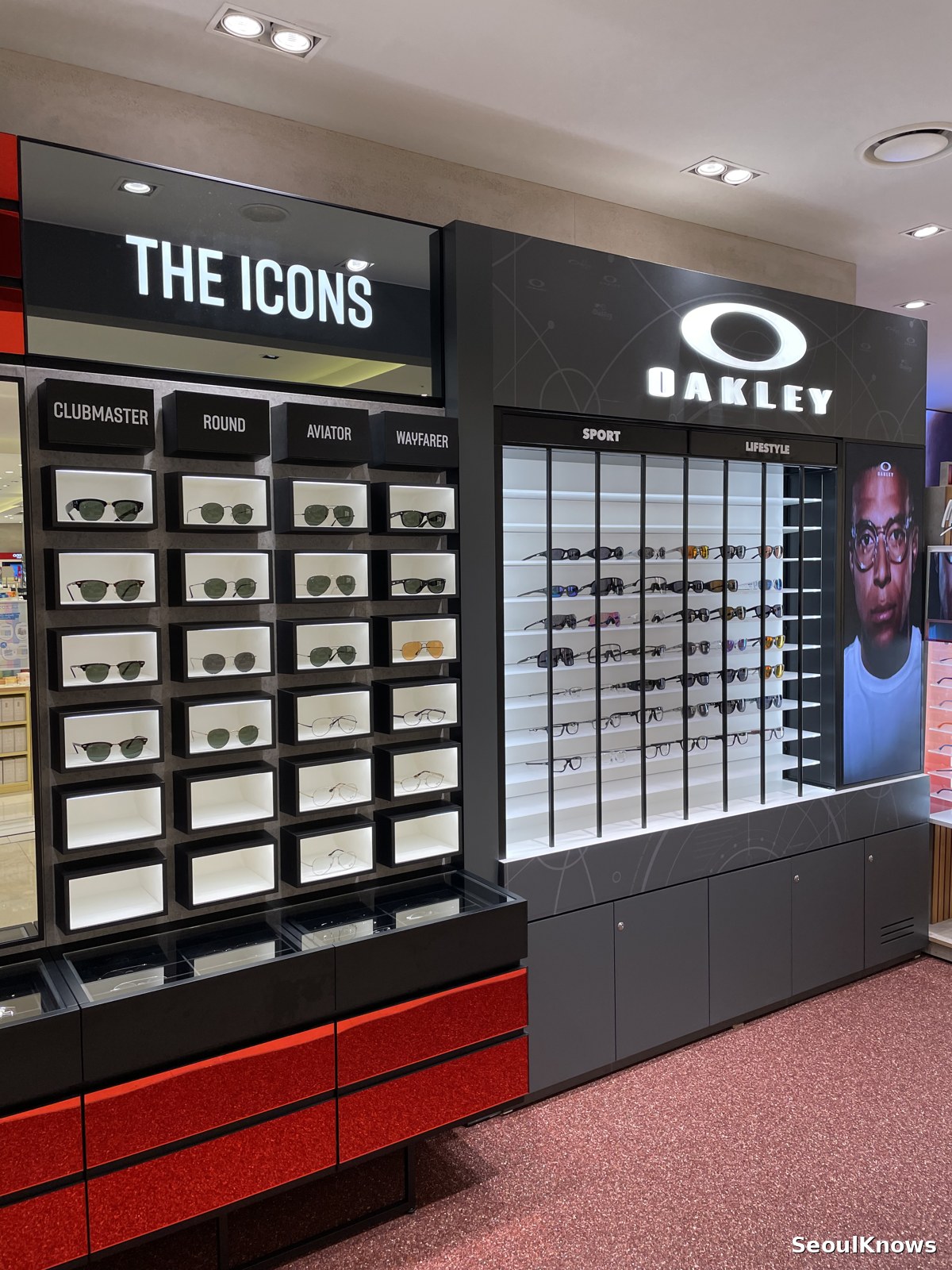
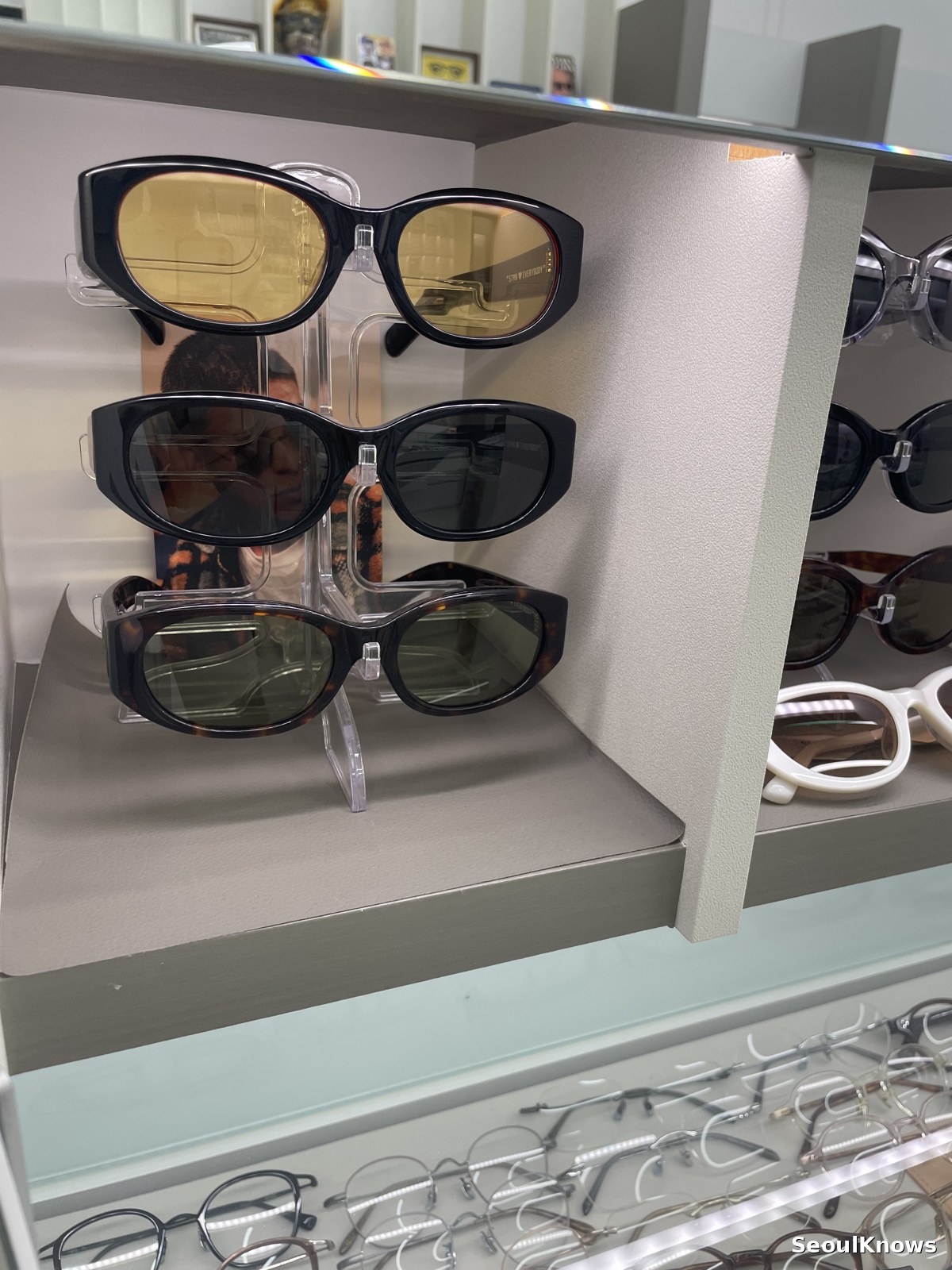
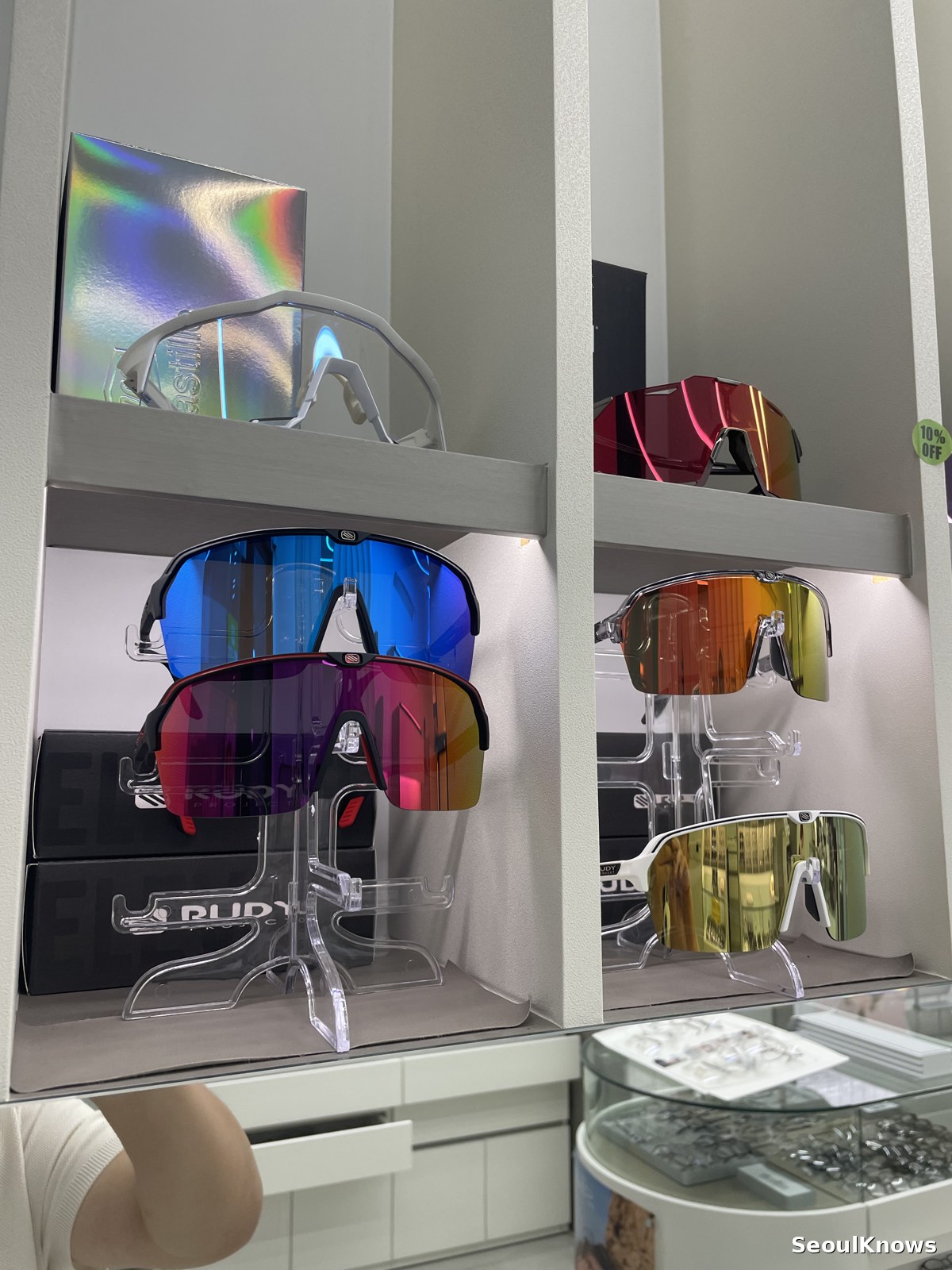
Ray-Ban, Oakley and Maui Jim are widely stocked, and so are the sports wraparound styles for cycling and golf. The advantage over buying at home isn’t always the frame price, it’s that prescription sunglasses get made at the same speed and the same low lens cost. A prescription pair of sunglasses that would be an expensive special order elsewhere is an ordinary same-day purchase here.
Practical tips before you go in
- Bring your old glasses. The shop can read your current prescription straight off the lenses, which speeds things up and gives them a reference point.
- Bring your passport. Many larger shops are registered tax-refund stores, and tourists can get the VAT deducted immediately at the register, typically another 7 to 10 percent off.
- Ask for the total. Quoted prices sometimes cover the frame only. “Total price?” with a gesture at both frame and lenses avoids surprises.
- Photograph your prescription. Ask them to write it down or take a picture of the screen. Useful for ordering online later.
- Consider two pairs. At these prices, a spare or a prescription pair of sunglasses is an easy add-on, and shops often discount the second pair.
- Language. Central and department-store shops usually have some English. Elsewhere, a translation app plus your old glasses gets you through comfortably.
- Time it early. Go on your first or second day, not your last. If anything needs adjusting after a day of wear, you can pop back.
A few honest caveats
This isn’t a medical eye exam. A Korean optician measures your refraction accurately, but they aren’t screening for glaucoma or retinal problems. If you’re due a health check on your eyes, that’s an ophthalmologist, not an optical shop.
Warranty and returns are also a practical limitation: if something goes wrong six months later, you’re on the other side of the world. And if your prescription is unusual, very strong, or you need complex progressives, budget more time and go somewhere that specialises rather than picking the fastest shop on the street.
Quick facts
- Typical price: frame 20,000 to 100,000+ won, lenses 30,000 to 100,000+ won; most complete pairs land at 100,000 to 200,000 won, eye test included
- Time: commonly 15 to 30 minutes for standard single-vision lenses; longer for progressives or specialty lenses
- Prescription: not required in advance; Korean opticians are licensed to test your vision in store
- Appointment: not needed at most shops
- Tax refund: available at registered shops with your passport, usually deducted on the spot
- Bring: your current glasses and your passport
- Where: any neighbourhood optician for convenience, department stores for designer frames and progressives, Namdaemun if you want to compare a lot of shops at once
Frequently asked questions
Do I need a prescription to buy glasses in Korea?
No. Opticians are licensed to measure your vision in the shop, and the test is normally free with a purchase. Bring your old glasses if you have them.
How long does it take to get glasses in Korea?
Often 15 to 30 minutes for standard lenses, because shops keep lens blanks in stock and cut them on site. Progressive or specialty lenses take longer, sometimes a day.
How much do glasses cost in Korea?
You pay for the frame and the lenses separately. Frames run from about 20,000 won to over 100,000, lenses from about 30,000 won to over 100,000. Budget pairs come to 50,000 to 100,000 won, most people spend 100,000 to 200,000, and premium frames or progressives go above that. The eye test is normally free with a purchase.
Is the eye test free?
Usually, yes, when you buy glasses. It’s a refraction test to determine your prescription, not a medical eye examination.
Can tourists get a tax refund on glasses?
Yes, at shops registered for the scheme. Show your passport and the VAT is generally deducted immediately at the register.
Where should I buy glasses in Seoul?
Any neighbourhood optician will do a good job and is the easiest option. Department store shops are best for designer frames, premium lenses and progressives. Namdaemun Market has around 150 optical shops in one place if you want to browse widely, though reviews on whether it is actually cheaper are mixed.
Can I get prescription sunglasses made?
Yes, and it’s one of the best-value things to buy here. They’re made at the same speed and the same lens prices as regular glasses.
Will language be a problem?
Rarely. The eye test is mostly non-verbal, larger shops often have English speakers, and a translation app plus your old glasses covers the rest.
So yes: if you wear glasses, get a pair while you’re here. Bring the old ones and your passport, go early in the trip rather than late, and give yourself an hour. It’s one of the few things you can buy in Korea that you’ll use every single day afterwards.
Written by WY, a Seoul-based local sharing honest, first-hand guides to Korea. Every guide here is a place I’ve actually been to — written from my own visit, my own photos. More about me →