
Korea charges 10% VAT on most things you buy. If you’re visiting, you can claim a chunk of that back, but only if you know the rules before you shop, not after.
The system is genuinely good. What trips people up is the fine print: minimum spend per receipt, a maximum per receipt, and a cap across your whole trip. Get one of those wrong and you find out at the airport, when it’s too late.
Here’s how it actually works.
Quick facts (2026)
| Question | Answer |
|---|---|
| What’s refunded? | VAT, 10% of the pre-tax price |
| Who qualifies? | Non-Korean nationals staying under six months |
| Minimum per receipt | ₩15,000 |
| Maximum per trip | ₩5,000,000 total |
| Where? | In store, downtown kiosk, or the airport |
| What you need | Your passport and the original receipt |
| Deadline | Goods must leave Korea within three months, unused |
Do you actually qualify?
You qualify if you’re not a Korean national and you’ve been in the country for less than six months.
That last part catches people out. This is a tourist scheme. If you live here on a work or student visa, you’re outside it, regardless of your passport.
Overseas Koreans have a separate, stricter test involving how long you’ve lived abroad. If that’s you, ask at the refund counter rather than assuming either way.
The goods matter too. They have to be new, unused, and physically leave Korea with you within three months. Meals, hotel nights, and taxi rides don’t count, this covers things you carry out, not experiences you consume here.
The three ways to get your money
Most guides list these as if they’re interchangeable. They aren’t, each has different limits, and picking wrong costs you.
| Method | When it works | The catch |
|---|---|---|
| Immediate, in store | Single payment ₩15,000 or more but under ₩1,000,000 | Discount is applied at the till, nothing to claim later |
| Downtown kiosk | Refund before you fly, cash in hand for the rest of your trip | Purchases must not exceed ₩6,000,000 per receipt |
| Airport | Anything you didn’t claim earlier | Queues. Build in extra time |
Note that ₩1,000,000 figure for immediate refunds. It’s under one million, not up to it. A single ₩1,000,000 payment doesn’t qualify for the in-store route, you’d claim that one at a kiosk or the airport instead.
And across your entire trip, everything you claim adds up to a ceiling of ₩5,000,000.
Which one should you use?
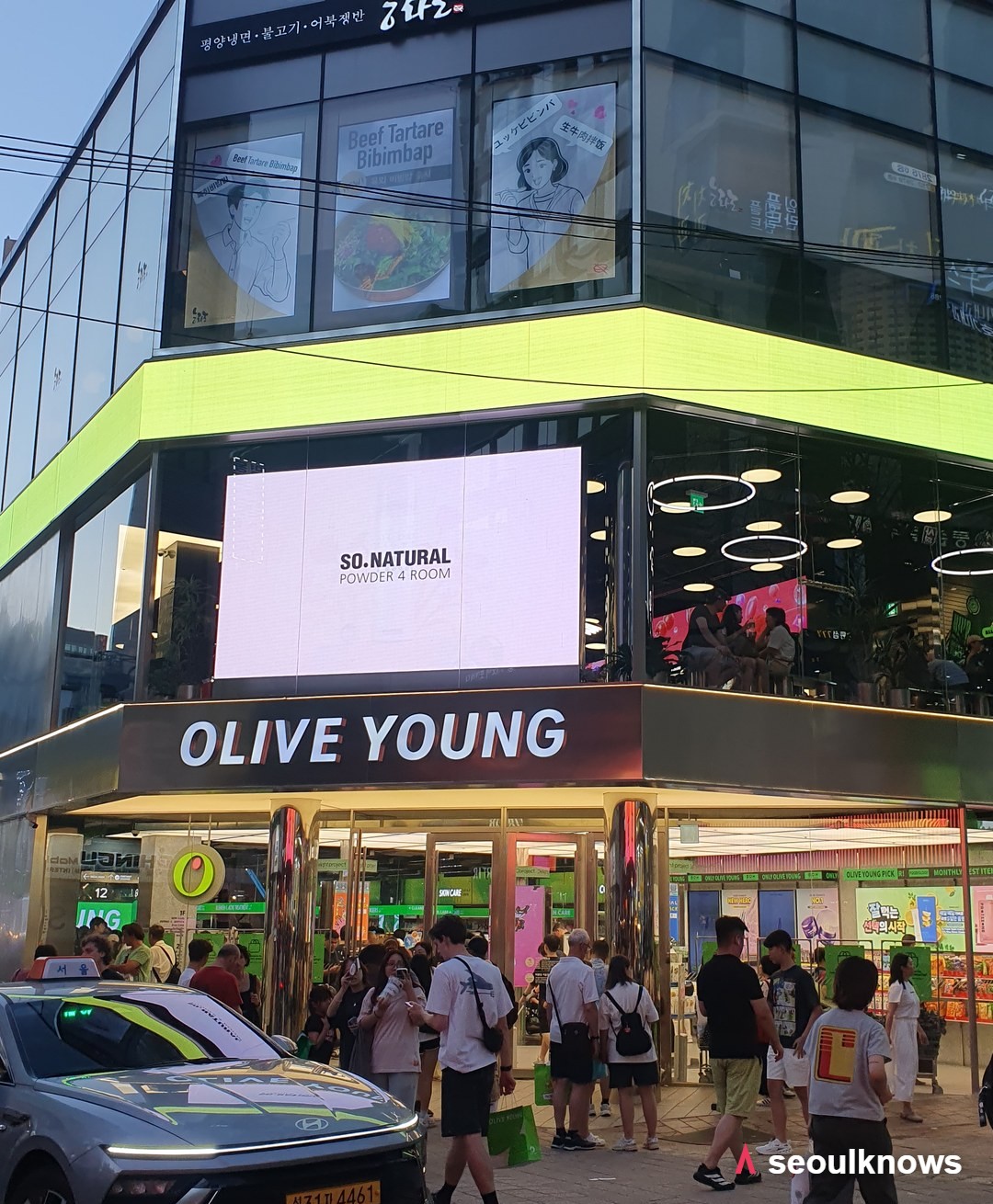
- Buying cosmetics, snacks, small stuff? Take the immediate refund in store. Chains like Olive Young handle this at the register, you just show your passport and pay less. Nothing to do at the airport.
- Bought something expensive mid-trip? Use a downtown kiosk. You get the cash while you’re still here to spend it.
- Didn’t get around to it? The airport is your backstop. Just don’t leave it to the last thirty minutes.
You can mix all three across one trip. The ₩5,000,000 trip ceiling applies to the total, however you split it.
Step-by-step: claiming at the airport
Step 1: Ask for the tax refund receipt when you pay
This is the step everything else depends on. At checkout, show your passport and say you want the tax refund. The shop issues a separate refund slip alongside your normal receipt.
No slip, no refund. You can’t go back for it later.
Step 2: Keep the goods accessible
Customs can ask to see what you’re claiming for. If it’s buried in a checked bag you’ve already dropped off, that’s a problem. Either keep purchases in your carry-on, or go to customs before you check in.
Step 3: Get customs confirmation if asked
Depending on the amount and the method, you may need a customs stamp or scan before you can collect. Follow the signs for tax refund customs, they’re marked in English.
Step 4: Collect
Self-service kiosks are faster than the staffed counters, and they run in English. Scan your passport, scan each refund slip, pick cash or card.
Cash is immediate. Card takes weeks and sometimes carries a fee, take the cash if it’s offered.
How much do you actually get back?
VAT is 10%, but you won’t see all of it. Refund operators take a service fee, so the real return lands somewhat below the headline rate.
On a ₩100,000 purchase, expect roughly ₩7,000-9,000 back rather than a clean ₩10,000. Worth having, just don’t budget as though you’re getting the full ten percent.
Rough working numbers:
| You spend | Ballpark refund |
|---|---|
| ₩15,000 (the minimum) | around ₩1,000 |
| ₩50,000 | ₩3,500-4,500 |
| ₩100,000 | ₩7,000-9,000 |
| ₩300,000 | ₩21,000-27,000 |
| ₩500,000 | ₩35,000-45,000 |
Indicative only, operator fees vary, so treat these as a planning range rather than a promise.
The practical read: below about ₩30,000 the refund is small enough that it’s not worth restructuring your shopping around. Above ₩100,000 it’s real money and worth the paperwork.
Medical and beauty treatments: the refund most people miss
If you’re coming to Korea for a skin treatment, a dermatology visit, or cosmetic surgery, there’s a separate refund route that almost nobody writes about.
Certain medical and aesthetic procedures at designated clinics qualify for VAT refunds for foreign patients. Not every clinic participates and not every procedure qualifies, but the ones that do can involve much larger sums than anything you’d claim on cosmetics.
What to do
- Ask before you book, not after. Say plainly: “Is this procedure eligible for a tax refund for foreign patients?” A participating clinic will know immediately.
- Check the treatment itself qualifies. Clinic participation and procedure eligibility are two different things.
- Get the paperwork at the clinic. Same principle as shopping, the documentation is issued at the point of service and can’t be added later.
- Bring your passport to the appointment.
- Ask which refund route applies, some clinics process it directly, others send you to the airport.
Because eligibility rules here are narrower and change more often than the retail scheme, treat the clinic as your source of truth rather than any guide, including this one. What we’d say is simply this: ask the question. Most people never do, and leave the money behind.
Mistakes that cost people money
- Forgetting to ask at the till. The single most common one. The refund slip has to be issued at the moment of purchase.
- Leaving the passport at the hotel. No passport, no slip. Carry it on shopping days.
- Checking the goods in first. Then being asked to show them.
- Using the items. Wearing the shoes, opening the cosmetics. They’re supposed to leave Korea unused.
- Arriving too late. Refund queues at Incheon get long in the morning and early evening.
- Splitting one purchase across receipts to game the limits. Don’t.
Quick tips
- Look for “TAX FREE” stickers on the door, not every shop participates.
- Photograph each refund slip. Paper receipts fade and go missing.
- Take immediate in-store refunds whenever you’re offered them. Fewer slips to manage.
- Give yourself an extra 30-40 minutes at the airport if you’re claiming several.
- Doing a big-ticket purchase? Ask the shop which method they recommend for that amount.
Frequently asked questions
How much do I need to spend to get a tax refund in Korea?
₩15,000 on a single receipt. Below that, the purchase doesn’t qualify.
Is there a maximum?
Yes, three of them. Immediate in-store refunds need a single payment under ₩1,000,000. Downtown refund booths cap purchases at ₩6,000,000 per receipt. And across your whole trip, the total can’t exceed ₩5,000,000.
Can I claim a refund if I live in Korea?
No. The scheme is for non-Korean nationals staying under six months. Residents on work or student visas don’t qualify.
Do I need to show what I bought?
Possibly. Customs can ask to inspect the goods, so keep them accessible until you’ve finished the refund process.
Cash or card?
Cash if you can. Card refunds take weeks and may carry a processing fee.
What if I forgot to ask at the shop?
Then that purchase can’t be claimed. The refund slip is issued at the point of sale and can’t be added afterwards.
Does food or my hotel count?
No. The refund covers goods you take out of the country, not meals, accommodation, or transport.
How long do I have?
Goods must leave Korea within three months of purchase, unused.
Do I claim before or after security at the airport?
It depends on the method and the amount. Customs inspection, where required, happens before you pass through, so if there’s any chance you’ll be asked to show the goods, sort that out before security and before checking your bags. Refund collection kiosks exist on both sides at Incheon. Follow the tax refund signage in your terminal; it’s marked in English.
Should I claim before or after checking in my luggage?
Before, if the items you’re claiming for are going into your checked bag. Once it’s on the belt you can’t produce it for inspection.
Which Incheon terminal am I in?
Check your boarding pass. Terminal 1 and Terminal 2 are separate buildings with their own refund desks and kiosks, and you can’t pop between them once you’re airside.
Can I get a refund on cosmetic surgery or a skin treatment?
Sometimes. Certain procedures at participating clinics qualify for foreign patients. Ask the clinic directly before booking, eligibility depends on both the clinic and the specific treatment.
Sources & last checked
Eligibility, minimum spend, and the ₩1,000,000 / ₩5,000,000 / ₩6,000,000 limits verified against the Korea Tourism Organization tax refund guide in August 2026. Rules and operator fees can change, confirm at the refund counter before you rely on a specific figure.
Related: Myeongdong Shopping Guide · Myeongdong Street Food Guide · Premium Outlets Near the Airport · Incheon Airport to Seoul