
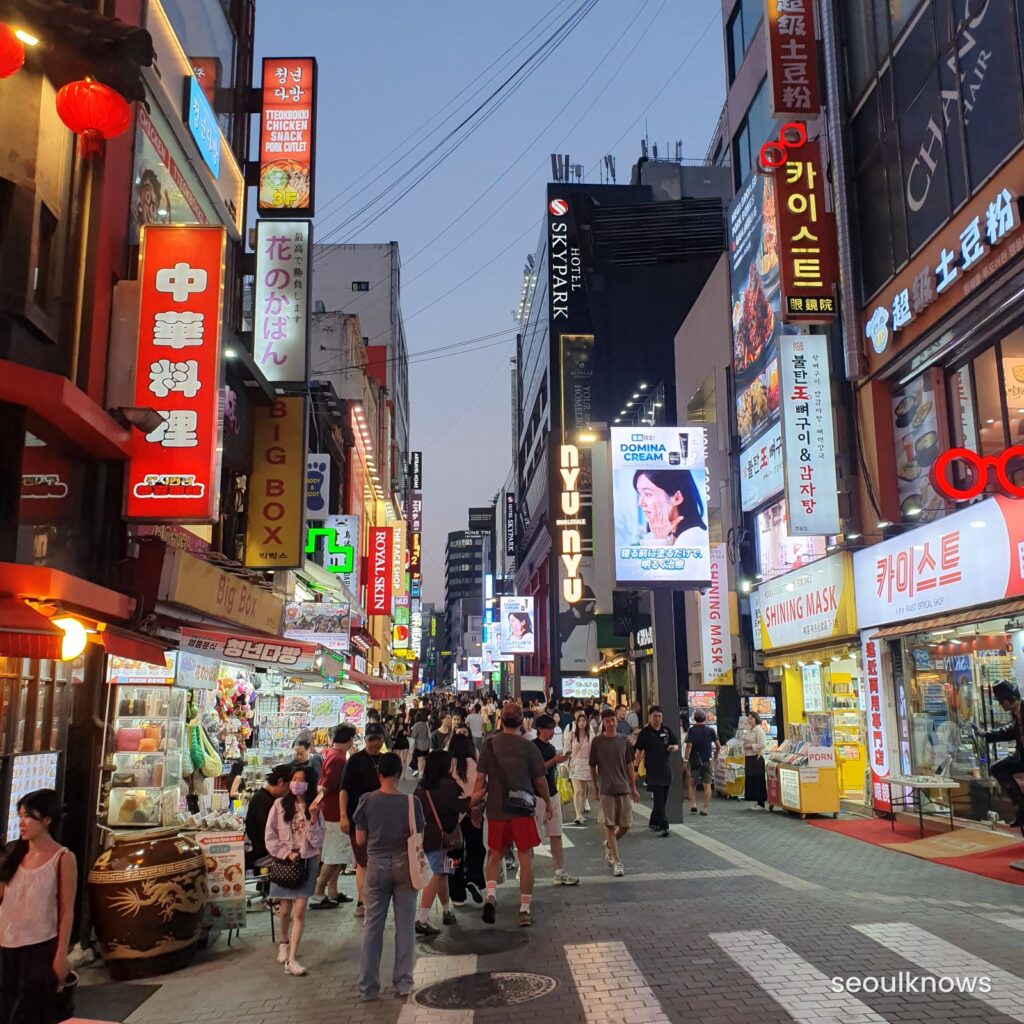
Myeongdong is Seoul’s most famous street-food street, a few blocks packed with sizzling grills, sweet griddle pancakes and photogenic splurges. Here’s a curated guide to the dishes worth trying, with real ₩ prices, hours and payment tips, one photo per dish so you know exactly what to look for.
In short: Myeongdong street food runs daily from about 2 PM to 11 PM along Myeongdong-gil. Budget ₩10,000–20,000 per person and most stalls take cards. Start with a chicken skewer (₩5,000–6,000), pork belly rolls (₩10,000) and hotteok (₩3,000–4,000); premium bites like cheese lobster run about ₩20,000.
🚇 Getting there Myeongdong Station (Line 4) Exit 6/8, or Euljiro 1-ga Station (Line 2) Exit 5/6
🕒 Hours Most stalls open ~2-4 PM until 10-11 PM; busiest in the evening
💳 Payment Cards & mobile pay at most stalls; carry a little cash for small items
💰 Budget About ₩10,000-20,000 per person for a good sampling
Opening hours at a glance — Most stalls: 2–4 PM → 10–11 PM daily · Busiest: 6–9 PM · Shortest queues: right at 4 PM · Cash & card both widely accepted (smaller stalls prefer cash).
Myeongdong Street Food: What to Eat First (Top 5)
- Chicken skewer (₩5,000–6,000) — the classic first bite
- Pork belly rolls (₩10,000) — samgyeop-mari, the Myeongdong icon
- Hotteok (₩3,000–4,000) — sweet, crispy griddle pancake
- Tteokbokki cup (₩5,000) — spicy rice cakes, easy to eat while walking
- Cheese lobster (₩20,000) — the photogenic splurge
🍢 Skewers & Grilled
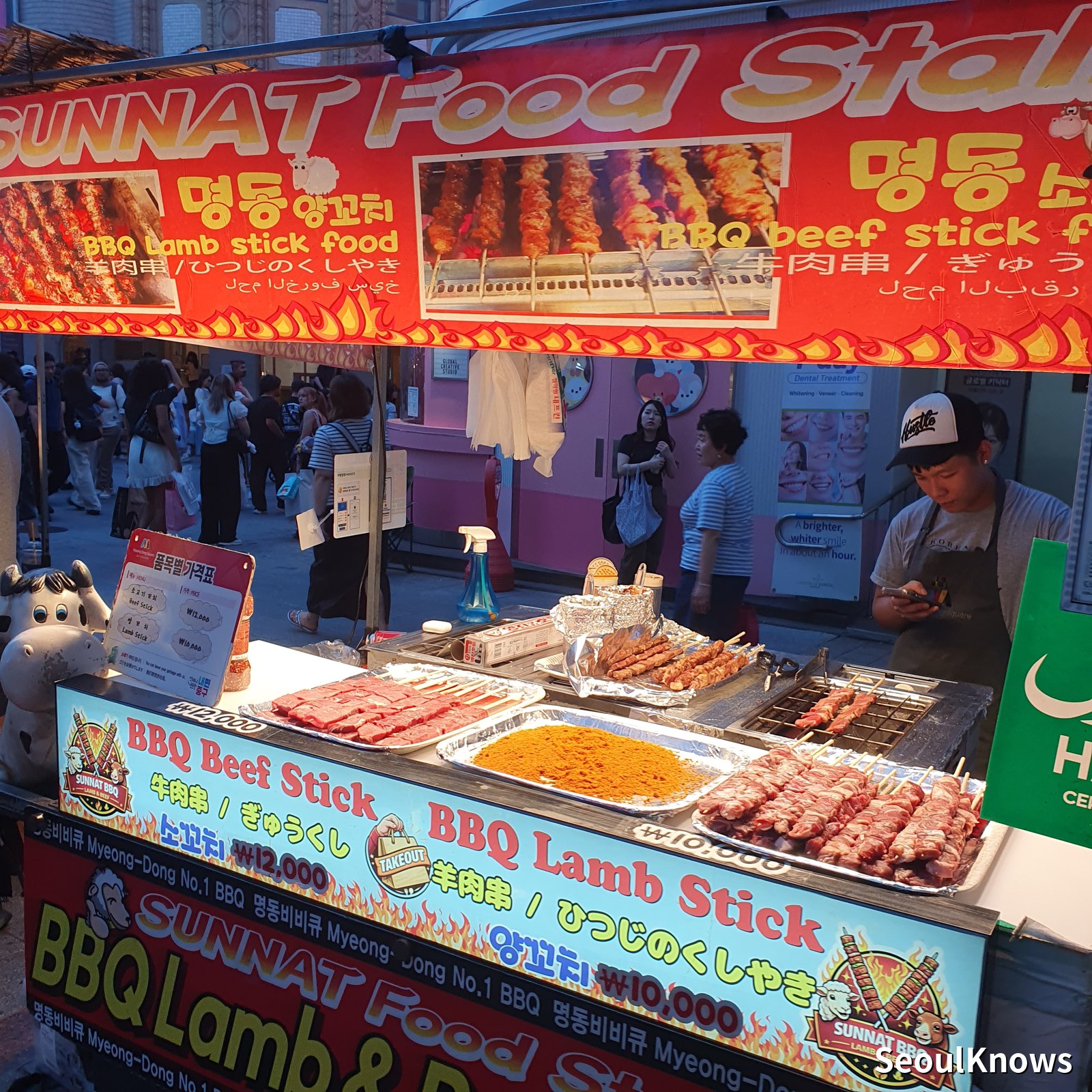
BBQ beef & lamb sticks, cumin-dusted beef and lamb skewers grilled to order, a Myeongdong crowd favorite.
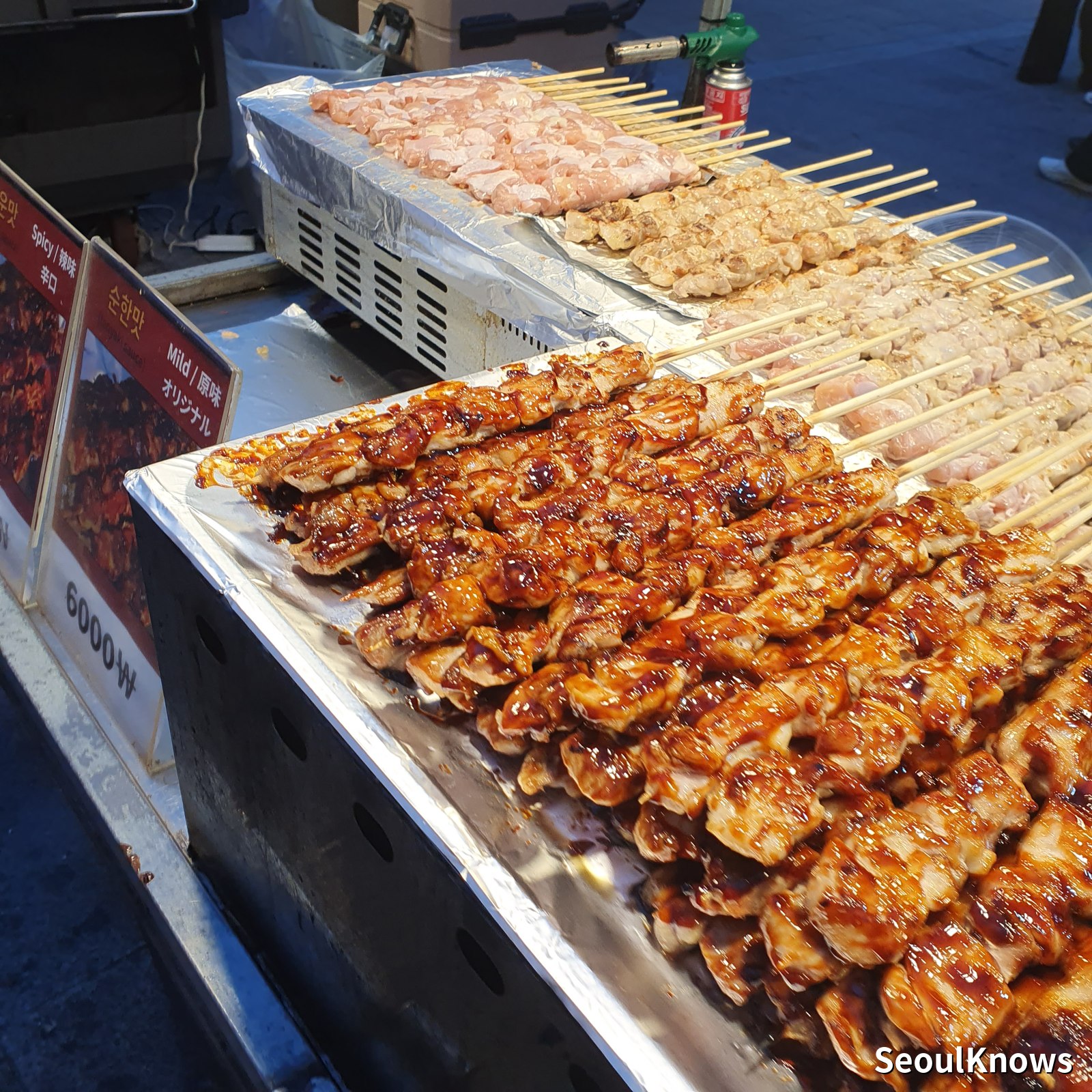
Spicy chicken skewers (dak-kkochi), grilled and brushed with a sweet-spicy glaze, the classic walk-and-eat. ₩5,000-6,000.
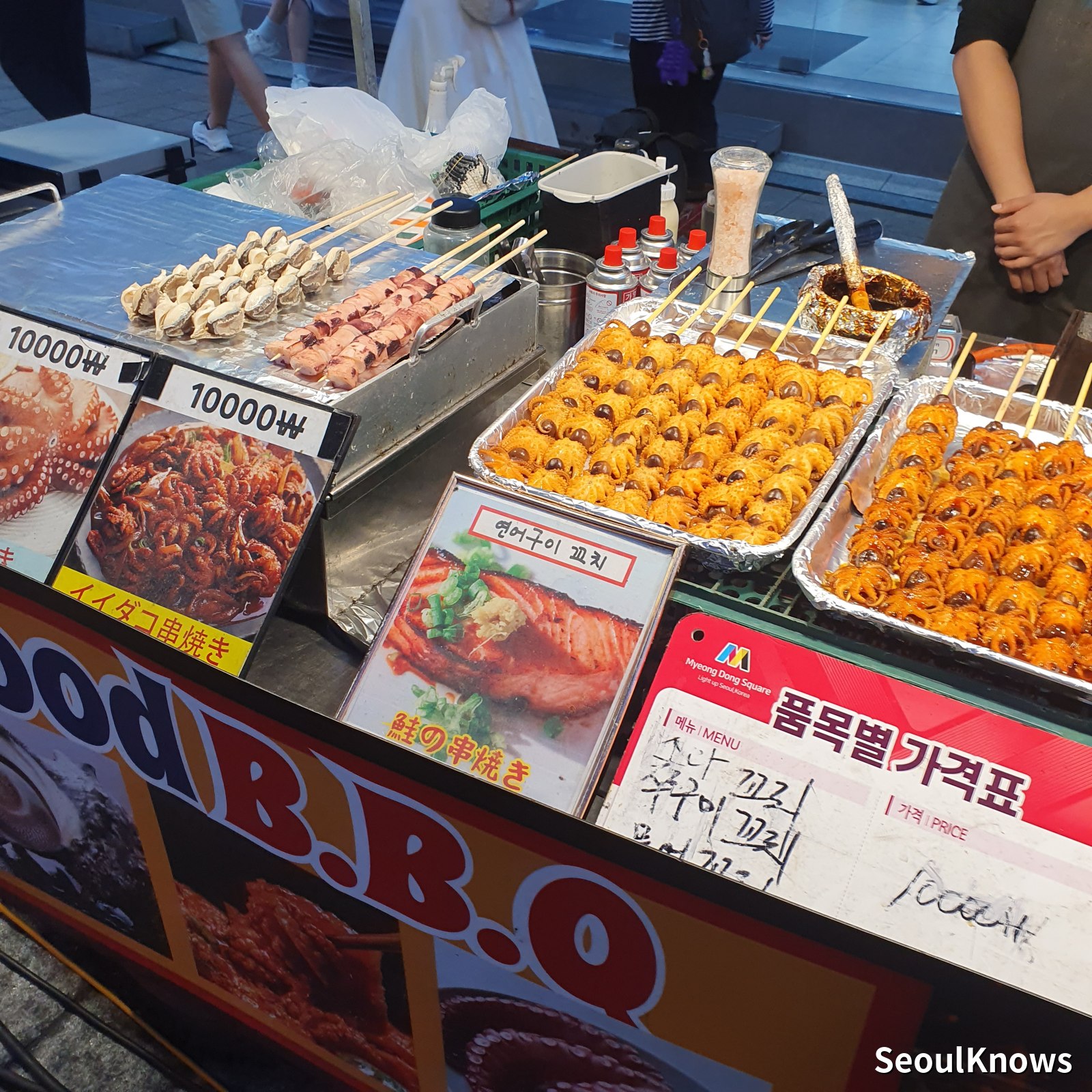
Seafood & stone-grilled skewers, conch, octopus and stone-grilled squid on a stick, usually market price, so check first.
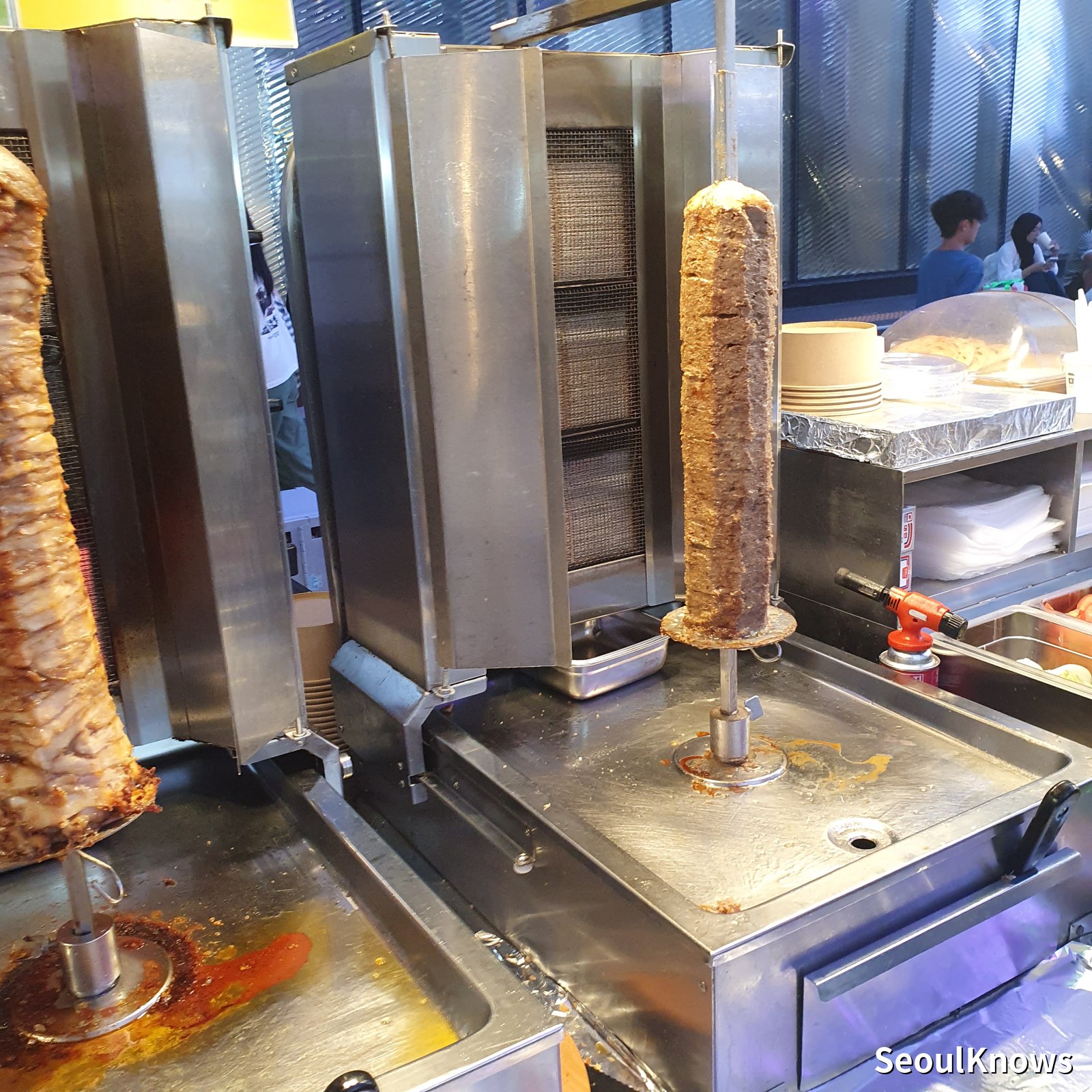
Kebab, Turkish-style döner carved fresh into a wrap, a filling street meal.
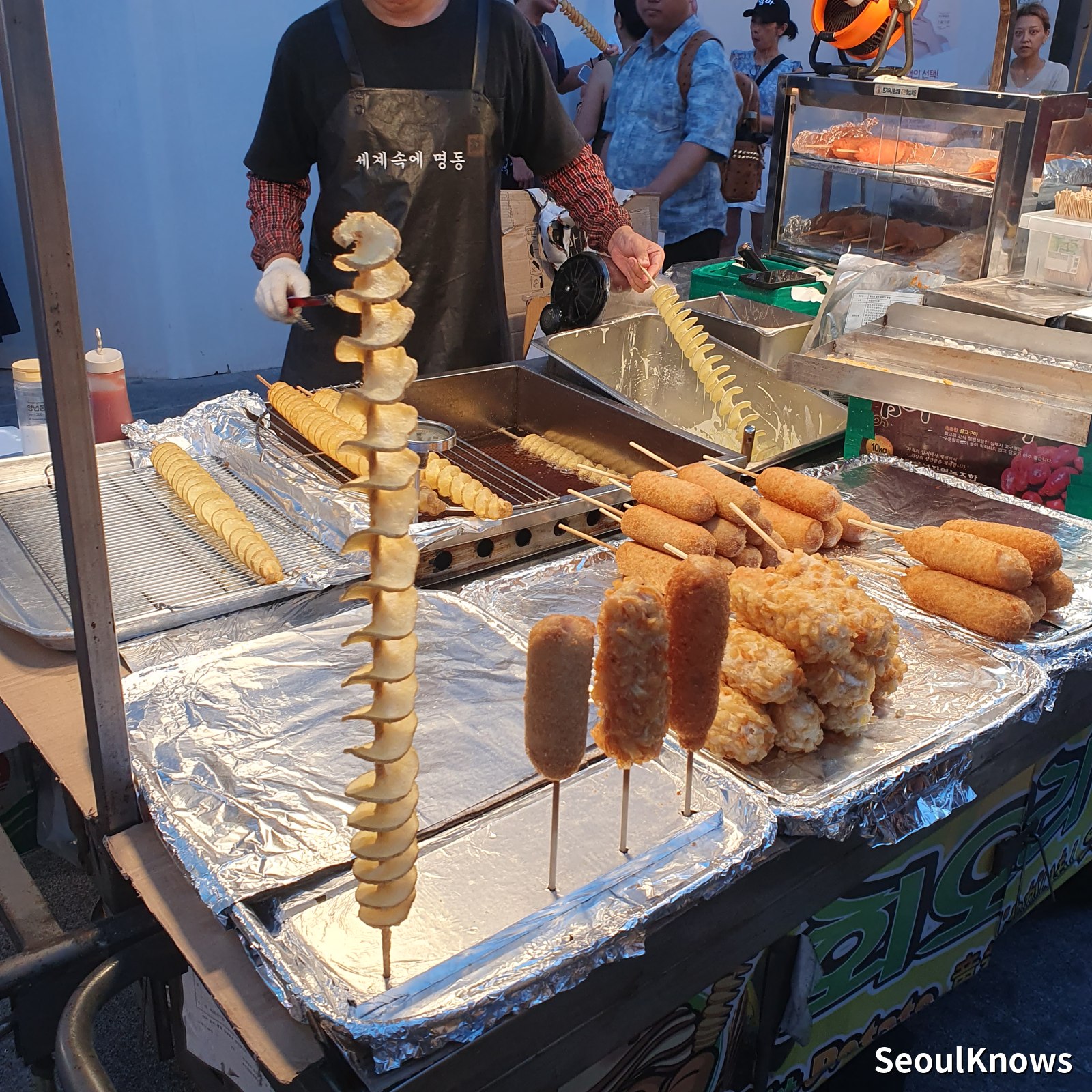
Tornado potato & sausage skewers, spiral-cut potato and sausage on a stick, deep-fried, savory and fun.
🍗 Fried Chicken & Fritters
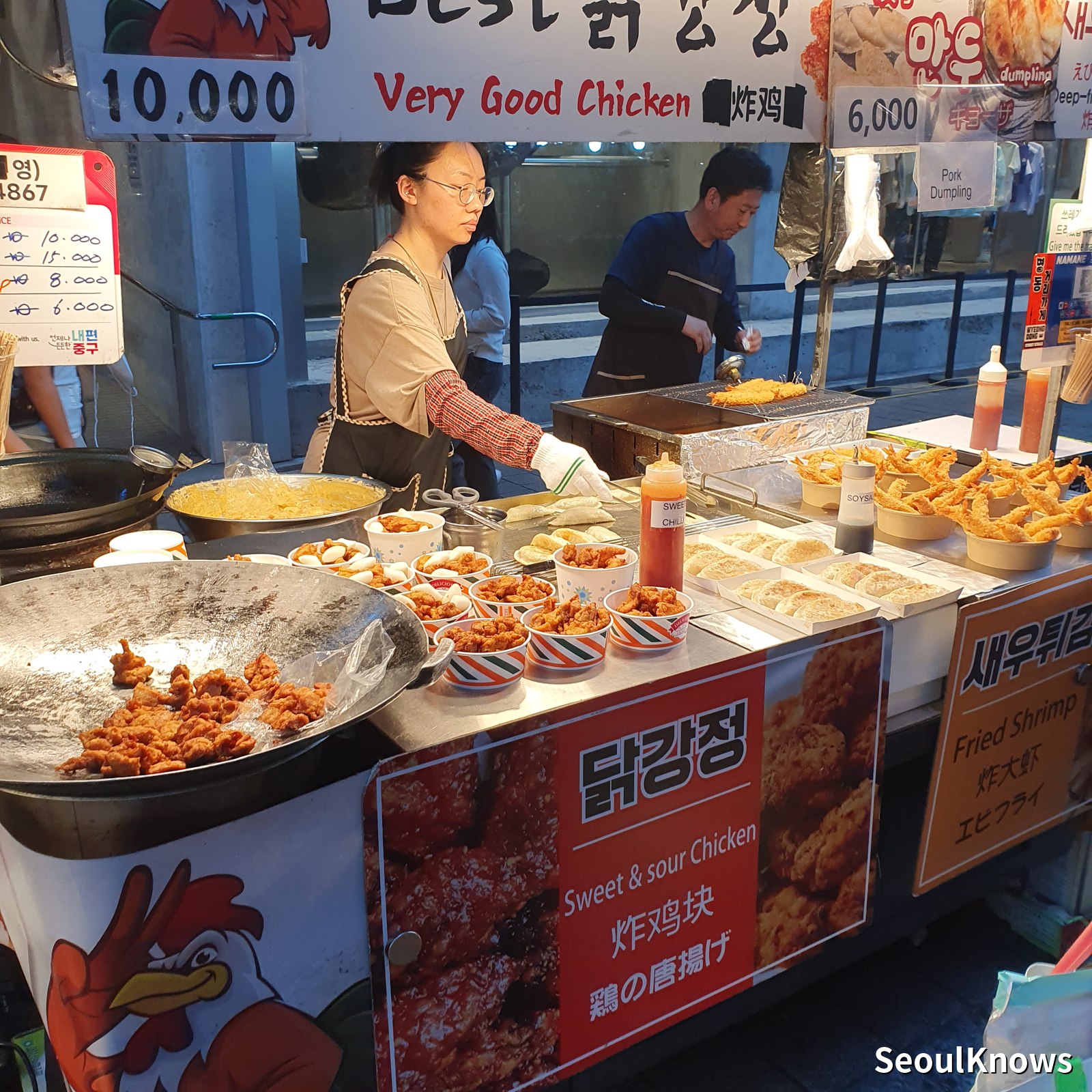
Dak-gangjeong (Korean fried chicken), crunchy bite-size chicken in a sweet-and-spicy glaze.
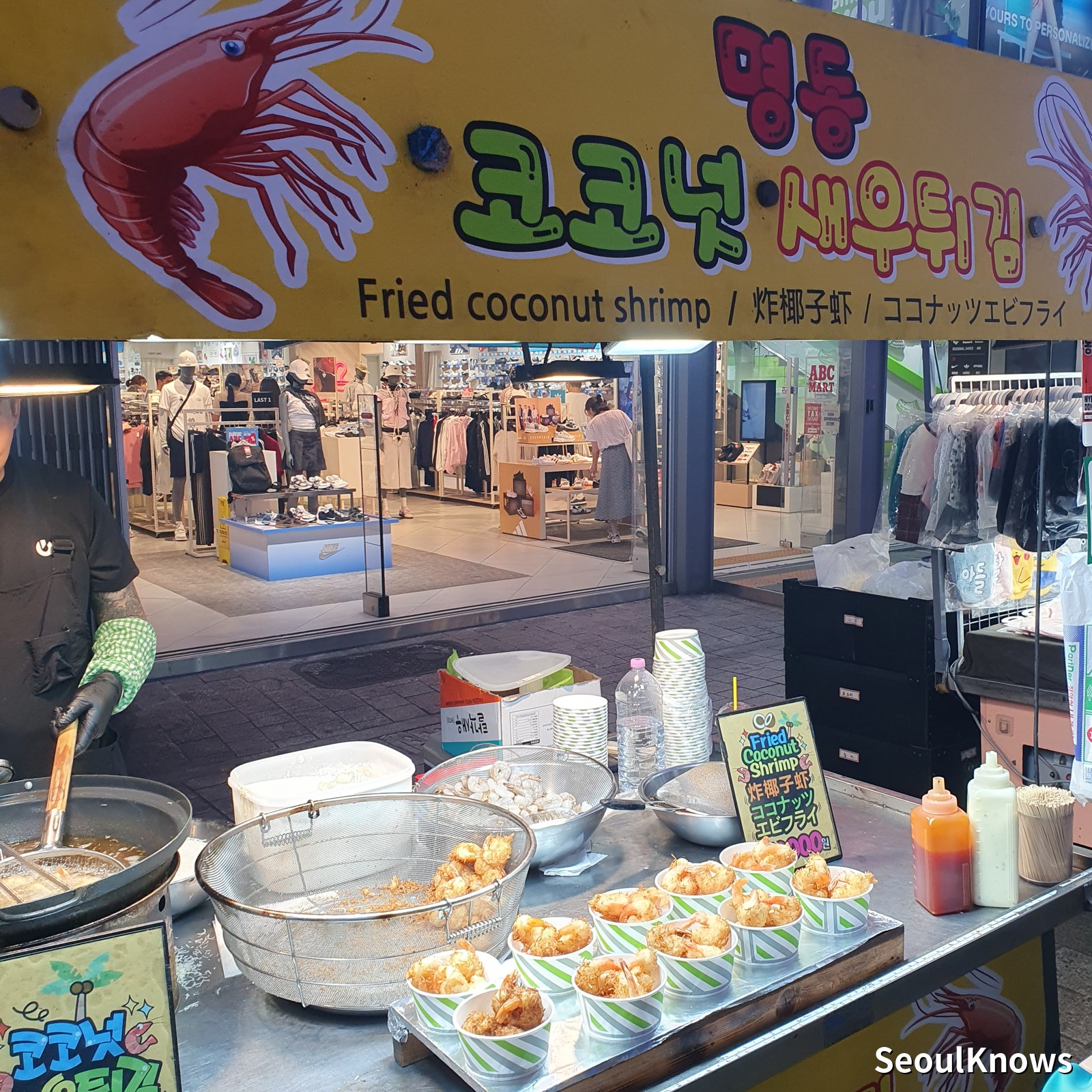
Coconut shrimp, whole shrimp fried in a crisp coconut batter.
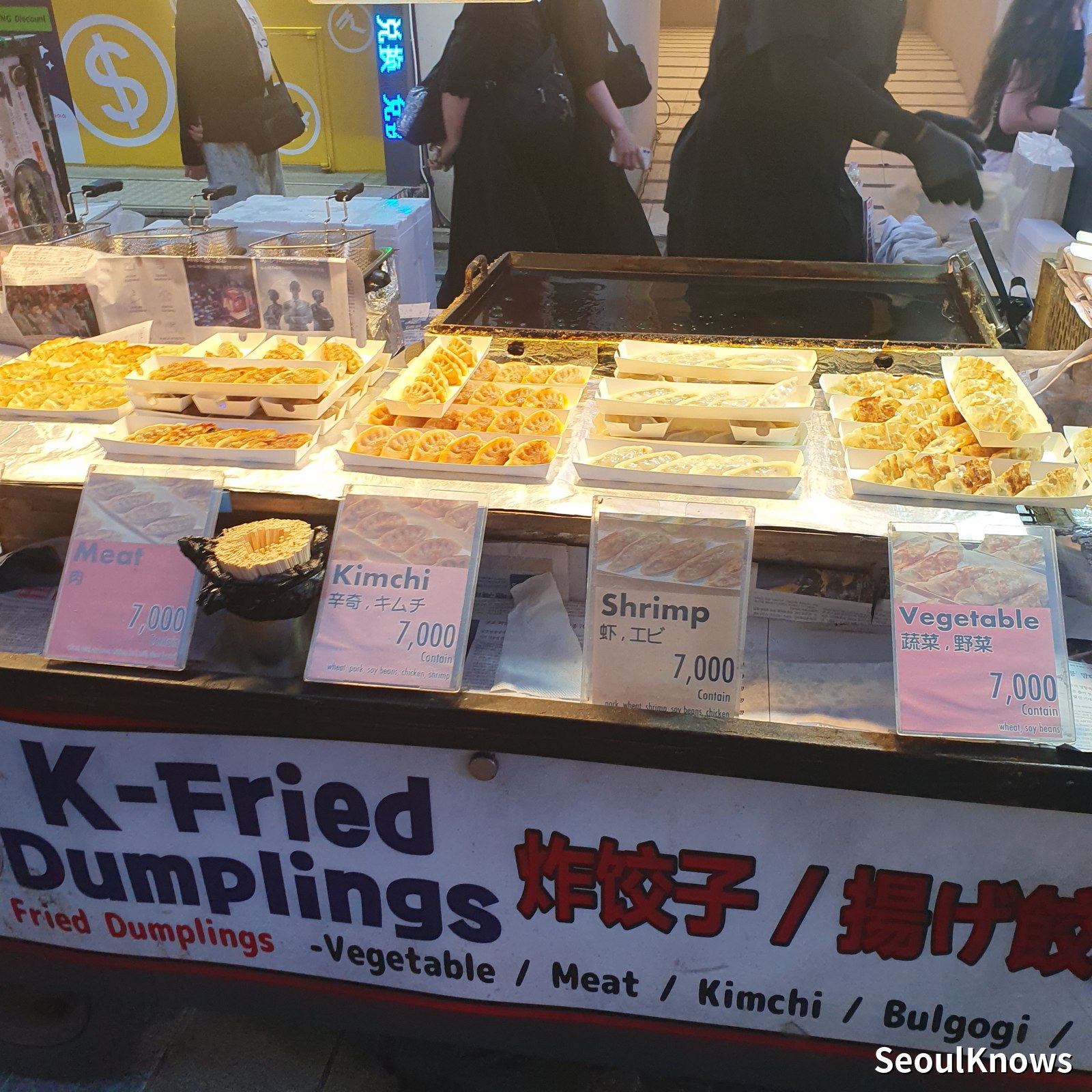
Fried dumplings (mandu), pan-fried dumplings, vegetable, kimchi, meat or bulgogi.
🦞 Premium Bites
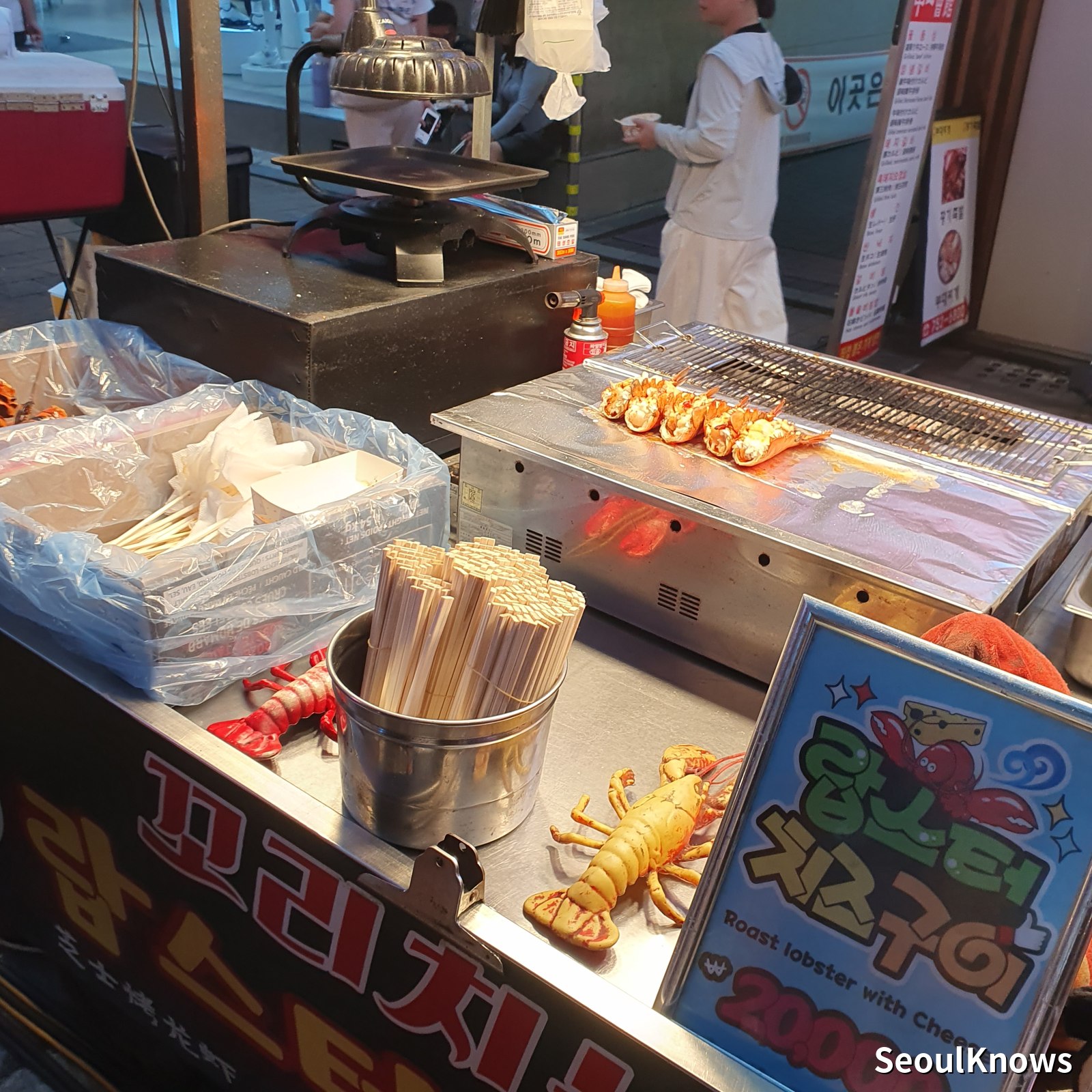
Cheese lobster, half a lobster grilled with melted cheese, a splurge-worthy bite (around ₩20,000).
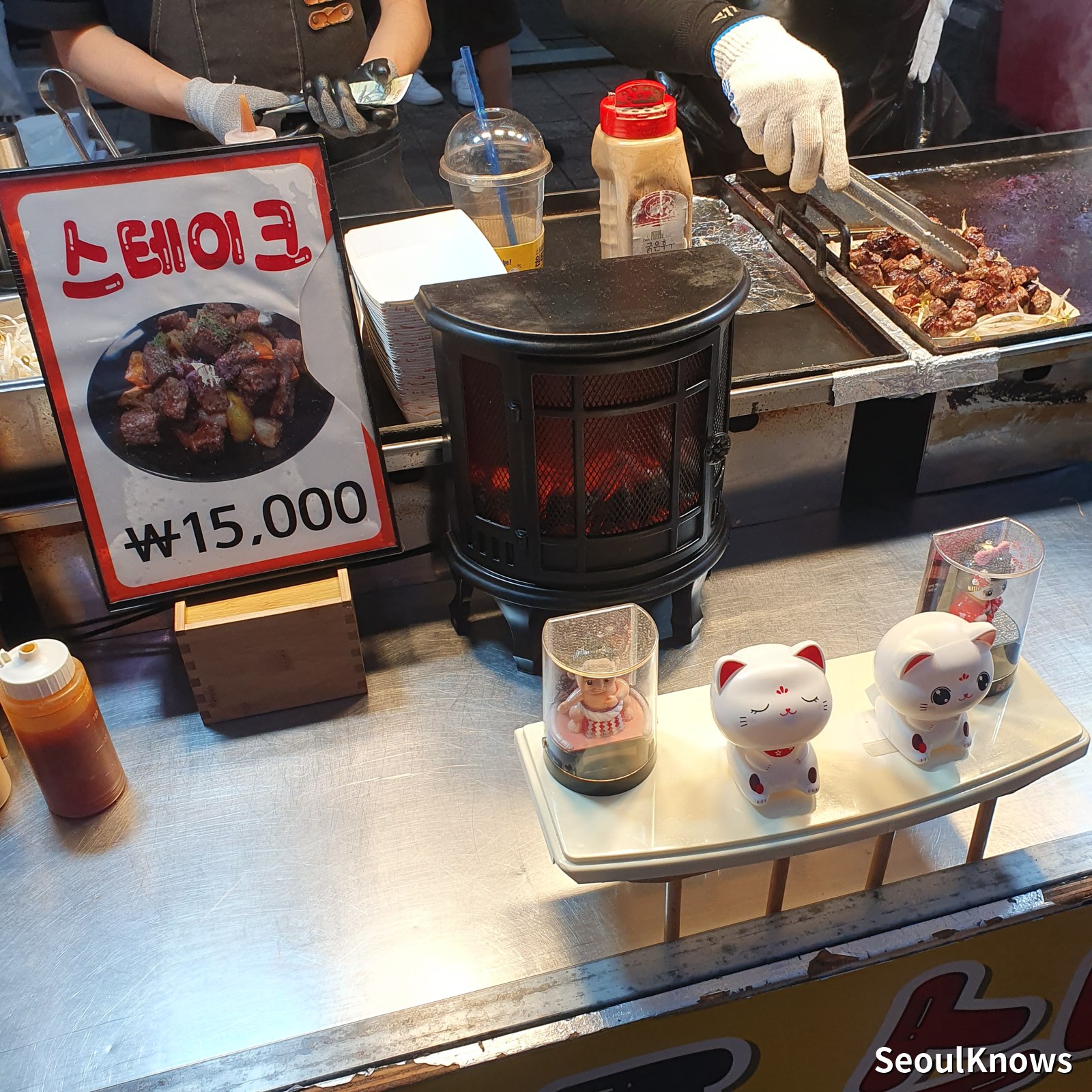
Grilled steak, cubed steak grilled to order (around ₩15,000).
🍜 Tteokbokki & Bunsik (snack foods)
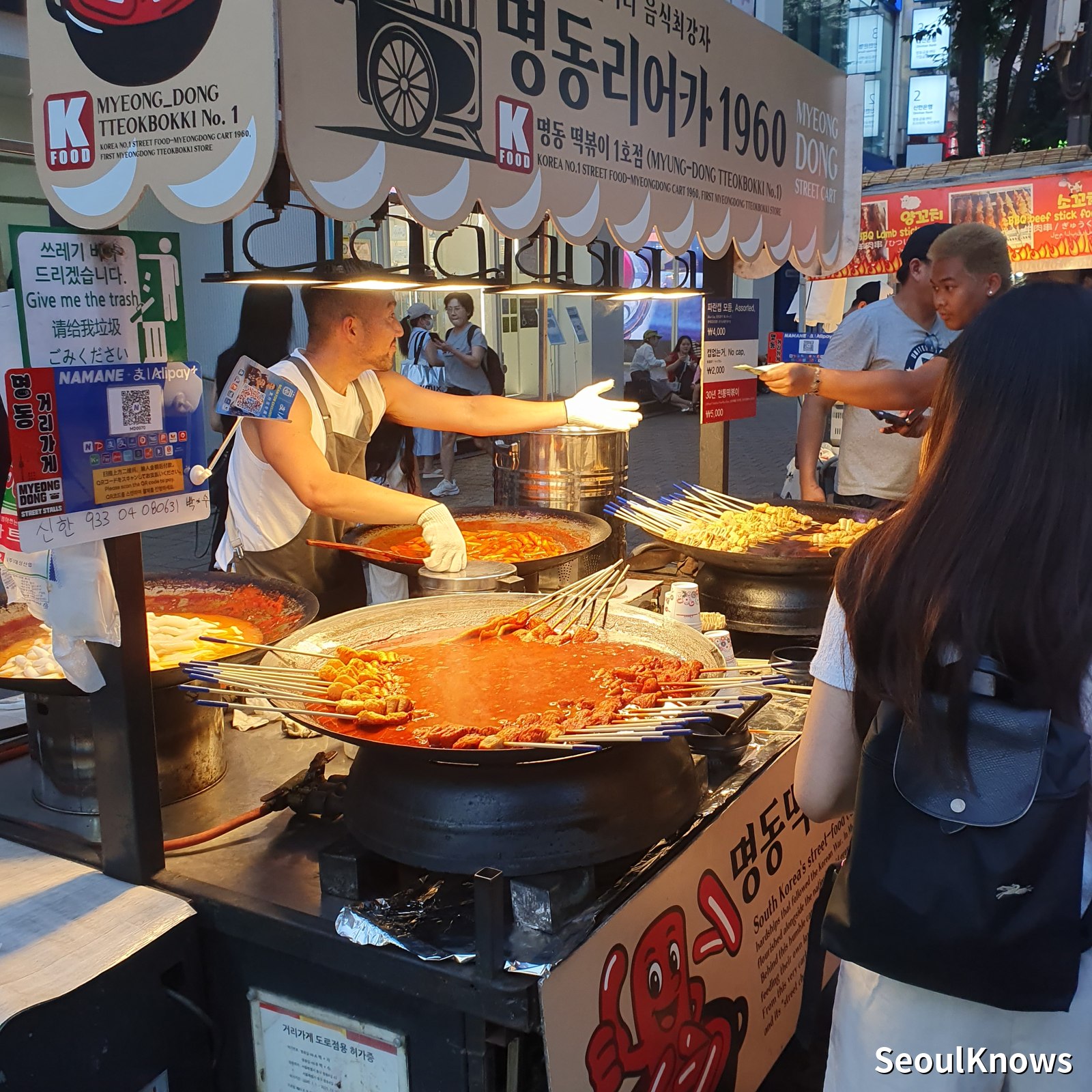
Tteokbokki, chewy rice cakes in a sweet-spicy sauce, the most iconic Korean street snack.
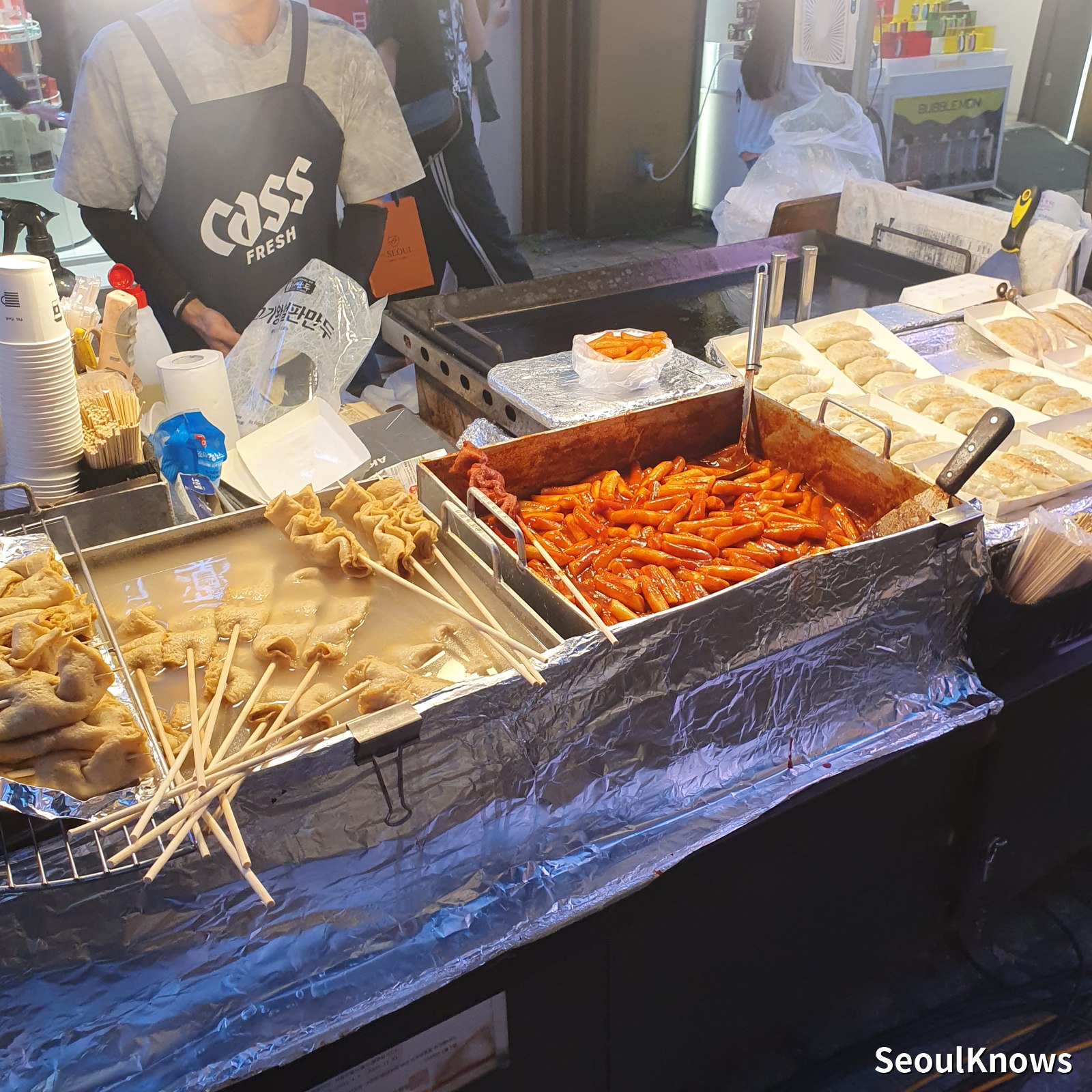
Oden & tteokbokki skewers, fish-cake skewers simmering alongside tteokbokki, grab a warm one.
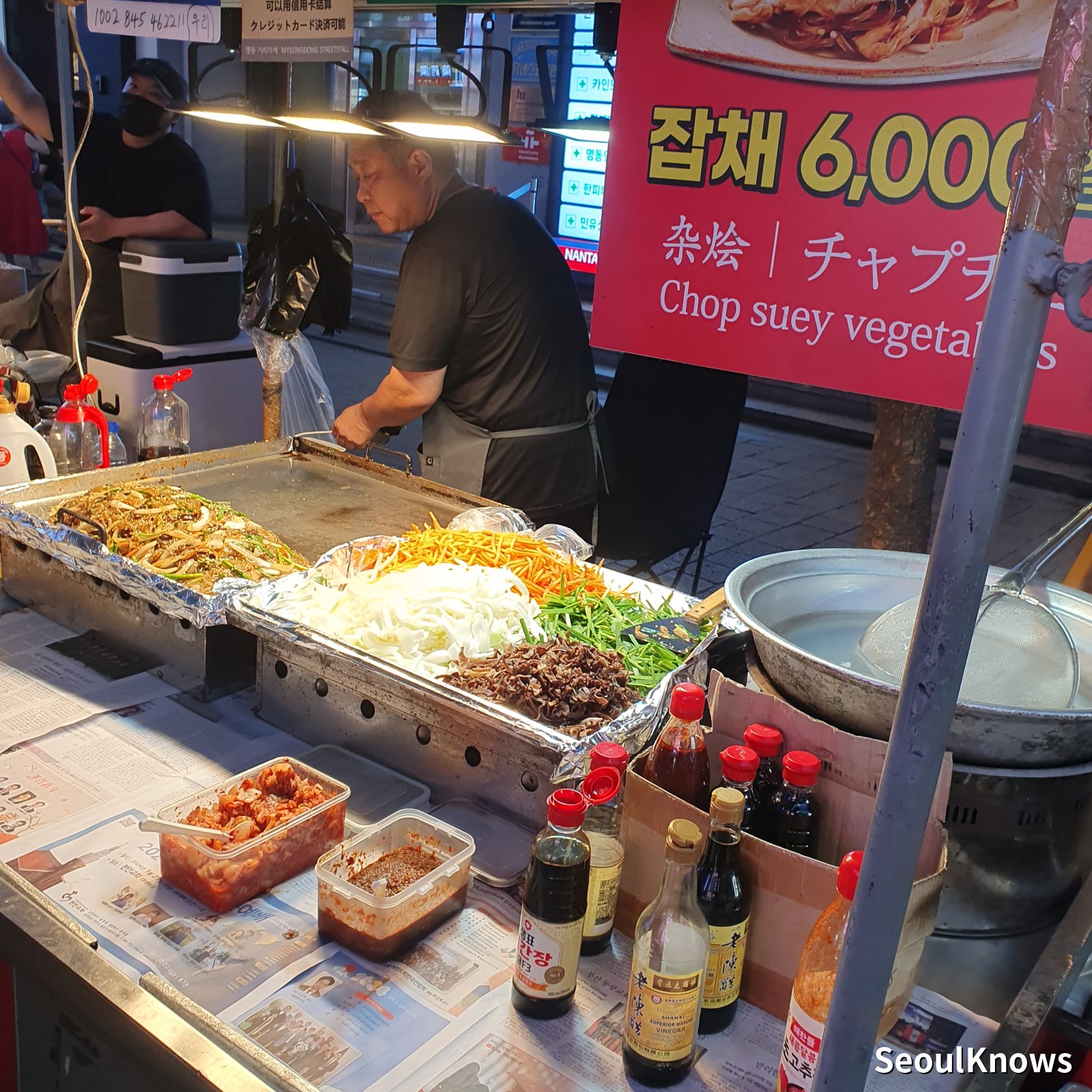
Japchae, stir-fried glass noodles with vegetables, served by the cup.
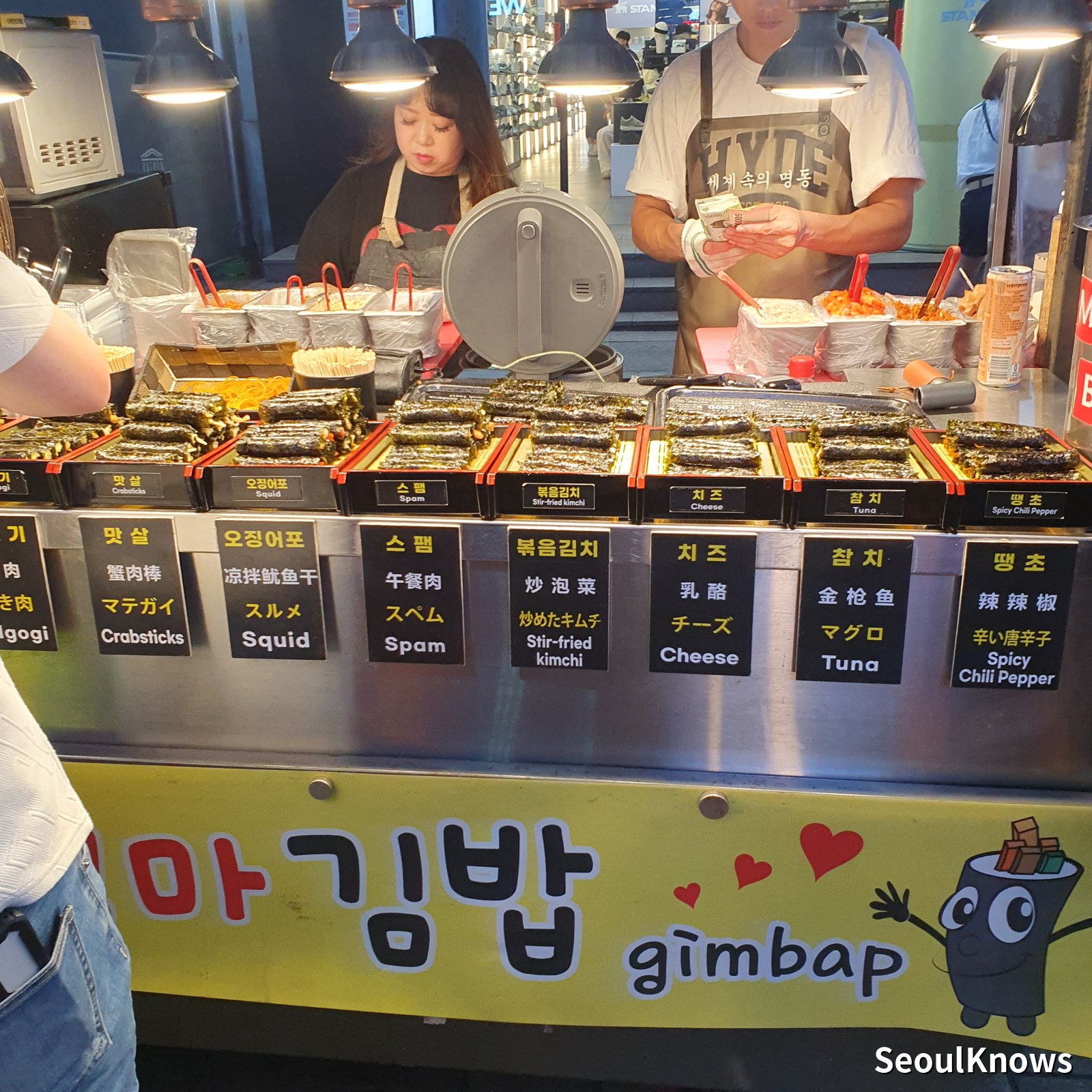
Mini gimbap, bite-size seaweed rice rolls with fillings like tuna, cheese or spam.
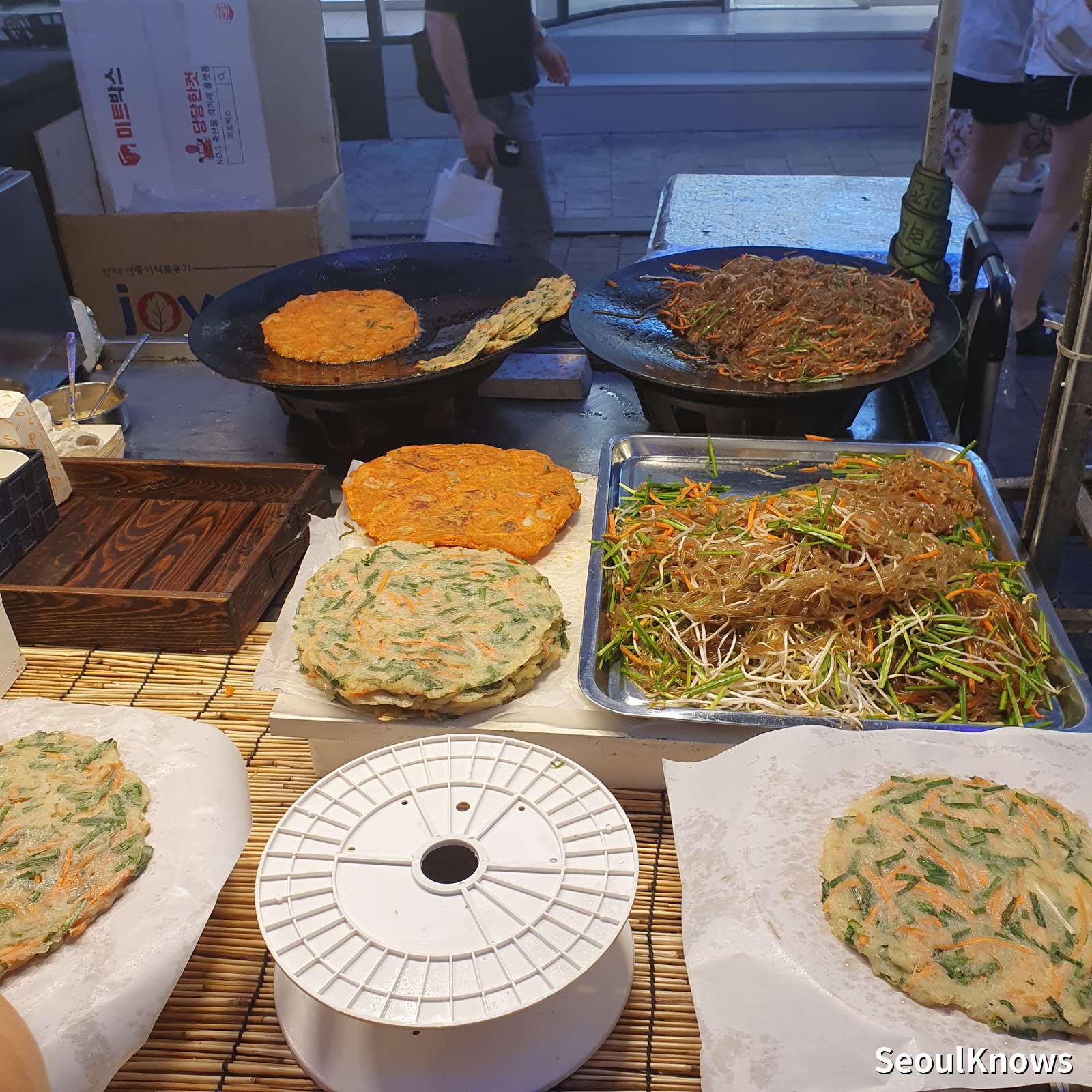
Korean pancakes (jeon), savory pan-fried pancakes, plain pajeon and kimchi-jeon.
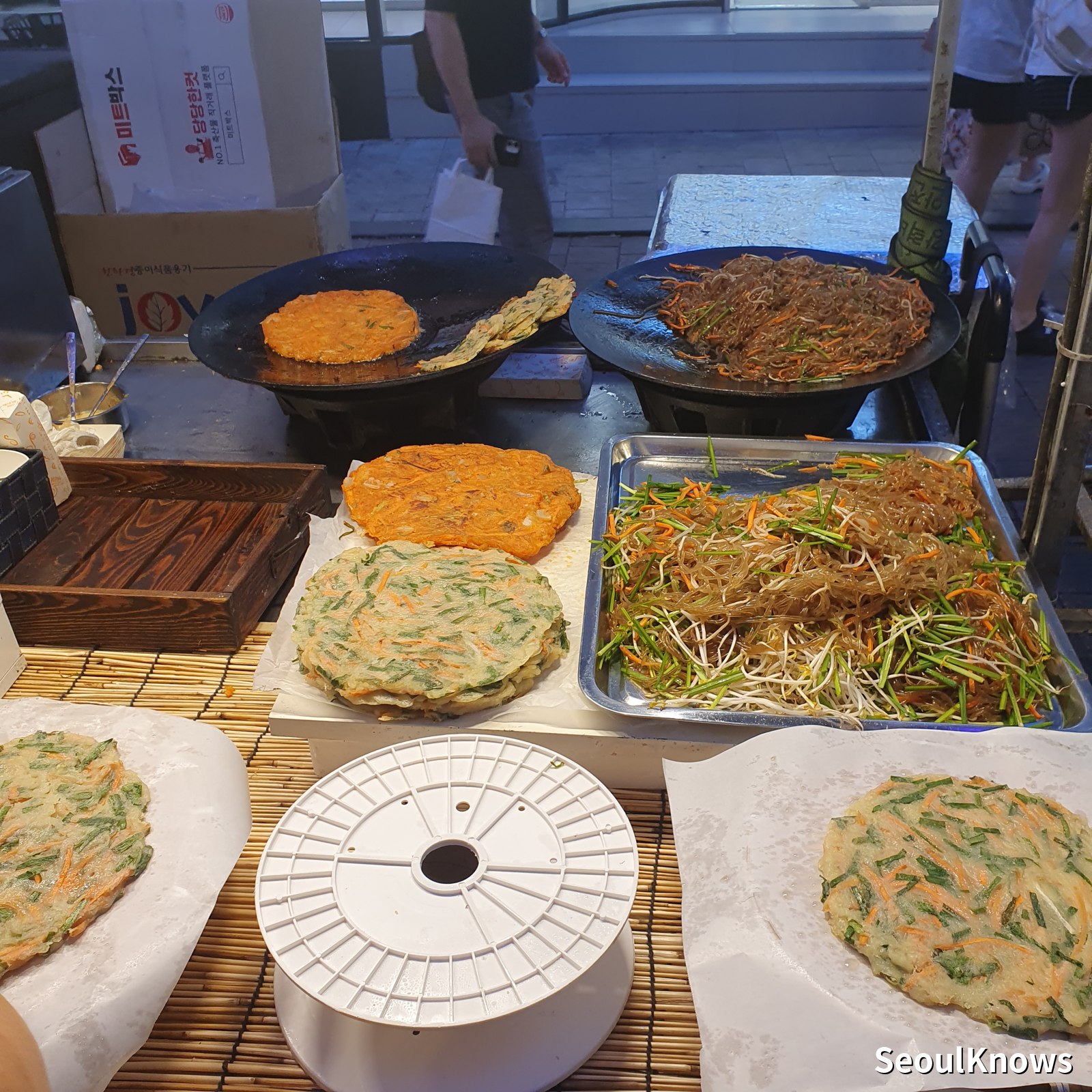
More jeon (pancakes), green-onion and mung-bean style Korean pancakes, crisp off the griddle.
🥐 Bread, Hotteok & Traditional
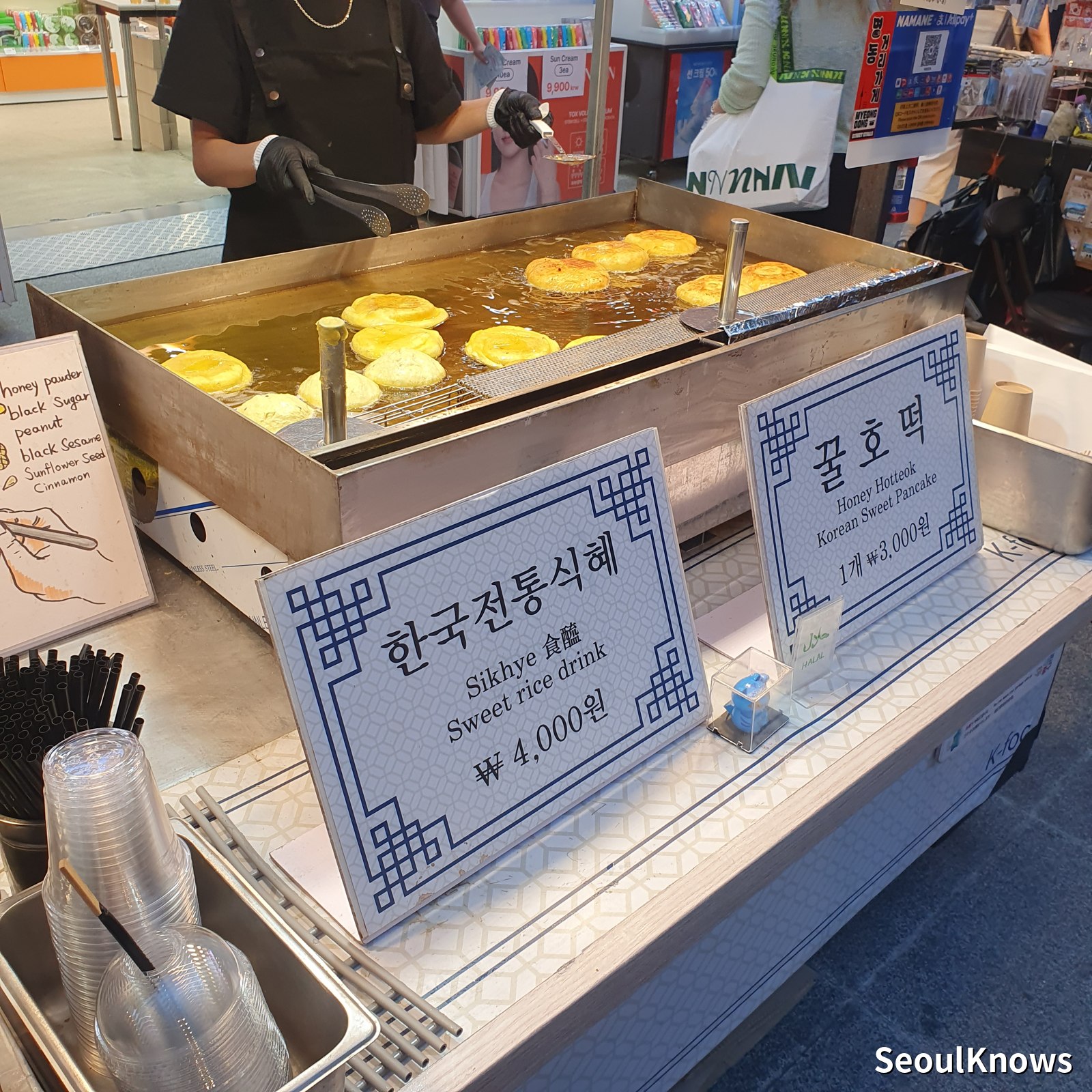
Hotteok, griddled sweet pancakes filled with brown sugar and seeds.
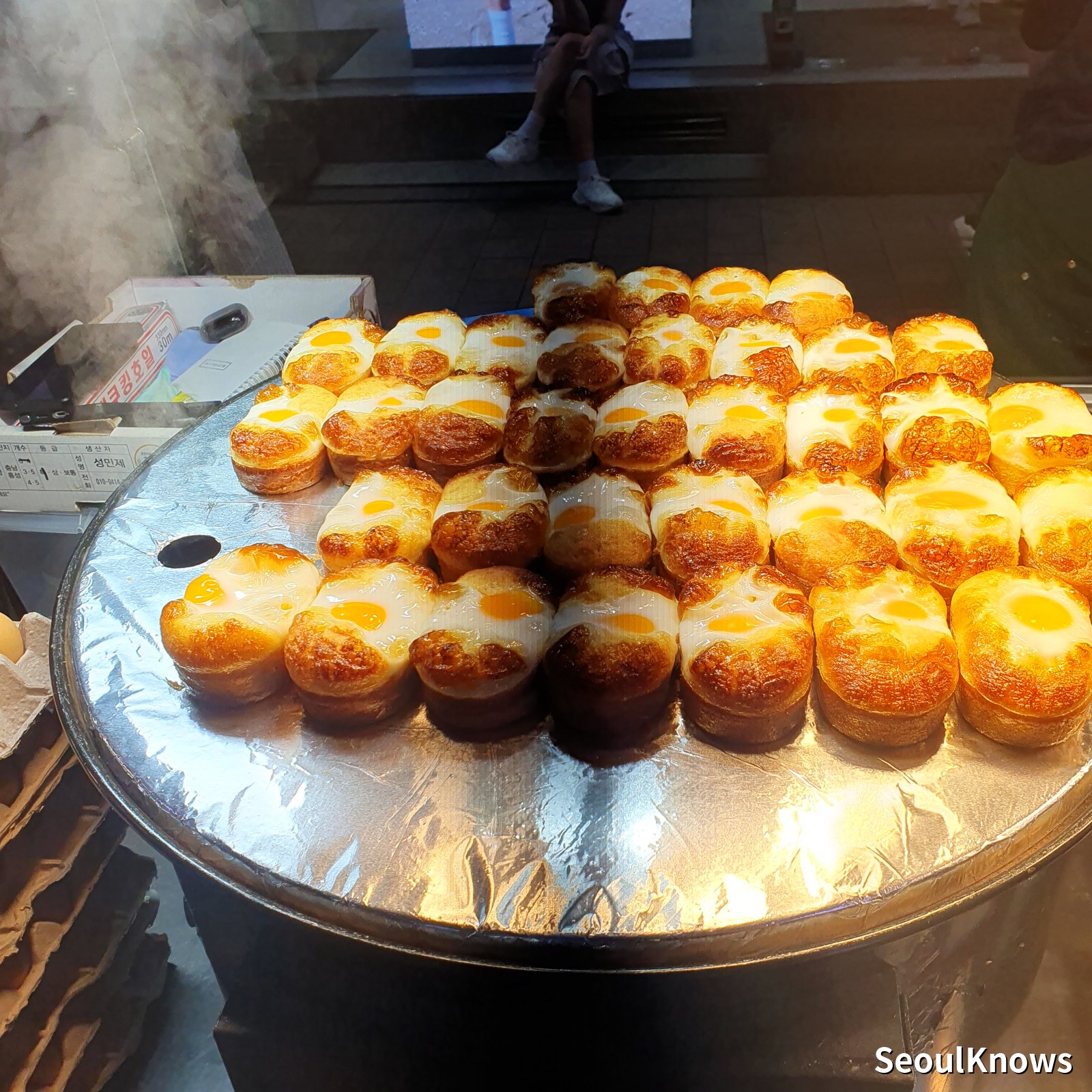
Egg bread (gyeran-ppang), warm little breads baked with a whole egg inside.
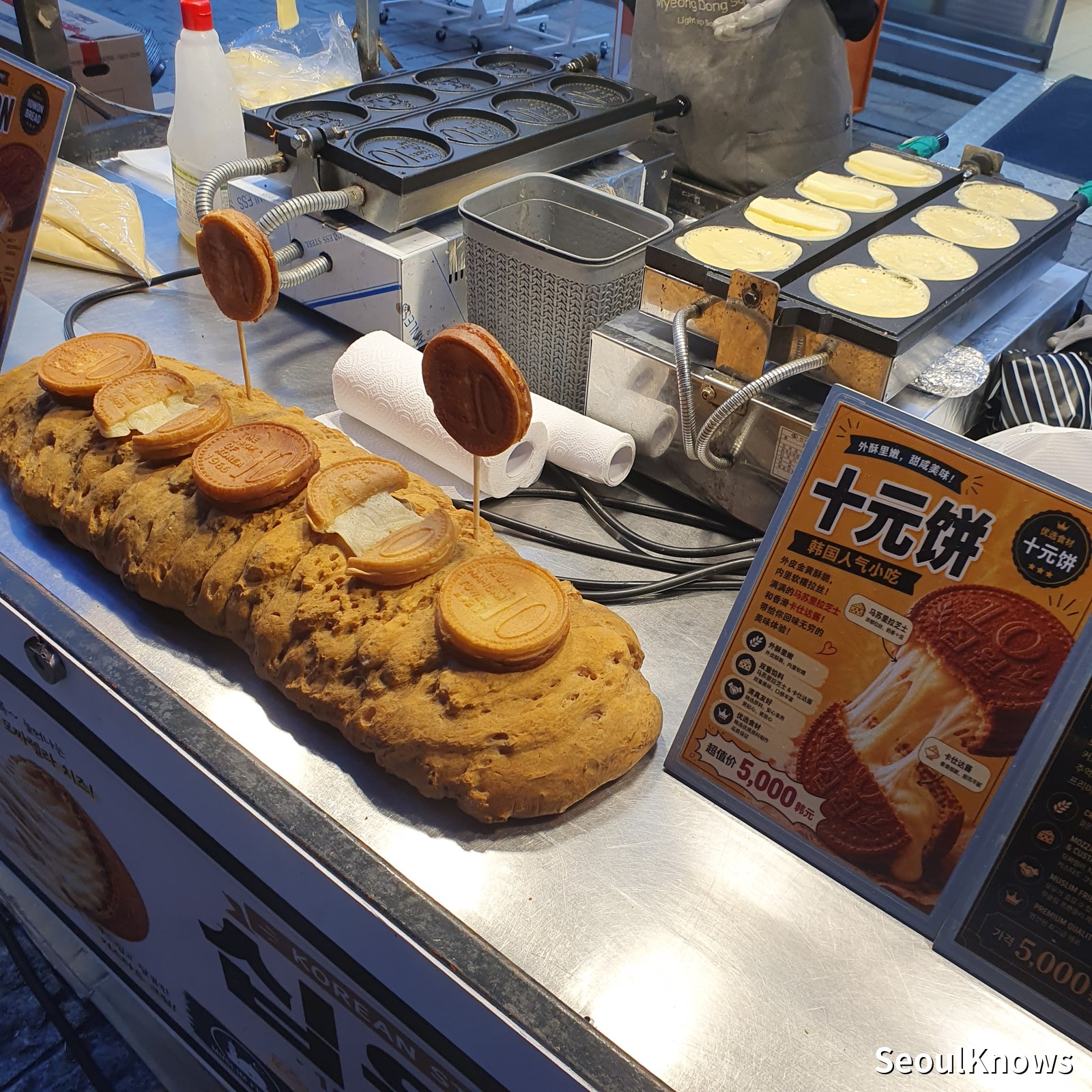
Ten-won & fish-shaped bread, coin-shaped 10-won bread and fish-shaped bungeoppang.
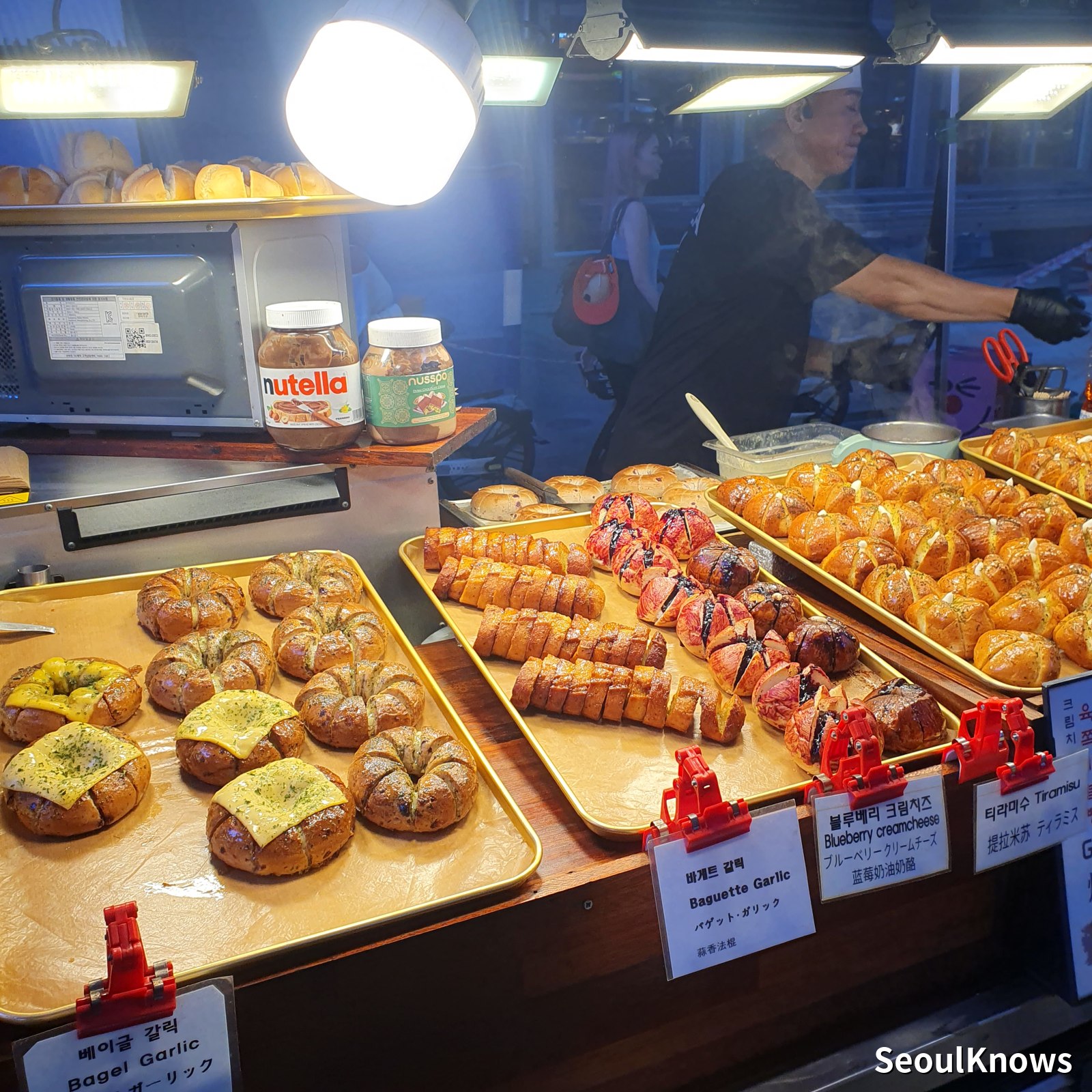
Garlic bread, buttery Korean garlic bread, crisp outside, soft inside.
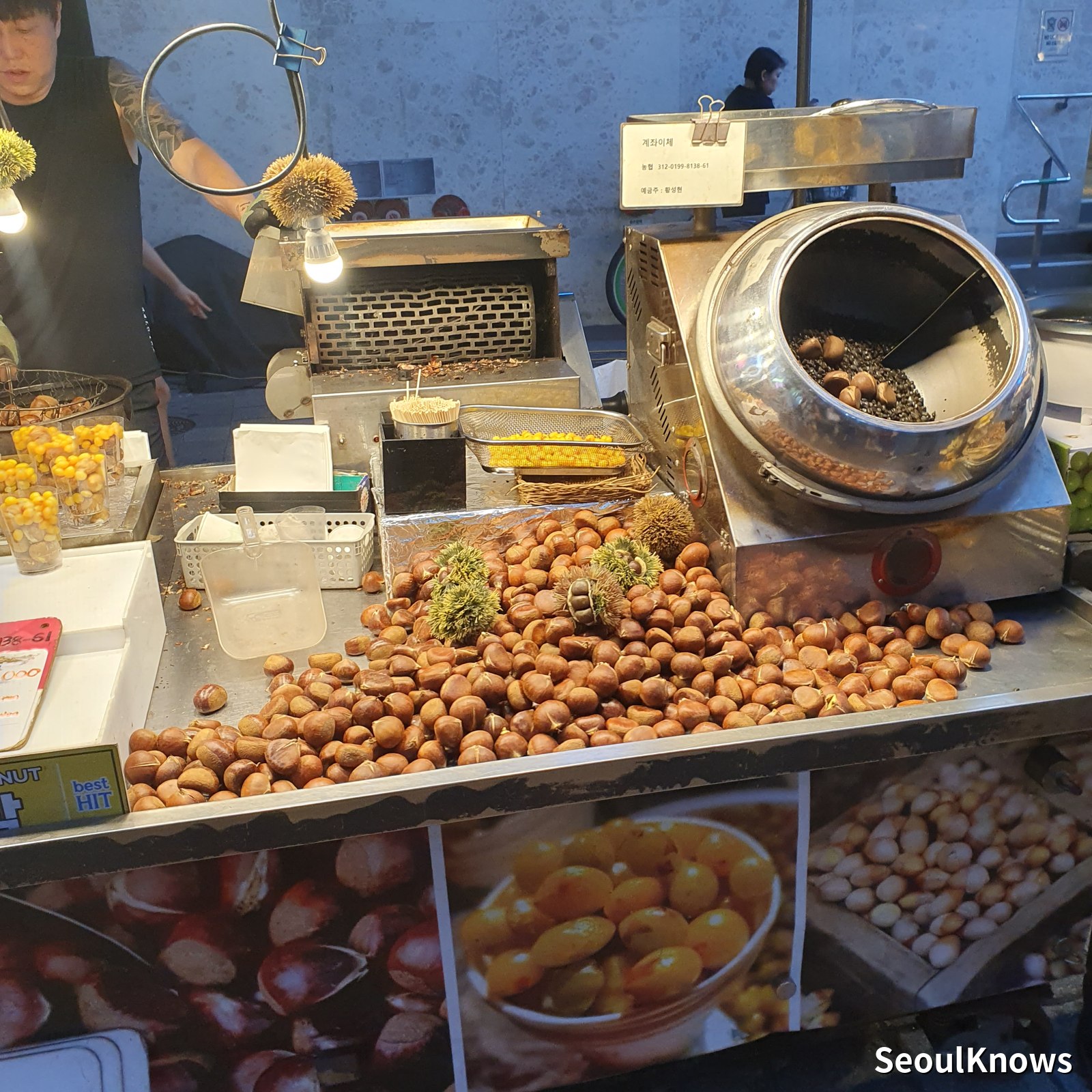
Roasted chestnuts (gunbam), freshly roasted chestnuts, a warm traditional snack.
🍮 Desserts
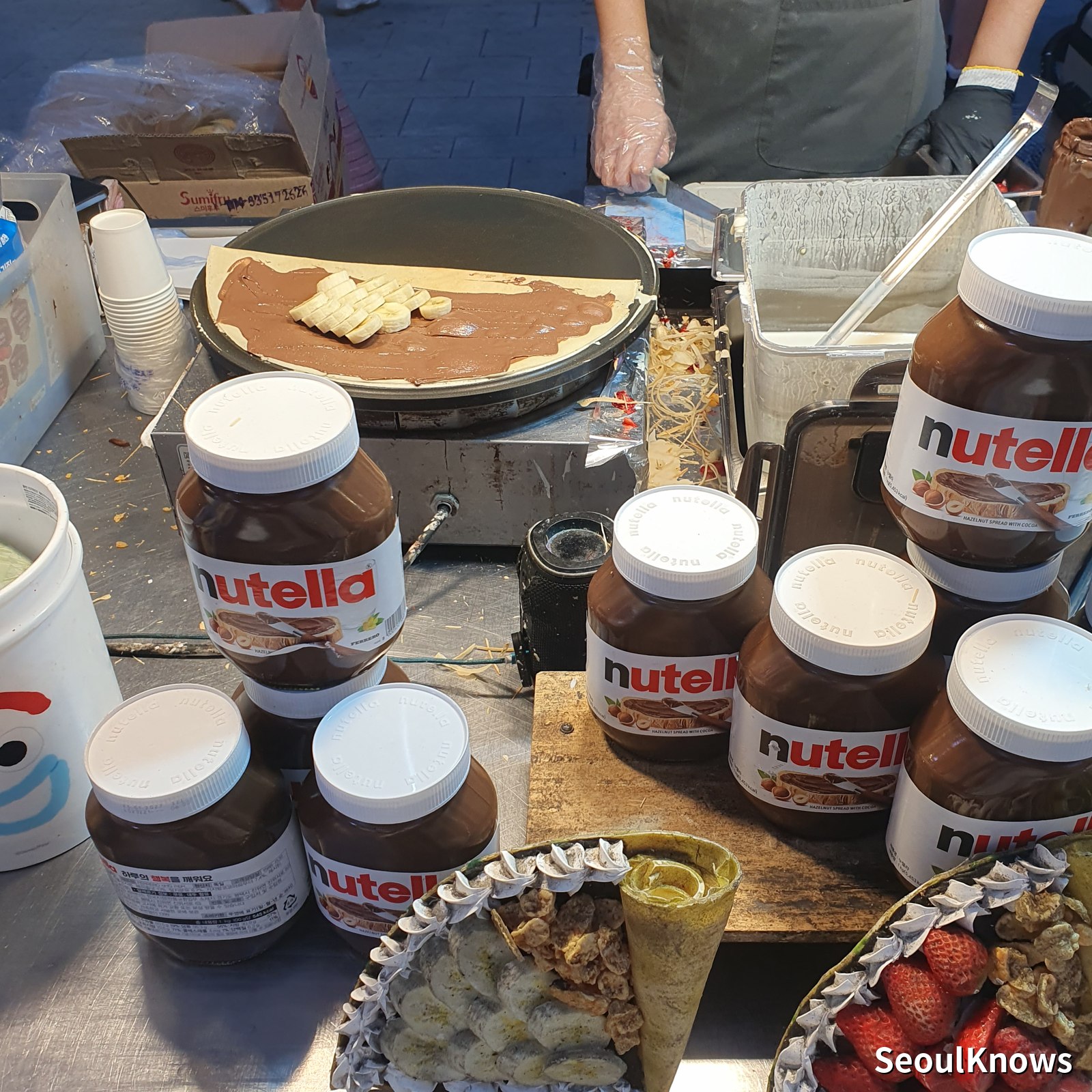
Crepes, folded crepes with Nutella, fruit and cream.
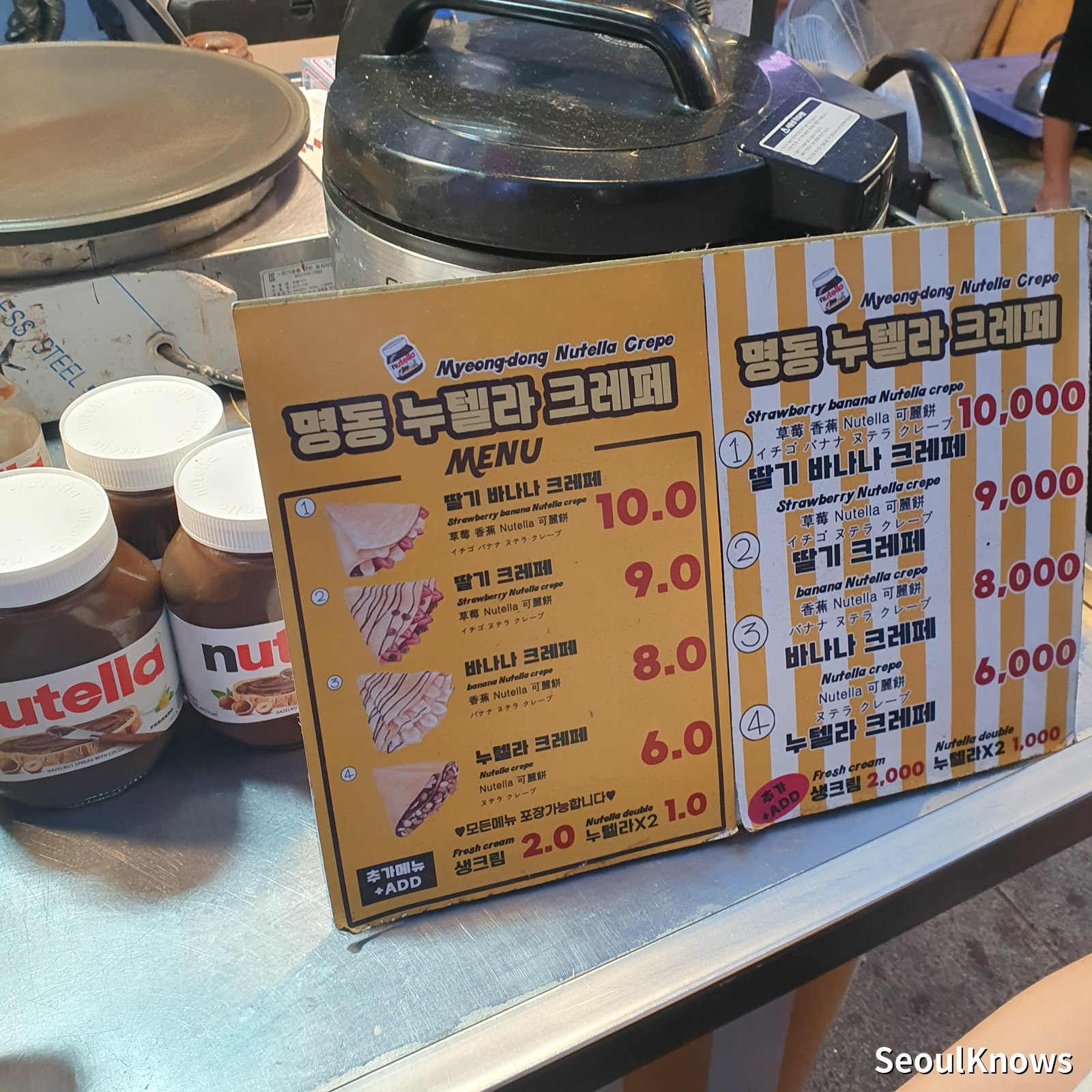
Crepe menu: pick your crepe, Nutella and banana are the favorites.
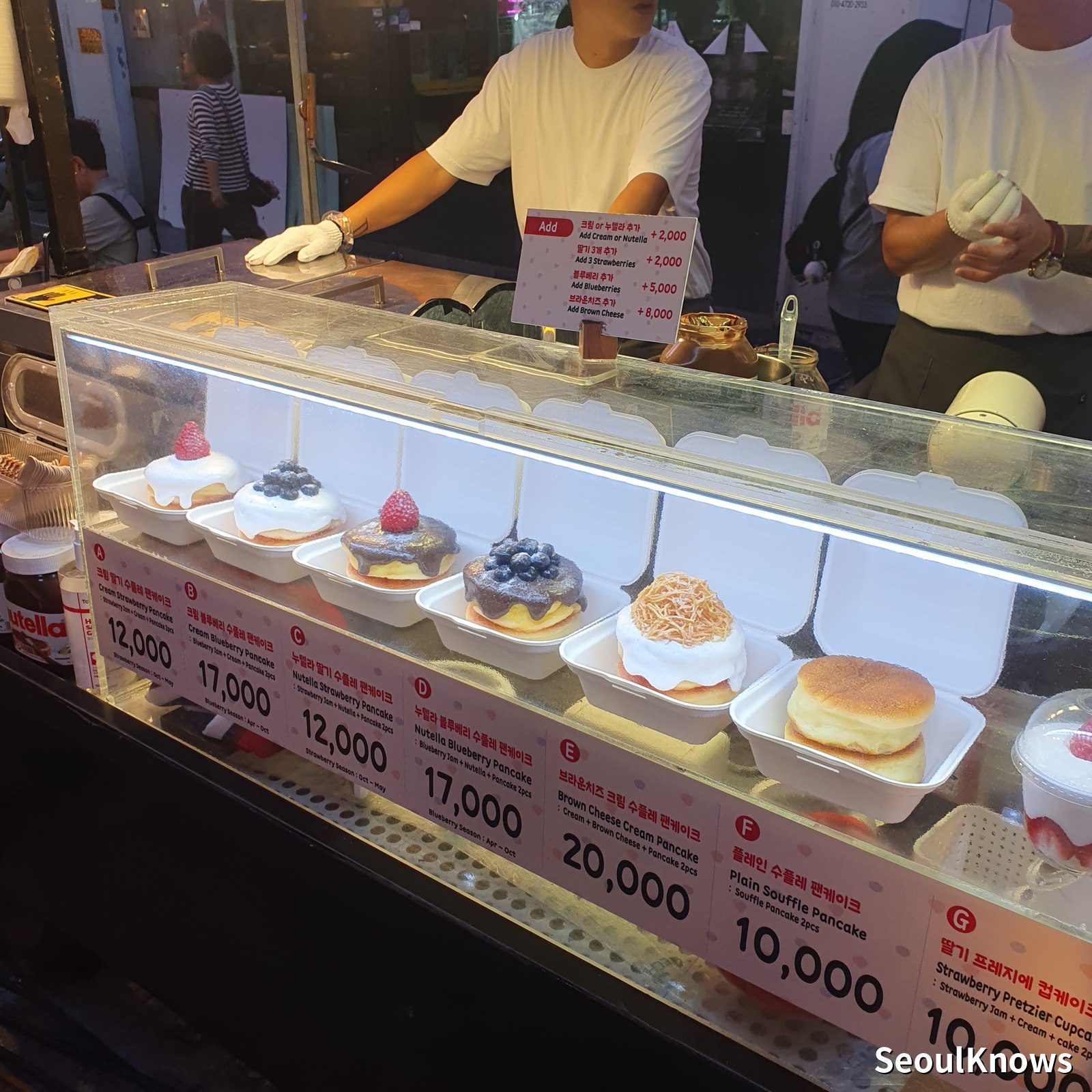
Souffle pancakes, jiggly souffle pancakes topped with cream and fruit.
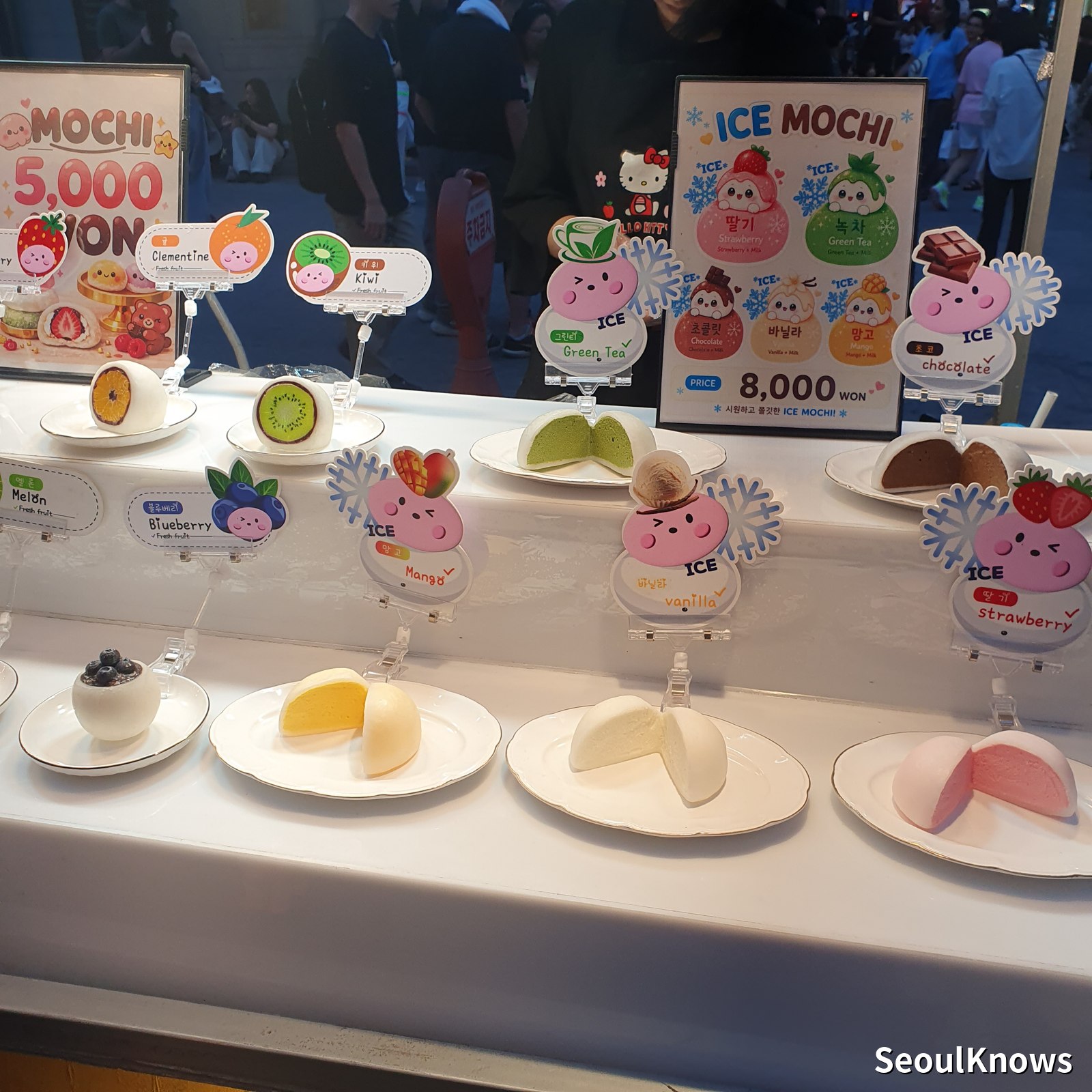
Ice mochi, chilled mochi with an ice-cream filling, cut fresh.
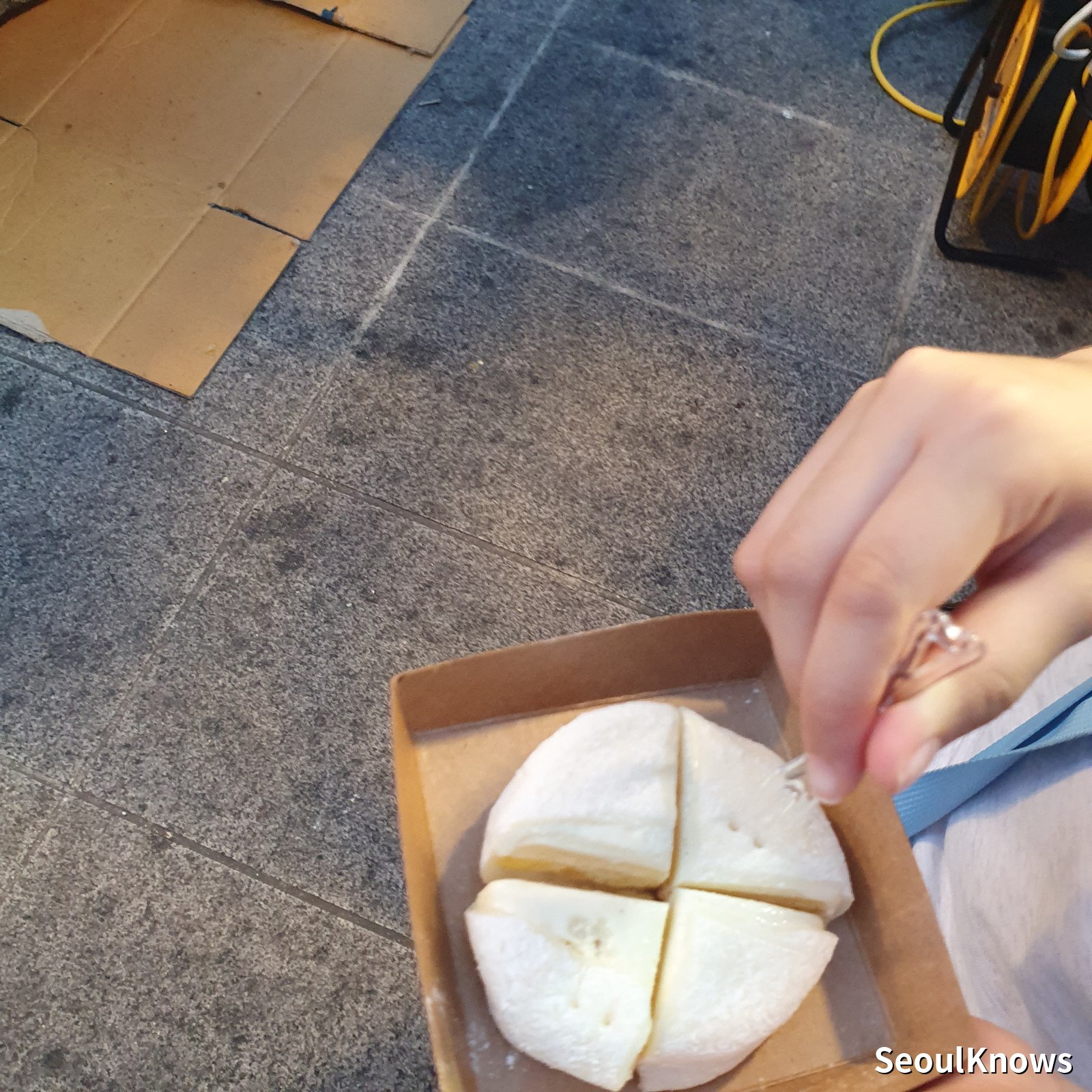
Ice mochi flavors: colorful ice-mochi on display (around ₩8,000).
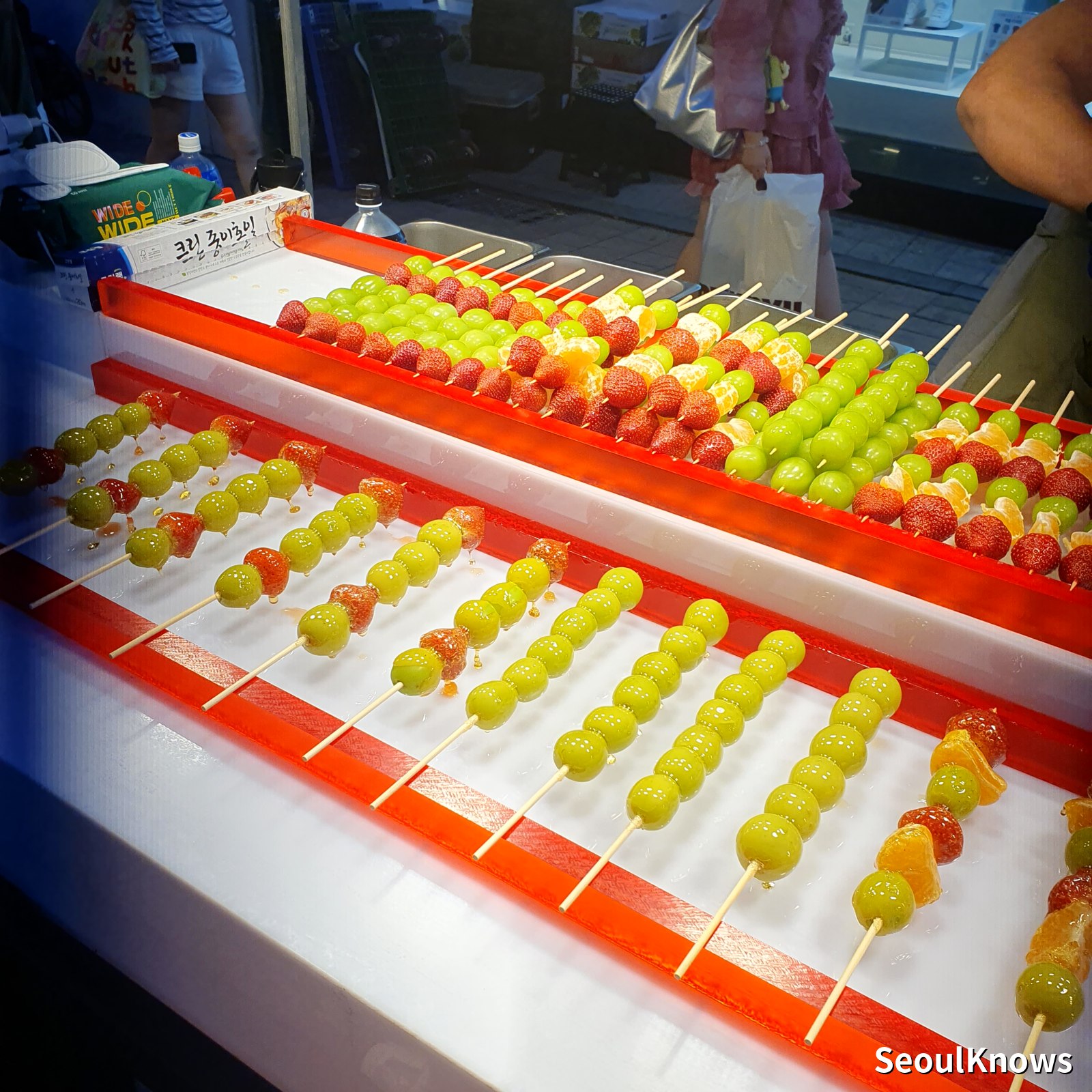
Tanghulu, candied fruit skewers with a glassy sugar shell.
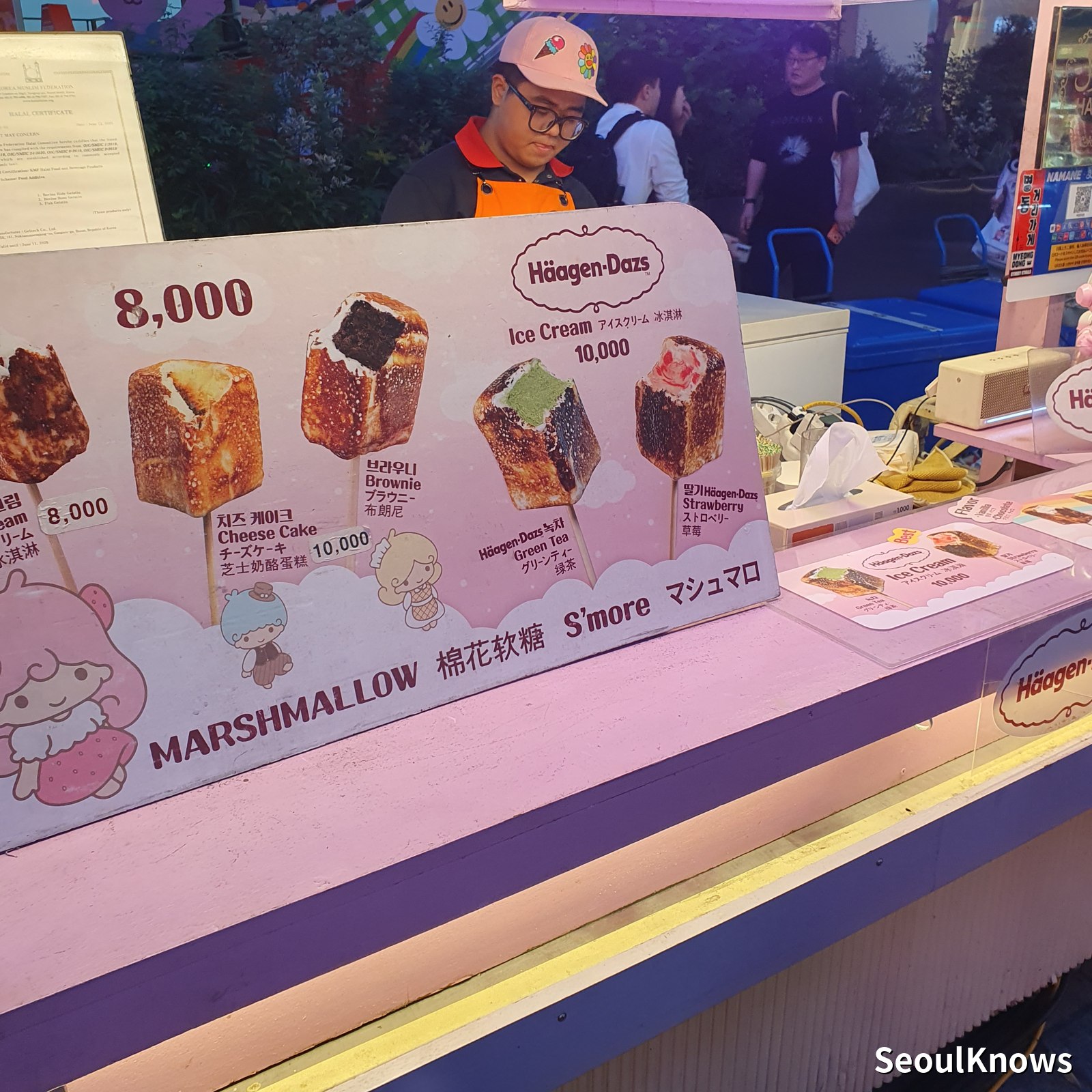
Ice cream & marshmallow, Häagen-Dazs bars and toasted-marshmallow treats.
🥤 Drinks
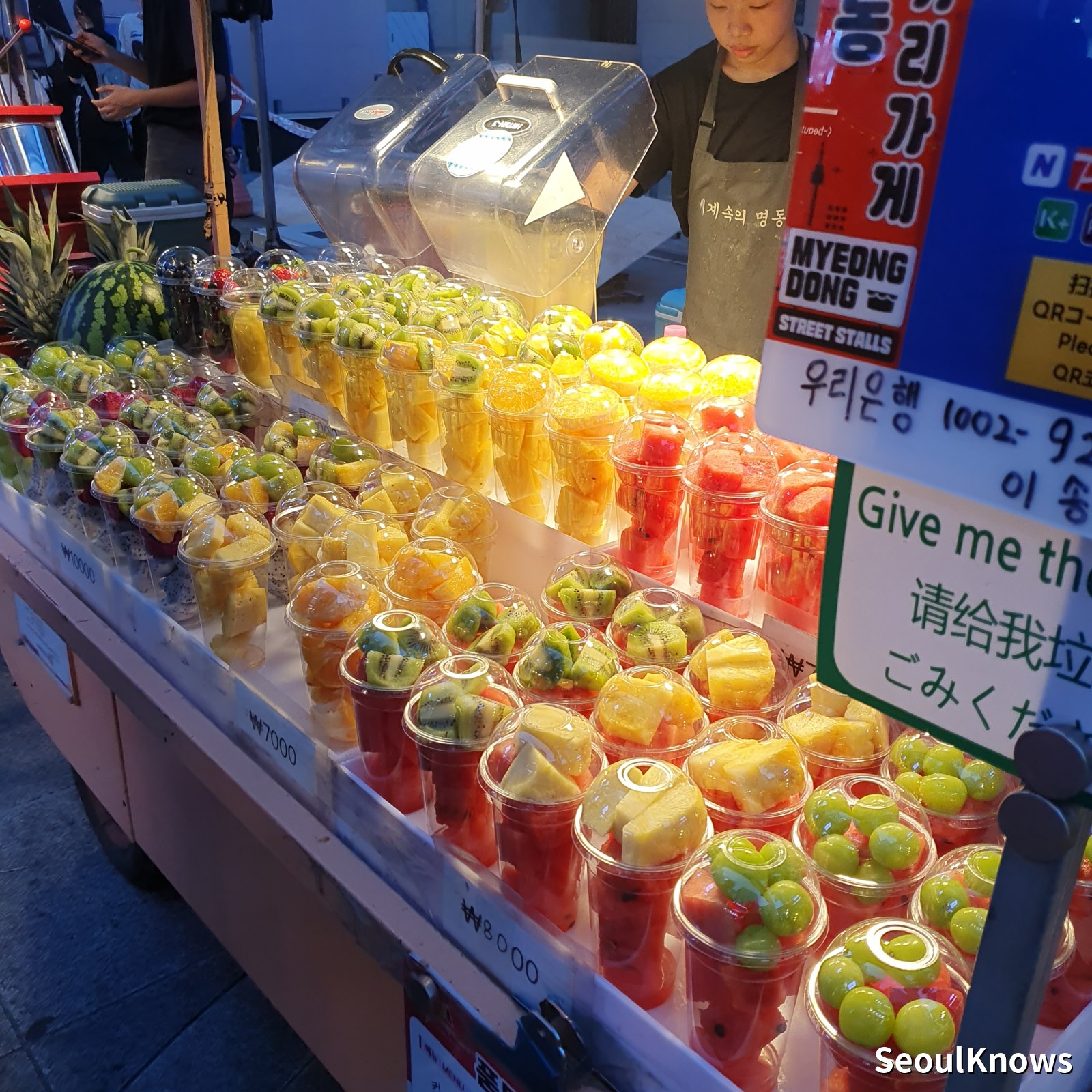
Fresh fruit juice, made-to-order juice from real oranges and lemons.
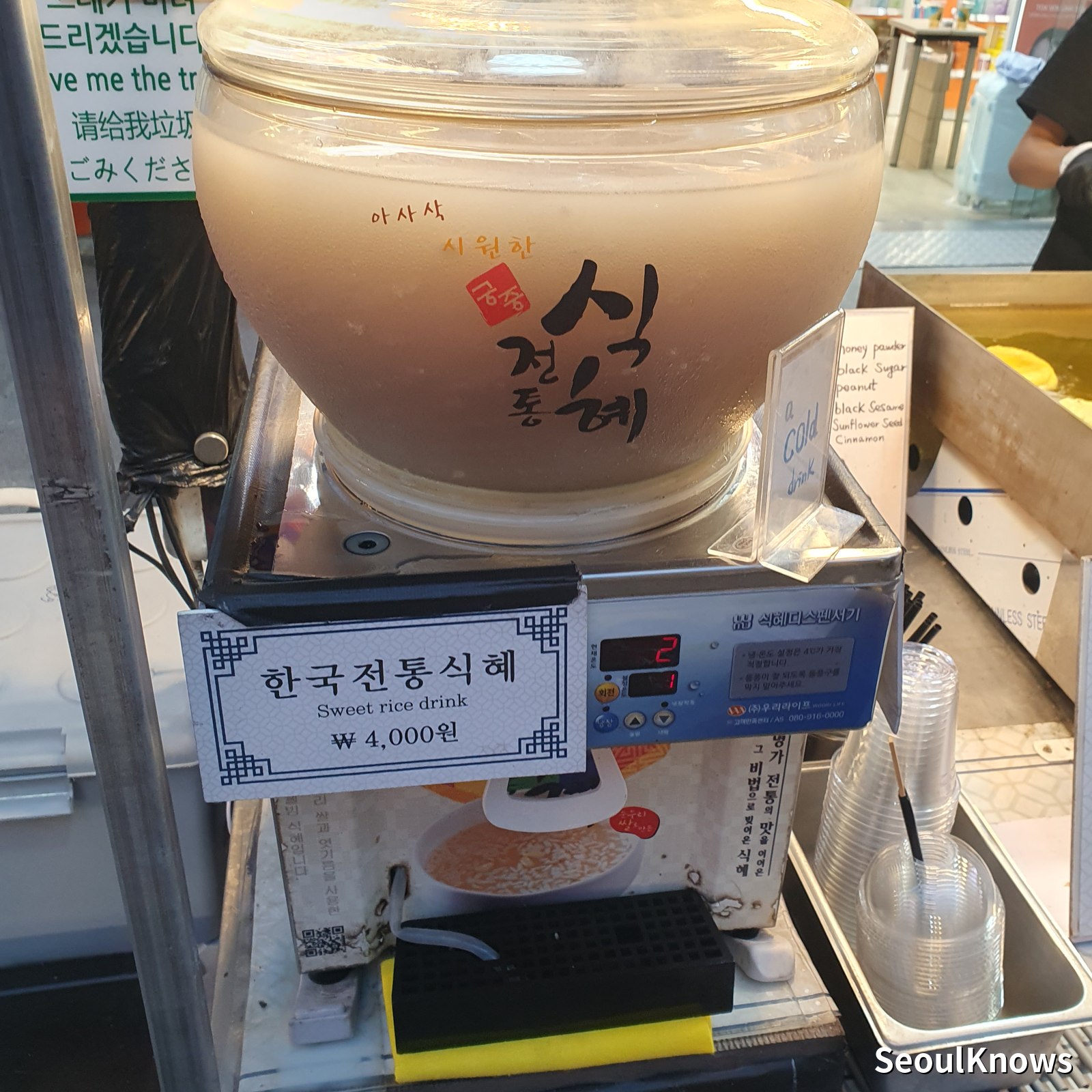
Sikhye, sweet traditional Korean rice punch, served cold (₩4,000).
Price Cheat-Sheet
🥓 Pork belly rolls ₩10,000
🍗 Dak-gangjeong (cup / box) ₩6,000 / 10,000
🦞 Cheese lobster / steak ₩20,000 / 15,000
🍜 Tteokbokki / japchae ₩5,000 / 6,000
🥟 Fried dumplings ₩5,000-7,000
🥐 Hotteok / egg bread ₩3,000-4,000 / 2,000
🍮 Crepe / souffle pancake ₩4,500-10,000 / 10,000-20,000
🍡 Tanghulu / ice mochi ₩5,000 / 5,000-8,000
🥤 Fresh juice / sikhye ₩6,000-7,000 / 4,000
Tips for First-Timers
- Go hungry and share, portions add up fast when you’re sampling.
- Evenings and weekends are liveliest, but also the most crowded.
- Prices vary slightly by stall; these are typical averages.
- Seafood like lobster and octopus is often “market price”, confirm first.
- Most stalls take cards, but keep a little cash for the smallest snacks.
When to Go: Best Time of Day
Most carts start setting up around 2 PM, but the street doesn’t fill out until closer to 5. How the evening actually runs:
- 2–4 PM — Maybe half the carts are open. Short lines and easy photos, but the premium seafood stalls usually aren’t running yet.
- 5–7 PM — The sweet spot. Everything’s open, the grills are going, and you can still walk without shuffling.
- 7–9 PM — Peak. Best atmosphere, genuinely shoulder-to-shoulder on weekends, and 10-minute waits at the popular carts.
- After 10 PM — Carts start packing up. Some vendors discount to clear stock, but selection drops fast.
Go on a weekday if you have the choice. Friday and Saturday nights roughly double the crowd for the same food at the same price.
Weather matters more than you’d expect. The stalls are open-air, so heavy rain and deep winter thin out the vendors as well as the fun — though winter does bring roasted chestnuts and sweet potatoes, which are worth the cold.
Is Myeongdong Street Food Worth It? An Honest Take
Short answer: yes for a first visit, no as your best meal in Seoul.
What Myeongdong genuinely does well:
- Variety in one block. You can sample eight different things in an hour without walking 300 meters. Nowhere else in Seoul is this concentrated.
- Low friction. English menus with photos, cards accepted almost everywhere, vendors used to tourists. On day one in Korea, that counts for a lot.
- The spectacle. Torch-flamed cheese lobster and meter-long ice cream are built to be filmed. That’s the point, and it delivers.
What it doesn’t:
- Value. These are tourist-street prices. A ₩10,000 pork belly roll here is a full sit-down meal’s worth of money in most Seoul neighborhoods.
- Depth. They’re snacks designed for walking and photos, not the dishes Koreans queue for.
If you want the same energy at local prices, Noryangjin Fish Market is far better value for seafood, and Bangi-dong Food Alley is where Seoulites actually eat. Do Myeongdong once, early in the trip, and treat it as an appetizer for the city. If you’re carrying on afterward, the Korean drinking street guide covers what comes next.
Halal, Vegetarian & Allergy Notes
Worth being blunt: street stalls are not certified anything.
Halal. No Myeongdong street cart is halal-certified, and grills and fryers are shared between pork, chicken and seafood. For sit-down meals it’s a different story — the Korea Tourism Organization sorts Muslim-friendly restaurants into four tiers (Halal Certified, Self Certified, Muslim Friendly and Pork Free), and there are certified options in the Myeongdong area. Check the VisitKorea listing before you commit, and treat the street itself as sightseeing.
Vegetarian. Safer picks: hotteok, roasted chestnuts and sweet potatoes, tanghulu, fresh juice, grilled corn. Avoid tteokbokki unless you ask — the broth is usually anchovy-based and it nearly always contains fish cake. Egg bread contains egg, as advertised.
Allergies. Peanuts and tree nuts turn up in dessert toppings and sauces, and shellfish is handled at the same counters as everything else, so cross-contact is realistic. Vendors rarely have ingredient lists.
Useful to show on your phone:
- 돌지고기 들어간어요? — Does this contain pork?
- 고기 안 들어간 거 있어요? — Do you have anything without meat?
- 뗌쾁 들어간어요? — Does this contain peanuts?
Myeongdong Street Food Map
Myeongdong Street Food FAQ
What should I eat first in Myeongdong?
Start with the icons: pork belly rolls (samgyeop-mari), a chicken skewer, a tornado potato, and a fresh watermelon juice, then a hotteok or crepe for dessert.
Can I pay by card at Myeongdong street stalls?
Yes, most stalls now accept cards and mobile pay. It’s still handy to carry a little cash for the smallest snacks.
What time does Myeongdong street food open?
Most stalls open in the mid-afternoon (around 2-4 PM) and run until about 10-11 PM. It’s busiest and most fun in the evening.
How much should I budget?
Around ₩10,000-20,000 per person lets you sample a good range; premium items like cheese lobster push it higher.
Is Myeongdong street food expensive?
By Seoul standards, yes. Budget ₩10,000–20,000 per person for a grazing dinner, roughly 30–50% more than the same snack at a neighborhood market. Individual items run ₩3,000–7,000, with premium seafood around ₩15,000–20,000.
Is Myeongdong street food halal?
No stall is halal-certified, and grills and fryers are shared across pork, chicken and seafood. There are halal-certified restaurants in the Myeongdong area, so the usual approach is to eat at one of those and enjoy the street for the atmosphere.
Which subway exit is closest to Myeongdong street food?
Myeongdong Station (Line 4) Exit 6 or 8 puts you at the bottom of Myeongdong-gil where the carts begin. From Euljiro 1-ga Station (Line 2), Exit 5 or 6 brings you in from the top of the street. Full walkthrough in our Seoul subway guide.
Written by WY, a Seoul-based local sharing honest, first-hand guides to Korea. Every guide here is a place I’ve actually been to — written from my own visit, my own photos. More about me →
🛍️ Done eating? Keep going with our Myeongdong Shopping Guide, Mimiline, Wiggle Wiggle, the Emart24 ramyun lab, a 12-floor Daiso & Korea’s flagship Olive Young.