
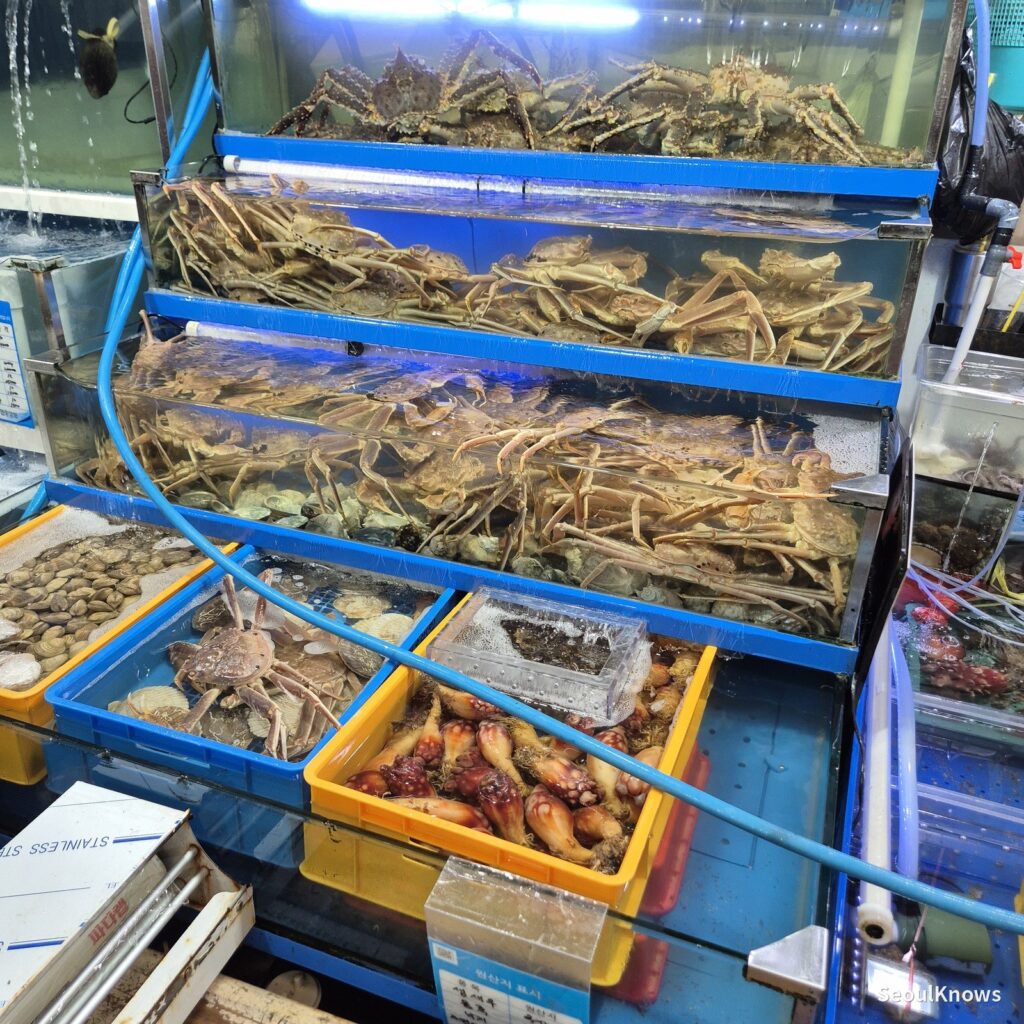
If you want to buy live seafood in Seoul and eat it on the spot, the answer is almost always Noryangjin Fish Market. You can get there by subway, most of it runs every day of the year, and the fish you pick downstairs gets prepared for you in a restaurant a few steps away.
What actually trips up first-timers is not the fish names, it is the layout. Where do you buy, where do you eat, and how many times do you pay? None of that is obvious when you walk in. This guide walks through the order: how to get there, how the floors work, the buy-then-cook system, what the cooking fees are, parking, and what time to go.
What is Noryangjin Fish Market?
Noryangjin is a working wholesale market with retail attached. Seafood arrives overnight from around the country, goes through auction in the small hours, and the same stock is sold to walk-in customers through the day. It was not built as a tourist attraction, you are walking through a real trading floor.
On Google Maps it holds a 3.9 rating from over 30,000 reviews, which is a very typical wholesale-market score: the praise is about freshness, the complaints are about prices not being fixed and vendors calling out to you. Both are fair, and both are covered below.
The building moved to its current modern hall in 2016. So this is not an open-air street market, it is indoors, with escalators and air conditioning. Rain does not matter, and summer is bearable.
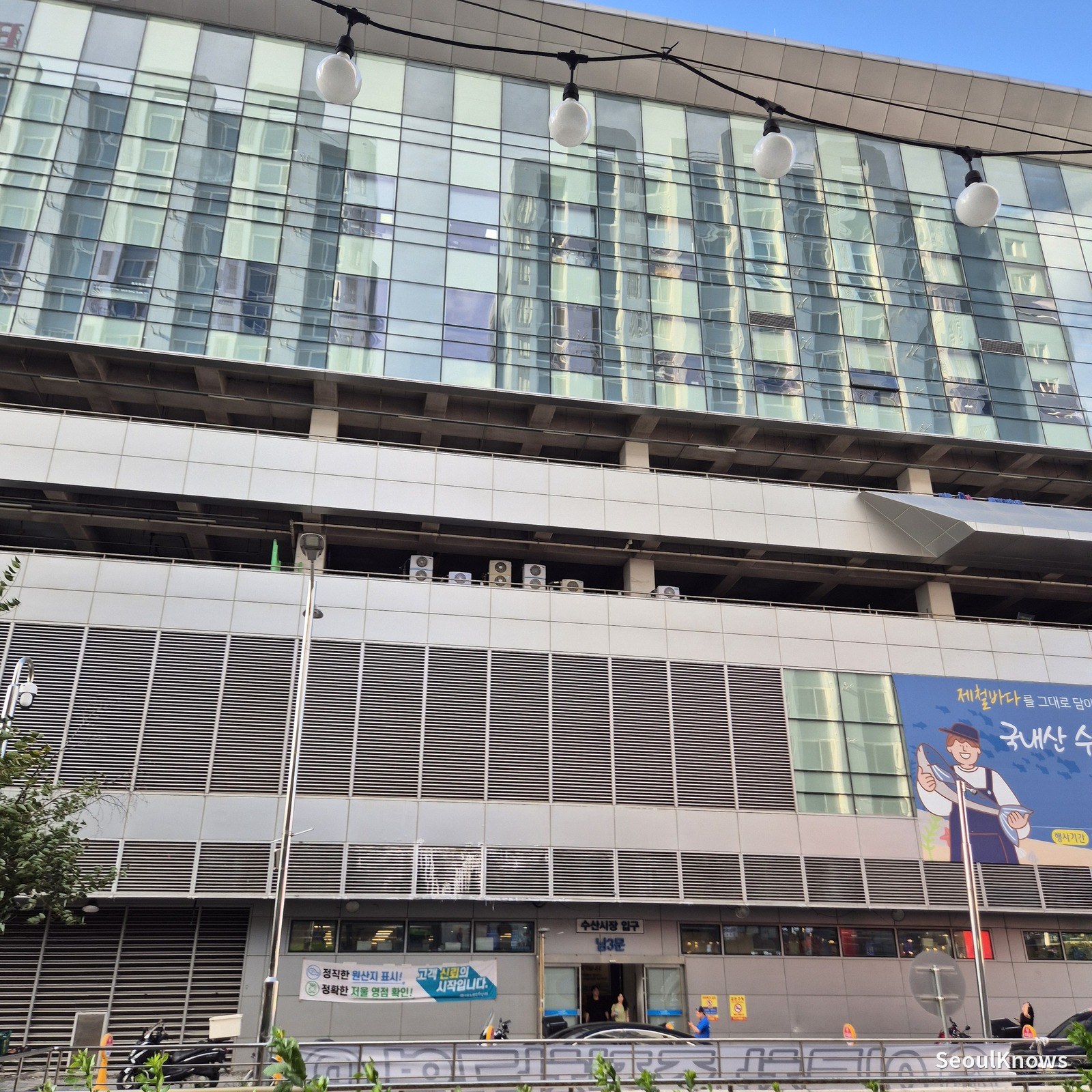
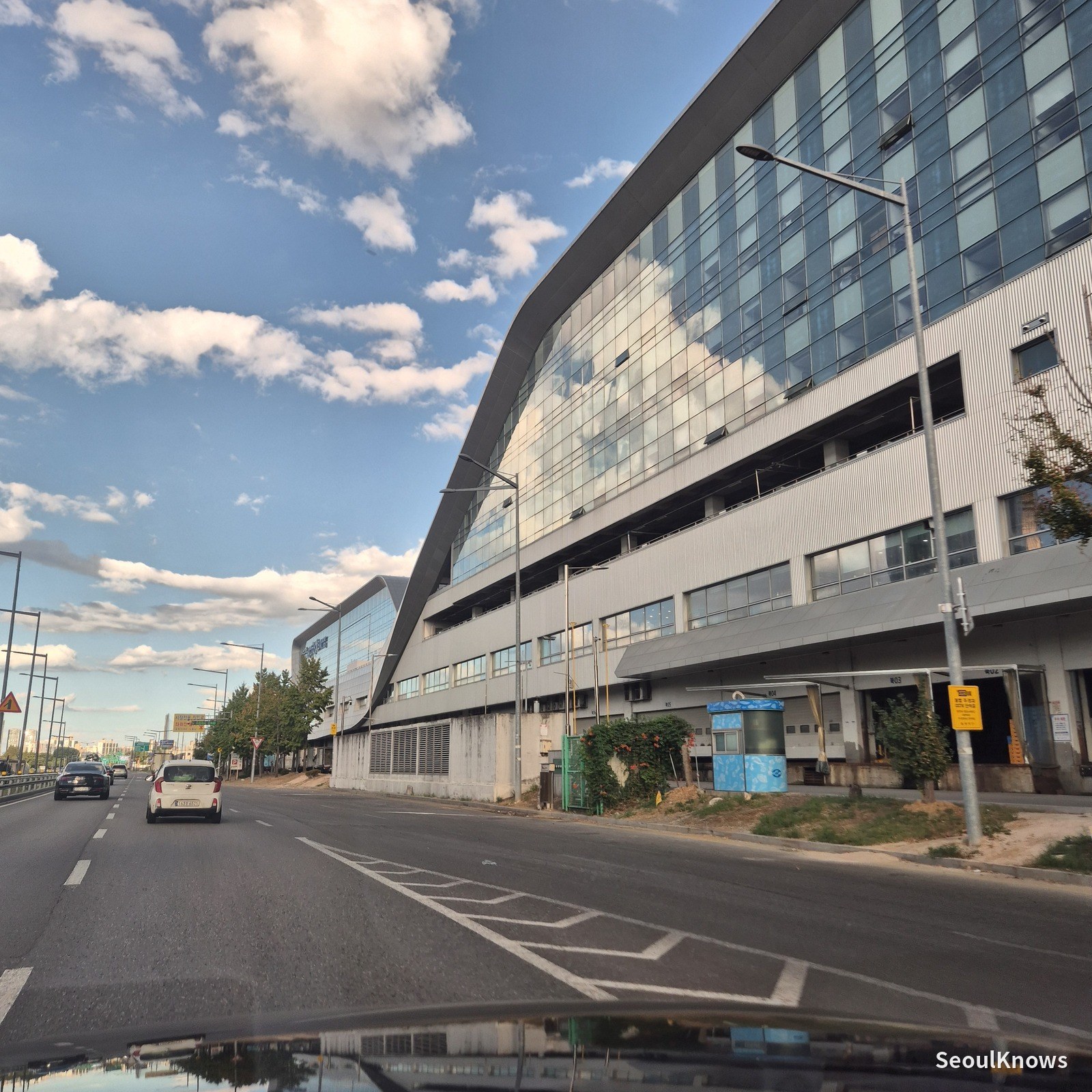
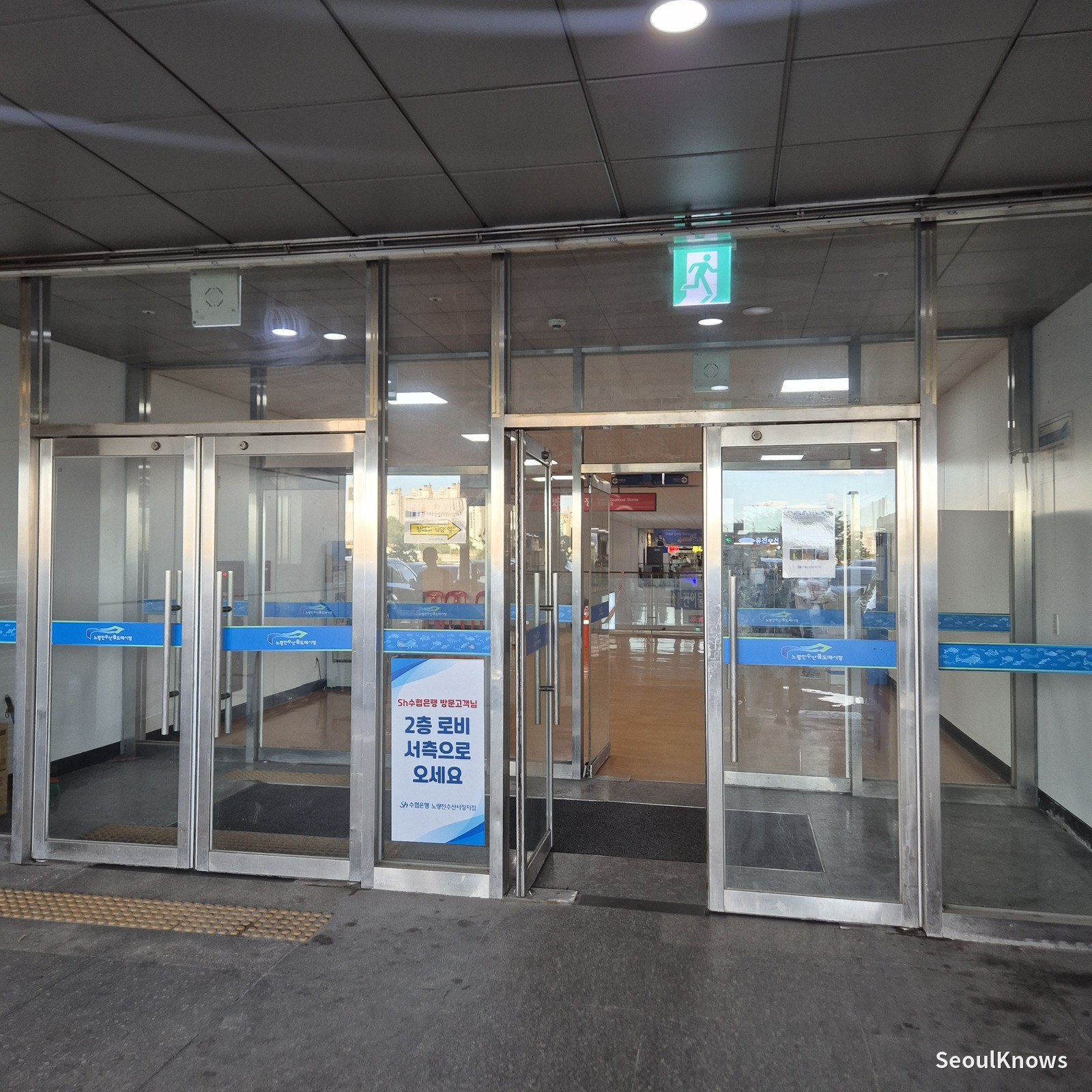
How to get there
Noryangjin Fisheries Wholesale Market
674 Nodeul-ro, Dongjak-gu, Seoul
Phone 02-2254-8000~1
· Line 1, Noryangjin Station, take Exit 9, walk straight 150m
· Line 9, Noryangjin Station, take Exit 7, walk straight 70m, then through the underpass
· Bus, get off at “Noryangjin Fish Market” or “CTS” and use the underpass
· Car, enter from Nodeul-ro, or from Noryangjin-ro via the market overpass
It is under a five-minute walk from the station, so it works as a half-day trip from anywhere in Seoul.
Learn the floors and you are halfway there
There is a large floor guide on the outside of the building. Memorise this and you will not get lost.
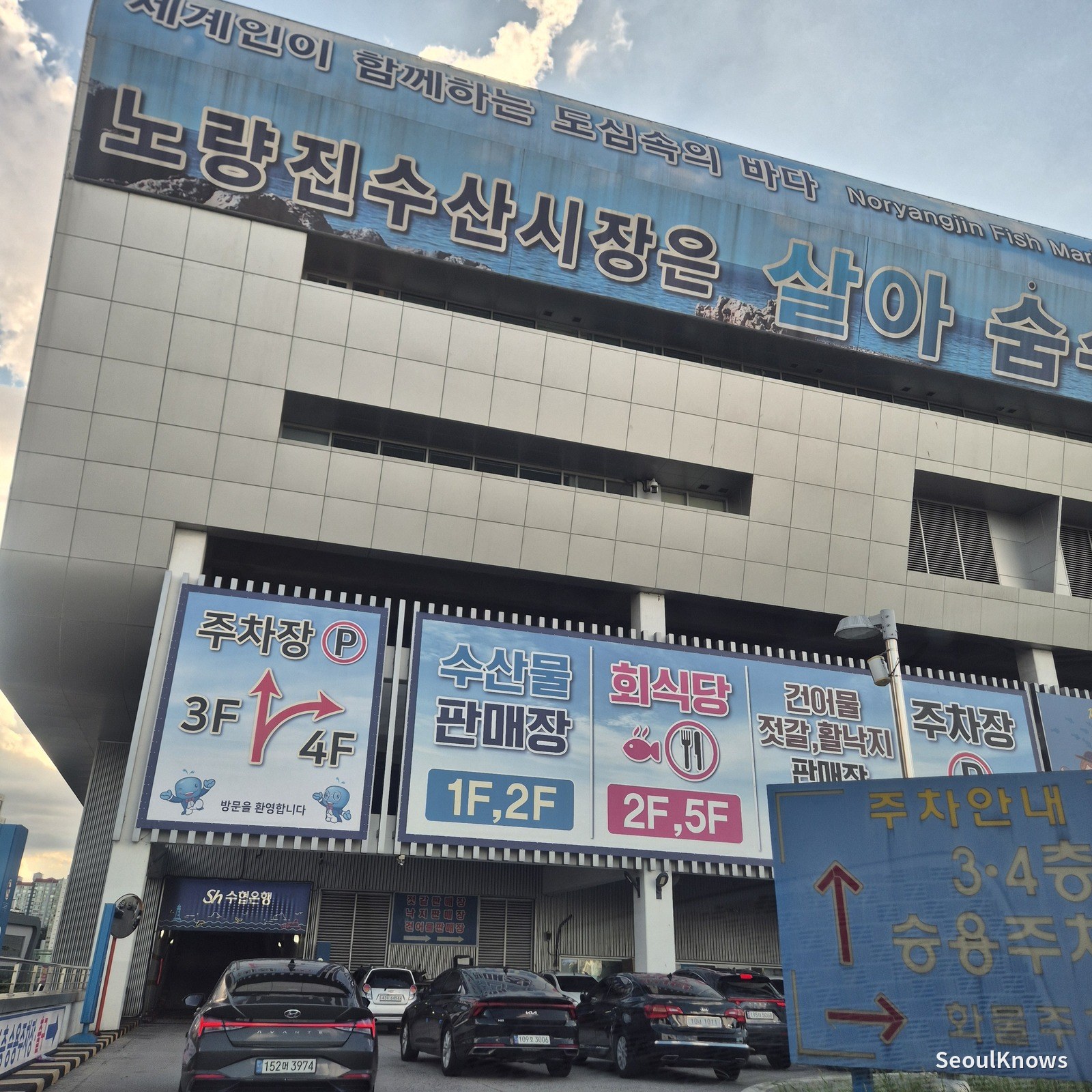
· 1F and 2F, sales floor: where you buy the fish
· 2F and 5F, restaurants (hoesikdang): where your fish gets prepared
· 3F and 4F, parking
· There is also a separate section for dried seafood, salted seafood and live octopus
The part worth noticing: the 2nd floor has both the sales floor and restaurants. So you can do the whole thing on one level, buy and eat. For a first visit, just go up to 2F.
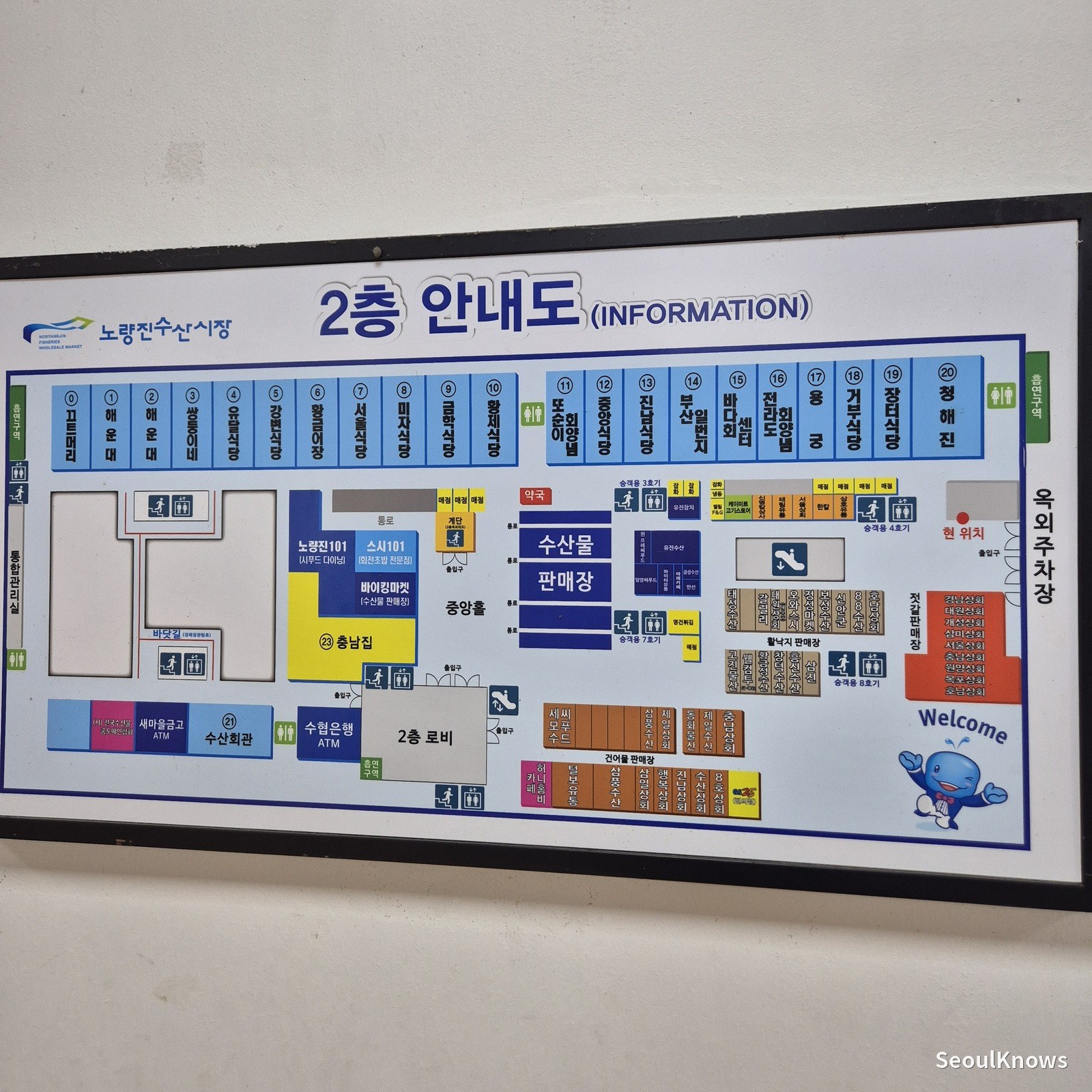
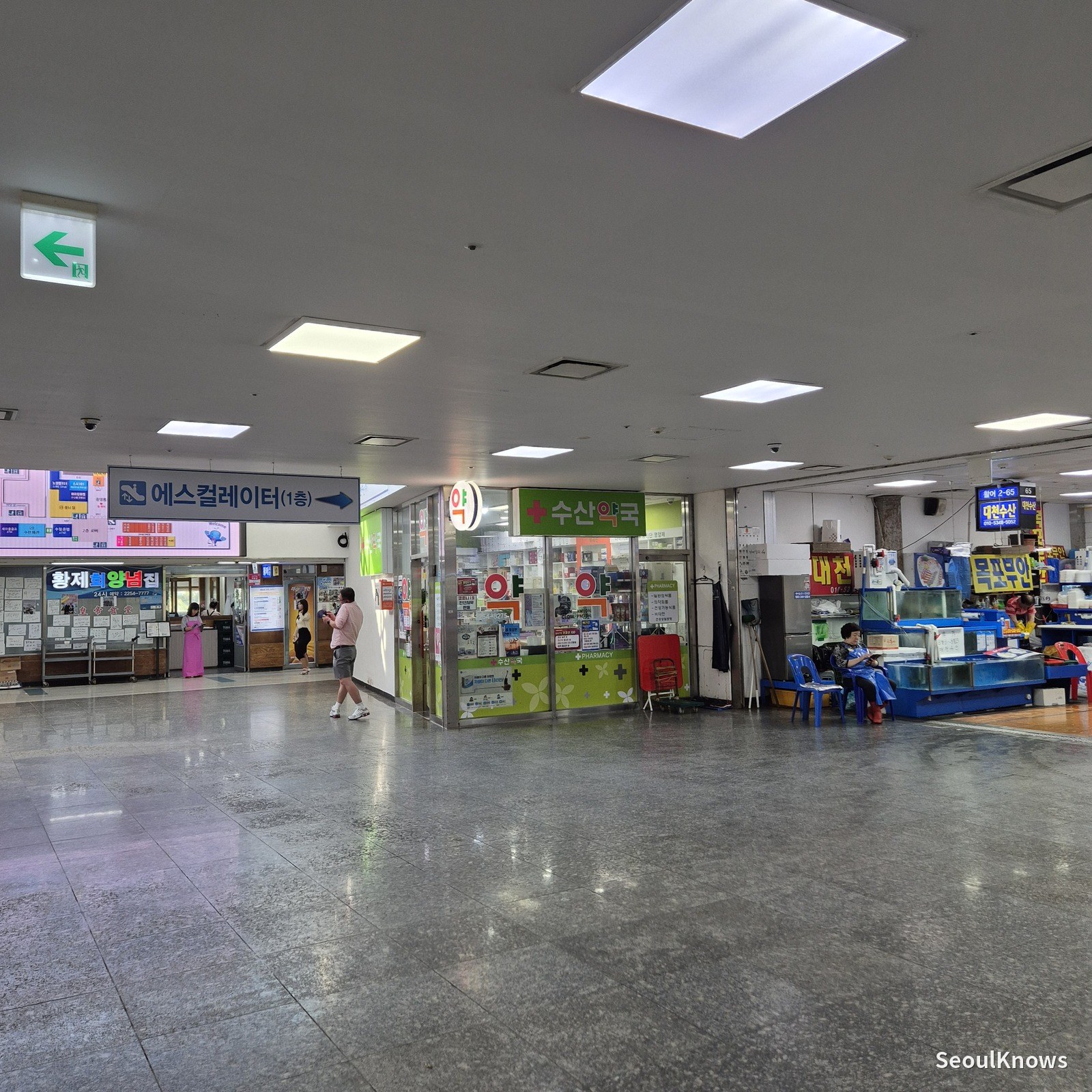
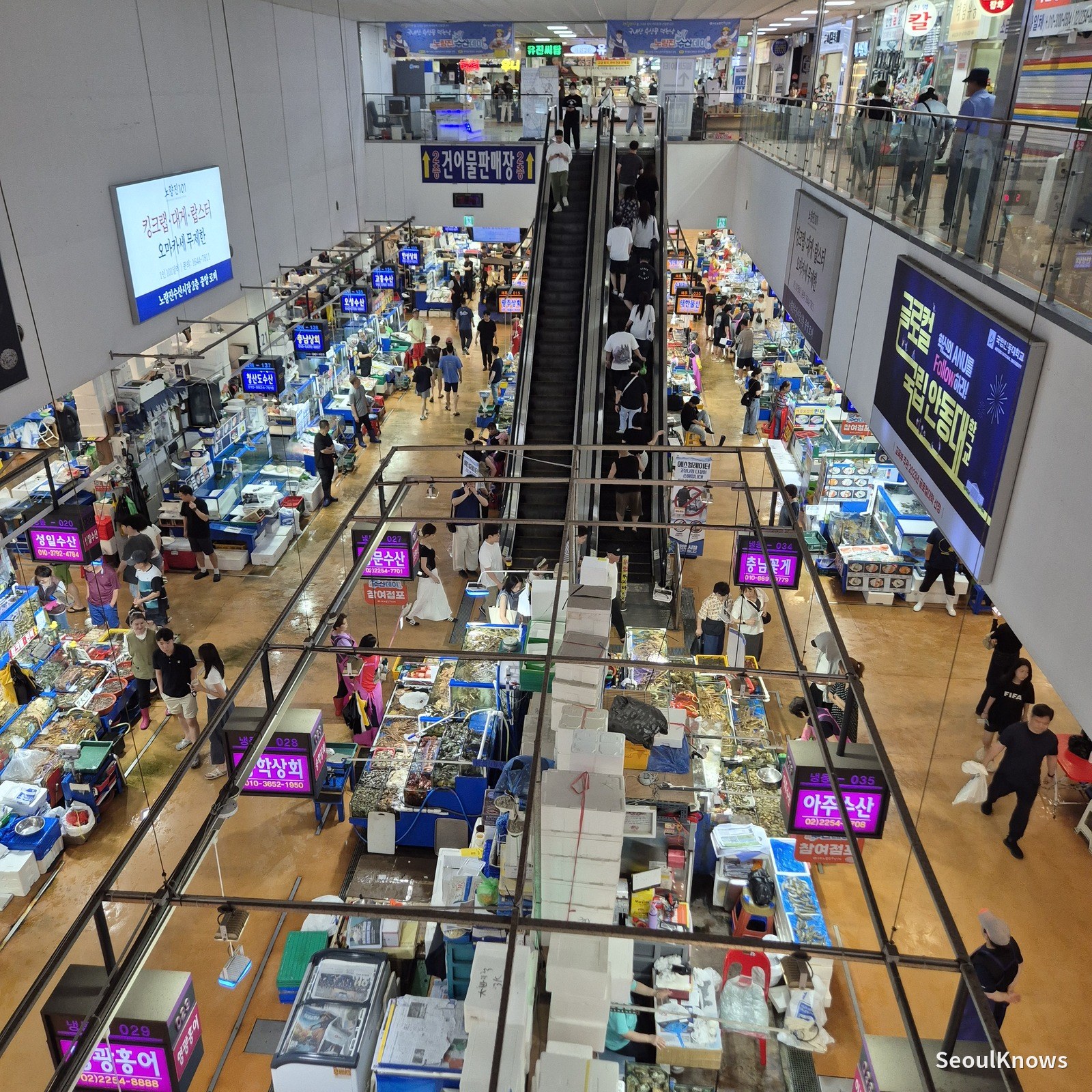
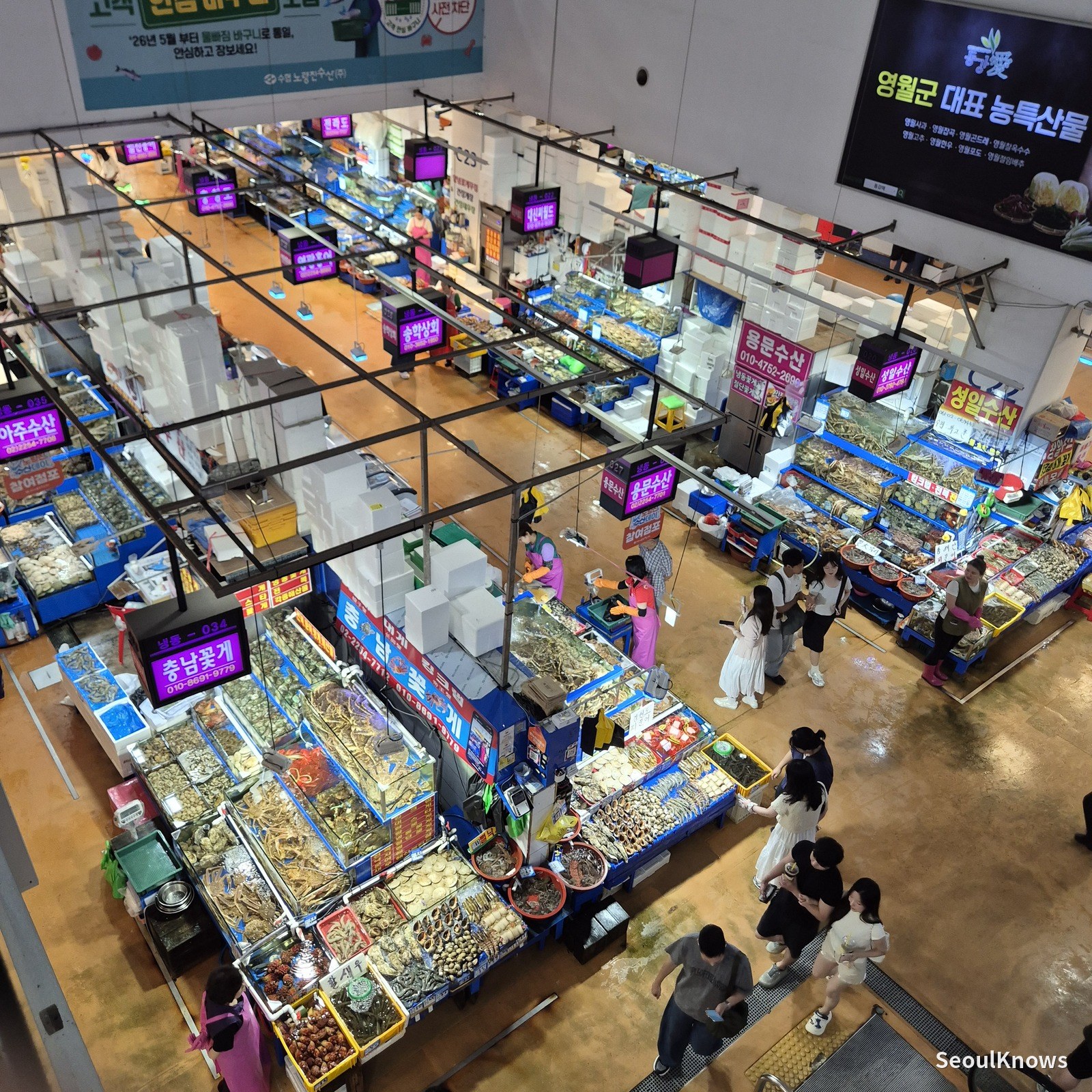
Looking down from the escalator you see the whole hall, rows of blue tanks along every aisle.
The system: you pay twice
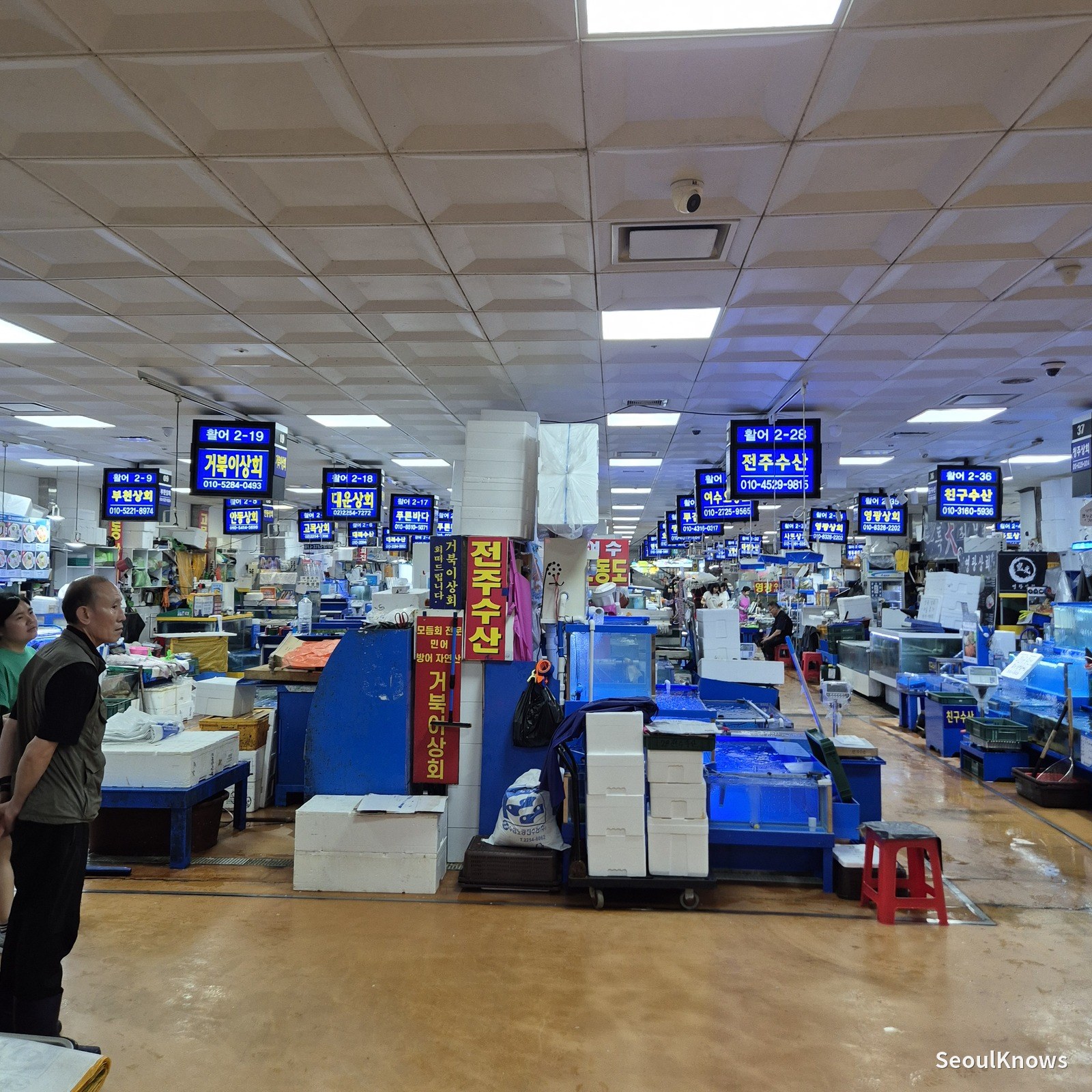
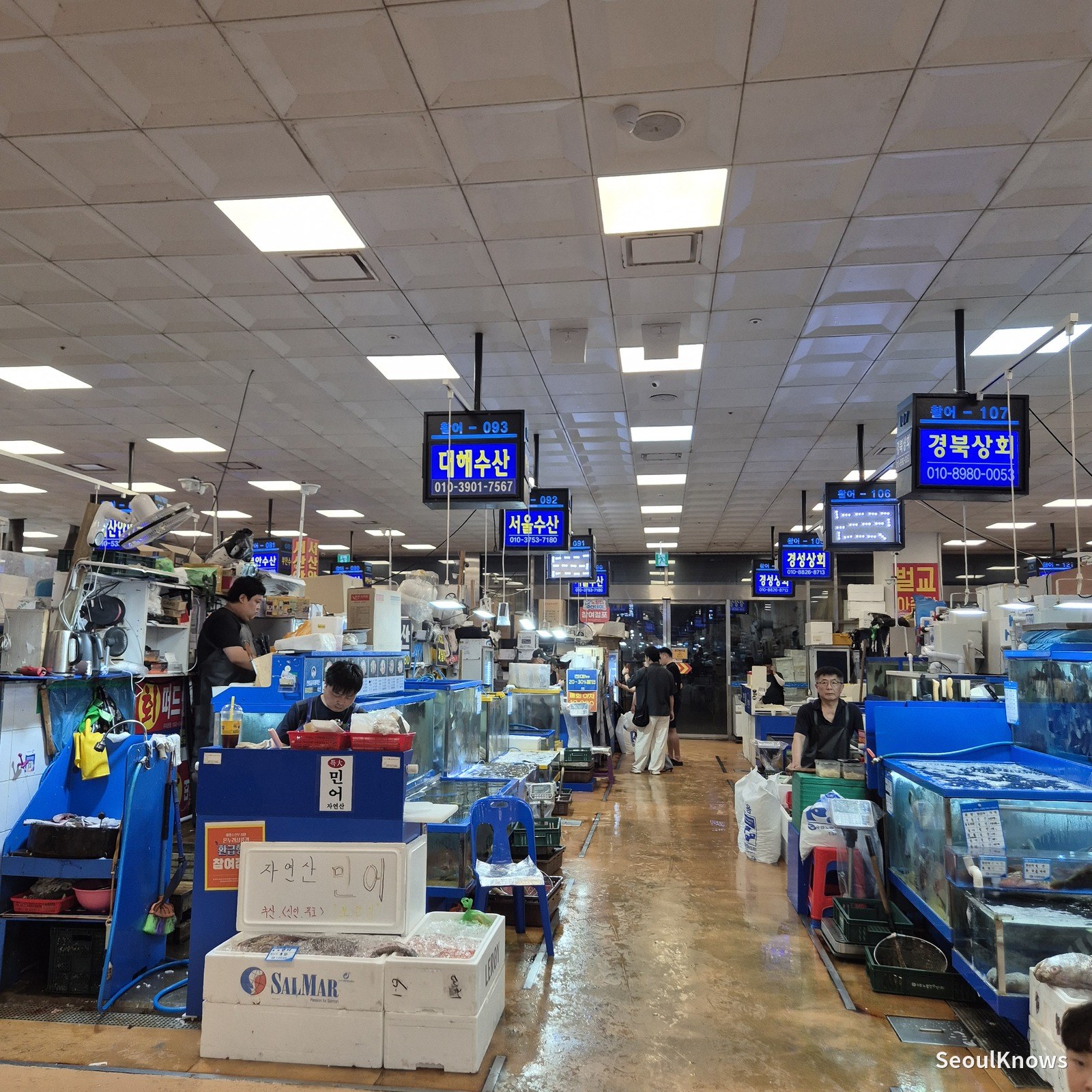
The key thing about this market is that buying and eating are separate transactions. The order goes:
1. Walk the 1F or 2F sales floor and pick what you want
2. Agree a price and pay the vendor (payment one)
3. They clean and pack it, or send it up to a restaurant for you
4. Walk into a restaurant on the same 2nd floor (there are more on 5F)
5. Pay the restaurant a table charge and cooking fee (payment two)
So the fish and the meal are billed separately. It catches people out, but that is simply how the market works, budget for both halves.
What the cooking fees are
The important thing here is that the table charge is per person, not per table. On top of that, anything steamed or grilled is charged by the kilo.
Good news for visitors: some of the 2nd-floor restaurants post their prices in English. You can read exactly what you will pay before you sit down. Here is what one of them listed:
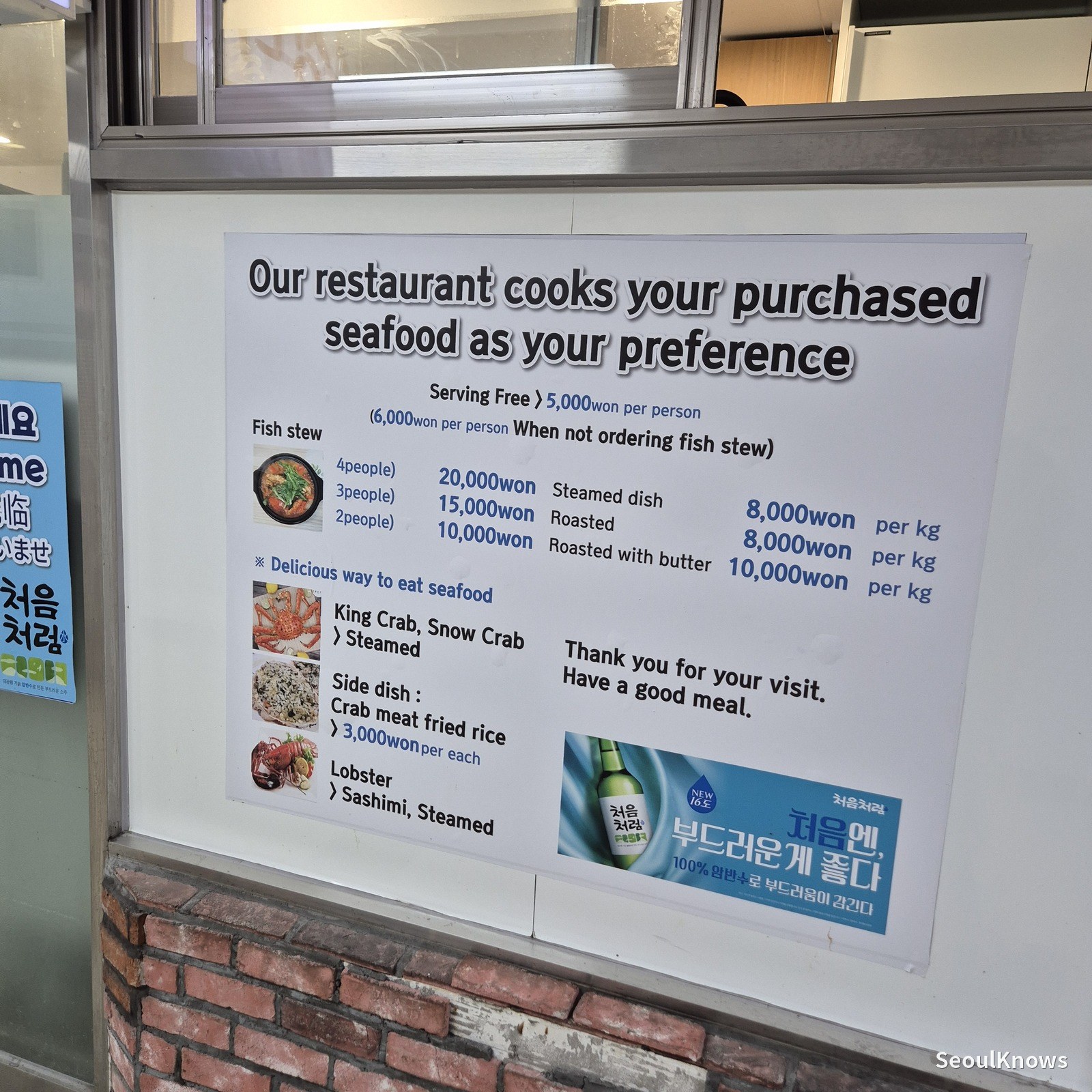
· Serving (table) charge: 5,000 KRW per person, 6,000 KRW per person if you do not order fish stew
· Fish stew: 10,000 KRW for 2 / 15,000 for 3 / 20,000 for 4
· Steamed: 8,000 KRW per kg
· Grilled: 8,000 KRW per kg
· Grilled with butter: 10,000 KRW per kg
· Crab meat fried rice: 3,000 KRW each
The same board suggested how to order: king crab and snow crab steamed, lobster as sashimi or steamed, with crab meat fried rice on the side.
Note: these fees vary by restaurant. Check the board at the entrance, and if it is unclear, ask the table charge first.
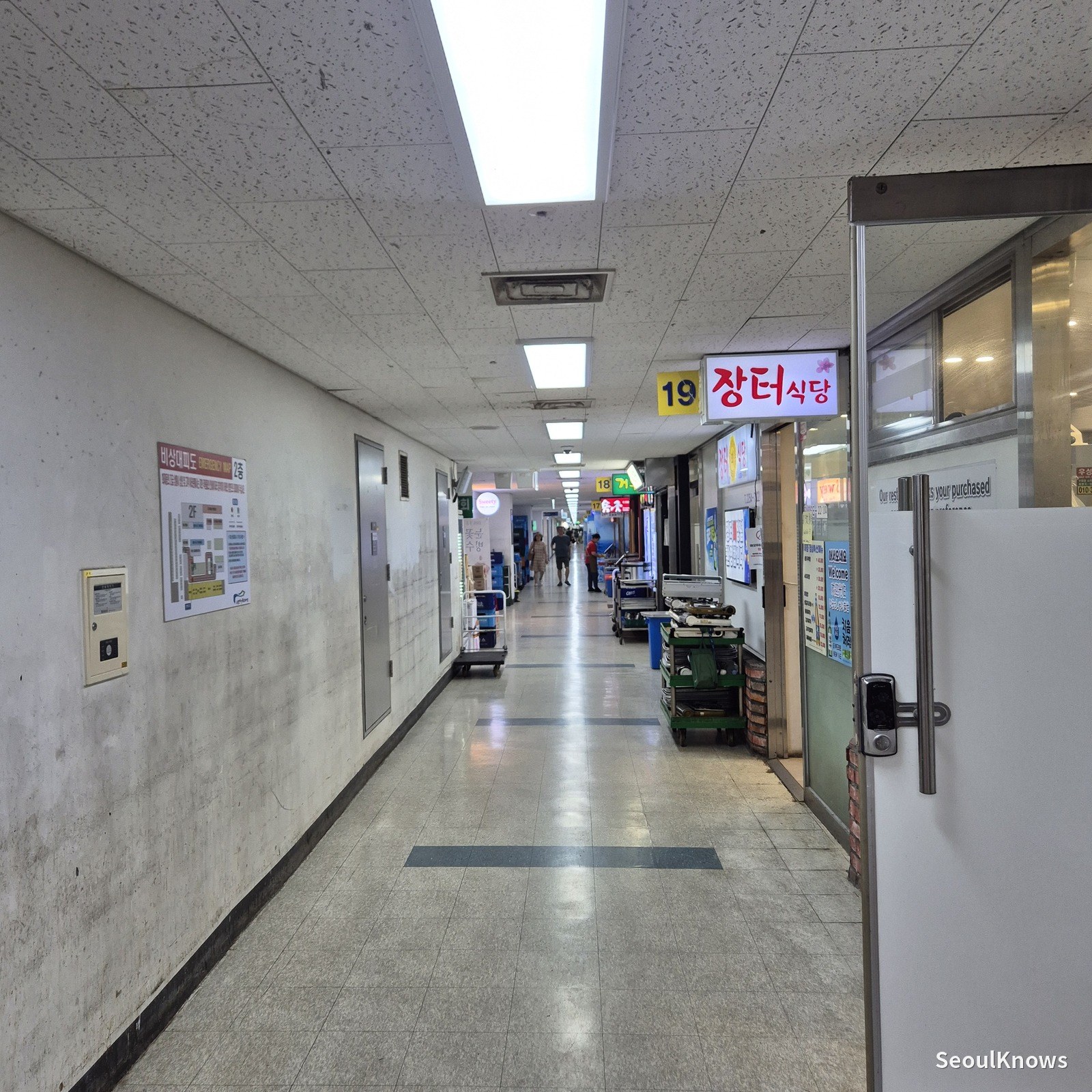
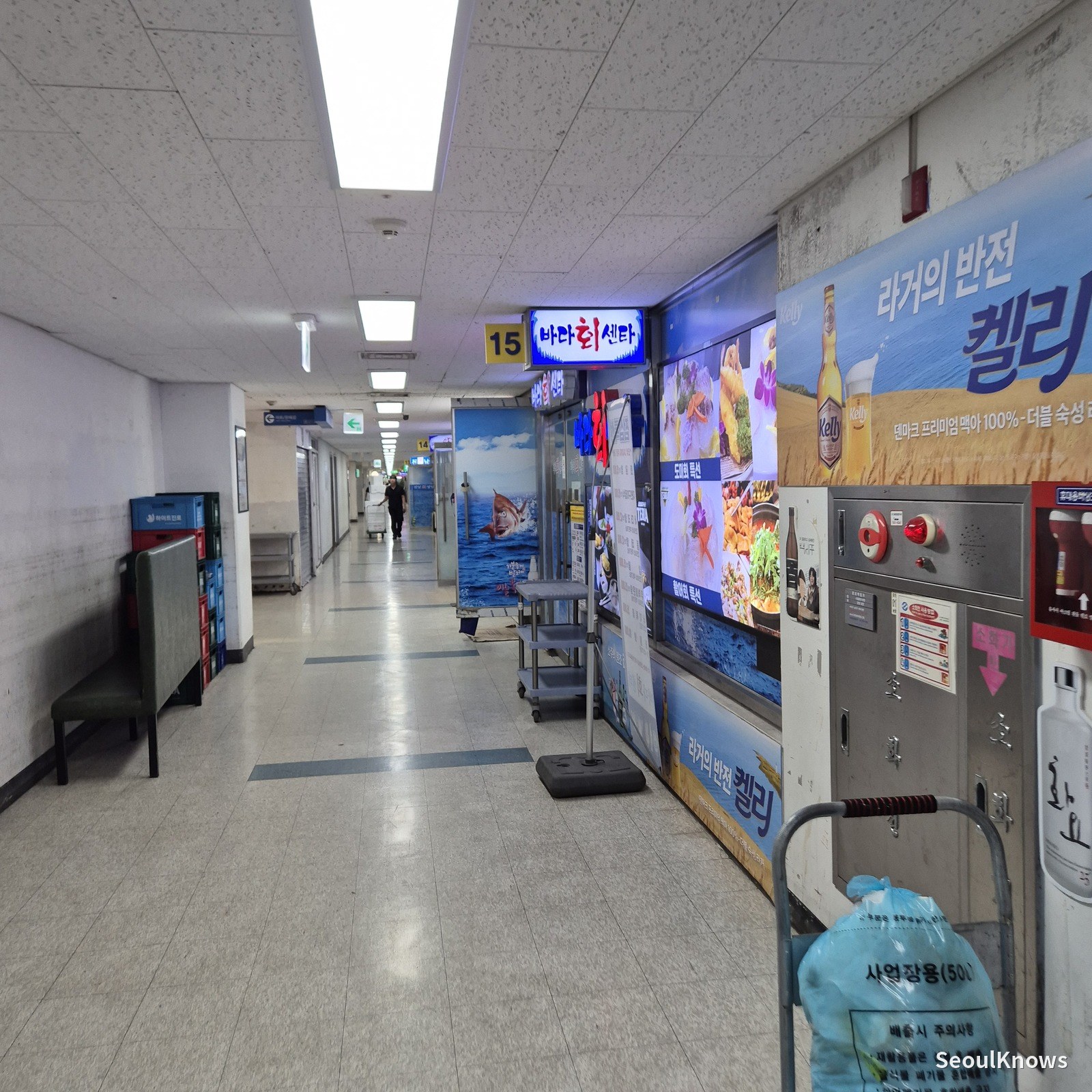
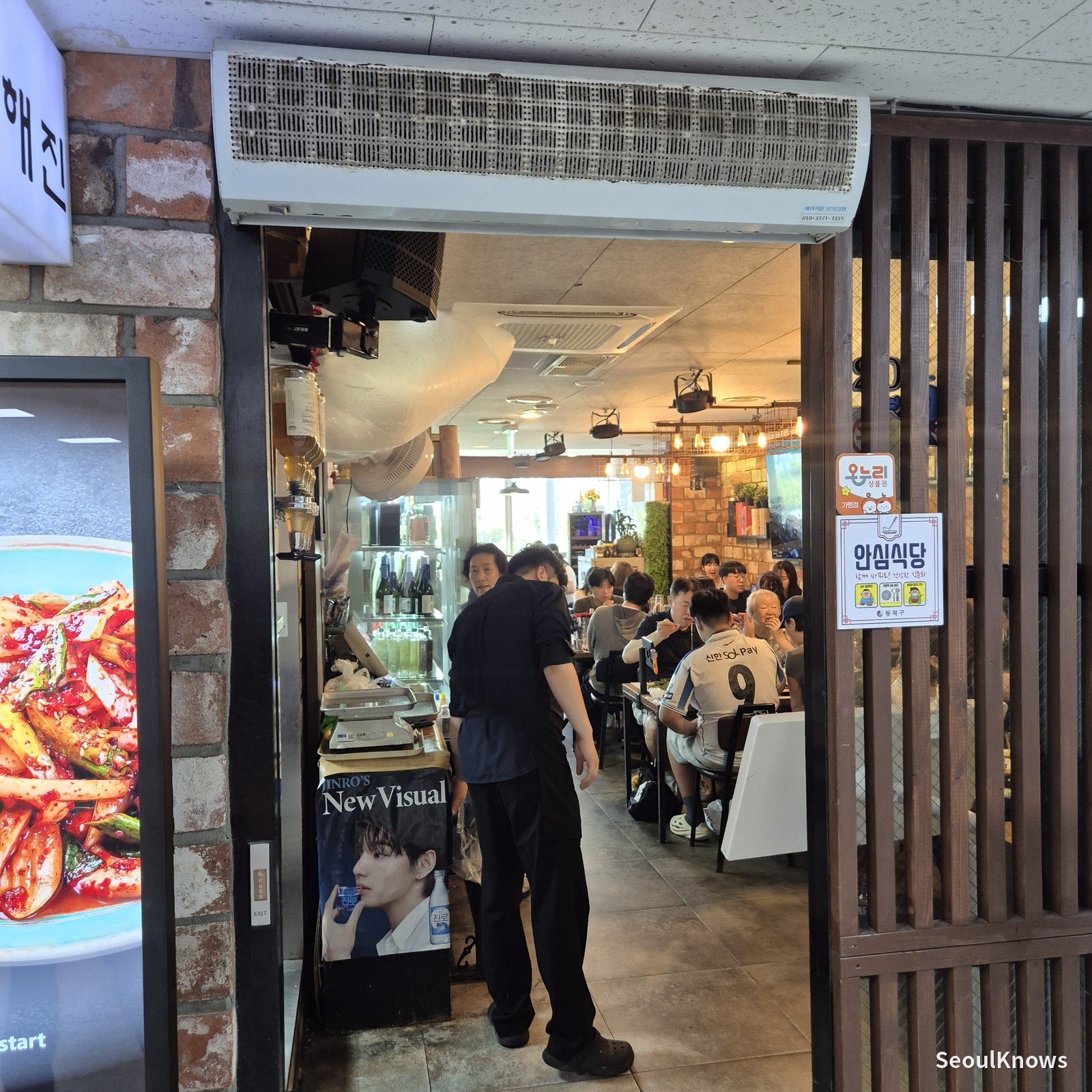
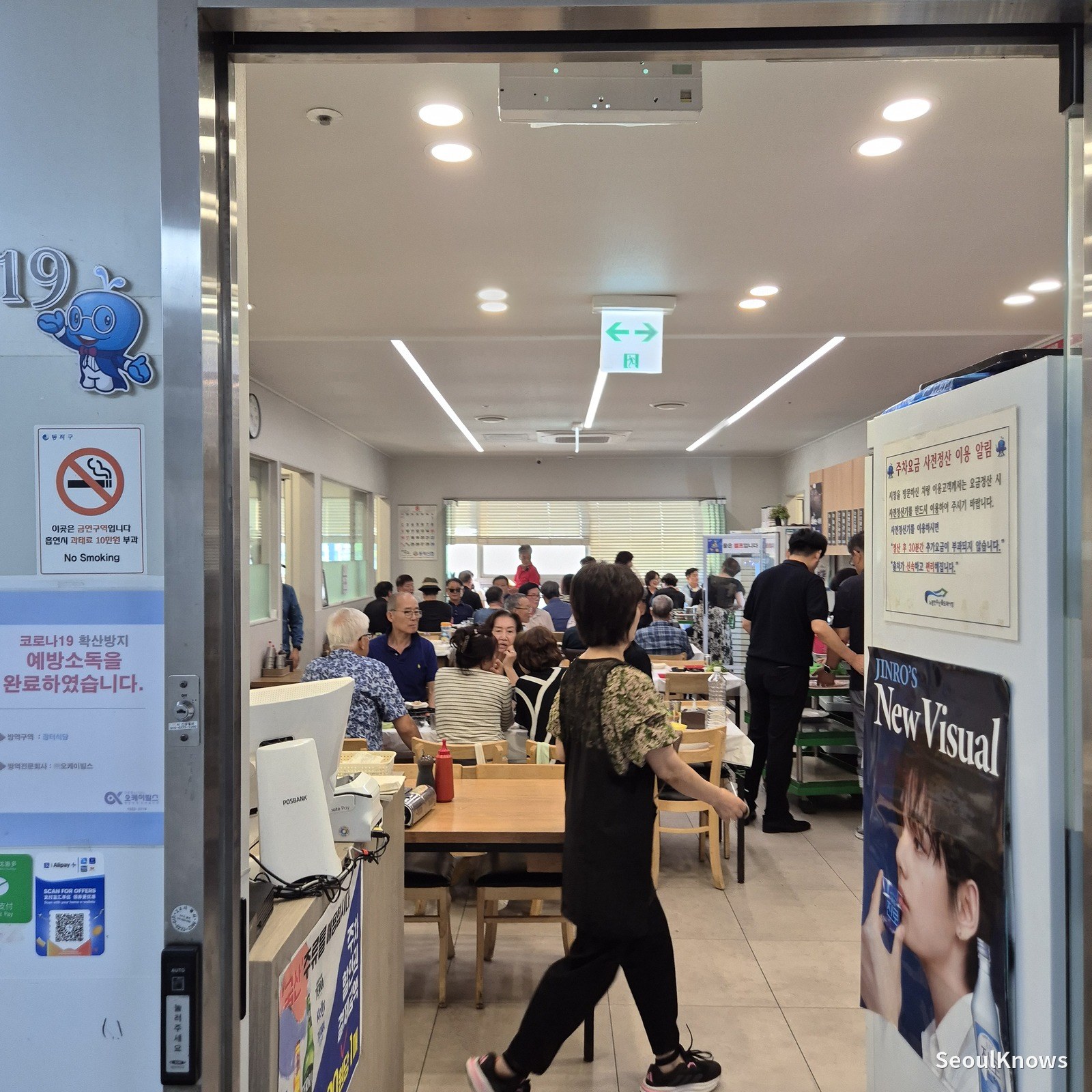
One restaurant had a sign asking guests to keep meals within two hours. Tables turn over here, so it is not the place to sit for a whole evening.
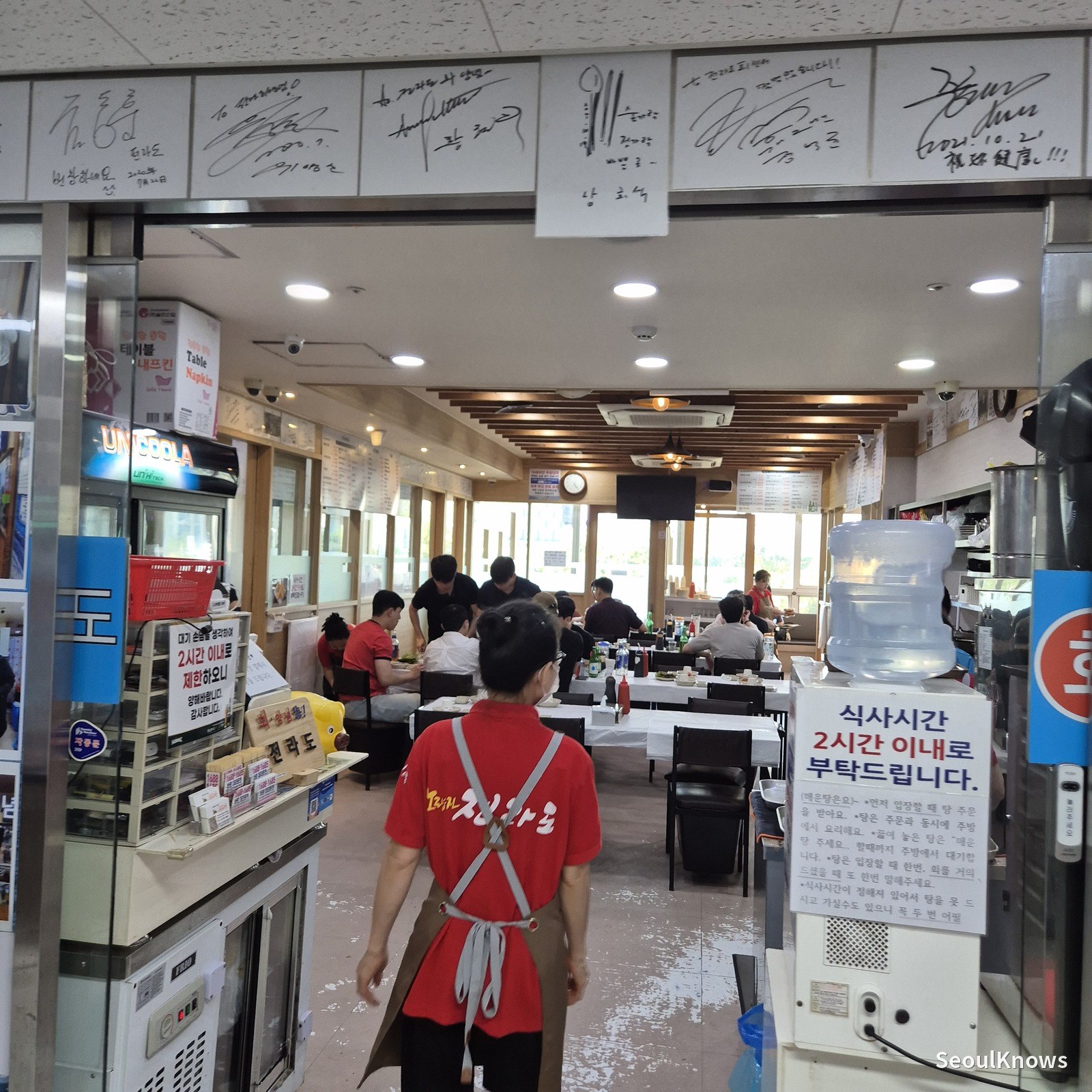
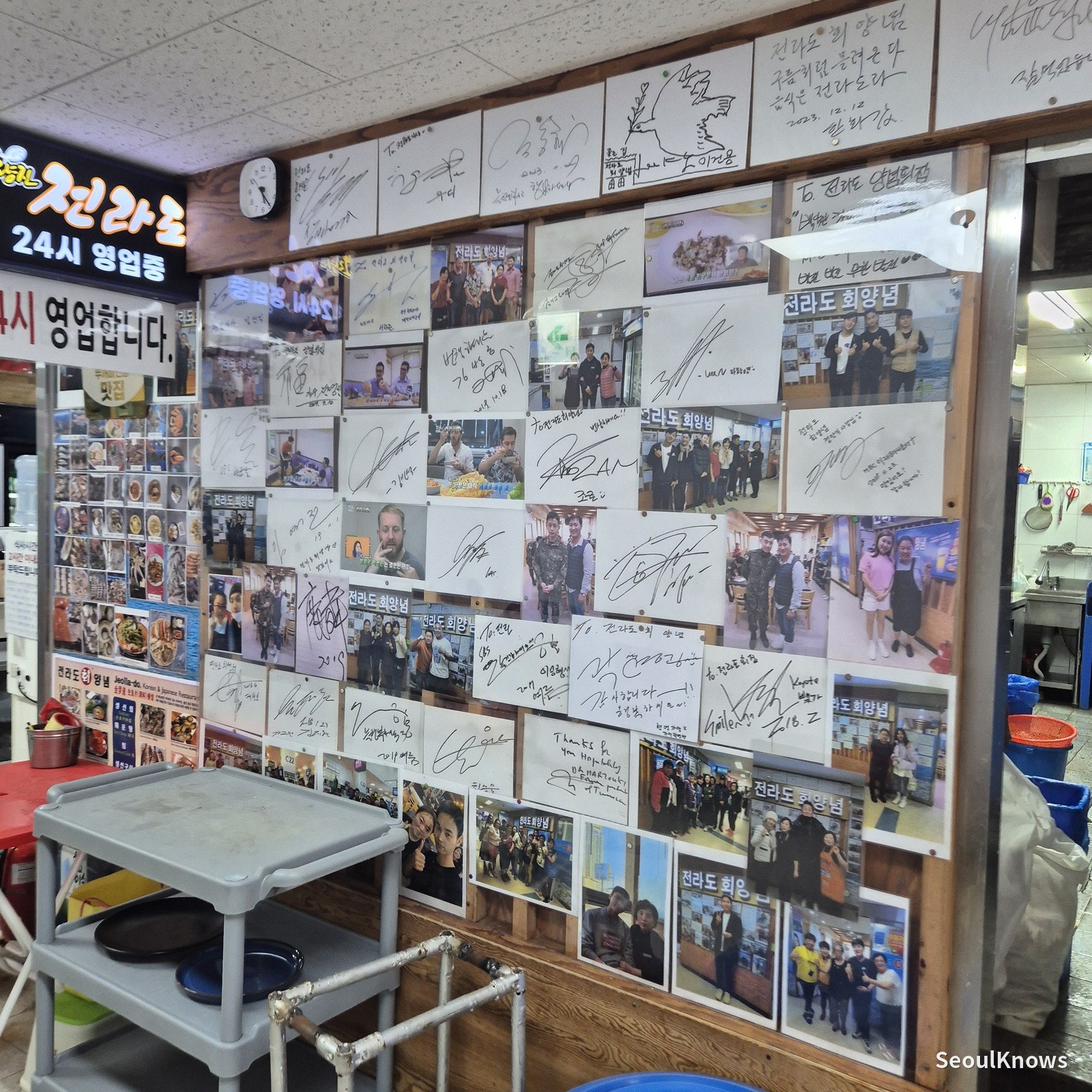
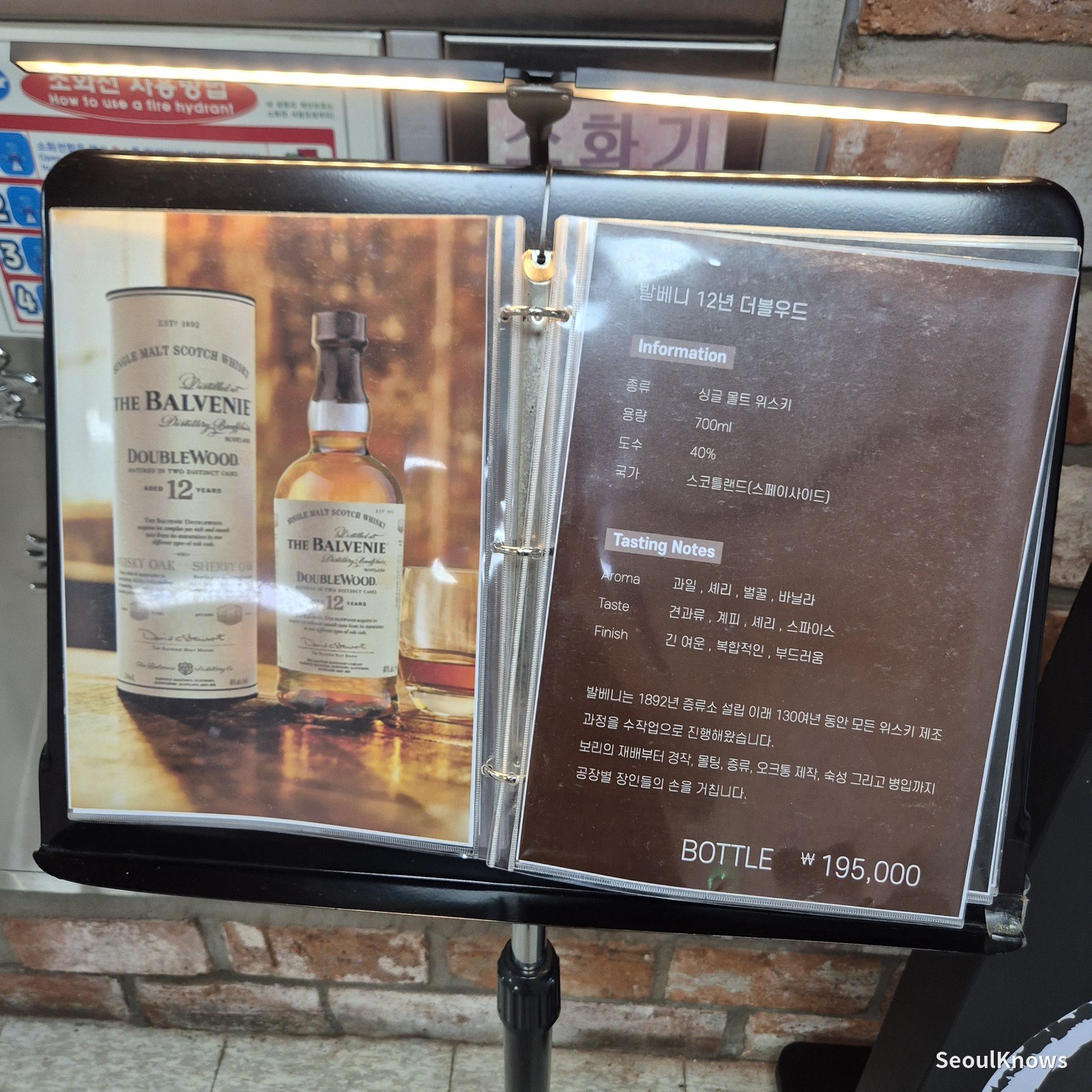
Drinks are ordered at the restaurant. Beyond soju and beer, some places carry whisky, one had Balvenie 12 DoubleWood at 195,000 KRW a bottle.
Once a week we send one email: hotels, food and the practical stuff, from someone who actually lives here. No filler.
What you can buy
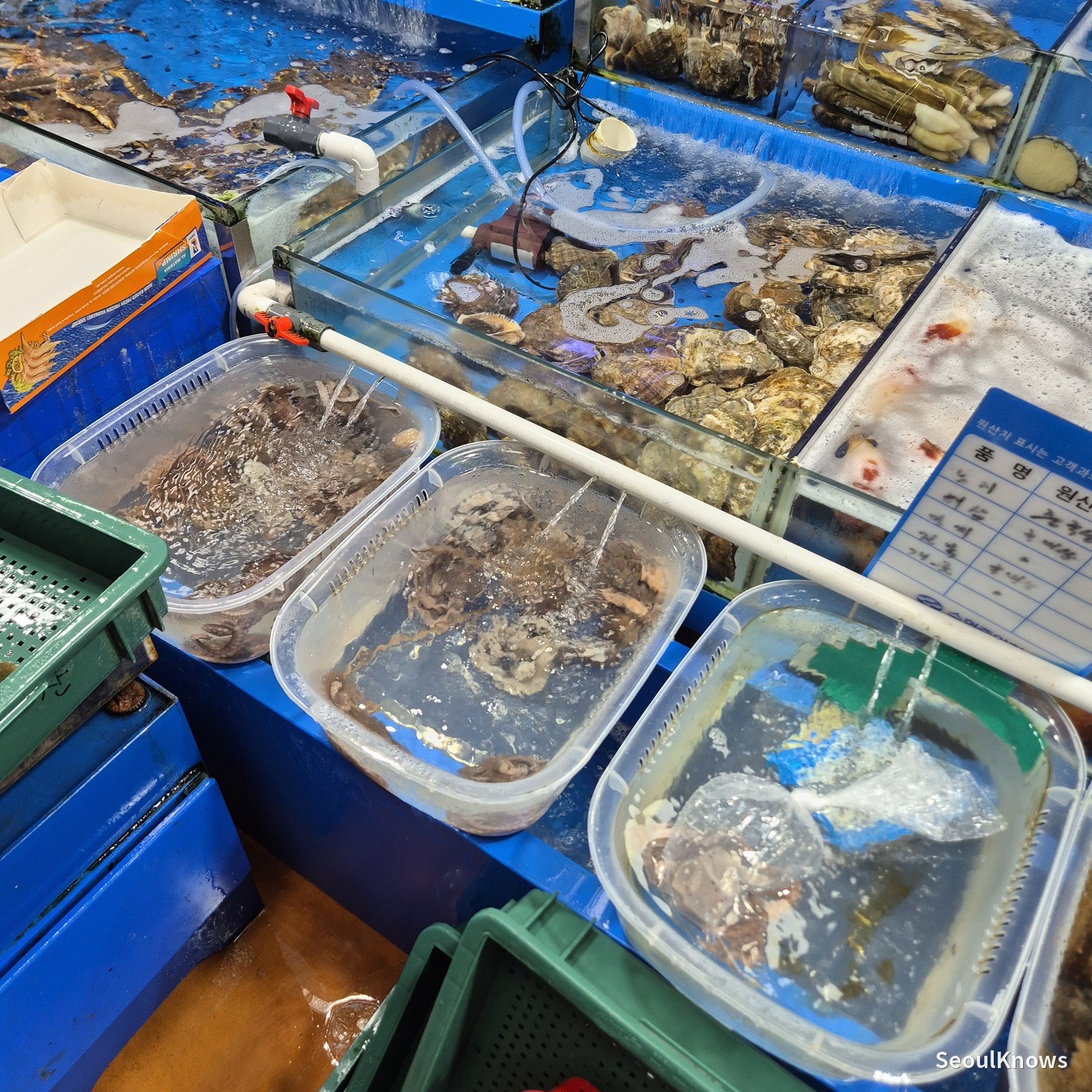
The sales floor divides roughly into live-fish tanks, crab and shellfish tanks, and a sashimi and sushi counter.
The king crab and snow crab tanks are what catch your eye first. They are weighed live and priced by the kilo.
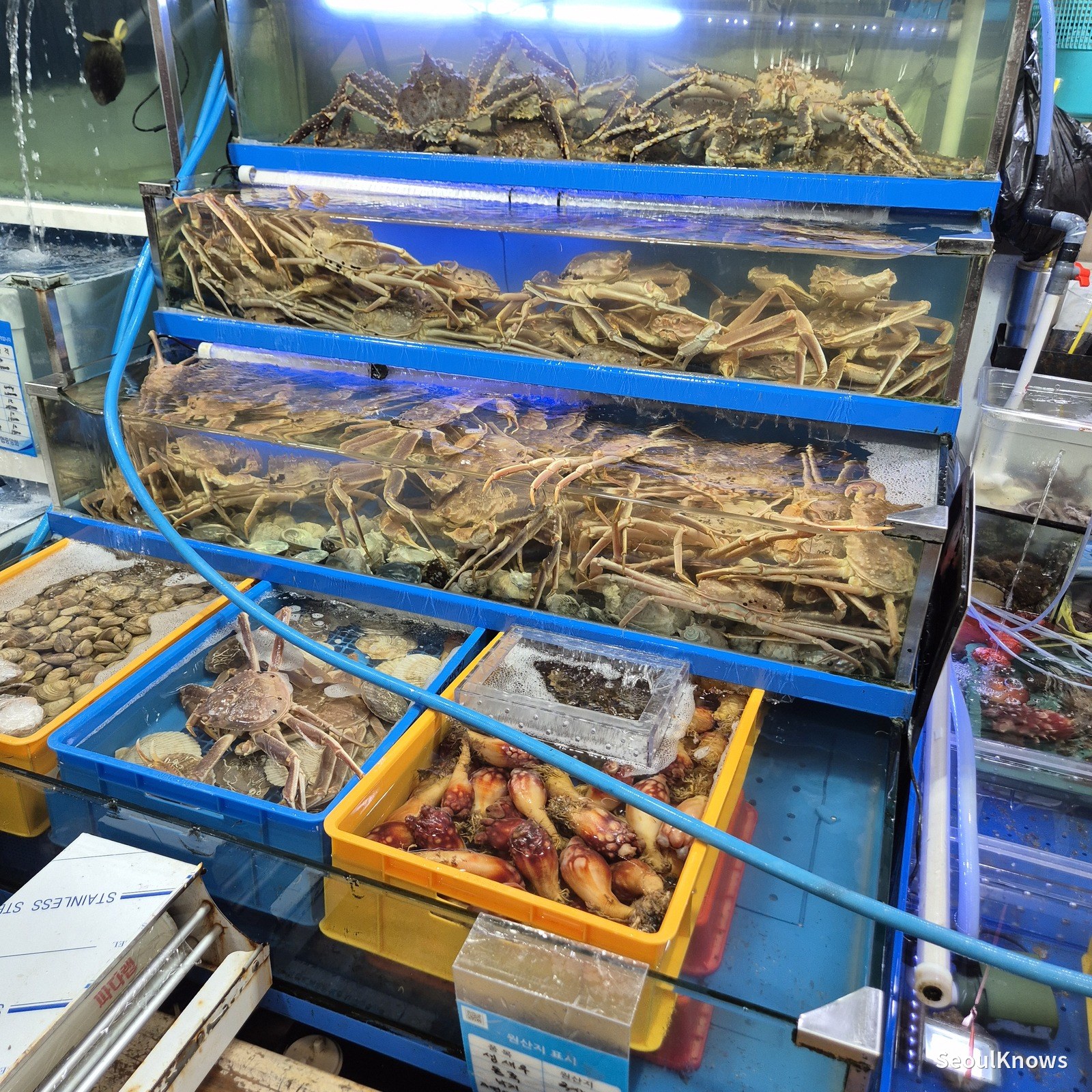
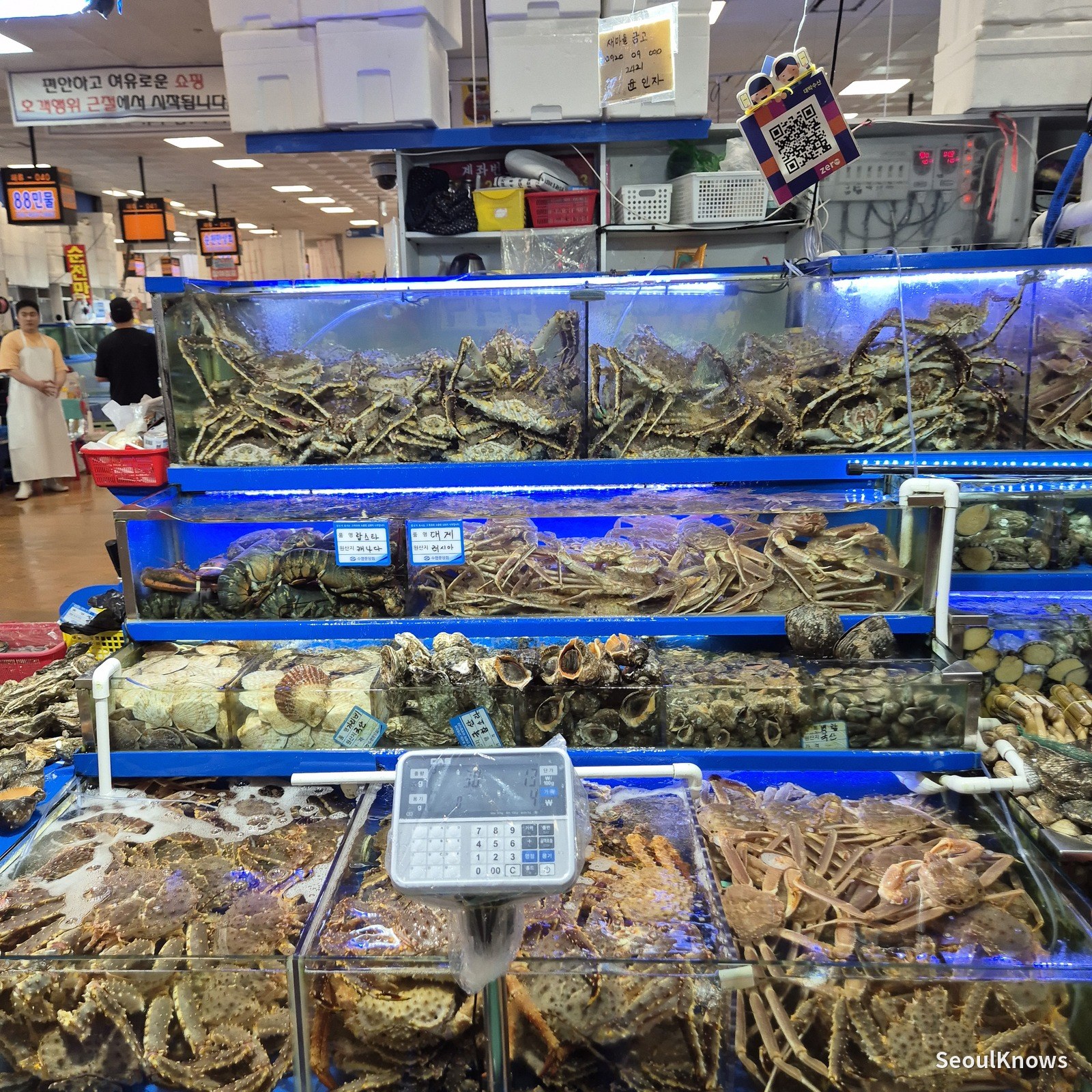
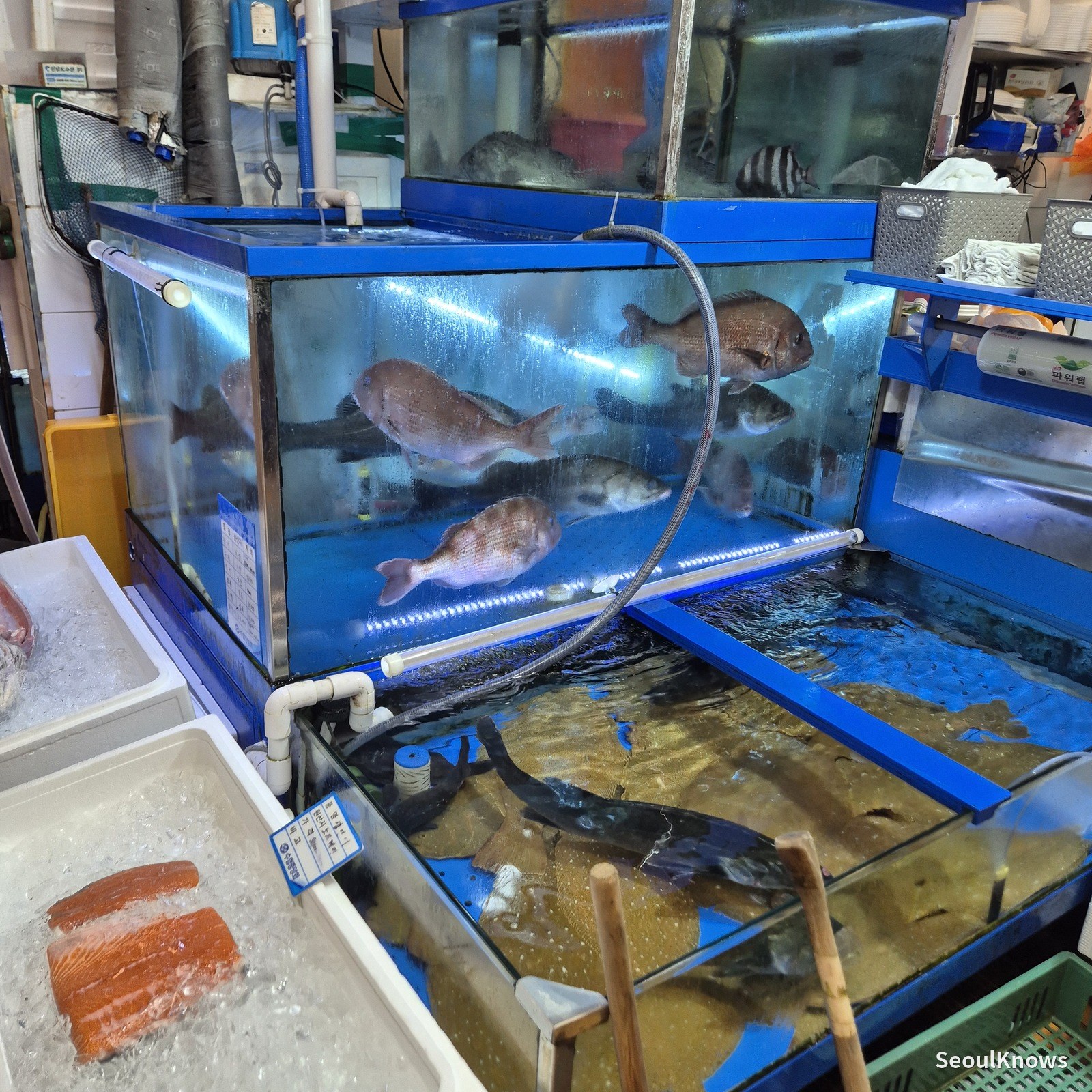
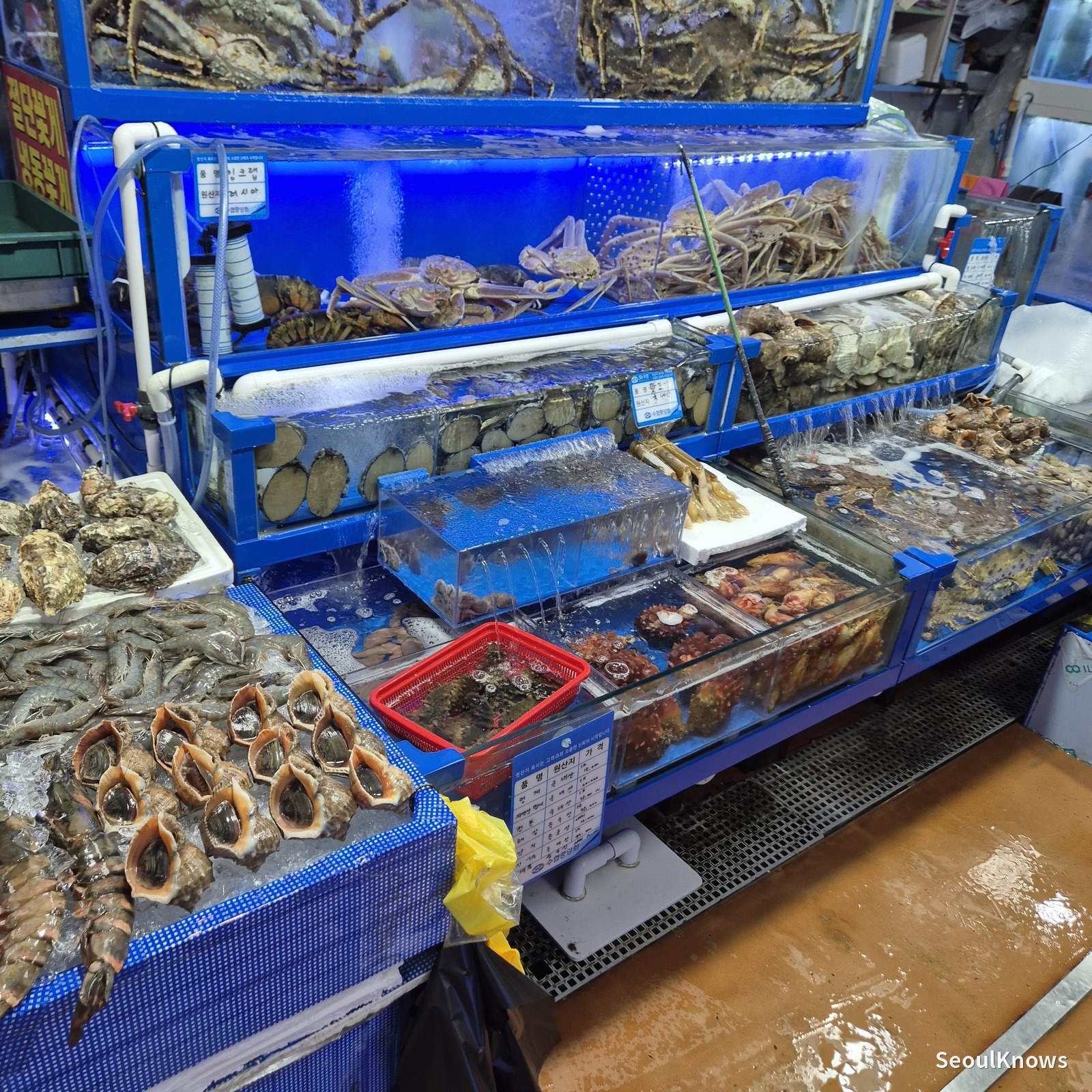
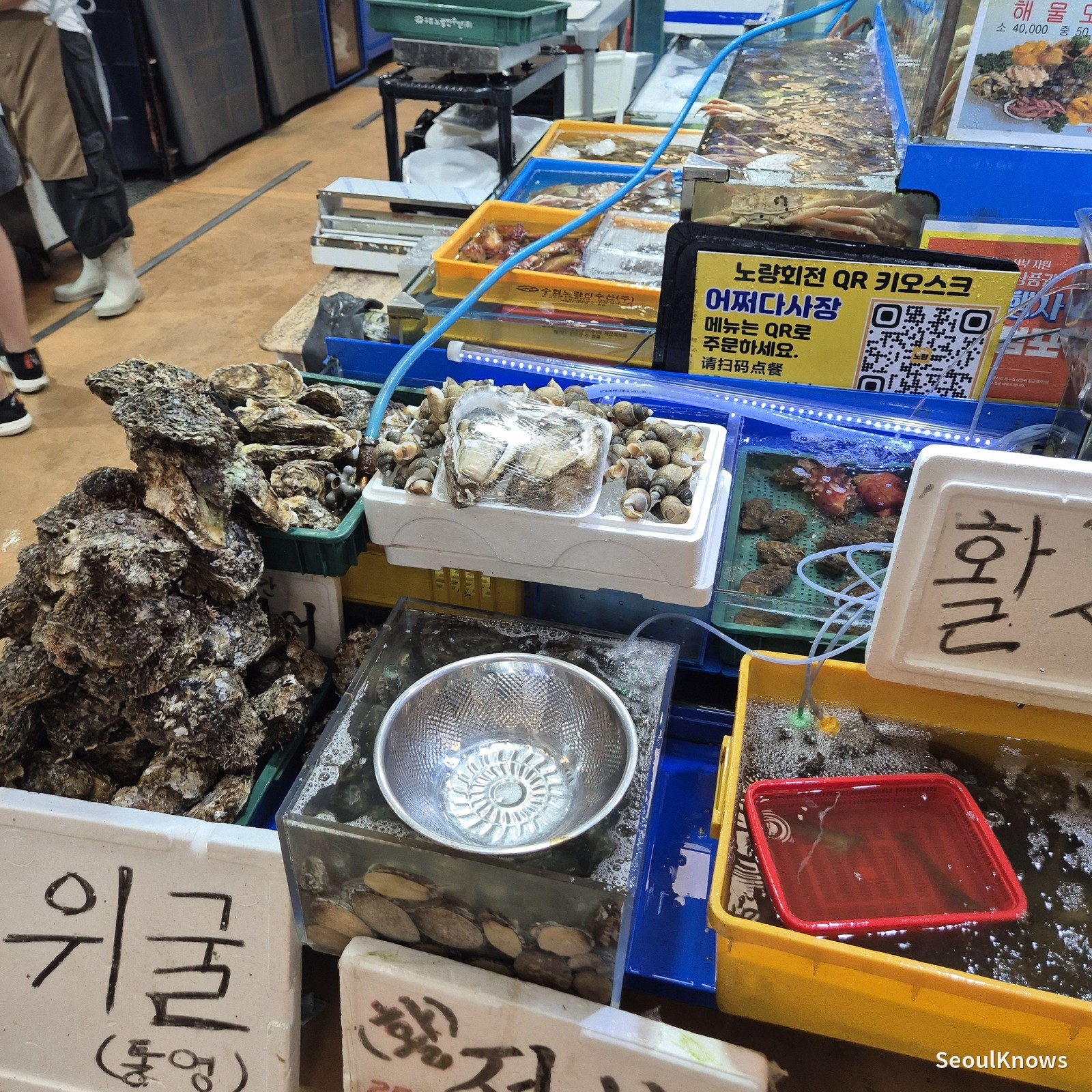
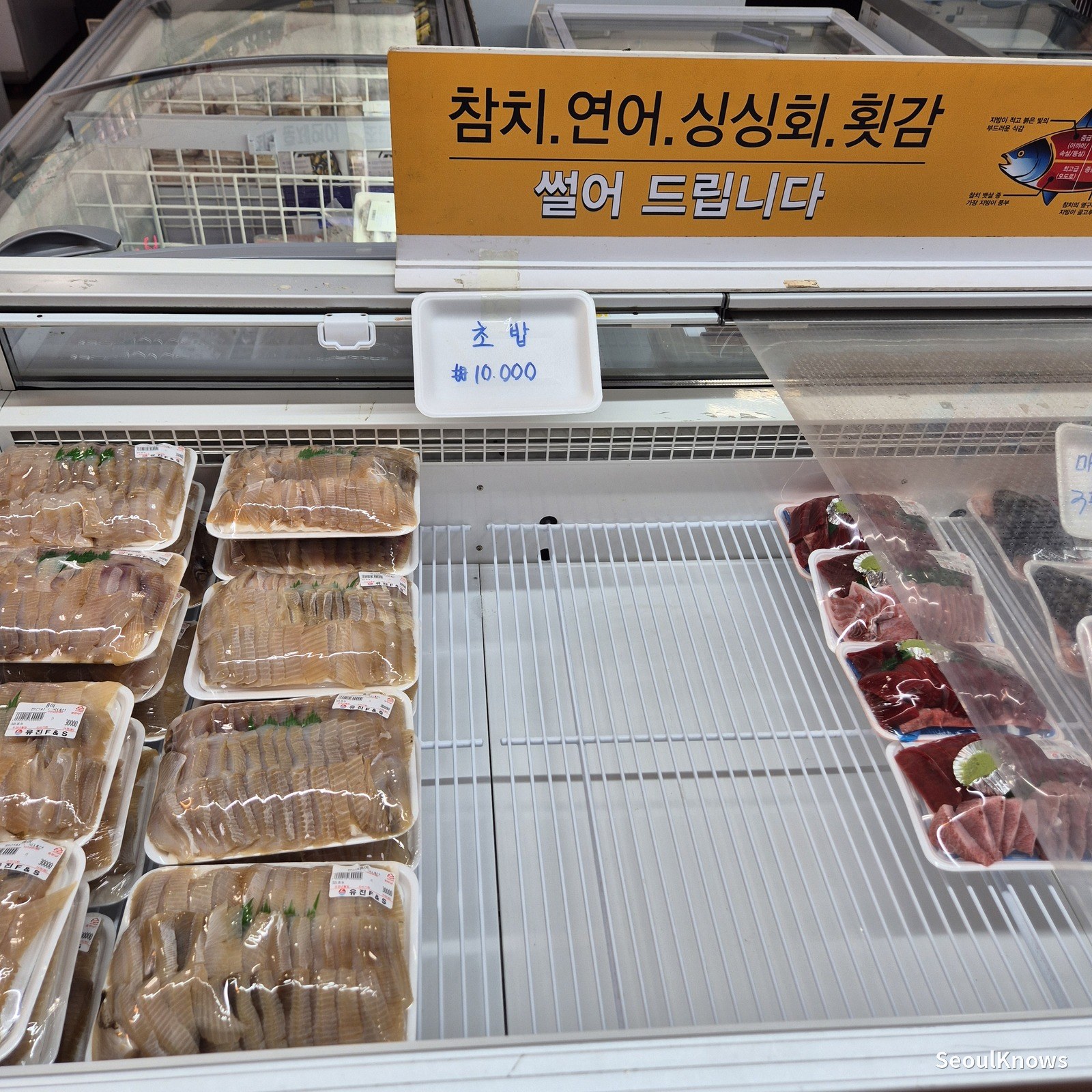
The live tanks hold white fish like rockfish and sea bream, and the shellfish counters have abalone, sea cucumber, oysters and octopus. Some stalls label the region the catch came from, the oysters I saw were from Tongyeong, and they will tell you if you ask.
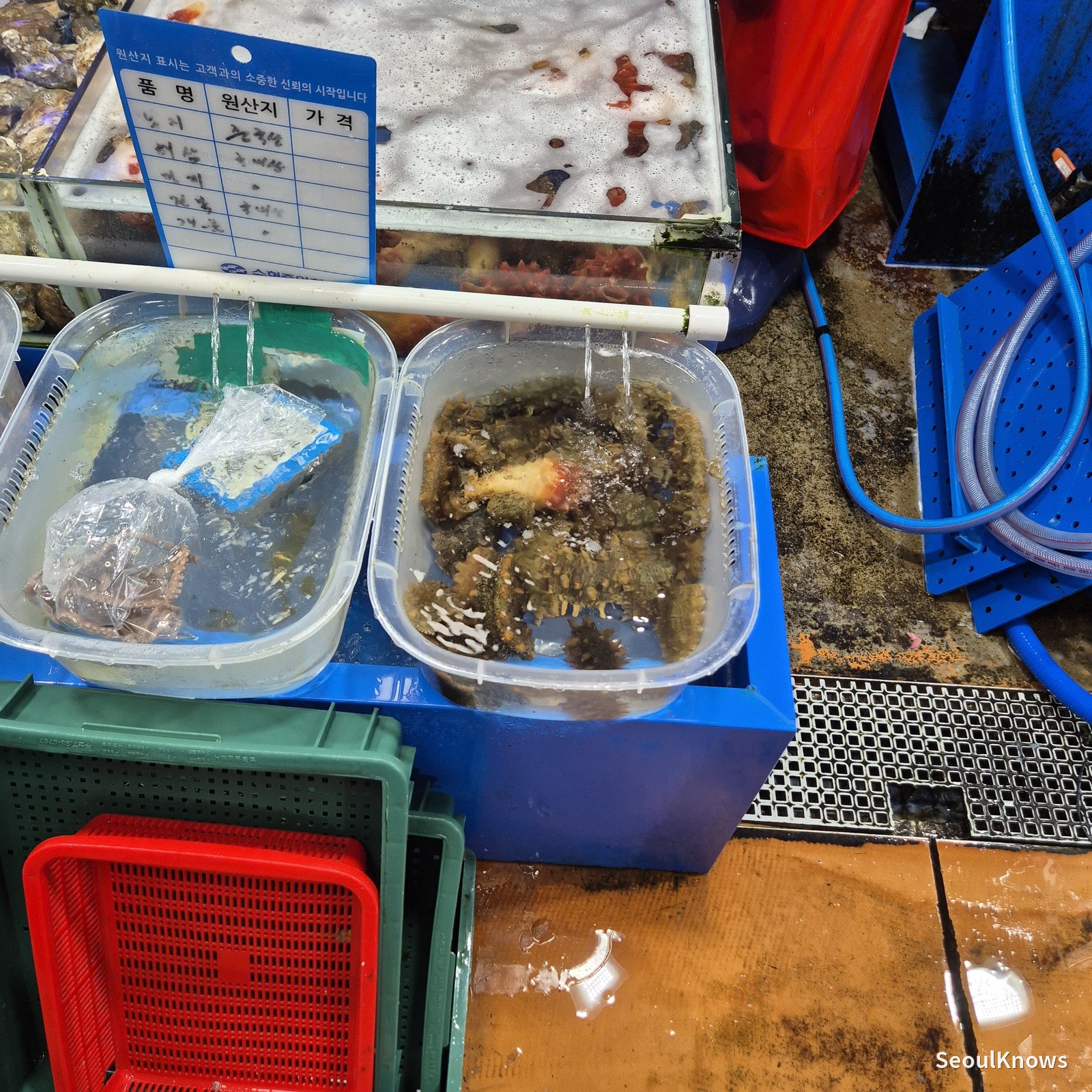
If you want to eat straight away, there are counters that slice it for you. Tuna, salmon and sashimi cuts are prepared to order, and sushi is sold by the pack, the one I saw was 10,000 KRW.
For a rough sense of prices, reviewers have reported paying around 30,000 KRW for seven palm-sized live abalone and 65,000 KRW for 450g of sashimi. Prices move with the season and with how you negotiate, so treat that as a ballpark, not a rate card.
About the vendors calling out to you
This is the single most common complaint in reviews, so it is worth being straight about: it happens, but by most recent accounts less than it used to.
Read through the Google reviews and you see both sides. Some visitors describe being called at from every direction, especially if you are walking the aisles slowly without a plan. Others, including regulars returning after a few years, say the market is much cleaner now and the soliciting has largely stopped.
When I went, late afternoon, it was nowhere near being grabbed at. But this is a thing that depends heavily on when you go and how you carry yourself. It is not hostility, dozens of stalls sell the same fish, so calling out to customers is structural.
How to make it easy on yourself
· Decide what you want before you arrive. “Two kilos of king crab” ends a conversation fast. Standing there undecided invites everyone to offer you everything.
· Do one lap first. Ask prices, say you will look around and come back. Most stalls sell the same things.
· Decline briefly. Eye contact, a smile, “no thank you.” No explanation needed.
· Lock the price before you pay, so cleaning and delivery do not get added on after.
· Do not stop mid-aisle to deliberate, stop in front of the stall you actually like.
Worth knowing on a first visit
· Ask the price first, and watch the scale. For anything sold by the kilo, look while it is weighed.
· Compare a few stalls before committing. The same item is priced differently across the hall.
· The floor is wet. Water runs constantly, skip anything with a heel.
· Check restaurant fees in advance, or your budget will be off.
· Always ask for parking vouchers (see below).
Parking: ask for the vouchers
Parking is on 3F and 4F and runs on an unmanned payment system. Pay at a pre-payment machine before you drive out; once paid, you have 30 minutes with no extra charge.
Machines are next to the 2F information desk, at the outdoor lot entrance, and in the escalator halls and by the lifts on 3F and 4F. Cash is only accepted at the two machines in the 3F escalator hall, the rest take cards and parking vouchers.
The vouchers are the point. Vendors and restaurants hand them out, each worth 1,000 KRW with no limit on how many you use. Some businesses do not give them, so ask when you pay. Parking office: 02-2254-8185.
What time to go
The retail floor runs year-round, but hours differ by section:
· Premium 00:00~24:00
· General 01:30~22:00
· Frozen 03:30~22:00
· Shellfish 01:00~22:00
· Dried 23:00~19:00
· Salted 03:00~19:00
If you are coming for dinner, late afternoon into the evening is the easy window. I went around 5pm, most stalls open, and not uncomfortably crowded.
If you want to see the auction
Auctions run in the small hours and are closed on Sundays and over New Year, Seollal and Chuseok. Start times by category:
· General 00:00~
· Shellfish 01:00~
· Premium fresh fish 01:30~
· Premium live fish 03:00~
· Frozen 03:00~
The auction is a separate trip, the timing does not overlap with buying and eating retail. You cannot really do both in one visit.
Quick facts
· Address 674 Nodeul-ro, Dongjak-gu, Seoul
· Phone 02-2254-8000~1 (parking 02-2254-8185)
· Getting there Line 1 Exit 9, 150m / Line 9 Exit 7, 70m then underpass
· Retail Open year-round; hours vary by section (premium 24h, general 01:30~22:00)
· Auction Small hours; closed Sundays and major holidays
· Floors Sales 1F/2F · Restaurants 2F/5F · Parking 3F/4F, 2F does both buying and eating
· Cooking fees (example) Table charge 5,000 KRW per person (6,000 without fish stew); steamed or grilled 8,000 KRW per kg; grilled with butter 10,000 KRW per kg
· Parking Unmanned payment; vouchers worth 1,000 KRW each from vendors and restaurants
Operating details come from the market’s official site; visitor impressions from Google reviews. Checked August 2026. Prices vary by business and change over time.
https://www.susansijang.co.kr
Frequently asked questions
Do I have to pay on top of the price of the fish?
Yes. You pay the vendor for the seafood, then pay the restaurant a per-person table charge plus cooking fees. Budget for both.
Is the soliciting bad?
It happens, though recent reviews often say it has eased a lot. Decide what you want before you arrive and do not stop mid-aisle to deliberate, and it mostly stops being an issue.
Will I get overcharged?
Nothing is fixed-price, so your best defence is asking two or three stalls on one lap. Most sell the same things. For anything by the kilo, watch the scale.
Do I have to go up to the 5th floor?
No. The 2nd floor has both the sales floor and restaurants, so you can buy and eat on one level. Go to 5F if 2F is full.
Is the table charge per table?
Per person. And in some places it is slightly higher if you skip the fish stew.
Can I go alone?
Yes, though items sold by the kilo have practical minimums, so two or more works better. Solo, the sashimi and sushi counters are easier.
Is English spoken?
It varies by business. Some 2nd-floor restaurants post their fees in English, so at least you can read what you will pay. On the sales floor a calculator and gestures get you through; a translation app helps.
Can I pay by card?
Mostly yes, though some vendors prefer cash for small or negotiated amounts. Bring a little.
Can I bring kids?
It is an indoor building, so yes. The floor is wet and the aisles are narrow, so hold hands.
The bottom line
Noryangjin is not a tidied-up market built for visitors, it is a working wholesale market. That means prices are not fixed and the process takes one go to learn. In exchange, there are not many places in Seoul where you can eat seafood this fresh.
The whole thing in one line: pick it downstairs, agree a price and pay, then pay the cooking fee upstairs and eat. Five minutes from the subway, open all year. Worth giving up one dinner in your Seoul itinerary for.
Written by WY, a Seoul-based local. Every place on this site is somewhere I have actually been, no second-hand write-ups, nowhere I have not set foot in. More about me →
Keep reading
- Millak Fish Market, Busan — The same system, Busan version
- Vikings Wharf seafood buffet — Seafood without the haggling
- Myeongdong street food guide — If you’d rather graze