
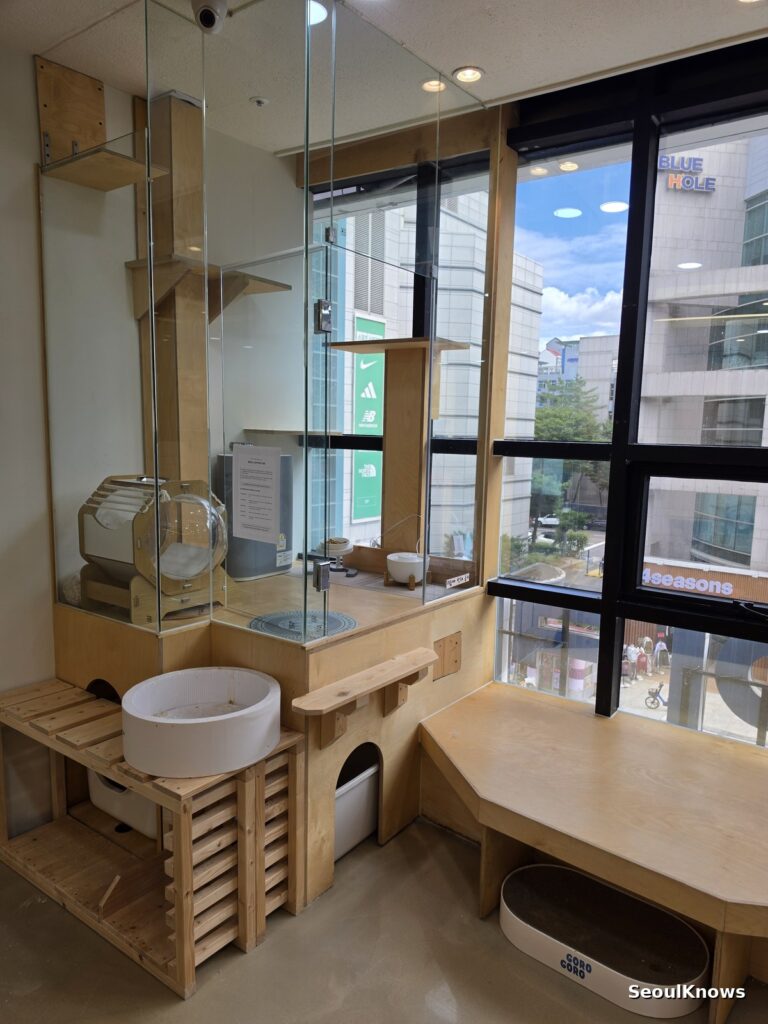
If you have spent any time walking around Seoul, you have probably passed one without realising it: a second- or third-floor window with a cat asleep against the glass. Cat cafés in Korea are not a novelty act any more. They are a normal, everyday part of the city — places where you pay a small entry fee, get a drink, and sit in a room with ten or fifteen cats who very much live there.
I went to one recently with my son, and it turned out to be a much better window into Korean pet culture than I expected. This guide covers what a Korean cat café actually is, what it costs, the etiquette rules that are taken seriously here, and what to expect if you bring a child.
Why Korea has so many cat cafés
The format did not start here. The world’s first cat café, Cat Flower Garden, opened in Taipei in 1998. Japan picked it up next — Neko no Jikan in Osaka in 2004 — and the idea travelled to Korea around the same time. From the 2010s it spread worldwide.
But it took root in Korea for a reason. Most people here live in apartments, and a lot of buildings and landlords still make pets complicated. Households are getting smaller and busier. Wanting a cat and being able to keep one are two very different things. A cat café solves that gap: an hour with cats, no lease clause required.
There is a regulatory angle worth knowing too. Korea went through a wave of “animal cafés” featuring raccoons, foxes, meerkats and other wild species. An amendment to the Wildlife Protection Act now effectively bars cafés from keeping live wild animals unless they register as a zoo or aquarium. Cats and dogs are classified as pets and are exempt — so cat cafés continue as normal, while the more questionable animal cafés are being phased out. If you were uneasy about the whole “animal café” category, that distinction matters.
What a Korean cat café actually is
It is a café in the sense that you buy a drink. It is not a café in the sense that you would bring a laptop and work there.
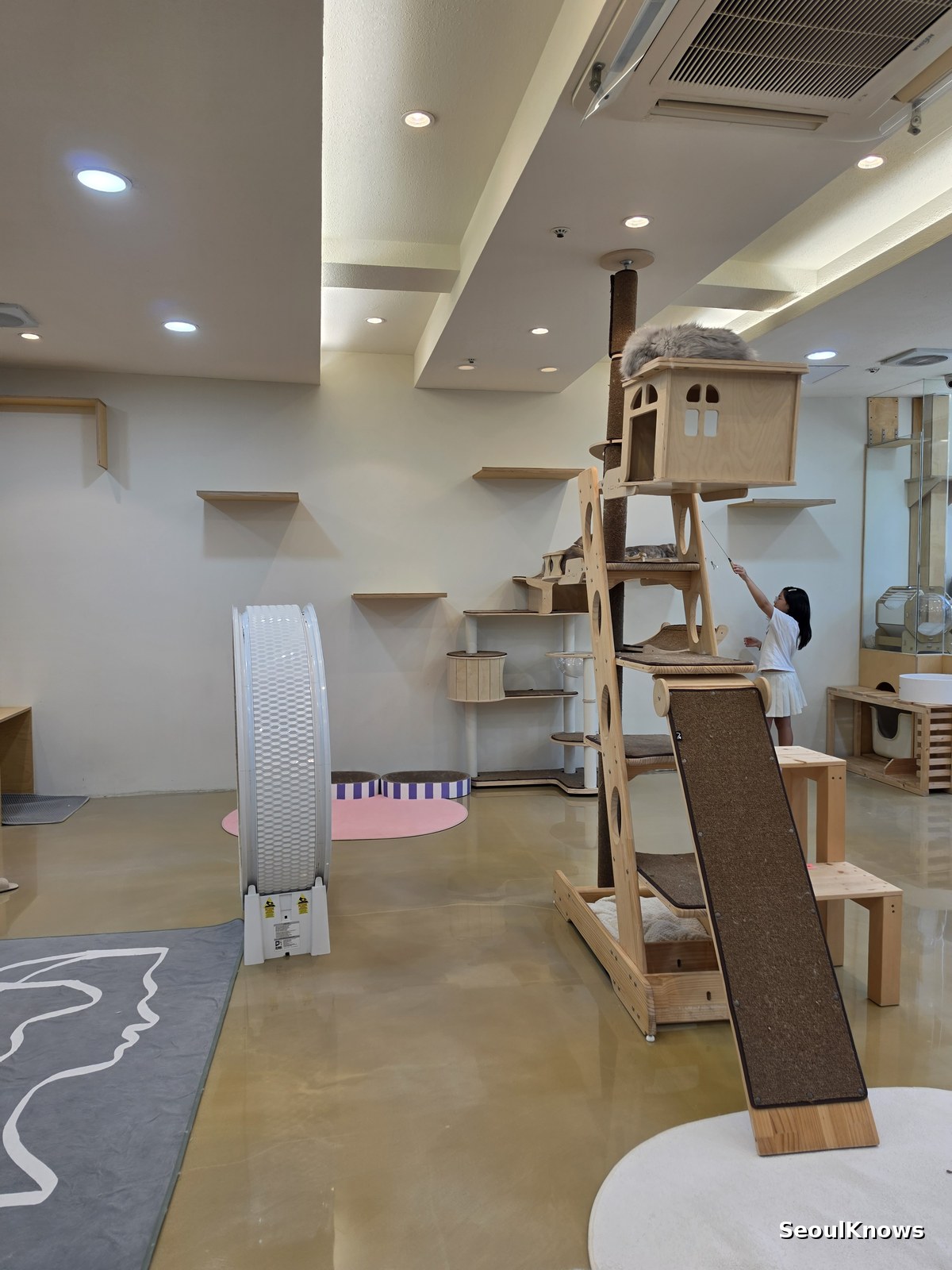
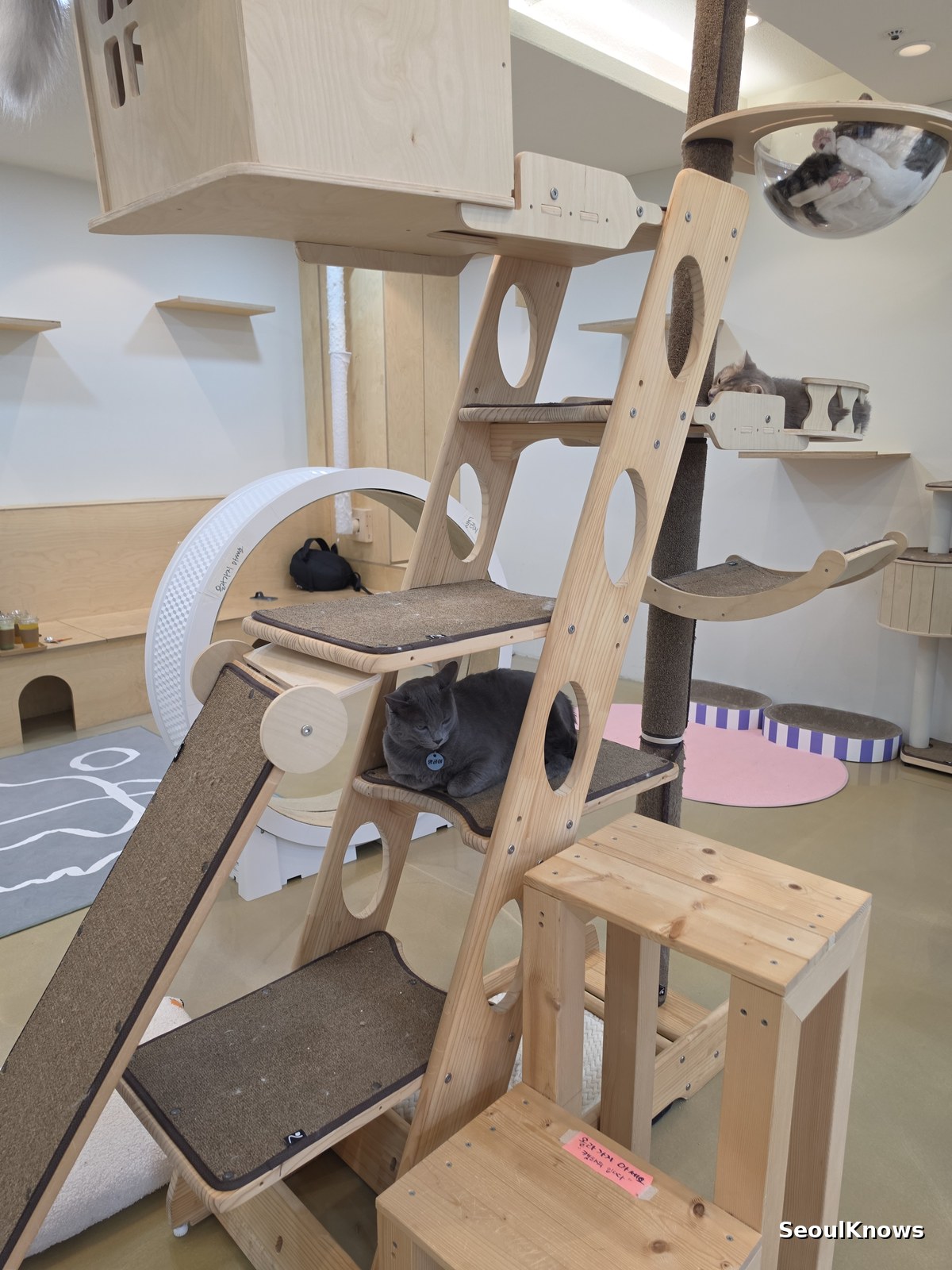
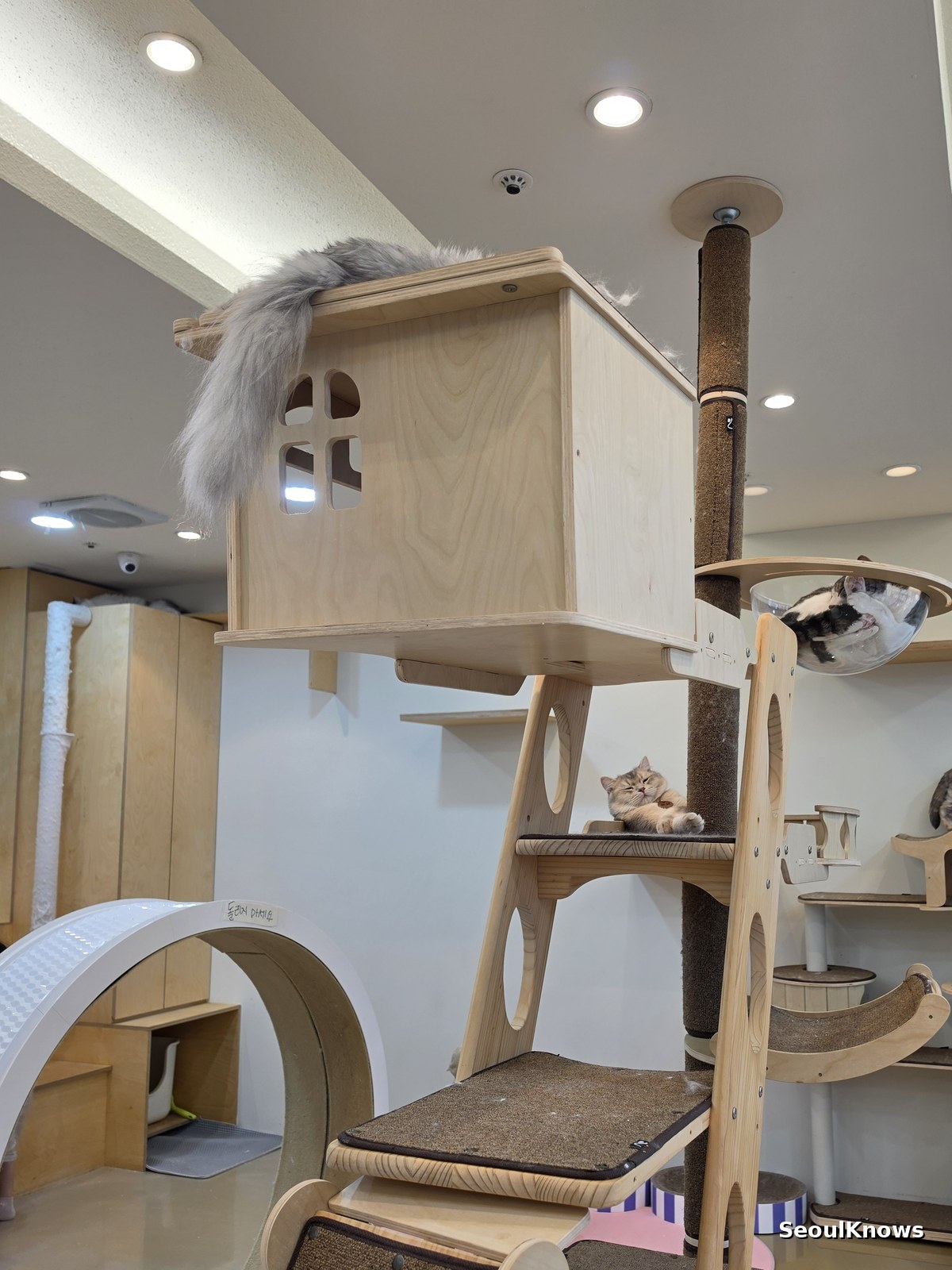
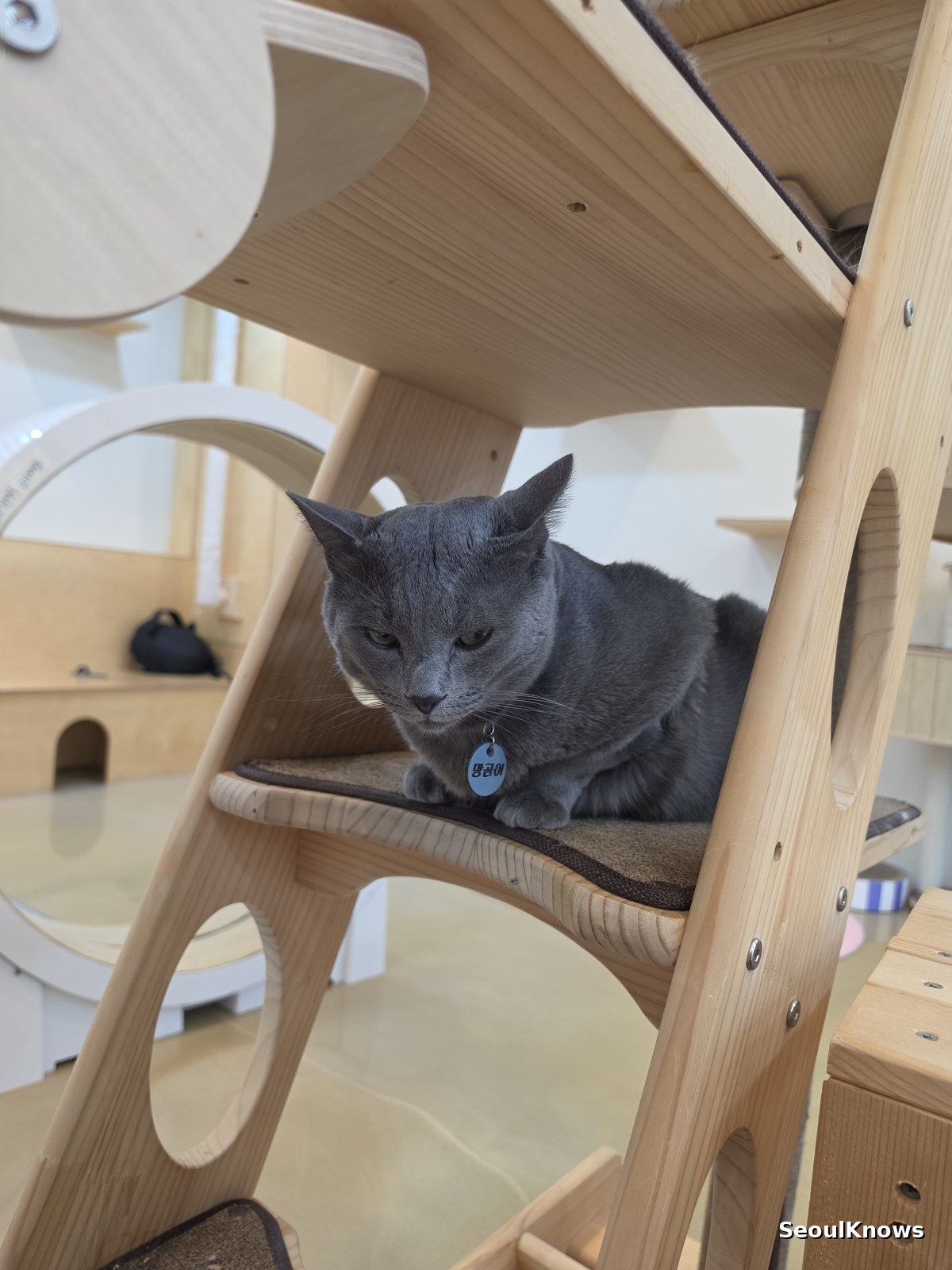
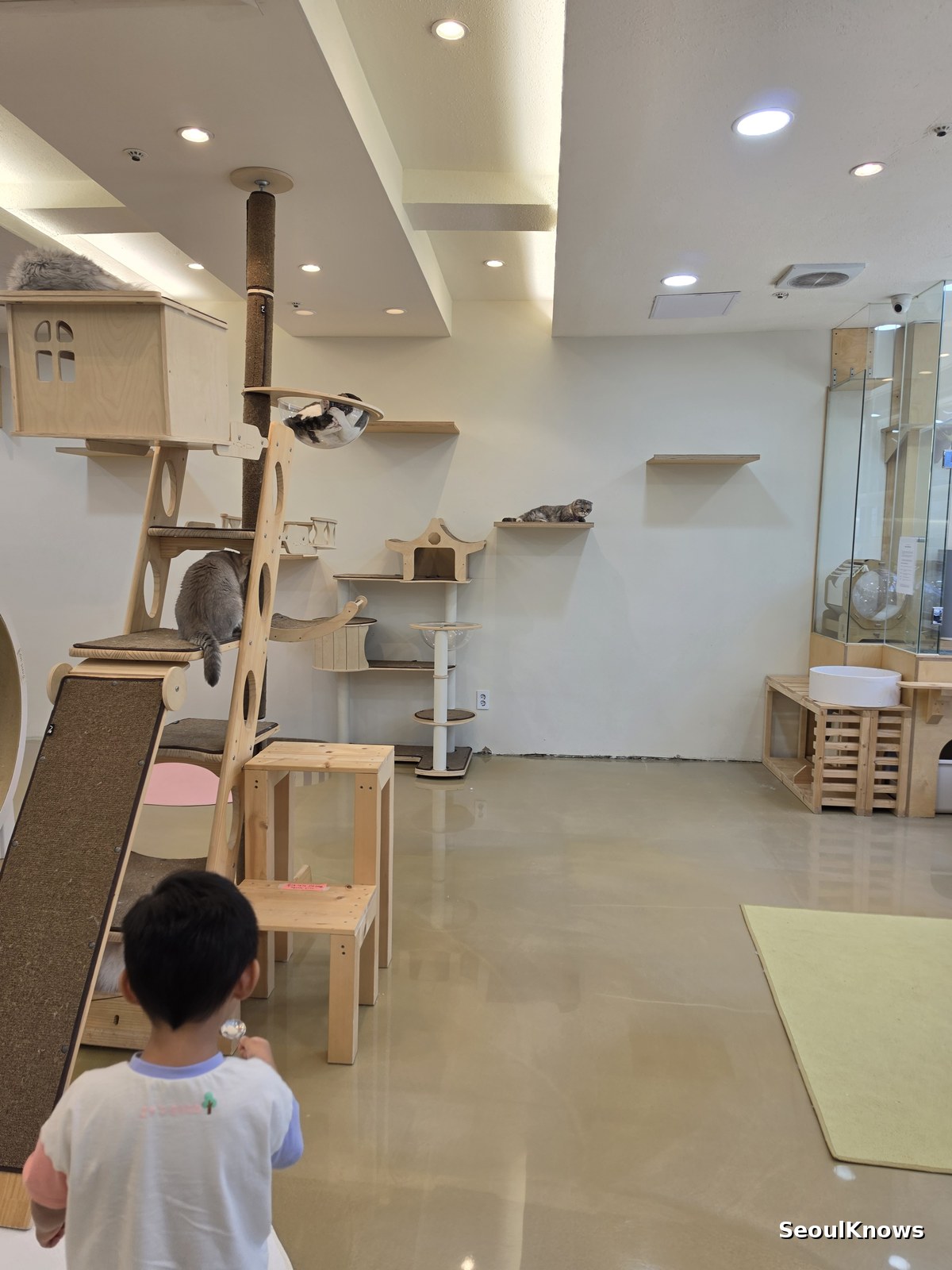
The layout is usually the same: one large open room, floor-to-ceiling wooden cat towers, walkways and shelves running along the walls, and low seating for humans around the edges. The cats own the vertical space. You get the floor and the chairs.
The thing that surprised me most was how little it smelled. A well-run cat café in Korea is cleaned constantly, and you can tell within thirty seconds of walking in whether a place is one of those or not. Use your nose at the door — it is the single most reliable test.
What it costs
Pricing is refreshingly simple. You pay an entry fee at the door, and a drink is usually bundled in. At the café I visited, the board read:
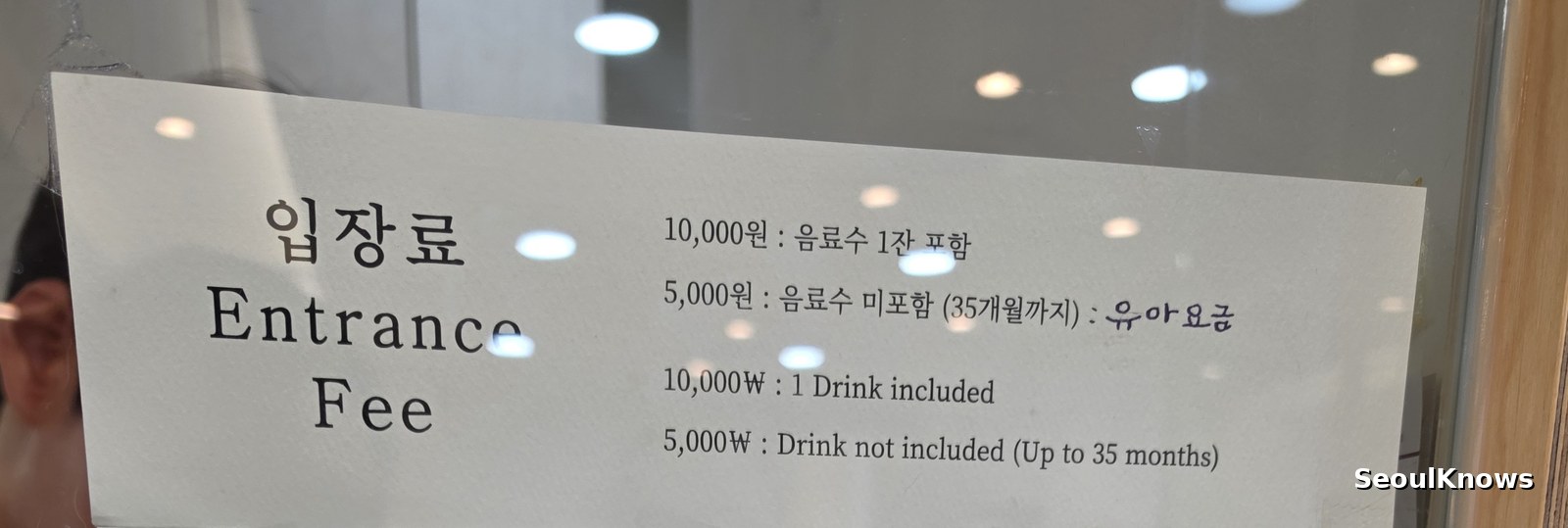
- ₩10,000 — entry, one drink included
- ₩5,000 — toddlers up to 35 months, drink not included
- Cat treats: ₩1,500–4,000, sold at the counter
That is a typical range. Expect roughly ₩8,000–12,000 for entry with a drink almost anywhere in Seoul. There is usually no time limit, though a few places cap it at one or two hours on busy weekends. Coffee, tea, lattes and ades are the standard drink list, and some cafés will refill an americano once for free.
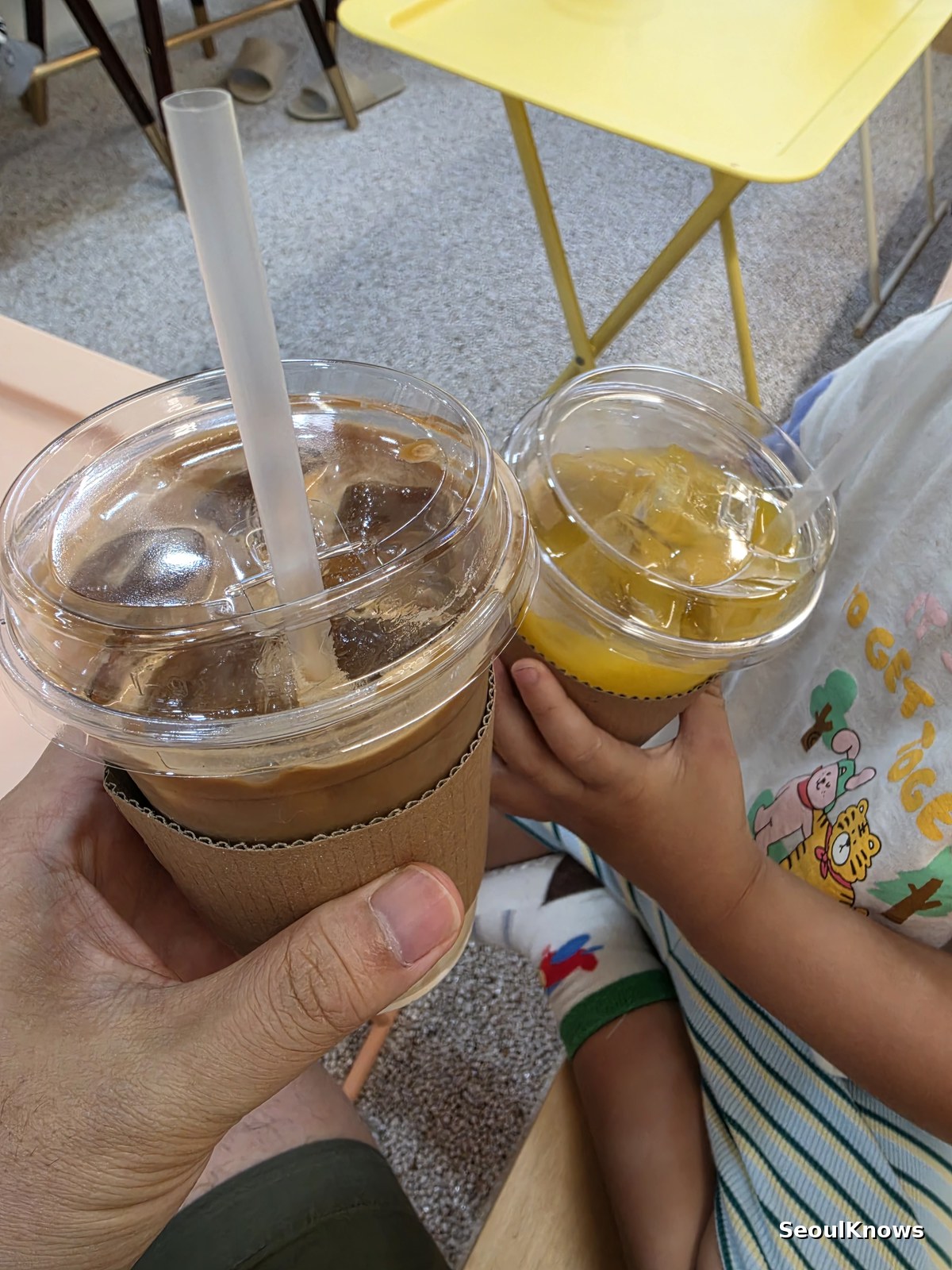
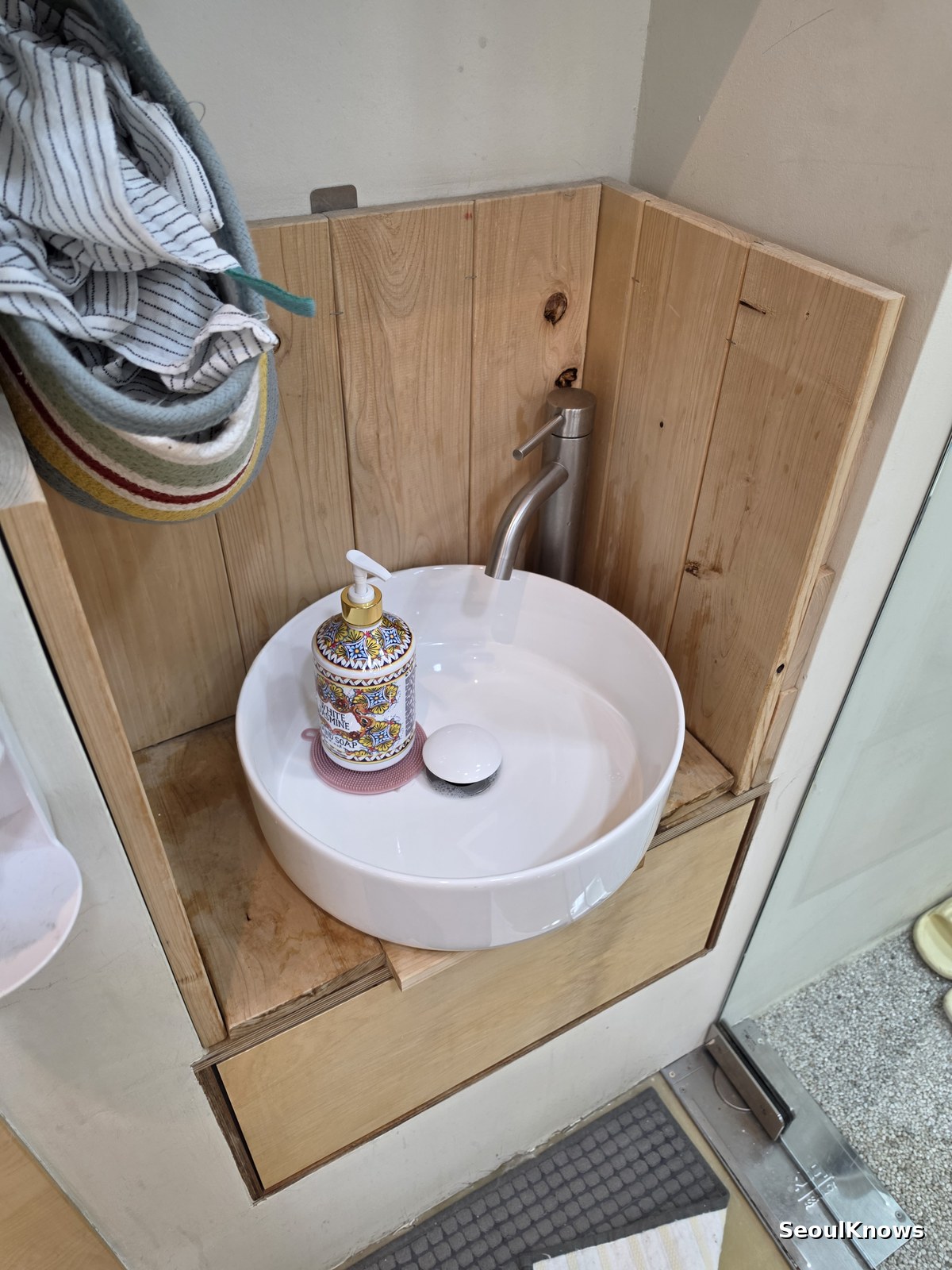
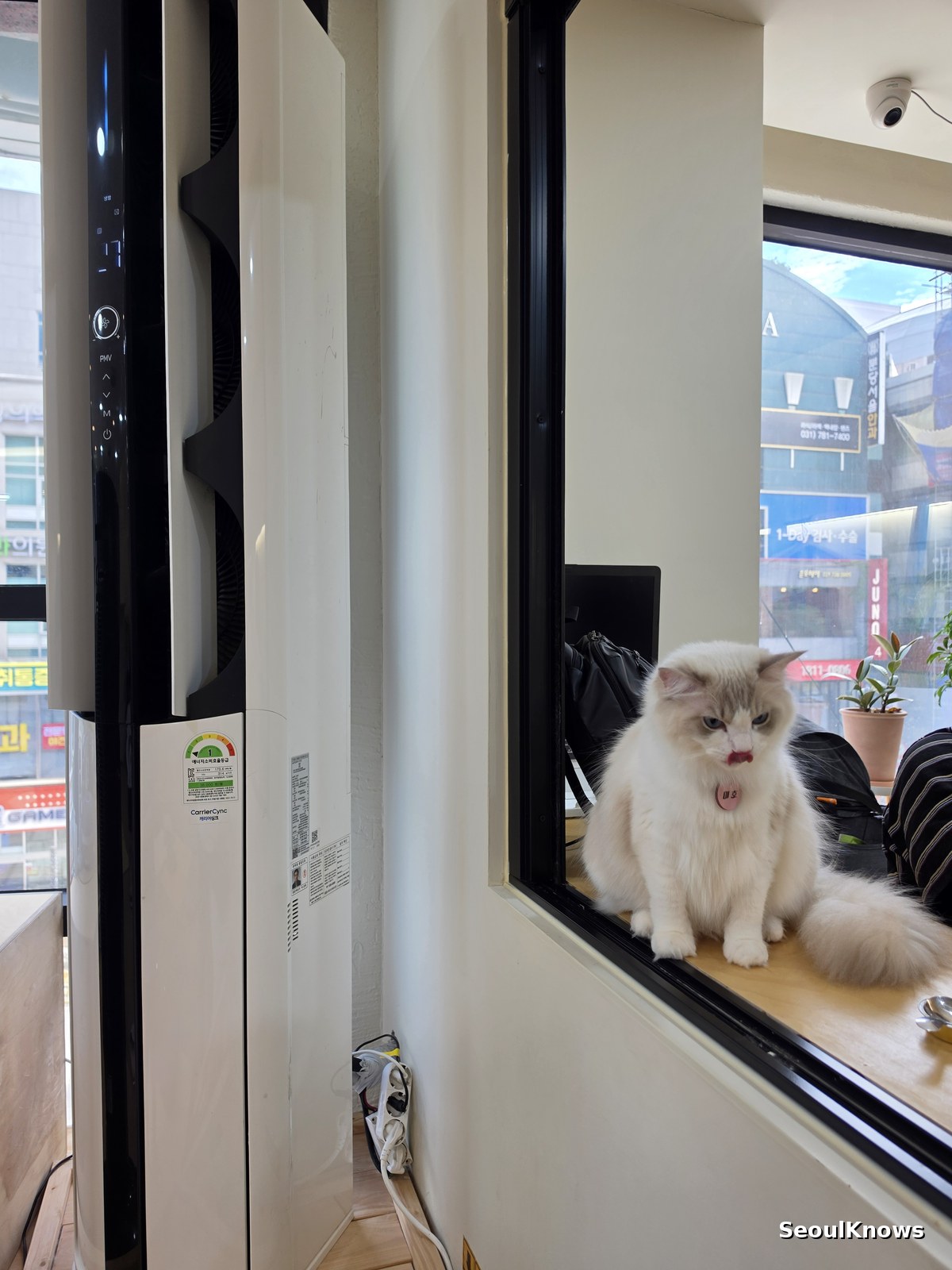
One detail I appreciated: there was a hand-washing sink right inside the door, with soap and towels, and you wash before you go in. Many cafés also keep the drinks area physically separated from the cat room, so your coffee never shares a surface with a cat. Both are good signs.
The rules — and Korea takes them seriously
This is the part most travel articles skip, and it is the part that matters most.
Korean cat cafés frame themselves not as attractions but as the cats’ home, which you are visiting. The notice on the wall at the café I went to said it plainly: this is a shared living space, and guests who break the rules can be asked to leave immediately. One line stuck with me — roughly, “the thing you think you can get away with just once can leave a cat with a lifelong scar.”
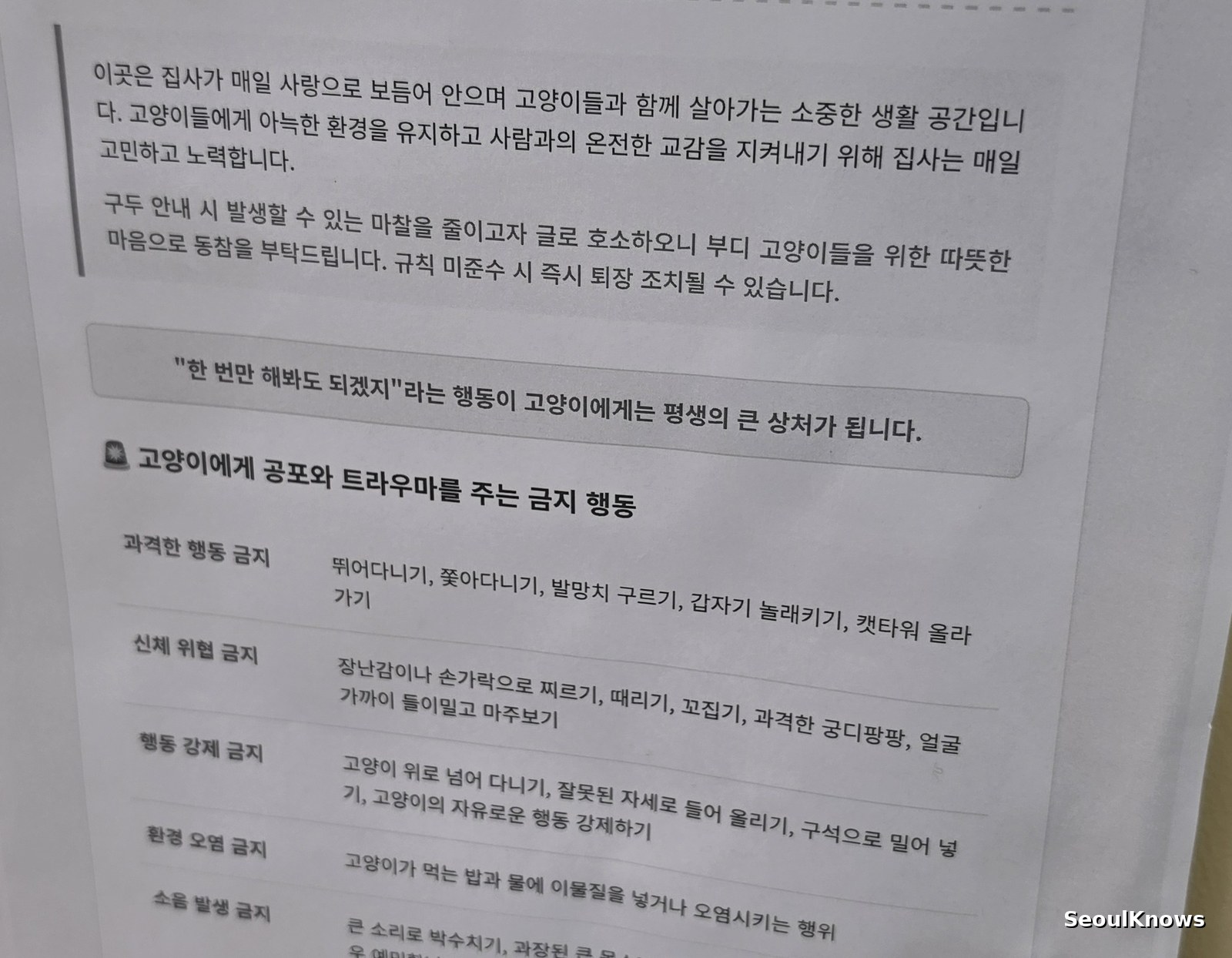
Here is what those rules actually say, translated:
- No rough movement — no running, no chasing a cat, no stomping, no startling them, and do not climb the cat towers.
- No physical pressure — no poking with fingers or toys, hitting, pinching, heavy patting, or pushing your face up close to theirs.
- No forcing behaviour — do not step over a cat, do not pick one up in an awkward hold, do not corner them, do not override what they choose to do.
- Do not touch their food or water — nothing goes into the bowls.
- Keep the noise down — no loud clapping, no shouting across the room. Cats hear far more sharply than we do.
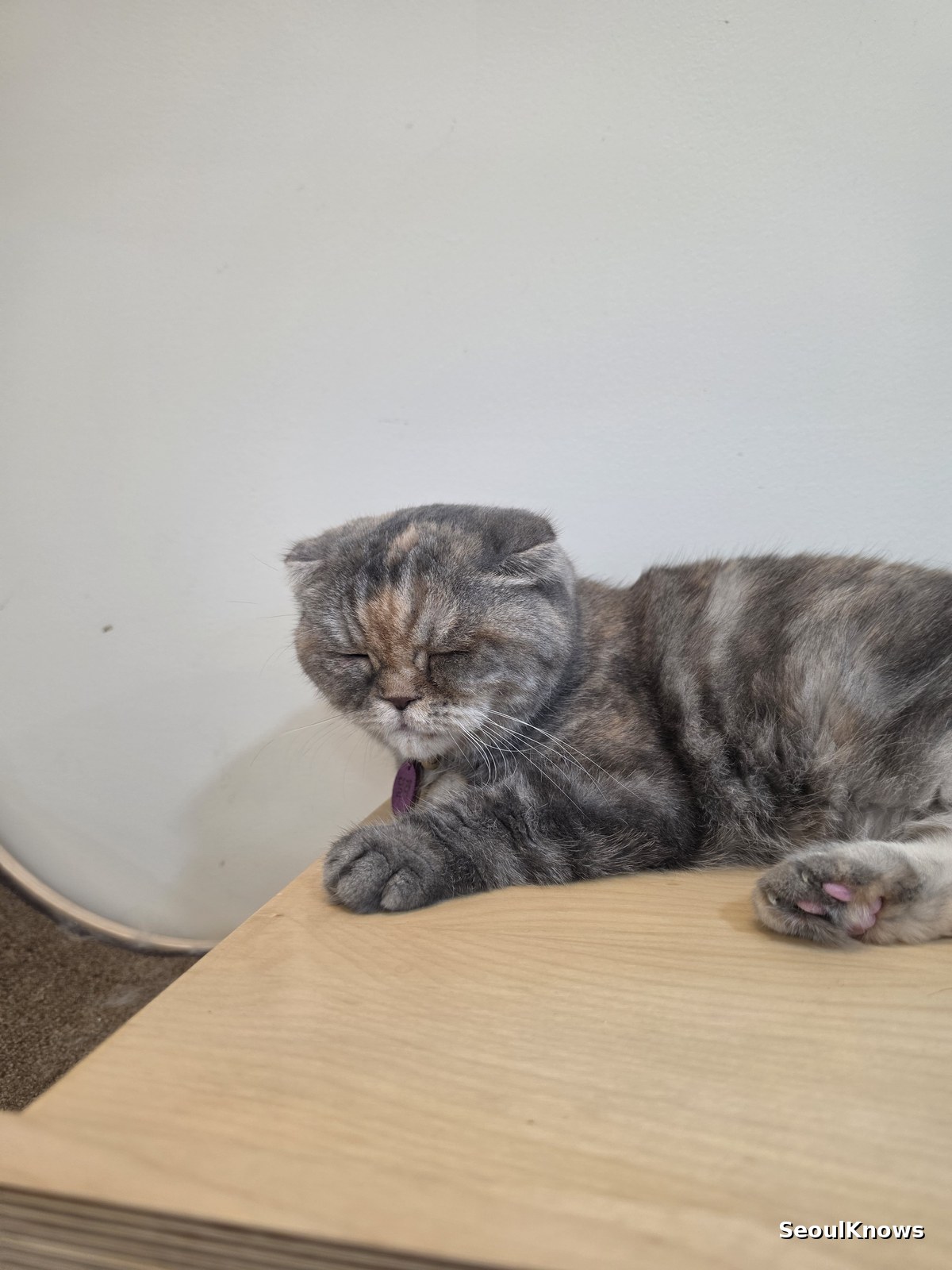
The short version: let the cat come to you. Sit down, stay still, keep your voice low, and hold your hand out flat rather than reaching over their head. Most of these cats are well socialised and will investigate you within a few minutes if you are not being alarming.
Also standard almost everywhere: do not pick the cats up, do not wake a sleeping cat, and do not use flash photography.
Buying treats is the real activity
If you want the cats to actually interact with you rather than ignore you elegantly, buy treats. This is the part everyone remembers.
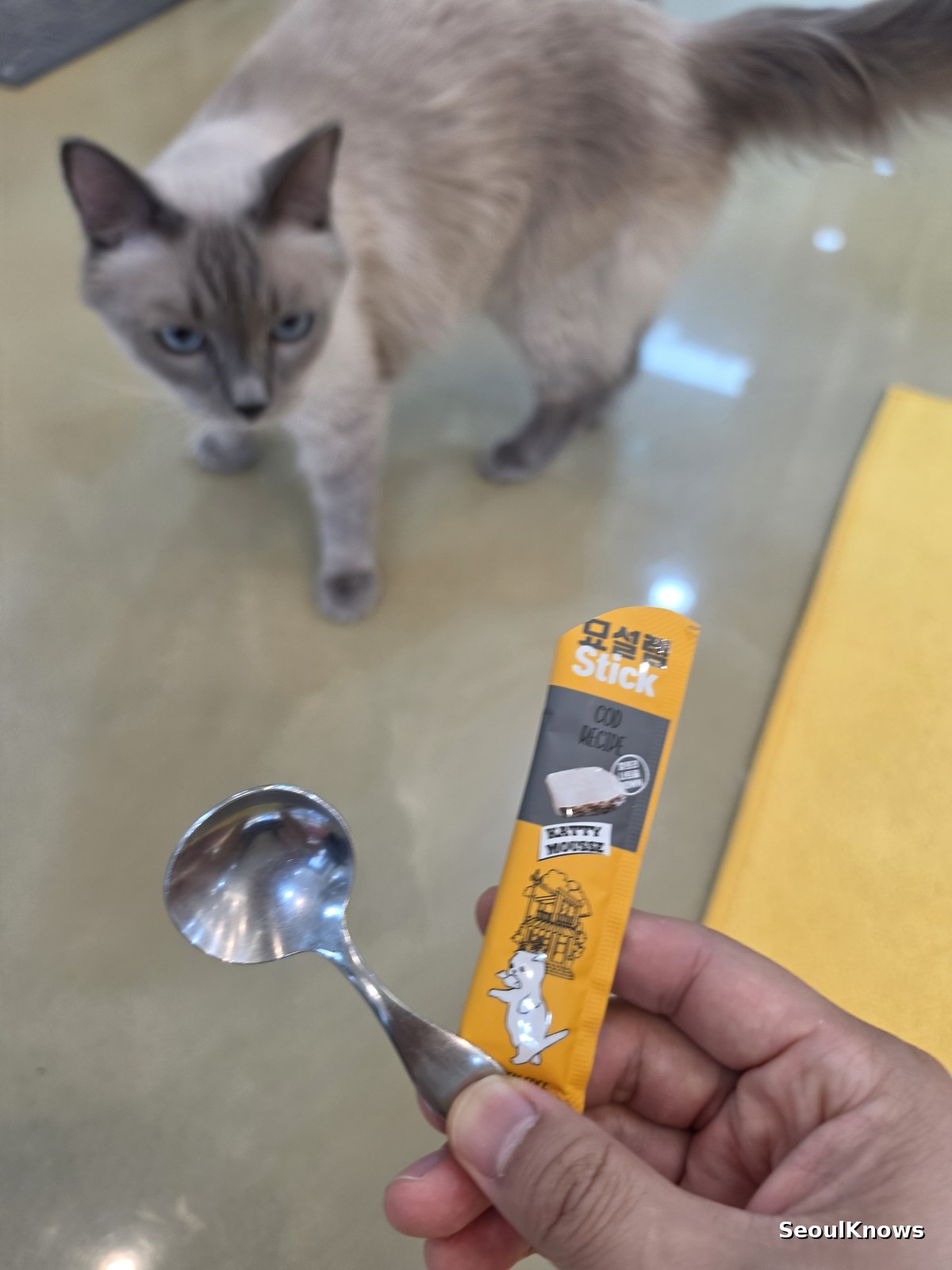
Treats are sold at the counter for around ₩1,500–4,000 depending on size and type — usually a squeeze tube of creamy cat purée, sometimes served on a small spoon so you are not holding it directly. The moment you pick one up, cats appear. It is very effective and slightly humbling.
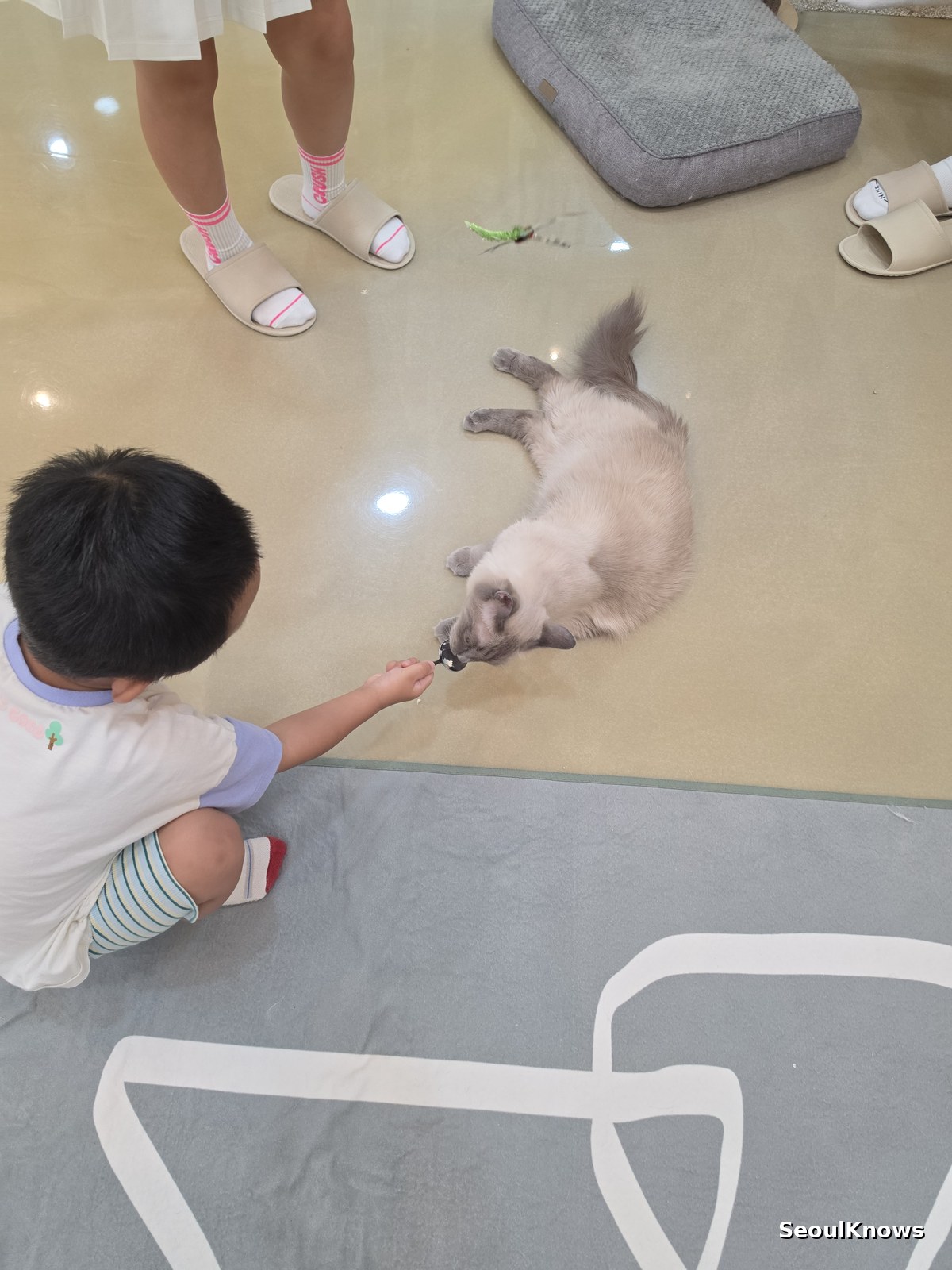
One rule that goes with it: feed only what the café sells. Do not bring your own food, and do not share your drink or snacks with them.
Going with kids
Cat cafés are a genuinely good rainy-day option with children — indoors, calm, and cheap by Seoul standards. But they come with one honest caveat, and I learned it the hard way.
My son is loud. Not badly behaved, just built with the volume set high. He got excited, raised his voice, and we were politely reminded that it startles the cats. Fair enough. It is their house.
So if you are bringing a child: have the “we use quiet voices in here” conversation before you walk in, not after. Once we did that, the afternoon changed completely — and the cats actually came closer once the room was calm. Most cafés have no minimum age, but a few set one, and toddlers usually get a reduced entry rate without a drink.
How to find one
Search 고양이카페 (goyangi cape — “cat café”) on Naver Map or Kakao Map rather than Google Maps, which is limited in Korea. Add your neighbourhood: 홍대 고양이카페, 강남 고양이카페, and so on. Read the recent photo reviews and look at the floors and litter areas in them, not just the cats.
Most cat cafés open early afternoon and stay open until around 22:00, and many close one weekday a month for deep cleaning, so check before you make the trip.
Quick facts
- Entry: roughly ₩8,000–12,000, normally including one drink
- Toddlers: often around ₩5,000, drink not included
- Treats: ₩1,500–4,000 at the counter
- Typical hours: early afternoon to about 22:00; many take one closing day a month
- Time limit: usually none, sometimes 1–2 hours at peak times
- Good for: rainy days, families with children, solo afternoons, anyone missing a pet back home
- Search term: 고양이카페
Frequently asked questions
Do I need to book a cat café in Korea?
No. Walk-ins are the norm. Weekend afternoons are the busiest stretch, so a weekday visit is calmer for you and for the cats.
Can I pick up or hold the cats?
No. Picking cats up is prohibited at essentially every cat café in Korea. Sit still and let them approach you — that is the whole technique.
Is it hygienic?
At well-run places, yes. Look for a hand-washing sink at the entrance, a drinks area separated from the cat room, and the absence of smell. If any of those are missing, leave.
Are cat cafés in Korea ethical?
The good ones treat the space as the cats’ home and enforce rules to protect them, and some also run adoptions. The wider “animal café” trend involving wild species has now been restricted by law, with cats and dogs exempt as pets. As a visitor, the most useful thing you can do is choose a clean café and follow the rules posted on the wall.
Can I bring my own food or treats?
No. Buy treats from the café so that what the cats eat stays controlled.
Is English spoken?
Often not much, but you rarely need it. Fees and rules are usually posted in Korean and English, and pointing at the treat jar works in every language.
The bottom line
A cat café is one of the cheapest, most low-effort hours you can spend in Seoul, and it tells you something real about how people here live — small apartments, long hours, and a genuine fondness for animals that has to find a place to go. Pay your ₩10,000, wash your hands, keep your voice down, buy a treat, and let the room come to you.
Planning a visit and want a recommendation? Leave a comment below with the neighbourhood you will be staying in and what you are after — quiet and calm, or somewhere that works with kids — and I will point you in the right direction. If you have already been to one in Korea, I would like to hear how it went.
Written by WY, a Seoul-based local sharing honest, first-hand guides to Korea. Every guide here is a place I’ve actually been to — written from my own visit, my own photos. More about me →