
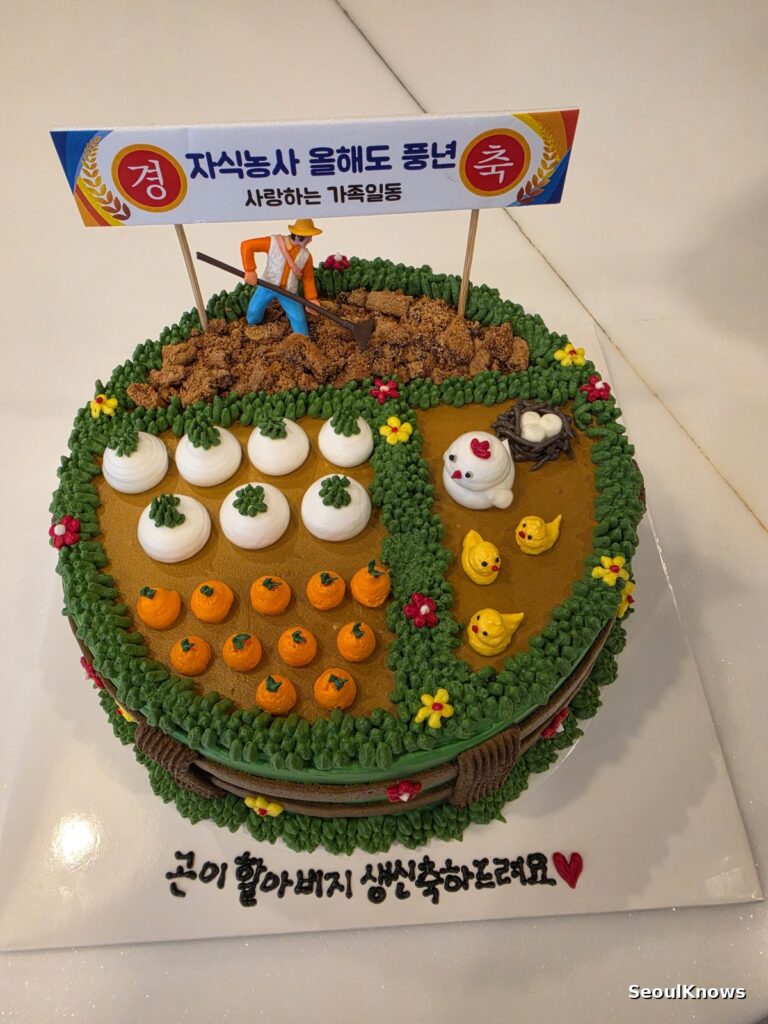
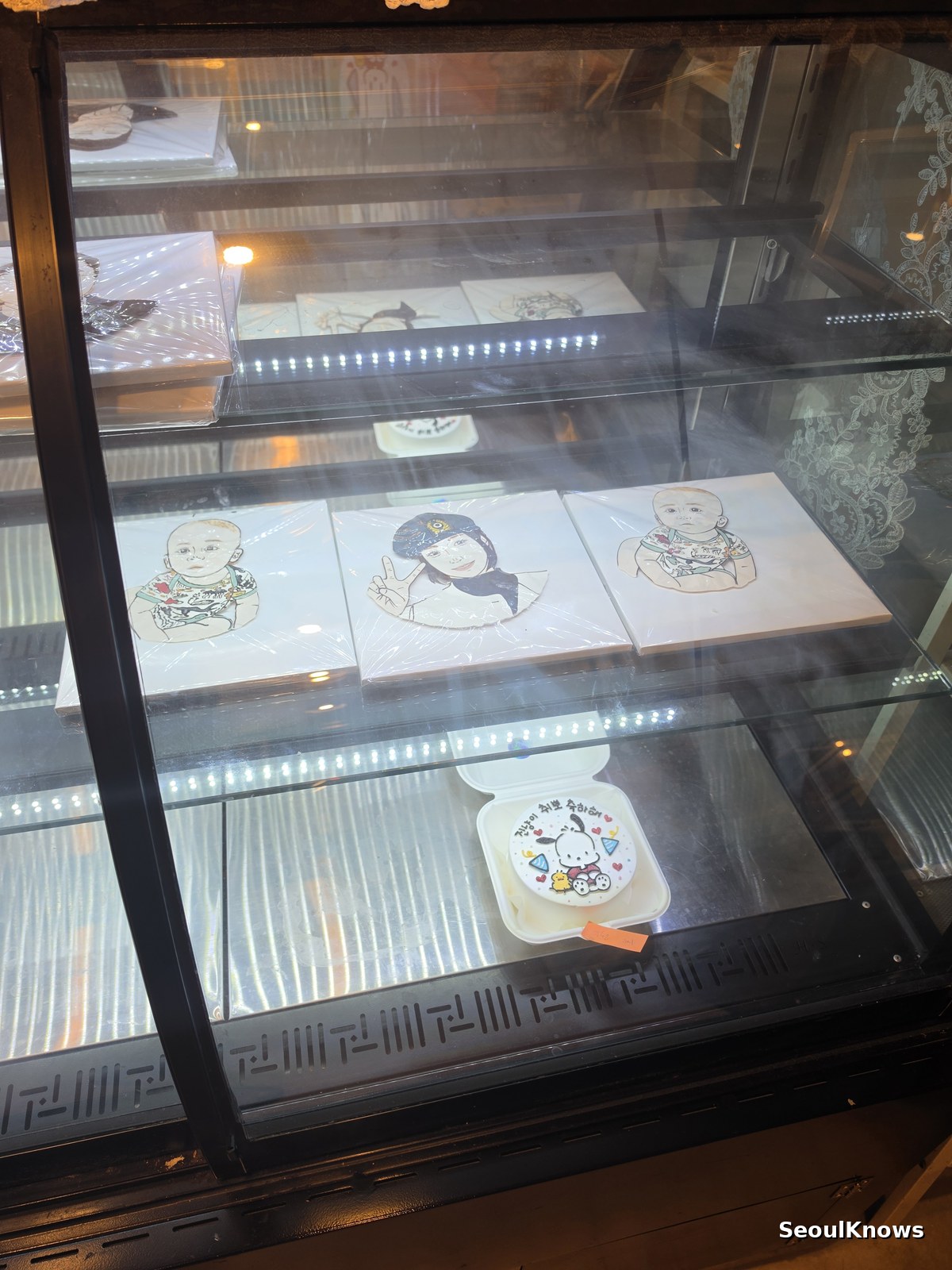
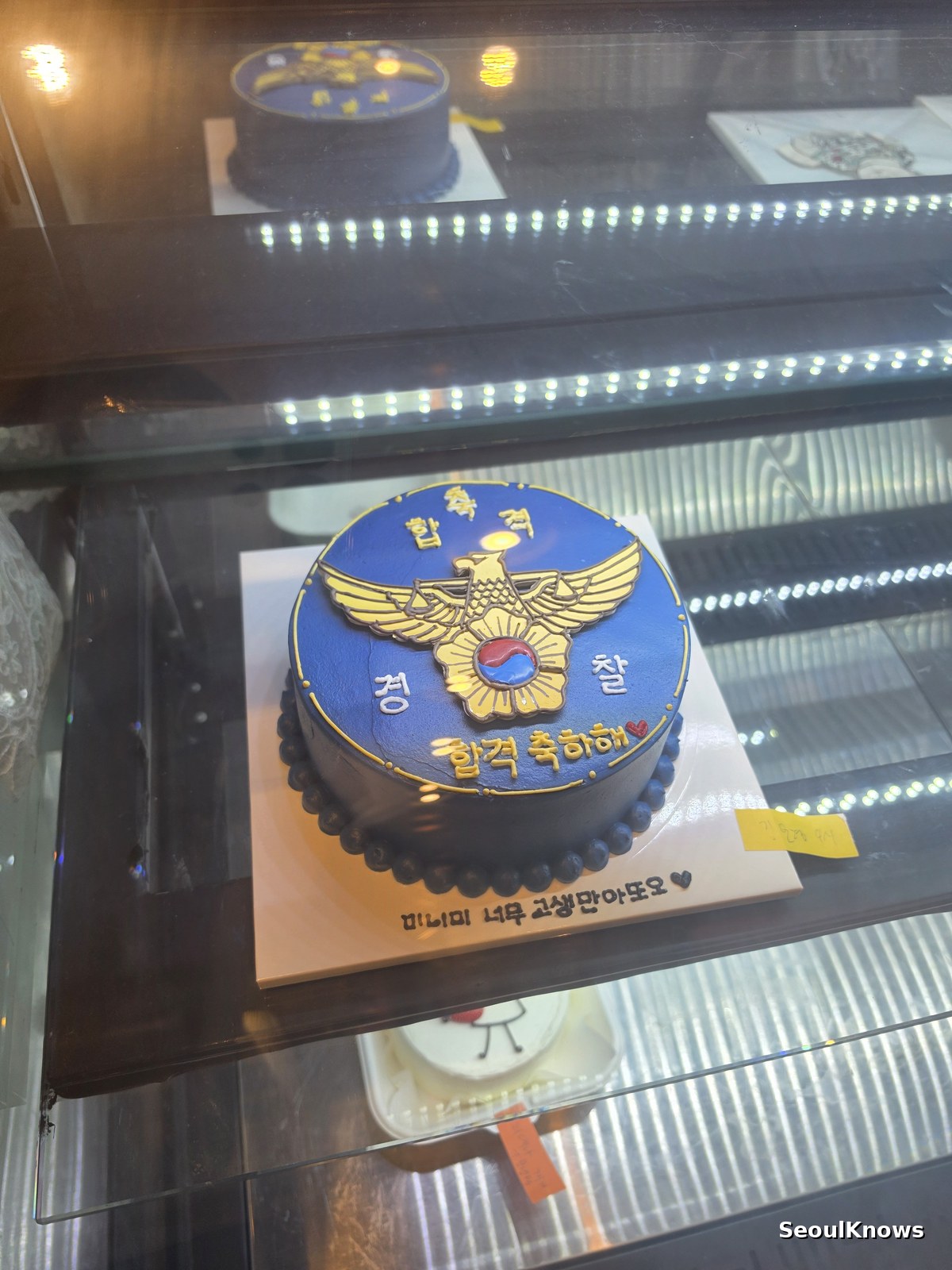
Walk past any residential block in Seoul and you will eventually find one: a small shop, usually up a flight of stairs, with a fridge full of cakes that look like nothing you would see in a supermarket. A cake shaped like a police badge. A cake covered in tiny piped vegetables. A palm-sized cake in a takeout box with a handwritten line of Korean across the top.
Custom-order cakes in Seoul are their own small industry, and they are far more accessible than most visitors assume — you do not need a wedding or a corporate budget to order one. This guide covers what these shops actually do, the two formats you will be choosing between, what you can customise, how far ahead to order, and how to explain what you want if you do not speak Korean.
A quick word on Korea’s cake culture
Koreans mark a lot of occasions with cake. Not just birthdays — 100-day anniversaries, 200-day anniversaries, a first day at a new job, passing an exam, a pet’s birthday, a friend’s promotion. The cake is less about dessert and more about the gesture.
Full custom cakes used to be expensive enough that most of those smaller occasions went uncelebrated. So Korean bakeries invented a workaround: the 도시락 케이크 (dosirak cake, or “lunchbox cake”) — a roughly 10 cm cake in a takeout container, about two or three slices’ worth, cheap enough to buy on a whim but still personalised with a message on top. It exploded a few years ago and is now everywhere.
Sitting alongside it is the 레터링 케이크 (lettering cake): a full-sized cake whose main decoration is a handwritten message. Same idea, larger scale, for occasions where several people will actually eat it.
What a Korean custom cake shop is actually like
These are not bakery chains. They are usually one or two people working out of a small studio, often on the second floor of a mixed-use building, and they make to order rather than to stock.
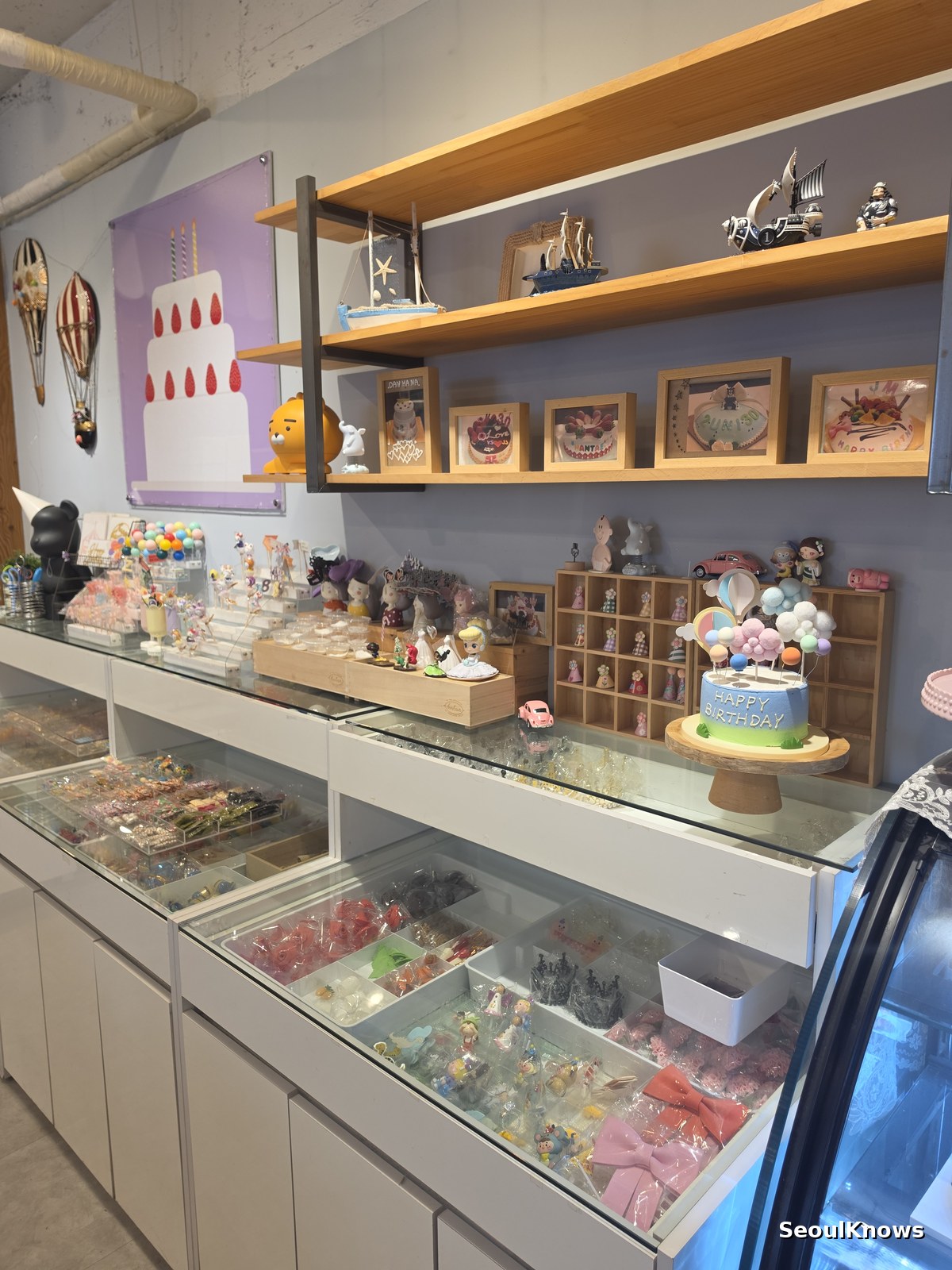
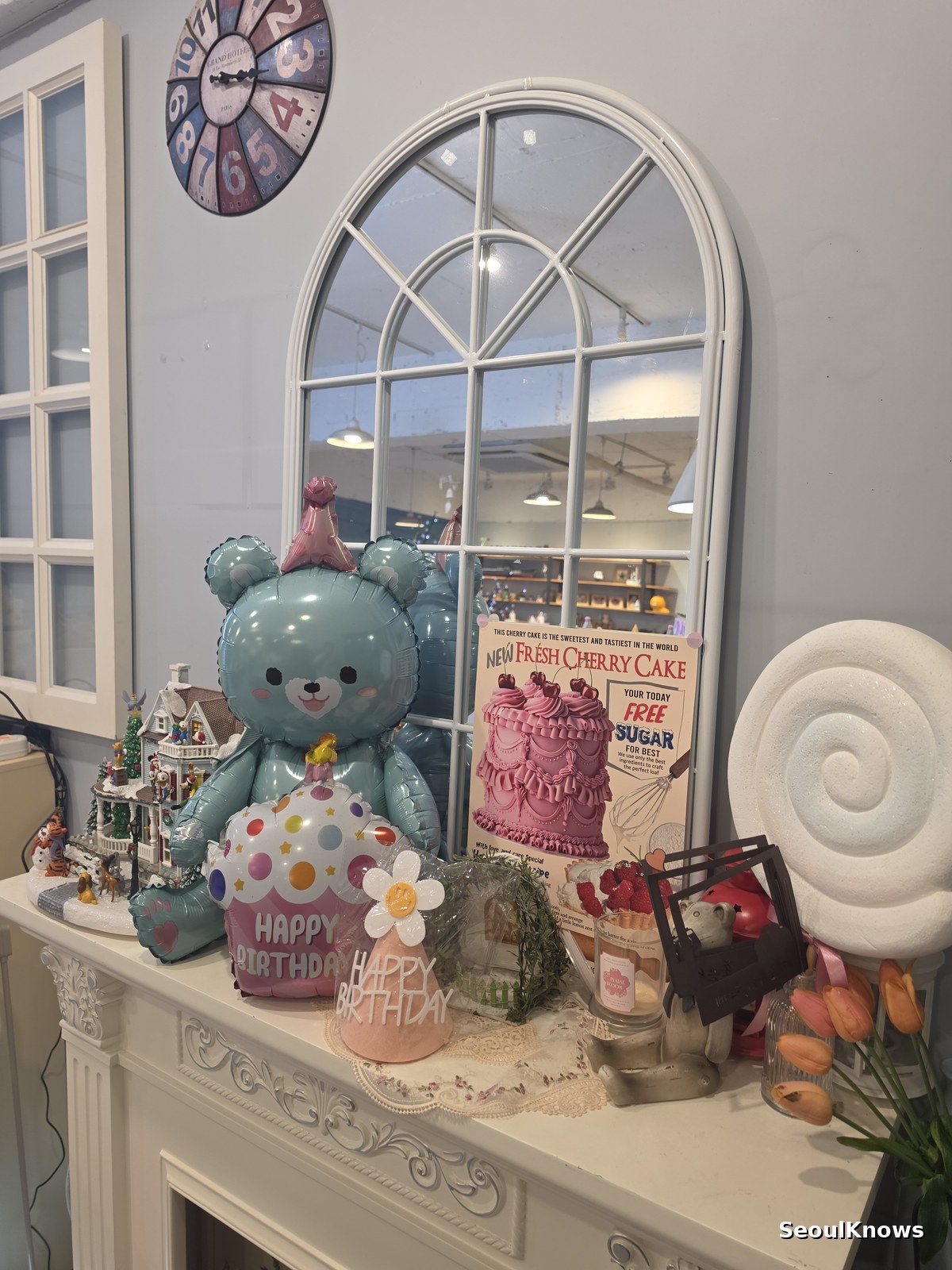
The room is generally half workshop, half showroom. There is a fridge with finished examples so you can see the real thing rather than an idealised photo, a consultation table, and — the part I did not expect — shelves and shelves of decorations.
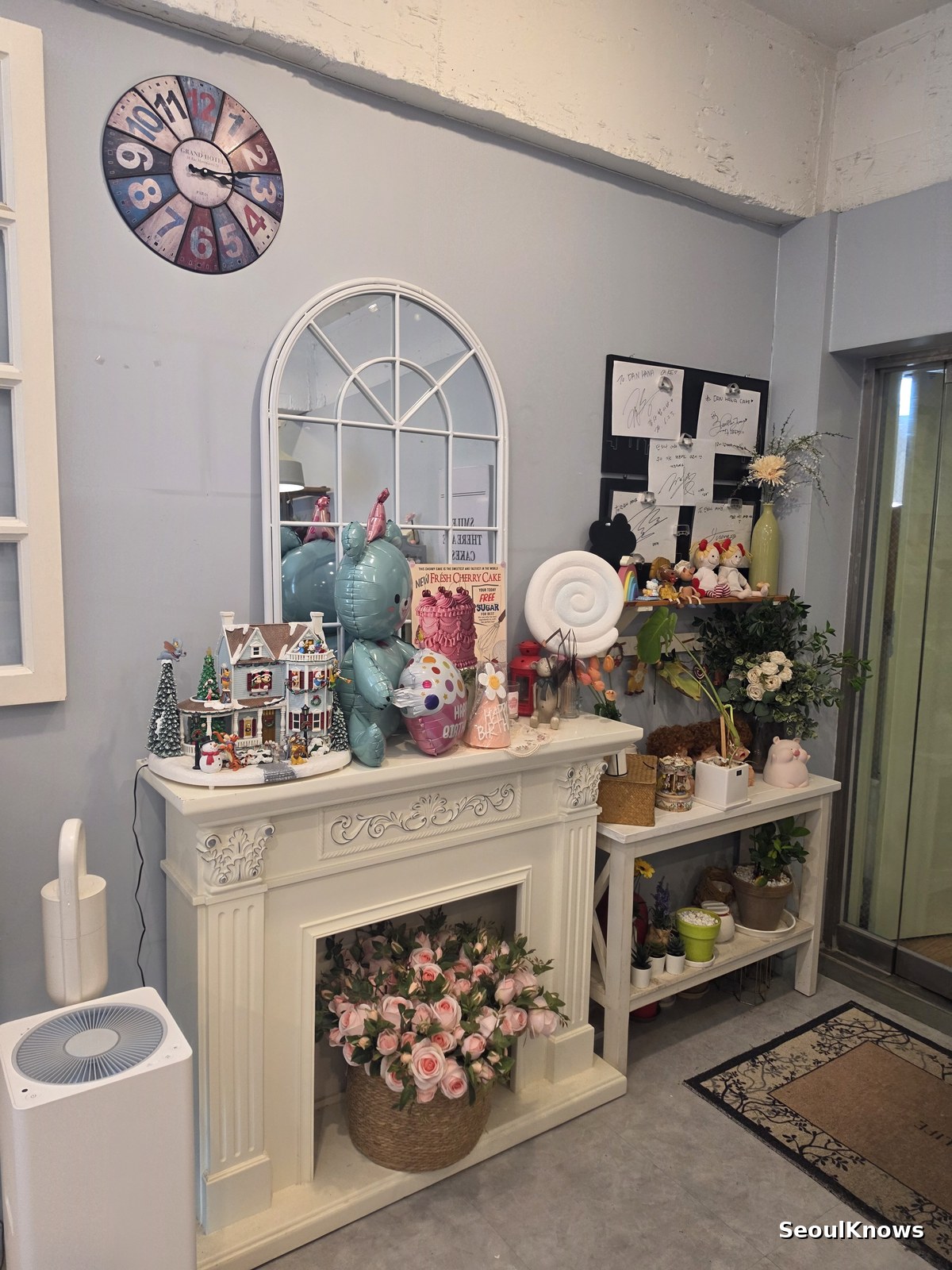
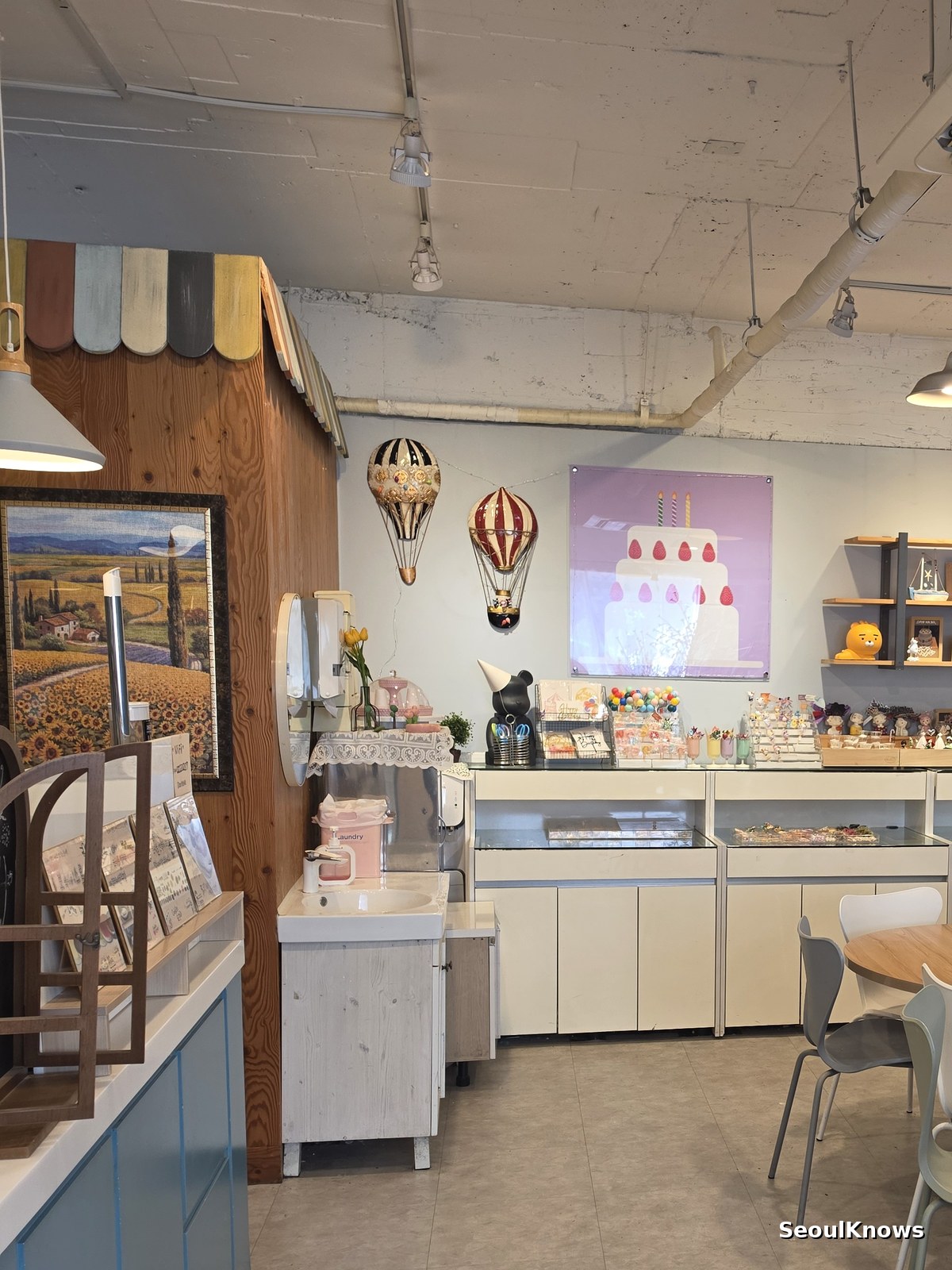
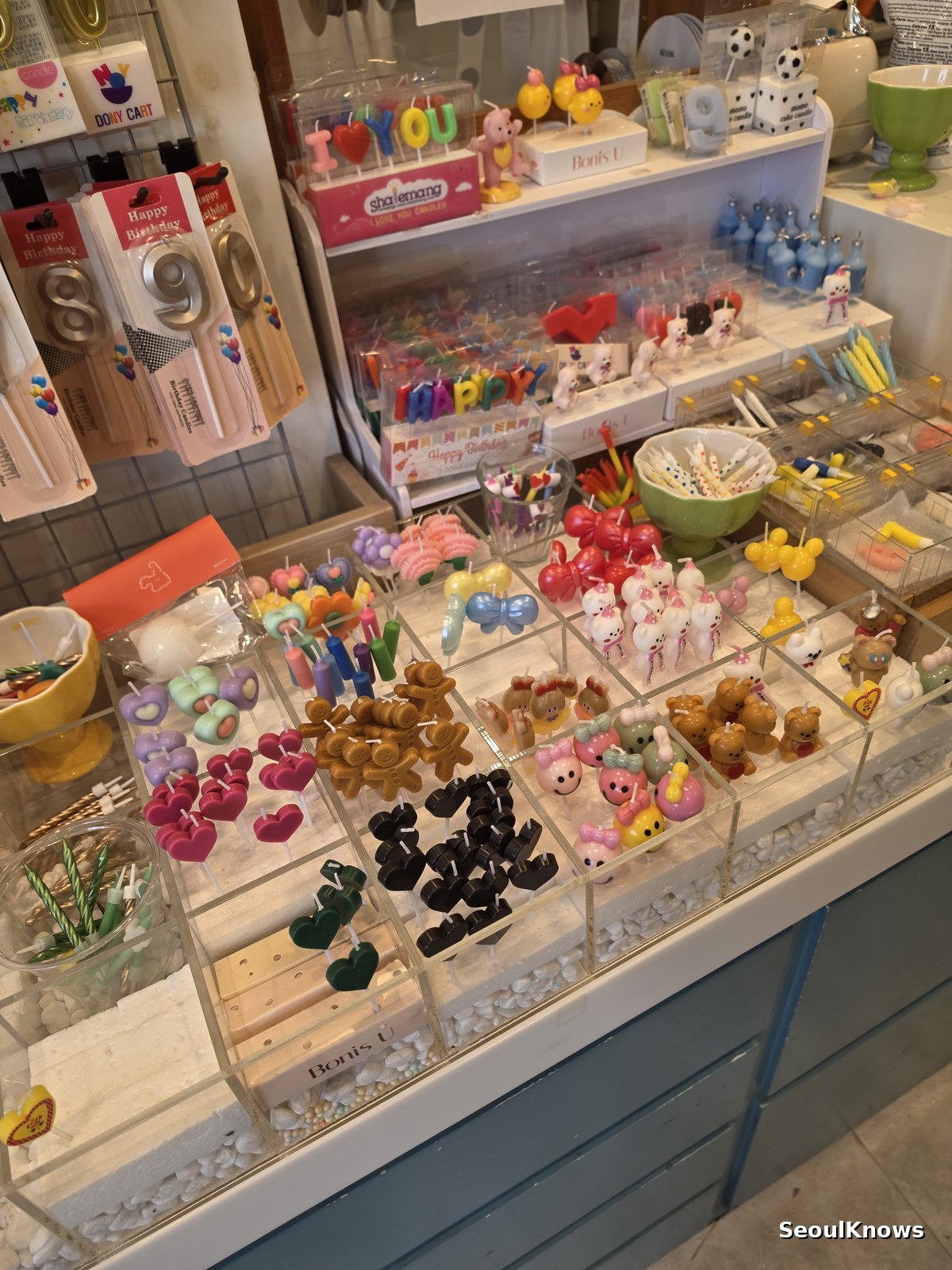
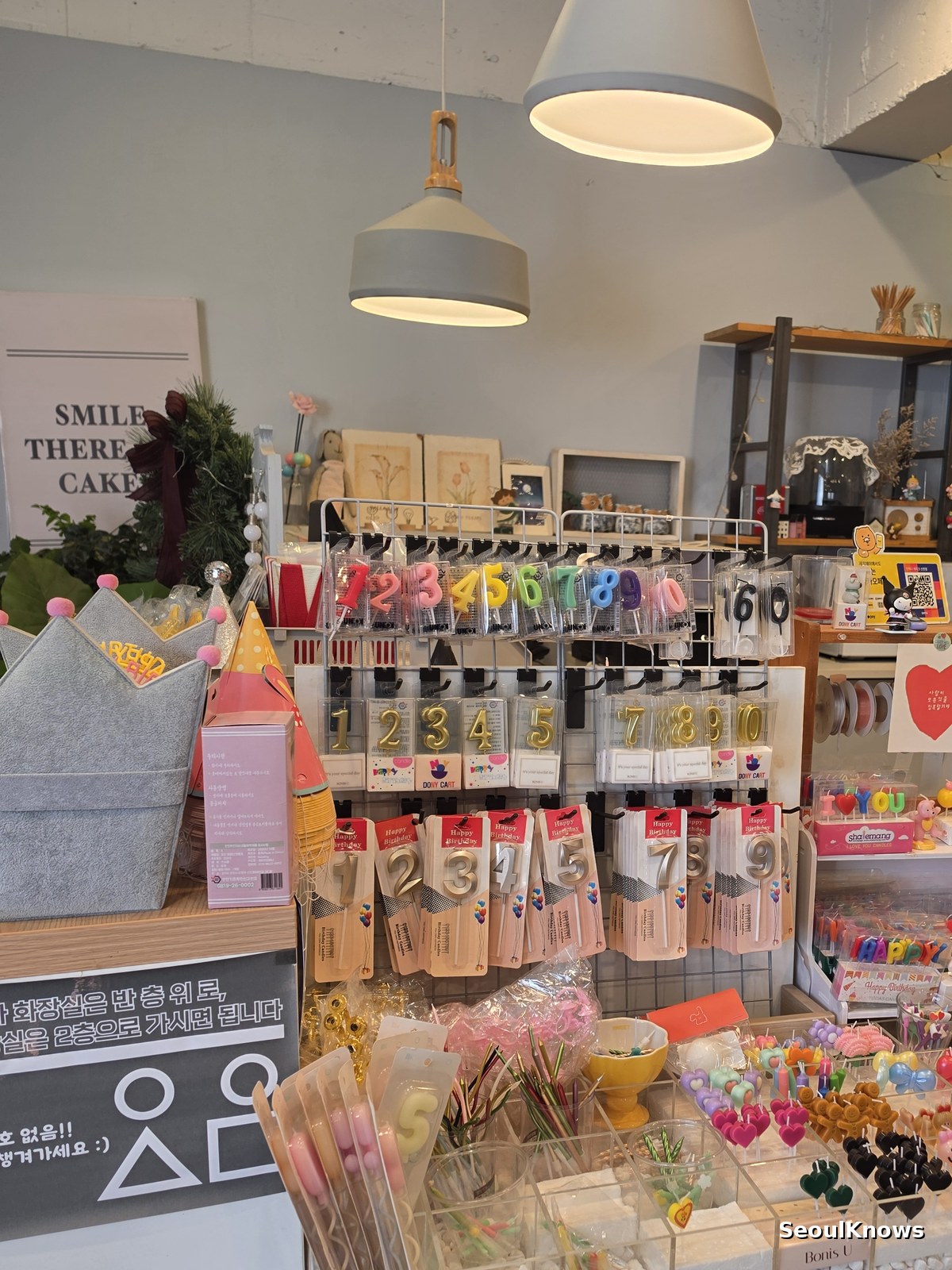
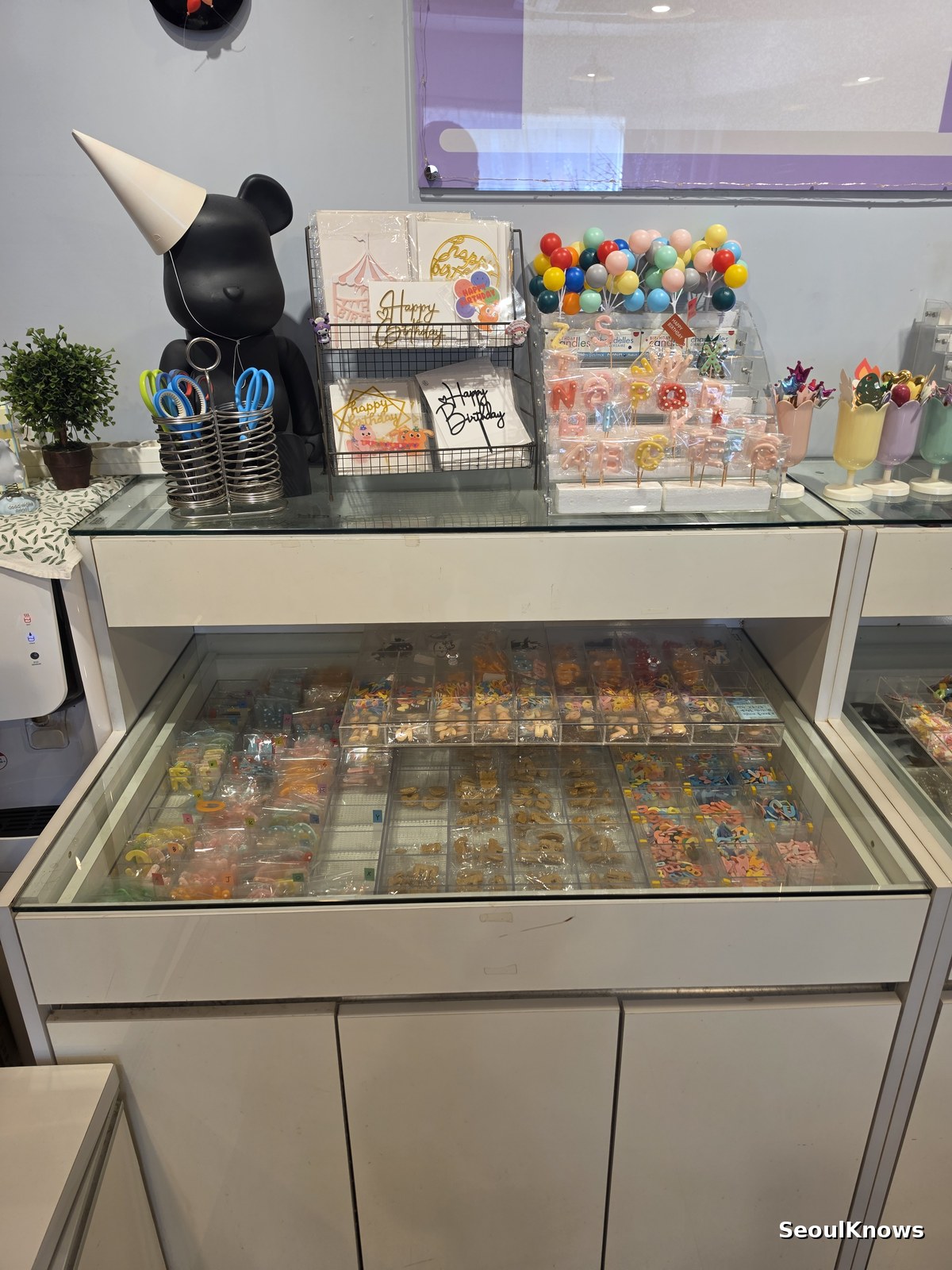
The decoration wall is the thing that changes how you order. Numbers, candles, message plaques, characters, miniature figures, flowers — all laid out where you can pick them up and hold them against a cake. Choosing in person is far easier than choosing from a photo, and it is usually where the good ideas happen.
What you can actually customise
More than you would think. In practice you are choosing four things:
- Format — lunchbox size or full size.
- Message — free text, in Korean or English, piped by hand.
- Toppers — plaques, figures, numbers, candles, chosen from the shelf.
- Concept — this is the real one. A good shop will build a whole scene on top of the cake around a theme you give them.
That last point is what separates these shops from a bakery counter. You are not choosing from a catalogue of eight designs. You are describing a person, and they design something for that person.
The kinds of cakes people actually order
Once you understand that the shop is designing rather than selling, the range opens up. These are the categories I see most often, and the ones worth knowing before you walk in.
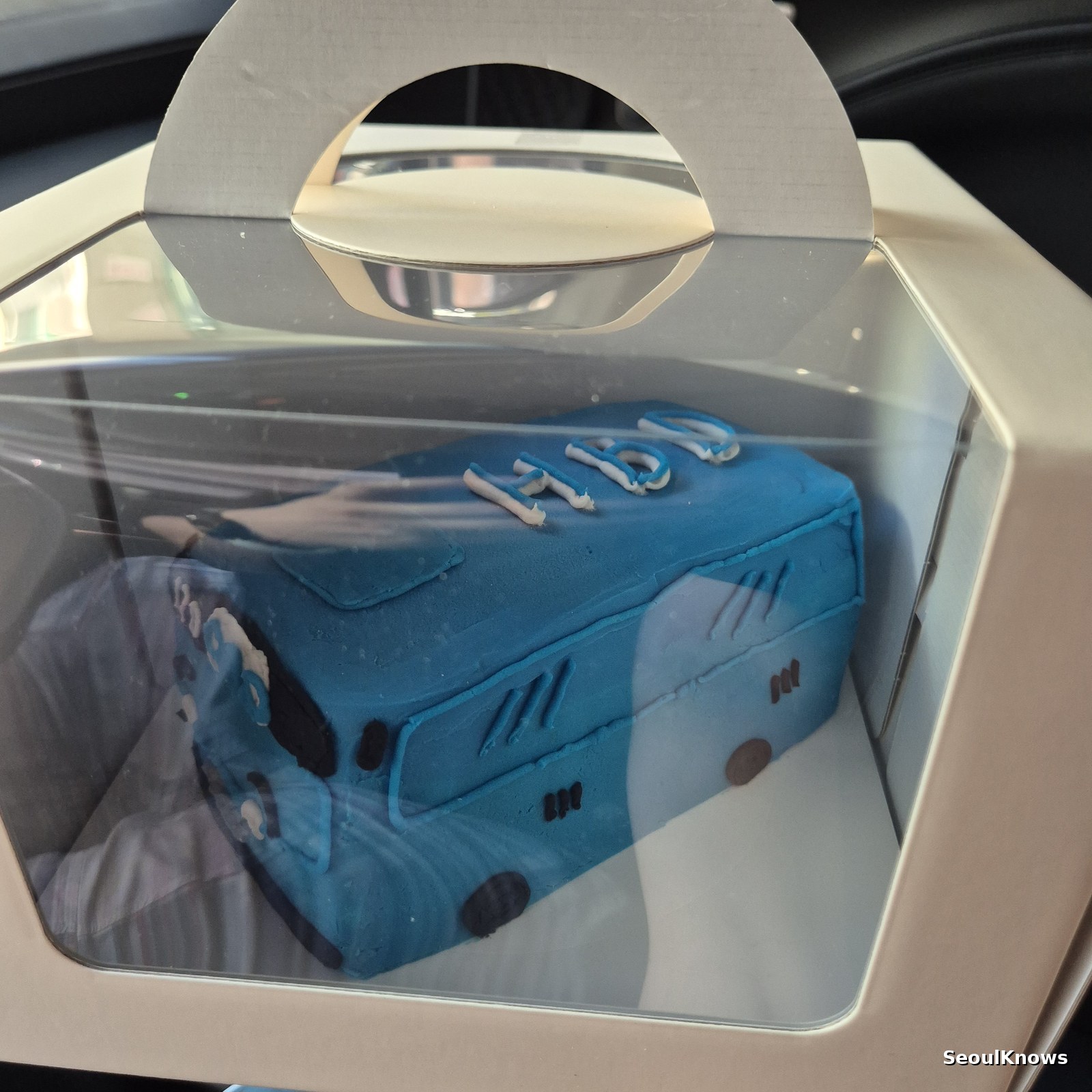
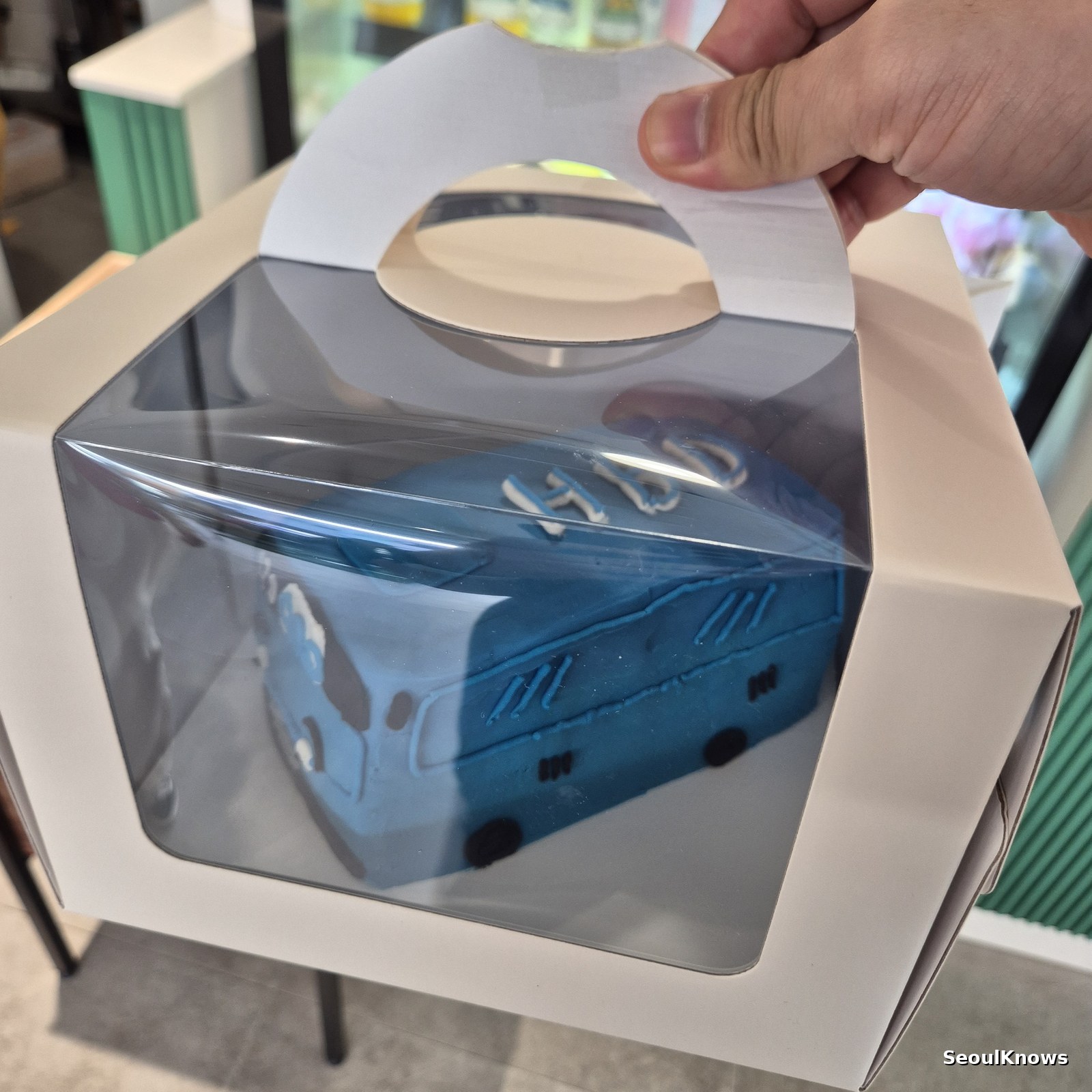
Character and vehicle cakes. This is the children’s-birthday default, and it is where the studios show off. I ordered a Tayo the Little Bus cake for my son — Tayo is a blue city bus from a Korean animated series that almost every Korean toddler goes through a phase of loving. It arrived as the bus itself, built in cream and fondant, and he was thrilled with it in a way no supermarket cake has ever managed. The shop will usually ask for the child’s age and a photo of the character, and work from there.
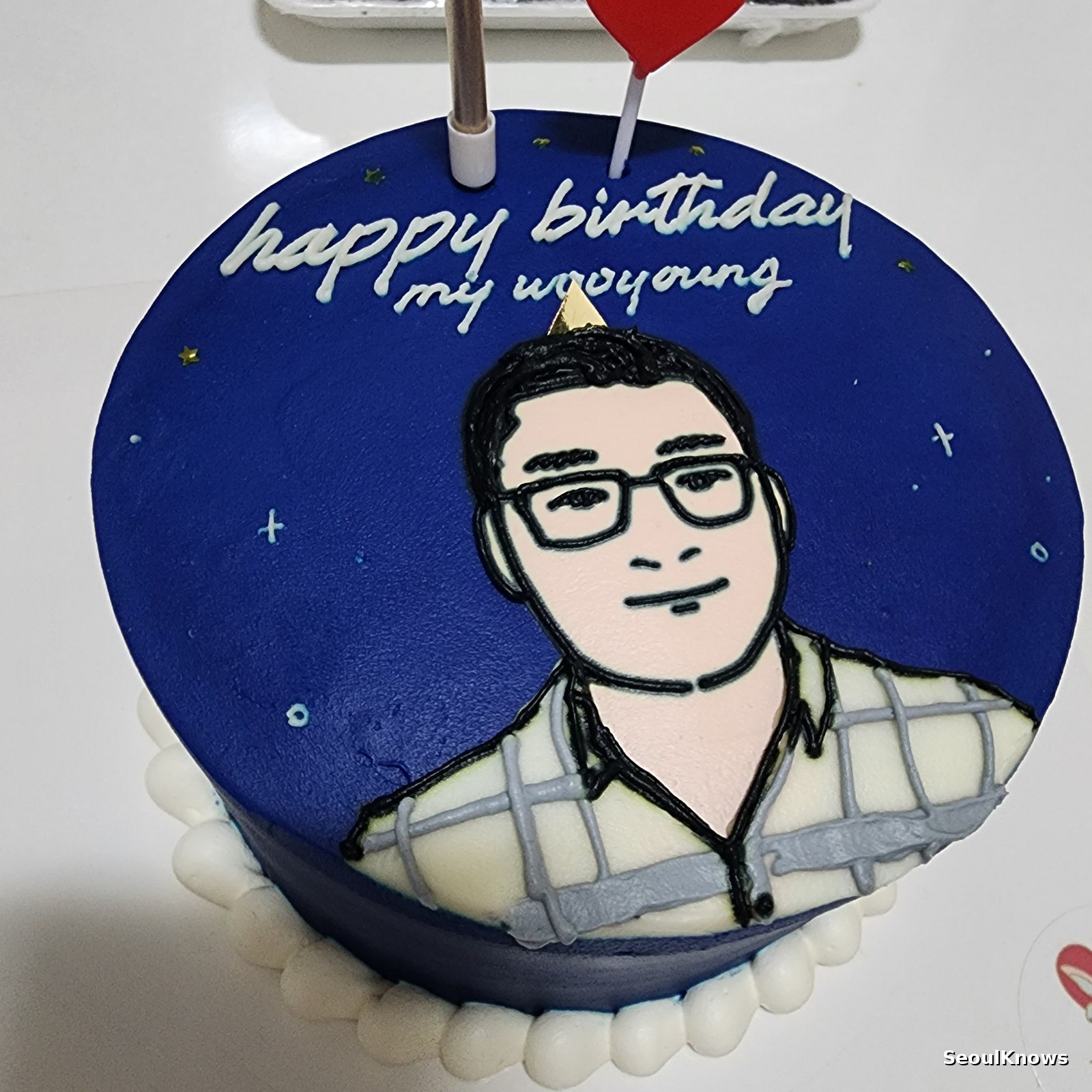
Portrait and caricature cakes. You send a photo, and the shop pipes the face onto the cake — sometimes realistic, more often as a friendly caricature. These are popular for milestone birthdays and for retirement or farewell parties at work, where the joke lands better than a name does. Give the shop a clear, well-lit photo and more lead time than you would for lettering.
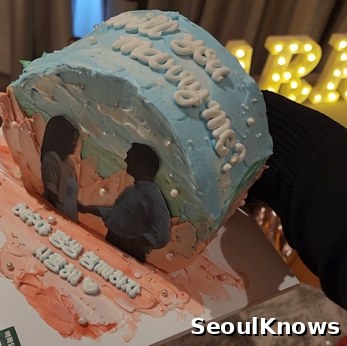
Proposal and event cakes. The other thing these studios quietly do is occasions with a script: proposals, engagements, anniversaries, opening day for a new business. A proposal cake is usually simple on purpose — a clean surface, one line of text, a ring topper — because the cake is a prop in a moment rather than the centrepiece. Shops that do these regularly will ask what time you are handing it over, since that determines how the cream is finished.
The Korean alternative: 떡케이크 (rice cake cakes)
If you want the version of this that is specifically Korean, ask for a 떡케이크 (tteok cake). Instead of sponge and cream it is built from tteok — steamed rice cake — usually as stacked layers of 백설기 (plain white rice cake) decorated with flowers, fruit, or a piped message, and often shaped or tiered like a conventional cake. These are made to order too, and they are just as customisable: colours, characters, names, the lot.
They show up at the occasions where a Western-style cake feels slightly off. A baby’s first birthday (돌잔치), an elder’s milestone birthday, a housewarming, a memorial gathering, or an office opening. Two practical advantages: they are much less sweet than buttercream, which matters if older guests are eating, and they hold up better without refrigeration on a long journey. The trade-off is texture — tteok firms up quickly, so it is at its best on the day.
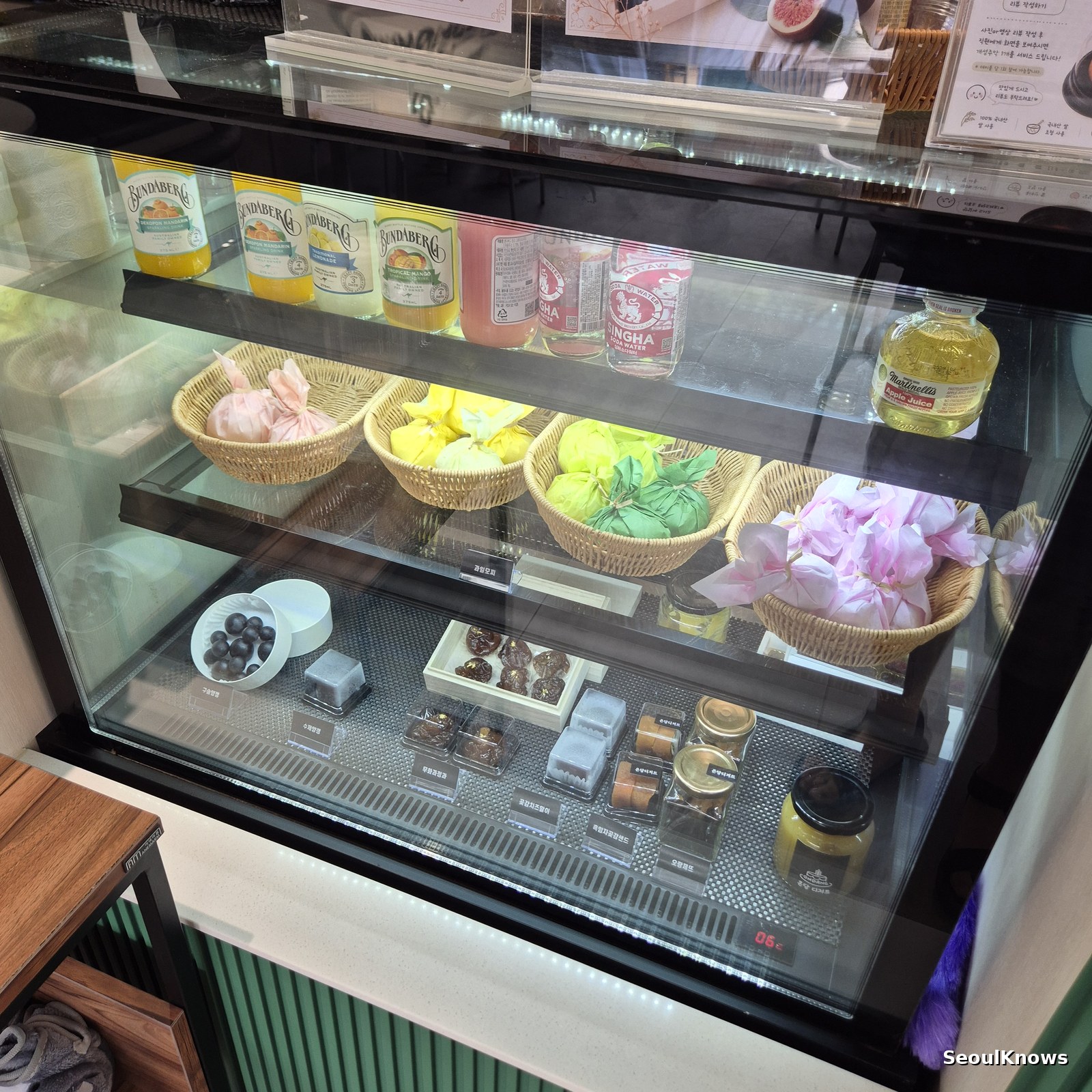
Rice cake shops (떡집) and some custom cake studios both make them. If you are searching, 떡케이크 plus your neighbourhood is the term. The same traditional-sweets counters often sell 약과, 양갱, 정과 and 곶감 as gift boxes, which travel well and make a good companion to the cake.
A real example: the farmer cake
My father-in-law retired a while ago and now grows a few crops. For his birthday I did not want a generic cake with his name on it — I wanted something that was about him.
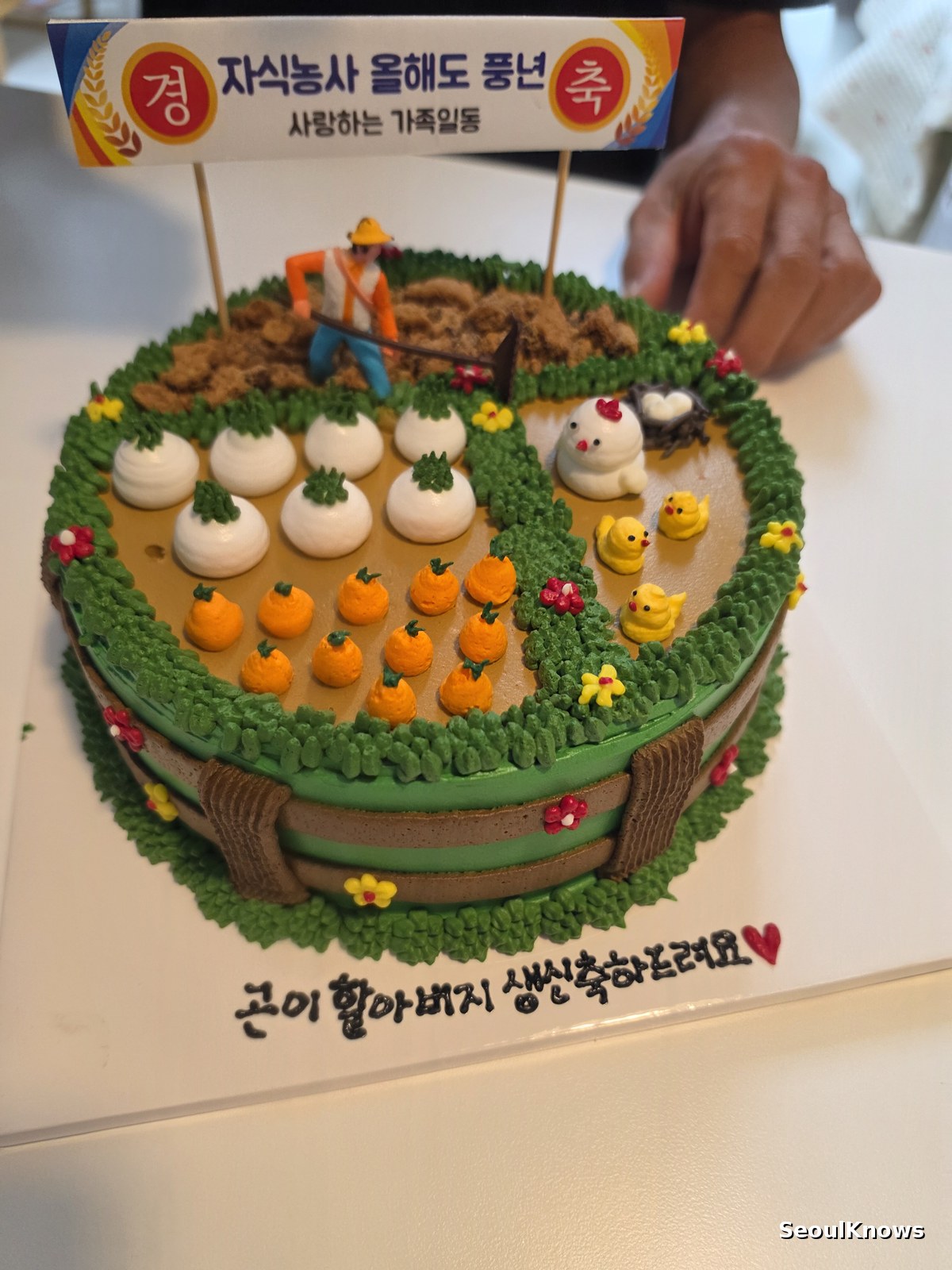
What we ended up with was a field. Piped cream furrows, rows of little vegetables planted across the top, crumbled “soil”, a fence around the edge. From a distance it reads as a cake; up close it reads as a tiny farm.
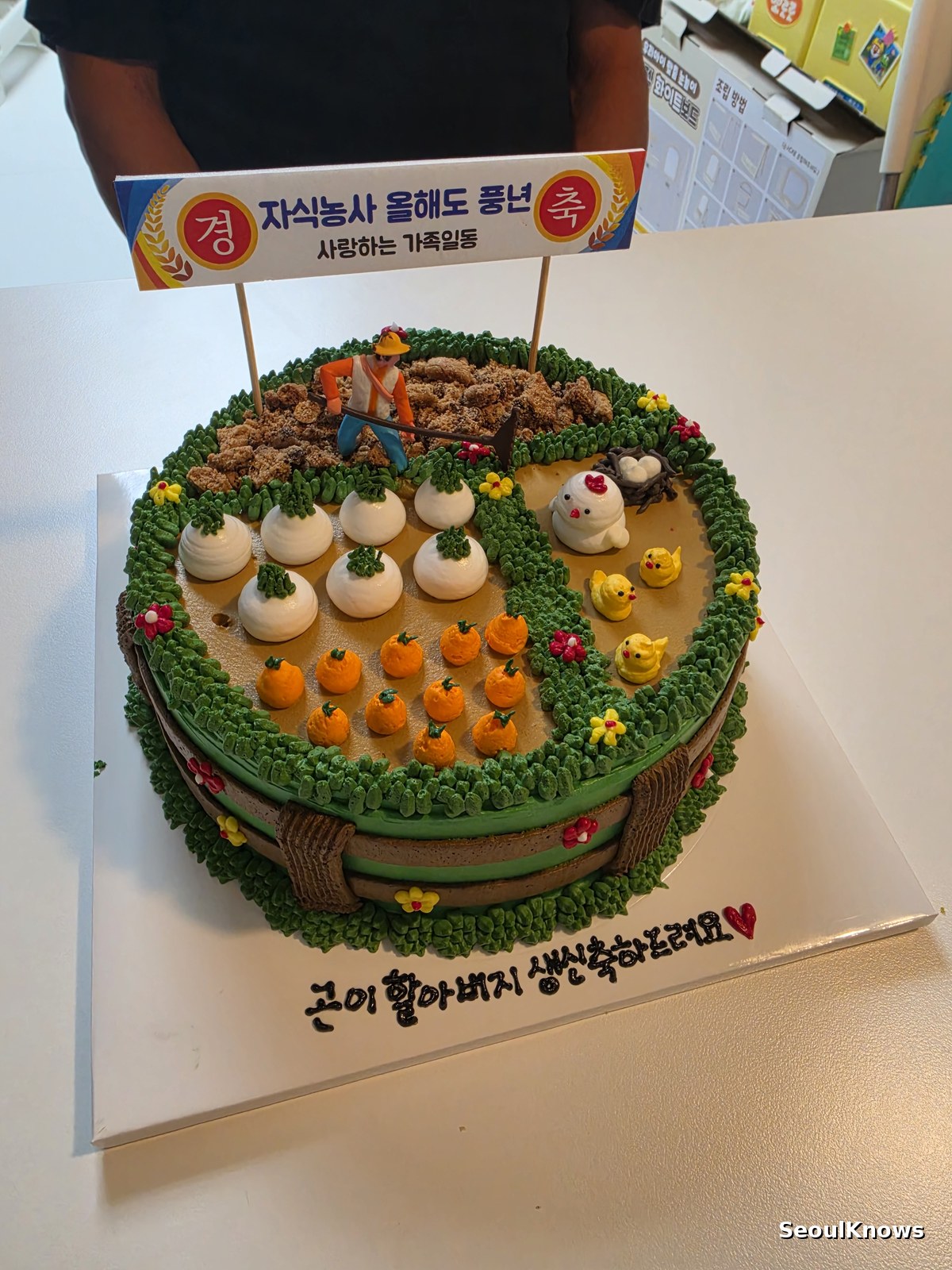
The message was written the way his grandson actually addresses him, not the formal version. The topper was a joke about a good harvest, from the family. Those two choices did more work than the cake design itself — everyone at the table read them out loud.
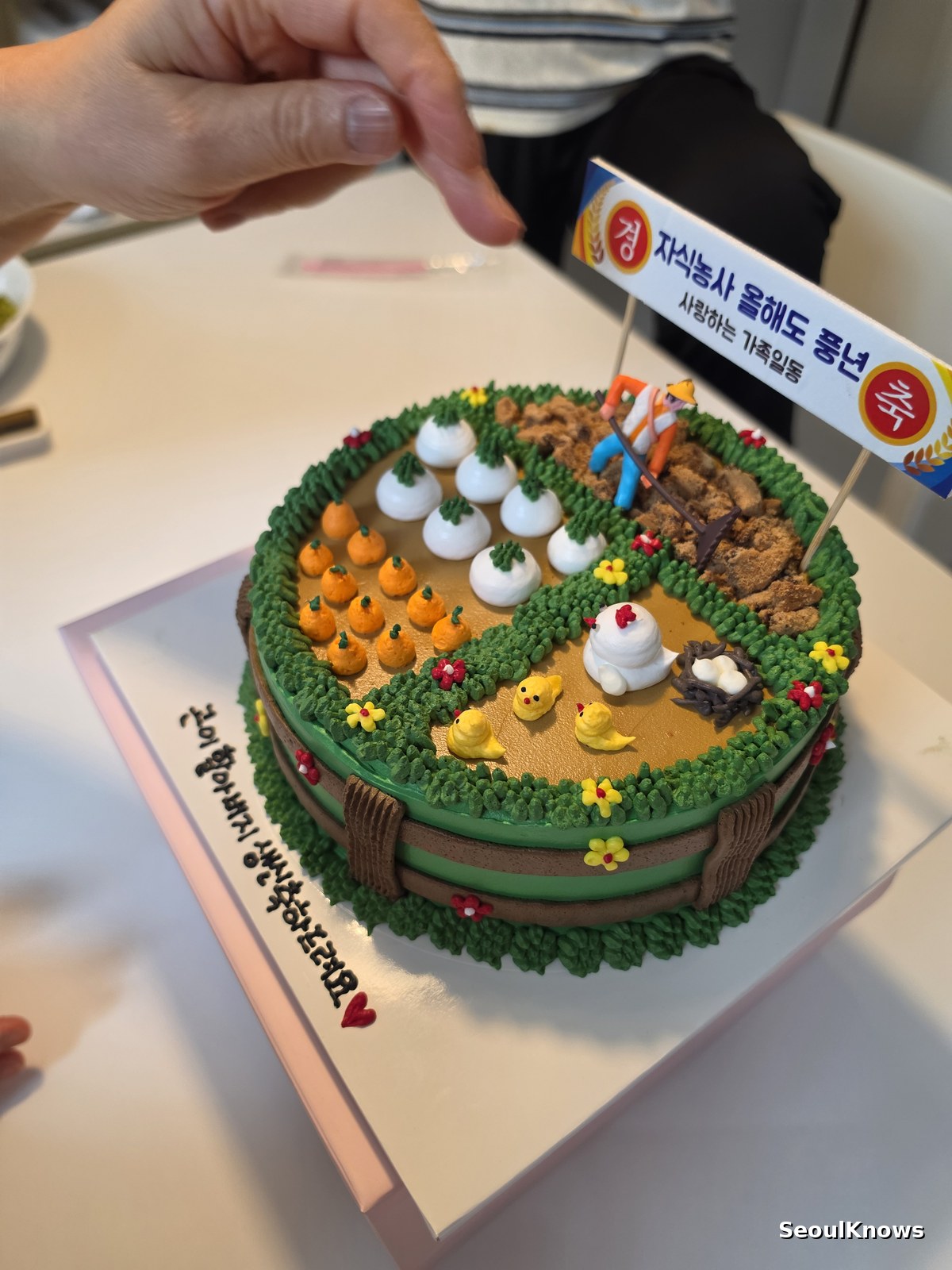
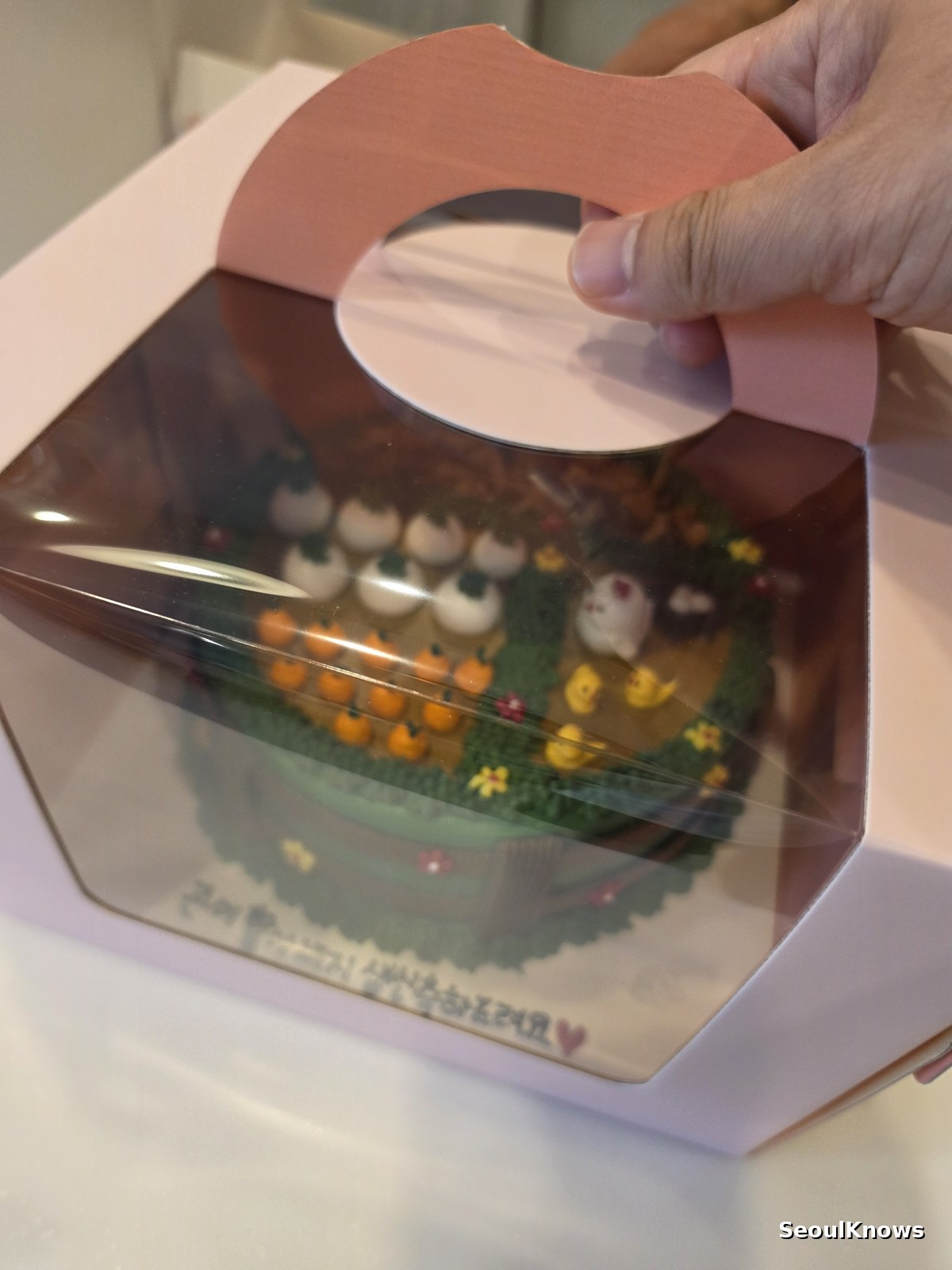
Two practical notes from that order. First, the packaging is built for transport — a rigid box with a clear window and the cake anchored inside, so nothing shifted on a car journey across the city. Second, the taste is calibrated for Korean palates: light sponge, cream that is not heavy, restrained sweetness. Older relatives who normally refuse dessert ate a full slice.
How to order one
Give them time. A lunchbox cake with lettering can sometimes be done same-day or next-day. A full custom concept needs longer — think several days, and more around Christmas, exam results season and the December–January rush. If you have a fixed date, ask early.
Bring a reference image. This is the single most useful thing you can do, and it removes the language barrier almost entirely. Screenshot something close to what you want and show it. Then say what to change.
Write your message down. Type the exact text into your phone — spelling, spacing, any hearts or symbols — and show the screen. Do not dictate it. Korean and English both work; the shop is copying characters, not composing them.
Lead with the person, not the design. “He retired and now farms” produced a better cake than any design brief I could have written. Tell them the hobby, the job, the running family joke, and let them design.
Say how many people will eat it. That decides lunchbox versus full size more reliably than anything else.
Quick facts
- Lunchbox cake (도시락 케이크): about 10 cm, 2–3 slices, the entry point for a personalised cake
- Lettering cake (레터링 케이크): full size, handwritten message, for a table of people
- Full custom concept: designed around a theme; costs more and needs more notice
- Character & portrait cakes: send a reference photo; allow more notice than plain lettering
- Proposal / event cakes: deliberately simple, timed around the moment you hand it over
- 떡케이크 (tteok cake): rice-cake version, less sweet, standard for 돌잔치 and elders’ birthdays
- Lead time: same or next day for simple lettering; several days for custom concepts
- Ordering: in person, by phone, or through the shop’s Instagram or KakaoTalk channel
- Transport: boxed with a window and secured inside; fine for a taxi or subway ride
- Search terms: 주문제작 케이크 (custom-made cake), 레터링 케이크, 도시락 케이크
Frequently asked questions
Can I order a custom cake in Seoul if I don’t speak Korean?
Yes. Bring a reference photo and type your message into your phone so it can be copied character by character. Many shops take orders through Instagram DMs, which gives you time to translate.
How far in advance should I order?
A simple lettering cake is often a day’s notice. A designed concept cake needs several days. Around Christmas and year-end, order well ahead — that is peak season for these shops.
Can the message be in English?
Yes. Hand-piped English lettering is completely normal. Show the exact wording rather than saying it out loud.
Are Korean cakes very sweet?
Generally the opposite. Light sponge and restrained cream is the house style, which is why they suit older guests and large groups.
Can I get one in a specific character or brand design?
Shops vary in what they will reproduce, and licensed characters are sometimes declined. Ask first and have a second idea ready.
What is a 떡케이크, and should I order one instead?
It is a cake built from steamed rice cake rather than sponge and cream, decorated and customised the same way. Order one if older relatives are eating, if you want something distinctly Korean, or if the cake has to survive a few hours outside a fridge. Skip it if you want a rich, creamy dessert — the texture is chewy and it is best eaten the day it is made.
Can they make a cake of a specific character my child likes?
Usually yes, and it is one of the most common requests. Bring a photo of the character, say the child’s age, and ask early — a sculpted character cake takes more work than a flat design.
Where do I find these shops?
Search 주문제작 케이크 plus your neighbourhood on Naver Map or Instagram. Instagram is genuinely the better tool here — most studios post their actual finished work, so you can judge the piping before you commit.
The bottom line
A made-to-order cake is one of the more underrated things you can arrange in Seoul. It costs less than you would guess, it can be organised in a few days, and the result is the thing people at the table actually talk about. The trick is not to arrive with a design. Arrive with a person, and let the shop do the rest.
Thinking of ordering one and not sure where to start? Leave a comment below with your neighbourhood, your occasion and roughly how many people it needs to feed, and I will help you work out what to ask for — or point you toward the kind of shop that does it well. I have been through the process in Korean, so if you are stuck on how to word the request, ask me here.
Written by WY, a Seoul-based local sharing honest, first-hand guides to Korea. Every guide here is a place I’ve actually been to — written from my own visit, my own photos. More about me →