
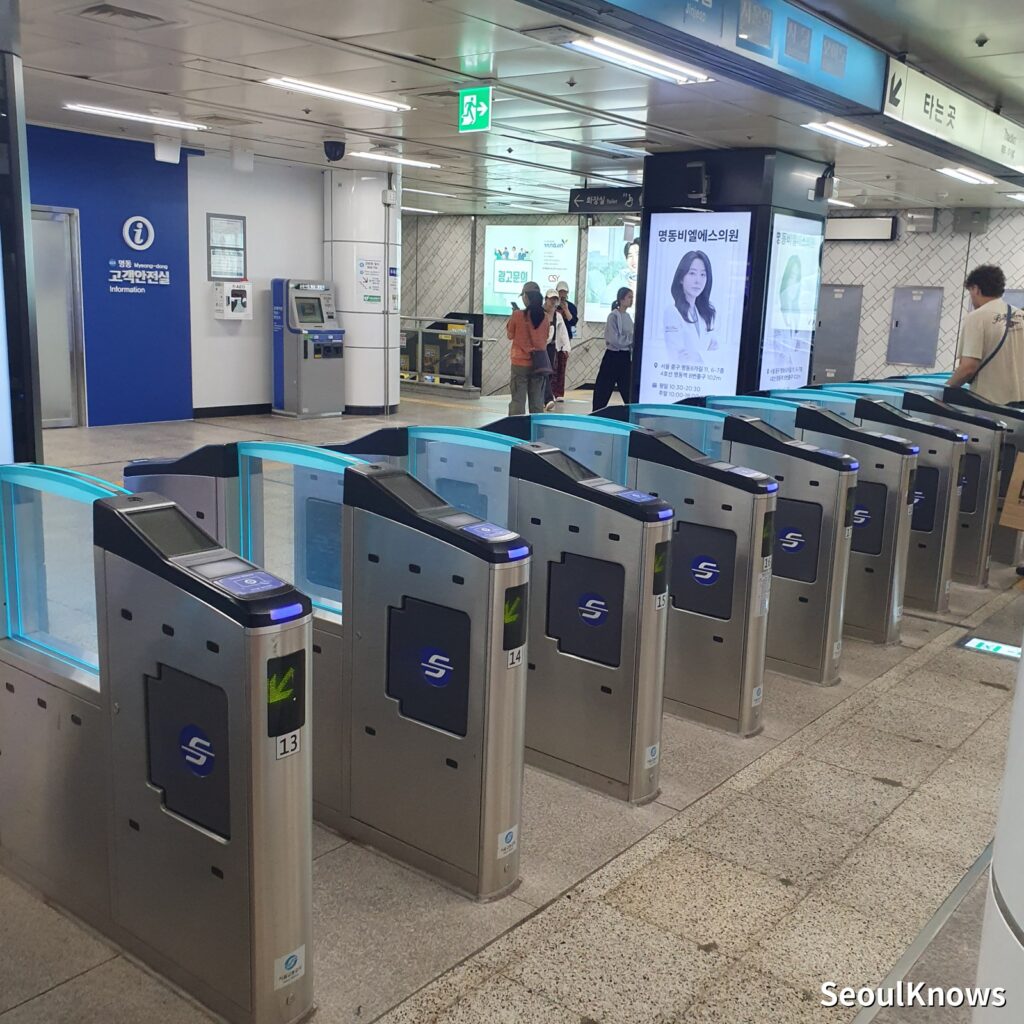
The Seoul Metro is one of the cleanest, cheapest, and most tourist-friendly subway systems in the world. Signs and announcements are in English (and often Chinese and Japanese), trains are frequent, and a single ride costs only about a dollar. This guide walks you through exactly how to buy a ticket and ride, using real photos from a Seoul station, and answers the questions first-time visitors ask most.
Quick facts (2026)
| Adult base fare | ₩1,550 with a transit card (T-money); ₩1,650 for a single-journey ticket |
| Child fare (age 6-12) | about ₩550 per single-journey ticket (youth 13-18 pay ₩900 with a registered transit card, but a youth single-journey ticket still costs ₩1,650) |
| Single-journey deposit | ₩500 refundable deposit added to every single-journey ticket, refunded at a Deposit Refund Device at your destination |
| Transfers | Free within 30 minutes with a transit card (60 minutes between 21:00 and 07:00), up to 4 transfers; fare is distance-based beyond the first 10 km, +₩100 per 5 km |
| Operating hours | roughly 05:30 to around midnight (varies by line and direction). Ride before 06:30 on a weekday with a card and the adult fare drops to ₩1,240 |
| Payment at machines | Cash and cards. Note: Climate Card recharges accept Korean-issued credit cards only |
Which ticket should you use?
You have a few options. For most tourists, a rechargeable transit card is the easiest, but a single-journey ticket is perfectly fine for occasional rides.
| T-money / WOWPASS | Rechargeable card sold at convenience stores and machines. Saves ₩100 per ride, free transfers, works on buses too. Best all-round choice. |
| Climate Card | Unlimited-ride pass for a set number of days, great if you ride a lot. Note recharges at machines need a Korean-issued card. |
| Single-journey ticket | Buy one ride at a time from the machine (the photos below). Costs ₩100 more than a card, plus a ₩500 deposit you reclaim later. |
Step-by-step: buying a single-journey ticket
Step 1. Find the ticket machine
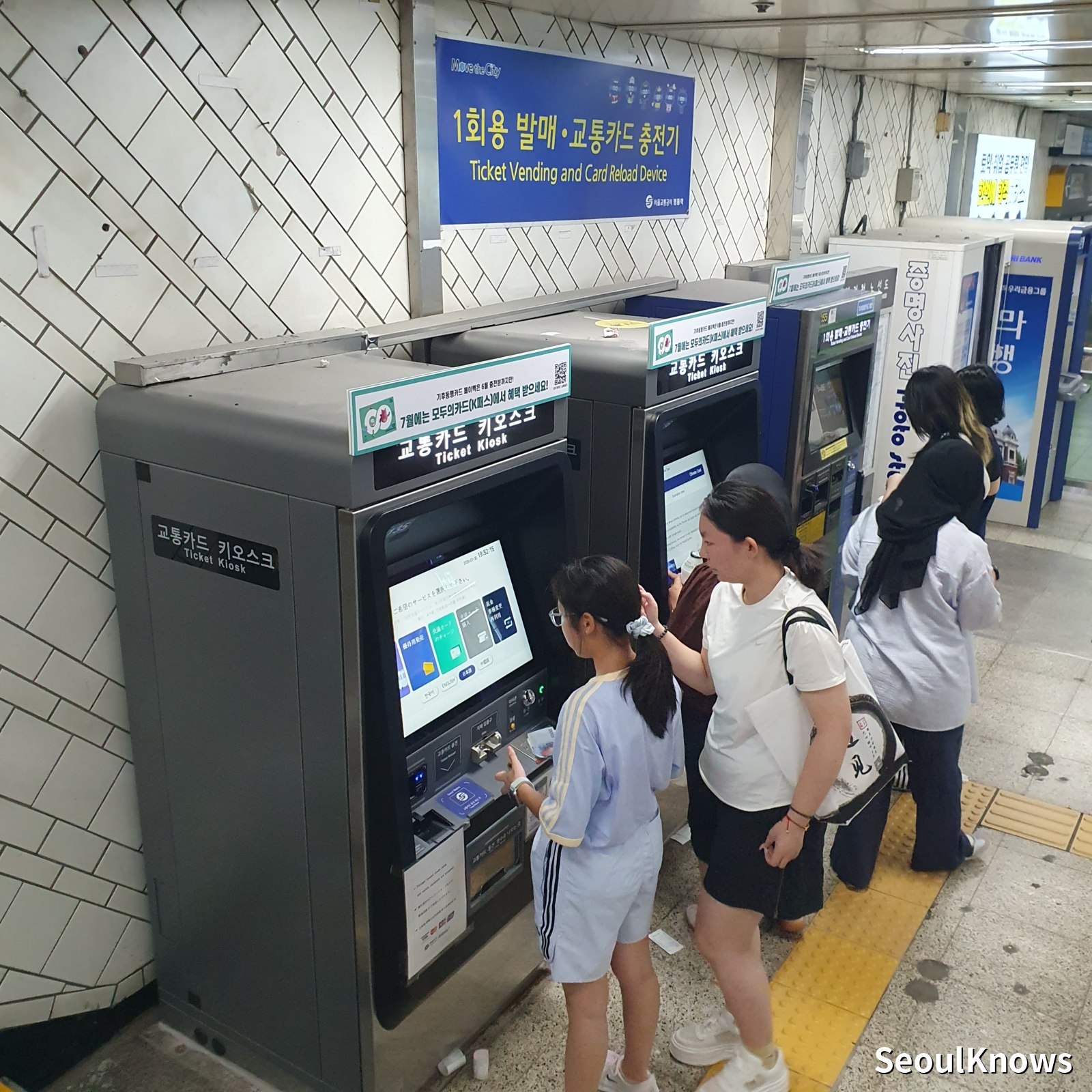
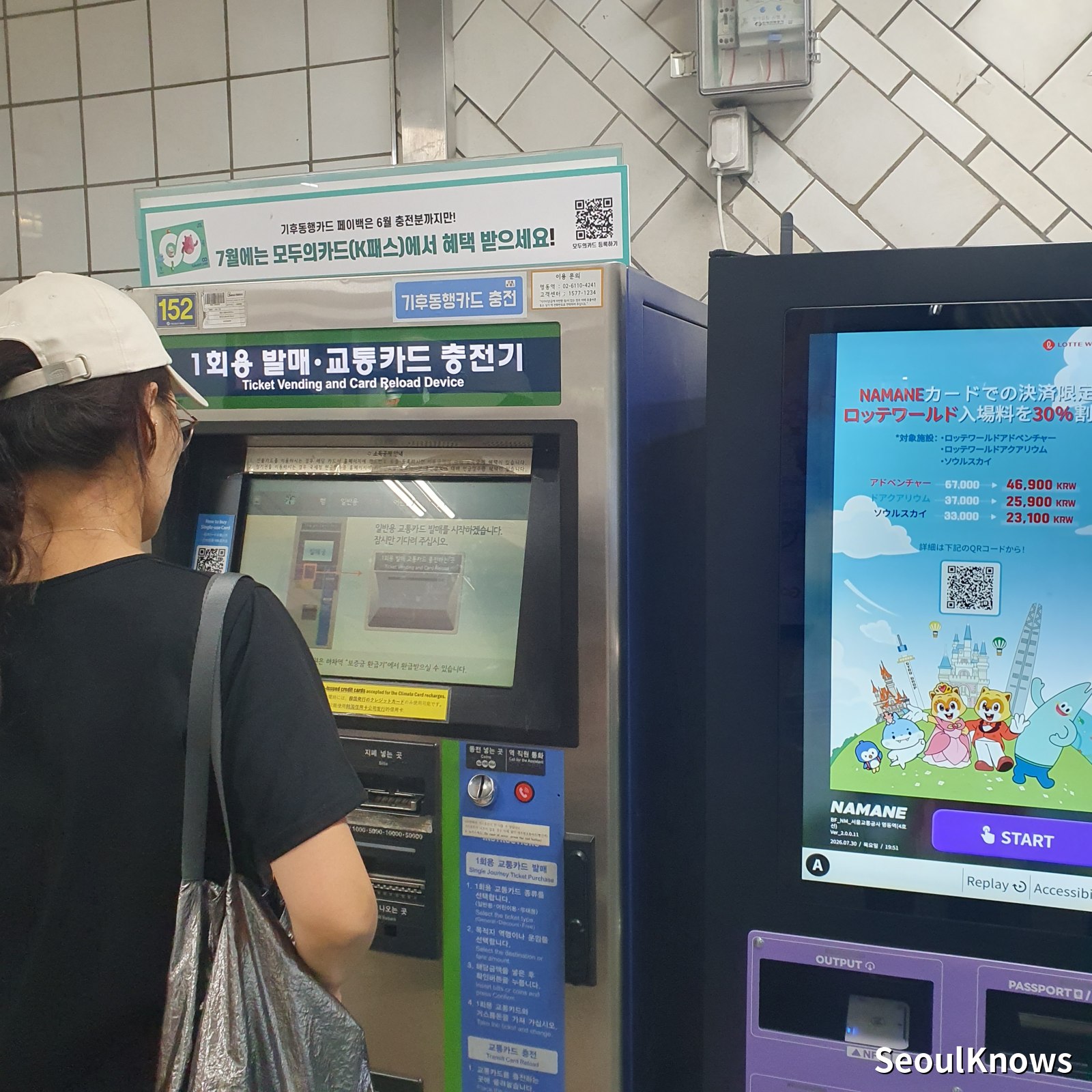
Inside every station, before the fare gates, look for machines labeled “Ticket Vending and Card Machine.” There is usually a row of them. Tap the screen to begin, you can switch the language to English at the start.
Step 2. Choose your destination station
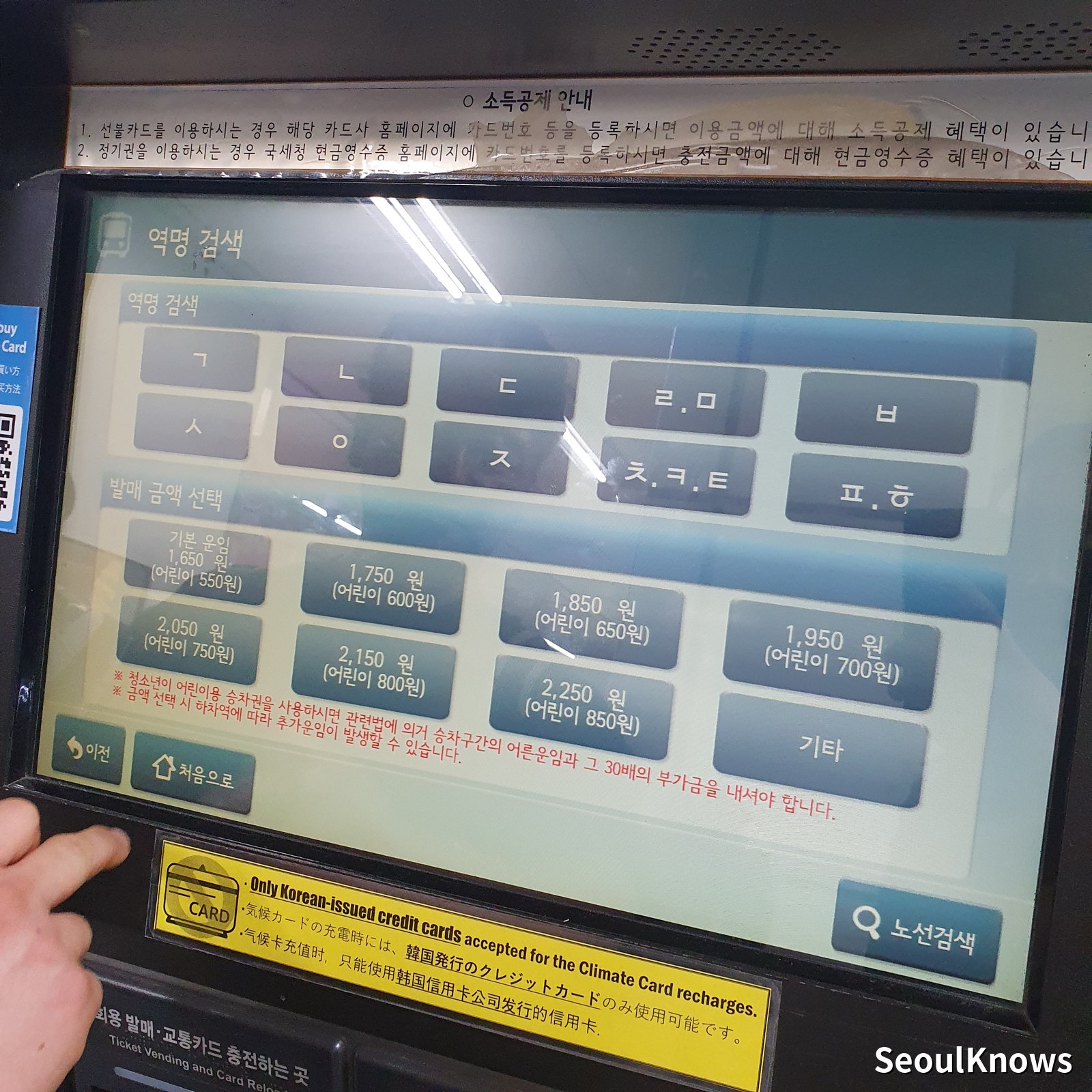
Select “Single Journey Ticket,” then find your destination. You can search by station name or tap it on the line map. The machine automatically calculates the correct fare based on distance, so you don’t need to know the price in advance.
Step 3. Pick ticket type and quantity
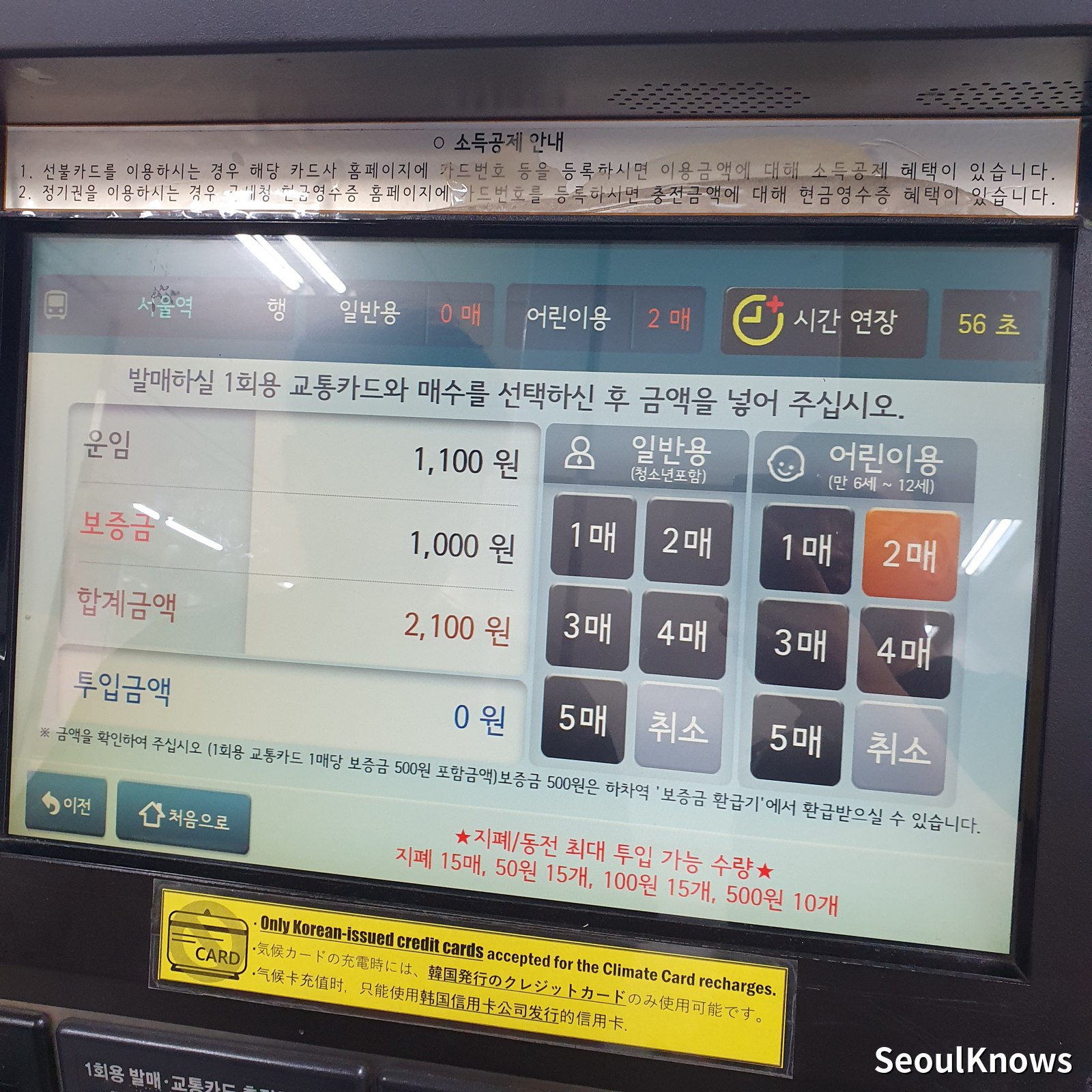
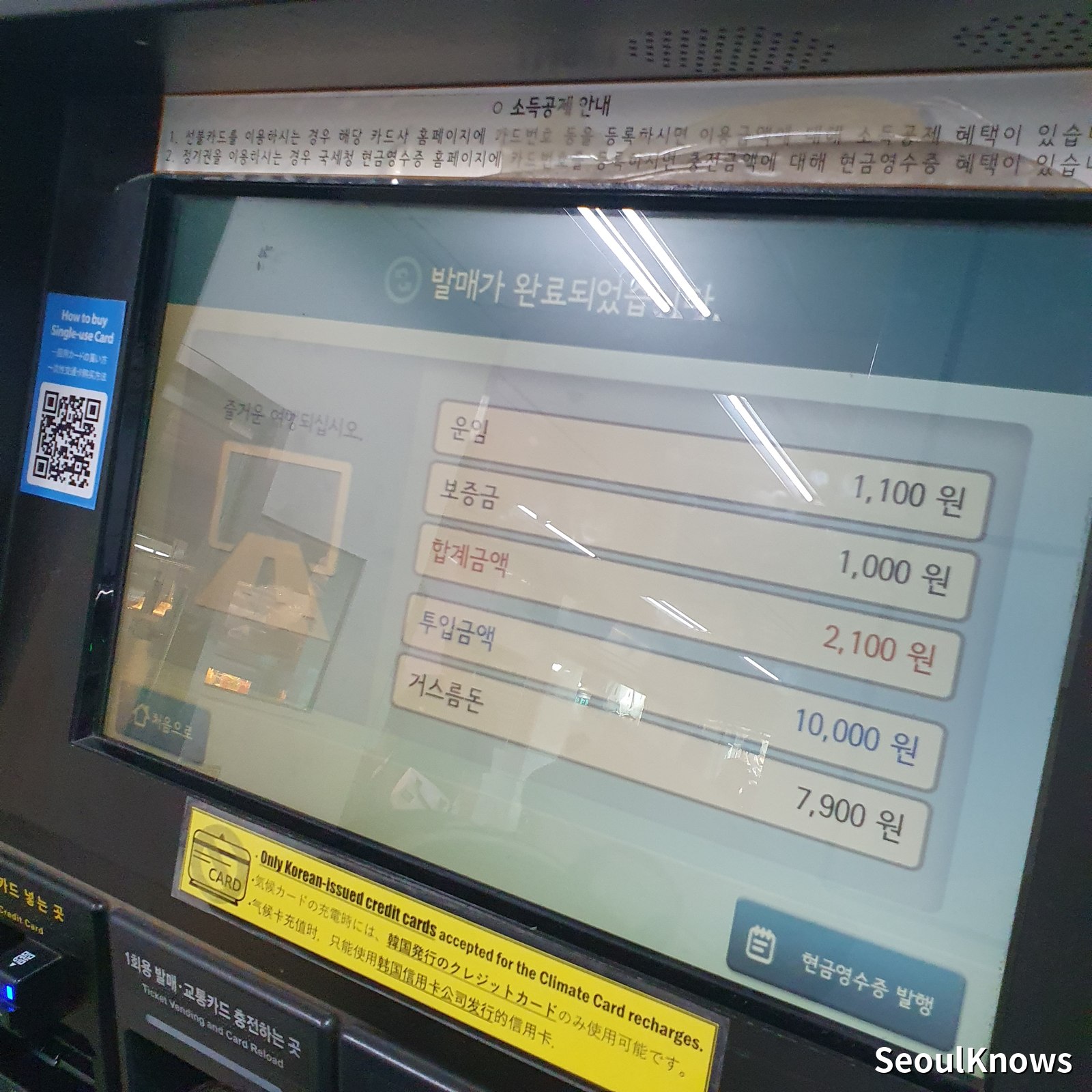
Choose Adult or Child and how many tickets you need. The screen then shows a clear breakdown: Fare + ₩500 Deposit = Total. (In the example below, two child tickets show a fare of ₩1,100, a deposit of ₩1,000, and a ₩2,100 total.) Don’t worry about the deposit, you get it back at the end.
Step 4. Pay and collect your card
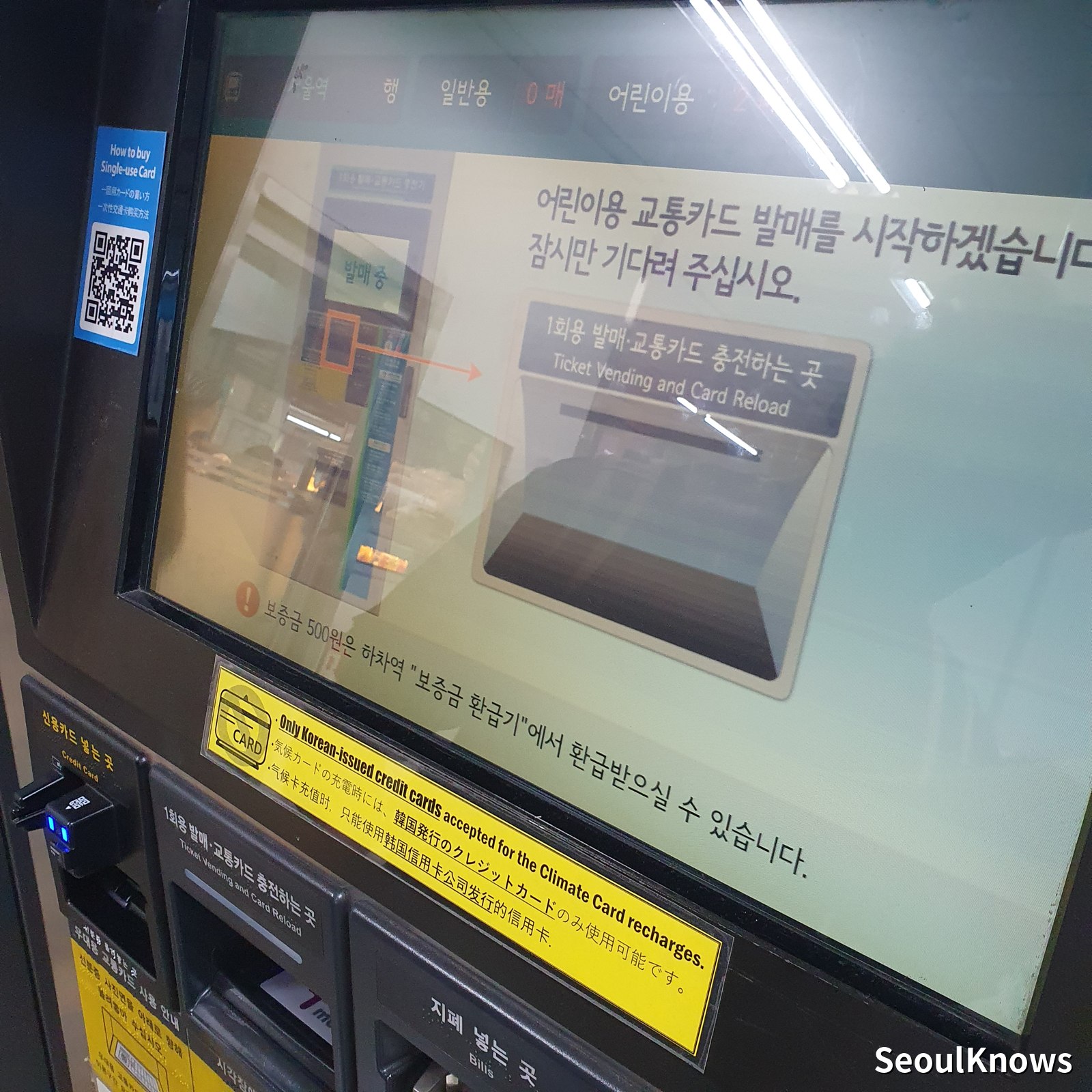
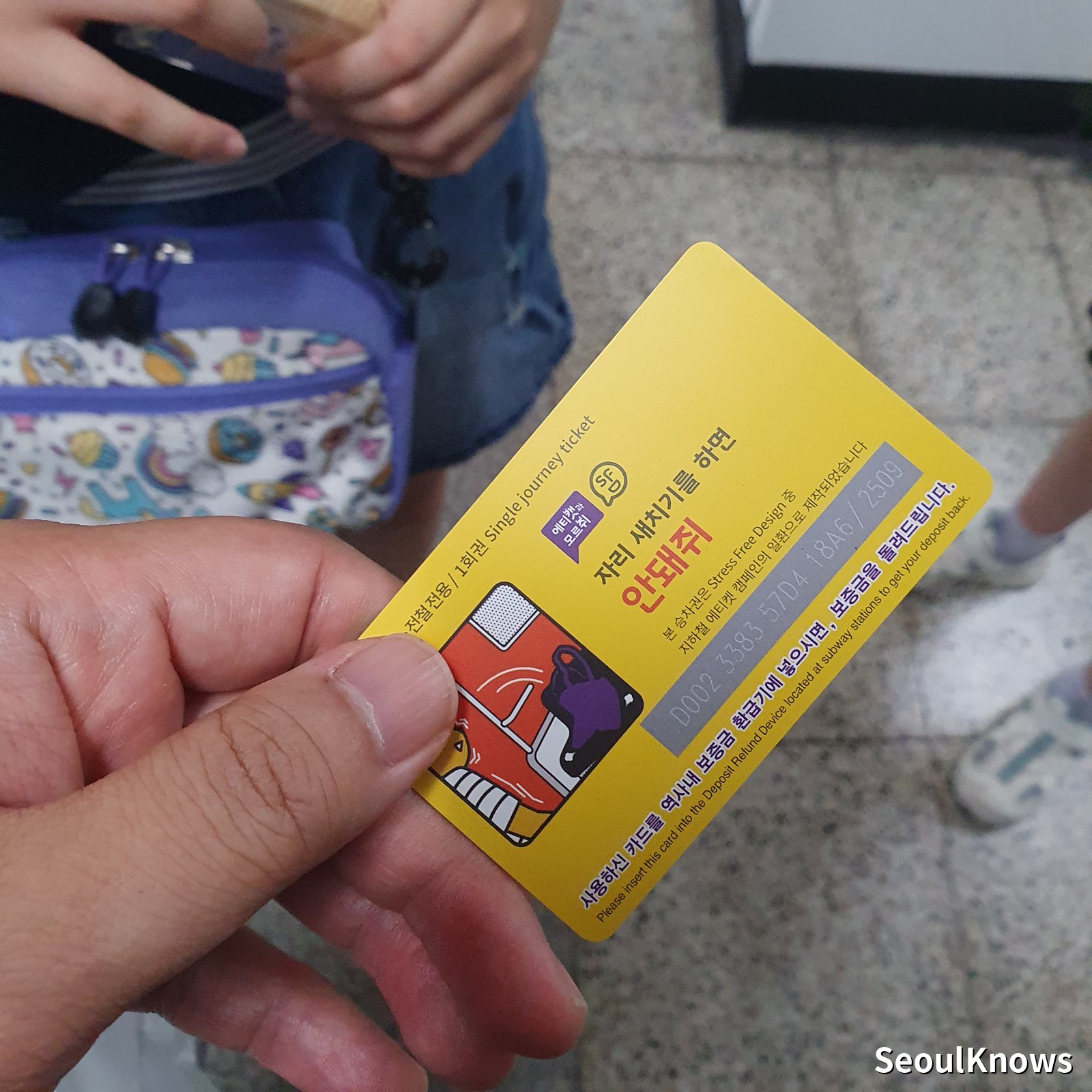
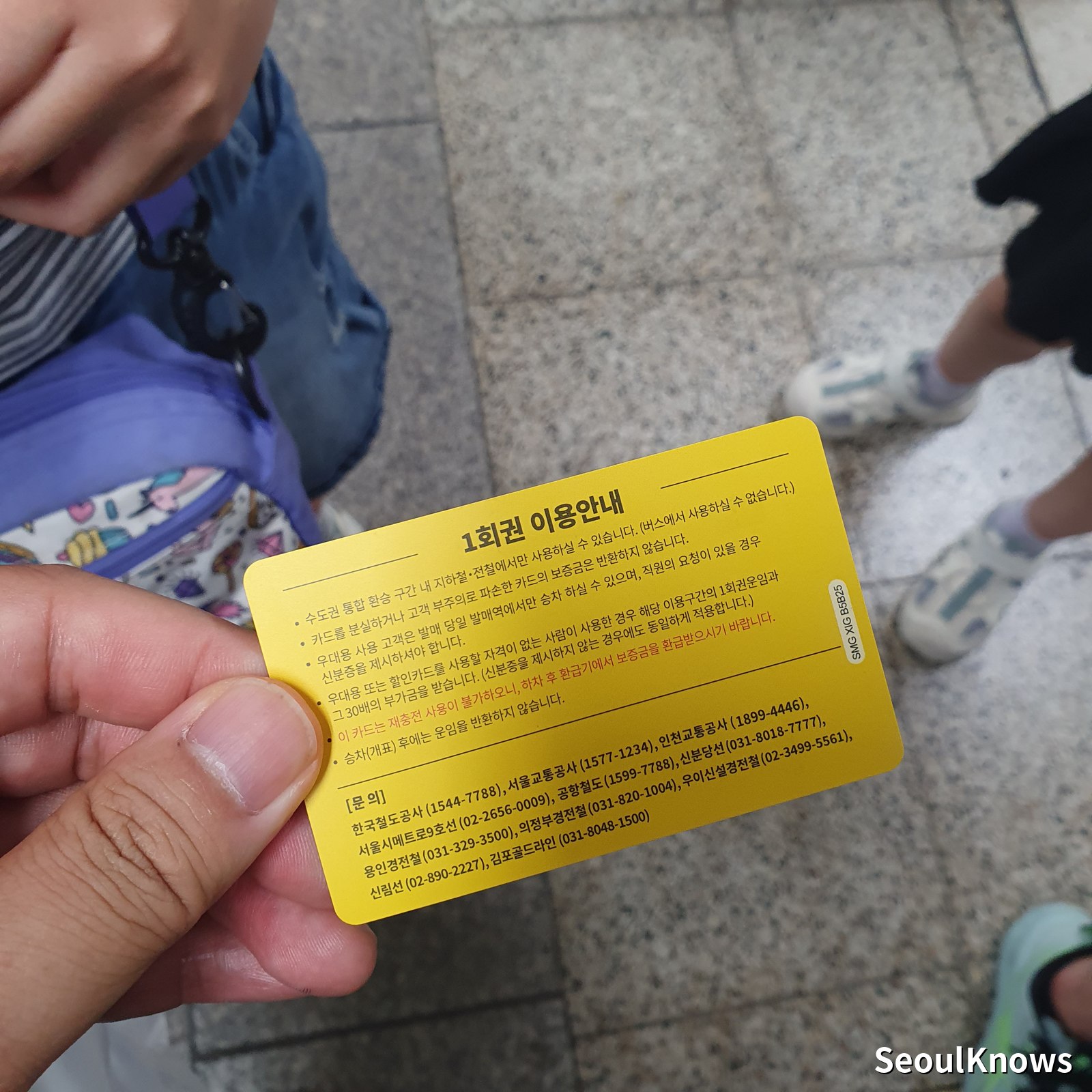
Insert cash (bills and coins) or pay by card, and the machine issues your ticket. It shows “Issuing…” and then a completed screen with your change. Your single-journey ticket is a thin yellow plastic card, not a paper ticket.
Step 5. This is your ticket
Keep this yellow card safe, you’ll tap it going in and coming out, and you’ll need it to reclaim your deposit. The back explains how to use it.
Once a week we send one email: hotels, food and the practical stuff, from someone who actually lives here. No filler.
Riding the train
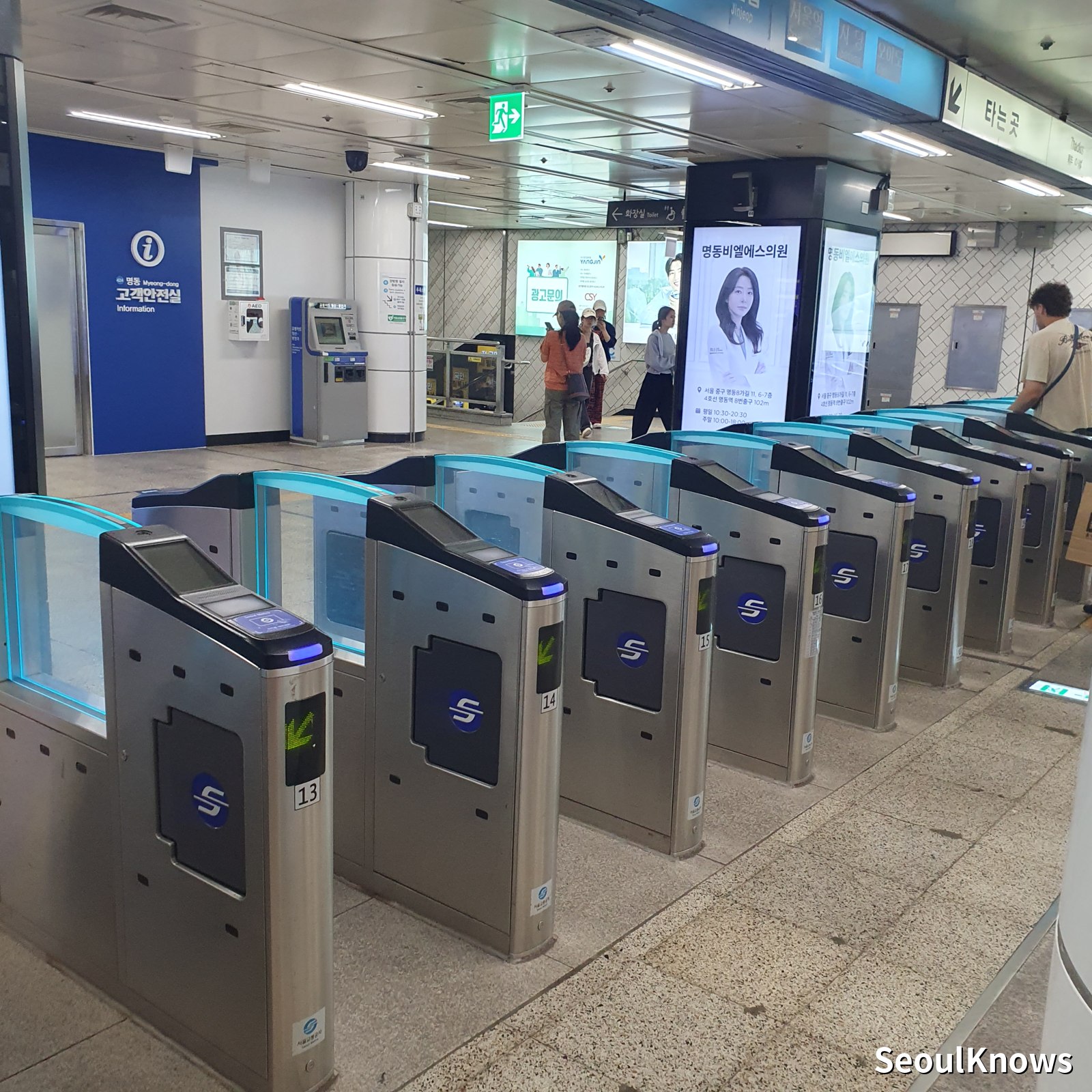
Tap in at the gate
At the fare gates, tap your card on the round reader on top of the gate and walk through. Do the same to tap out when you exit at your destination. If the gate beeps red, your card didn’t read, step back and tap again.
On board
Trains are clean, air-conditioned, and have clear English announcements before each stop. Screens and maps above the doors show the next station and which side will open. Free Wi-Fi is available on most trains.
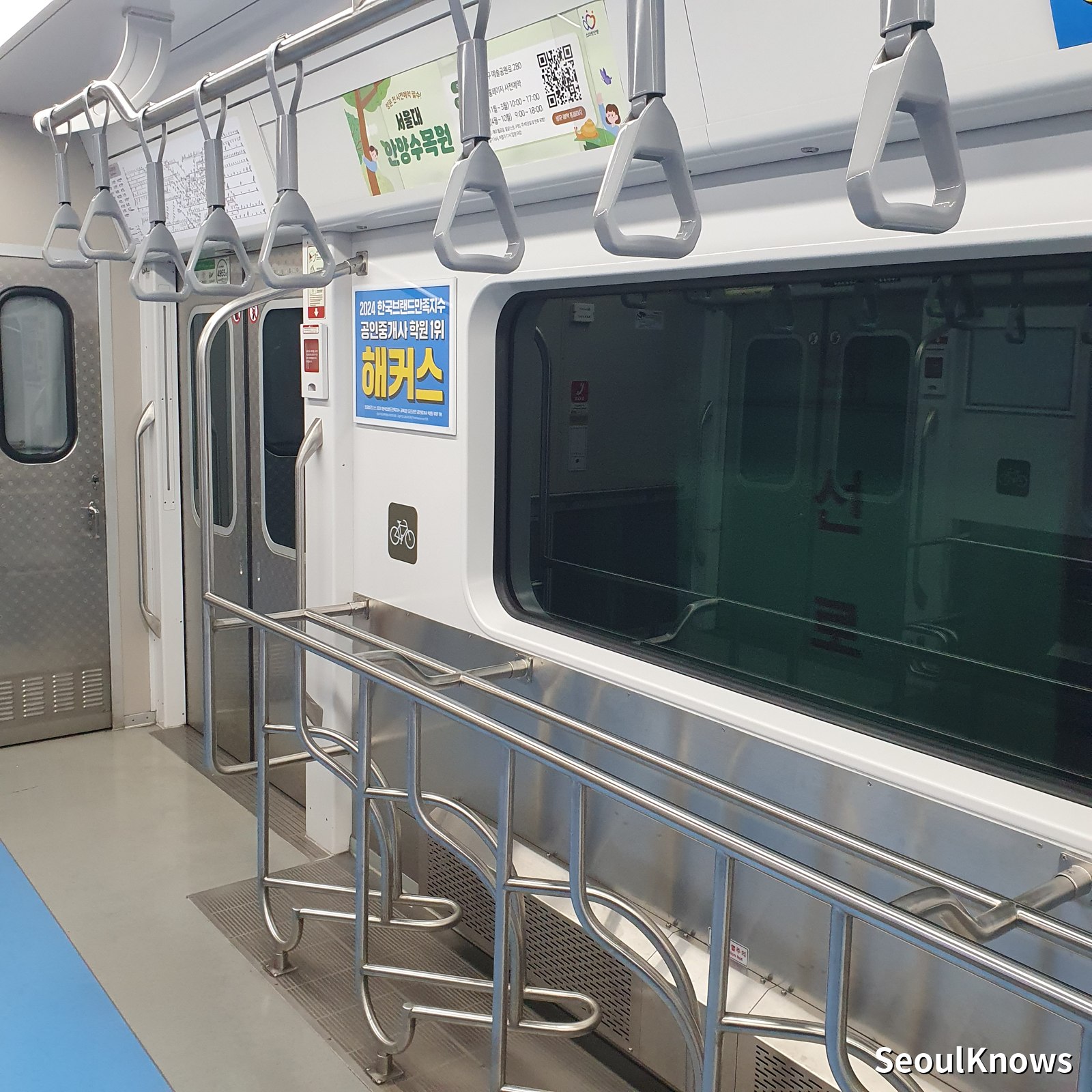
Bicycle spaces on the train
Look at the ends of each car and you’ll spot a dedicated bicycle area, marked with a bicycle symbol and fitted with metal rails to hold your bike steady. You can bring a full-size bicycle on the subway on weekends and public holidays, board the first or last car and secure it in these racks. Folding bikes (folded and bagged) are allowed any day, any time. Rules can vary by line, so check the current signage before you travel.
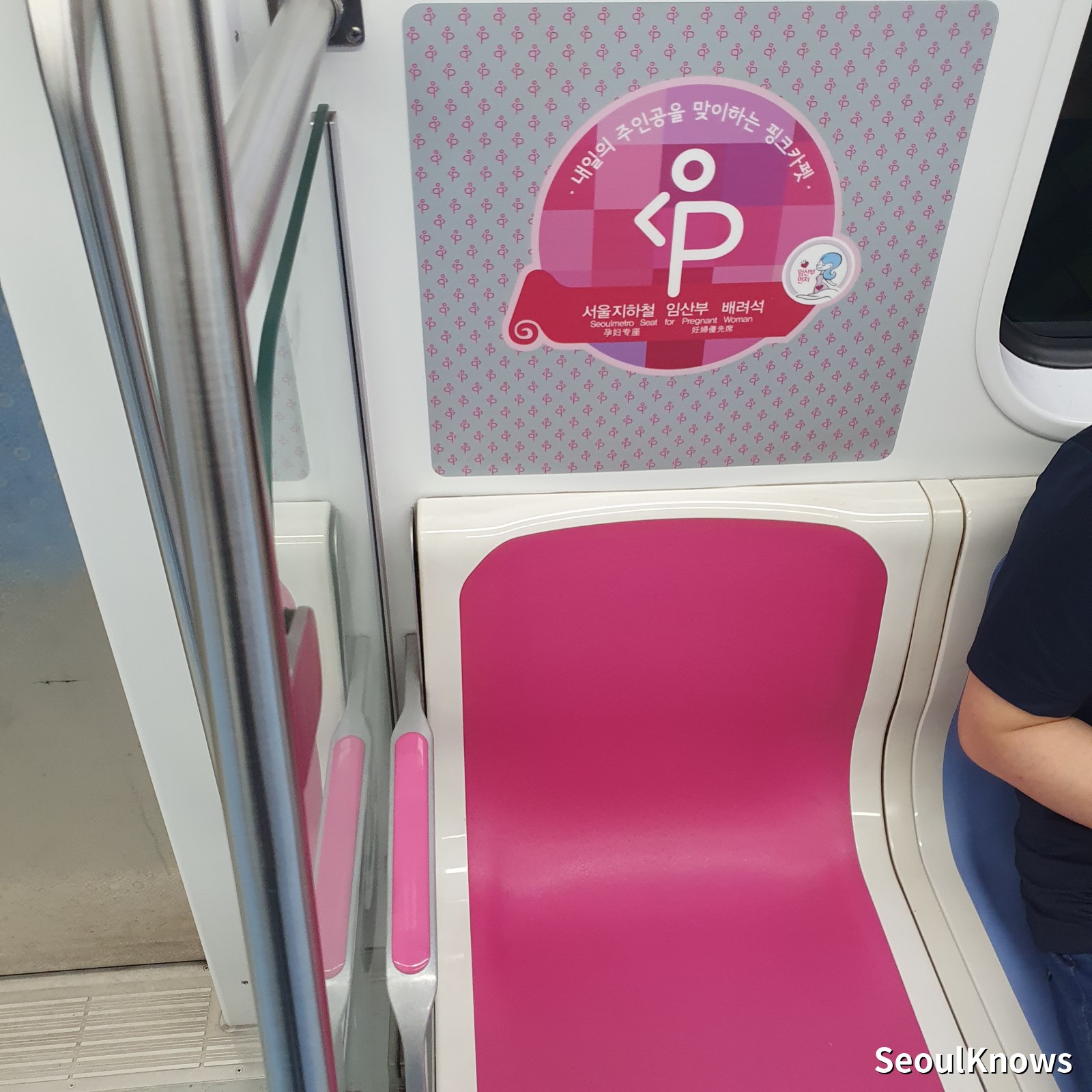
Priority and courtesy seats
The pink seats are reserved for pregnant passengers, and the seats at each end of the car are priority seats for the elderly, disabled, and passengers with small children. Please leave these free even if the car is crowded. Other etiquette: keep phone calls quiet, let people off before you board, and avoid eating strong-smelling food.
After your trip: get your ₩500 deposit back
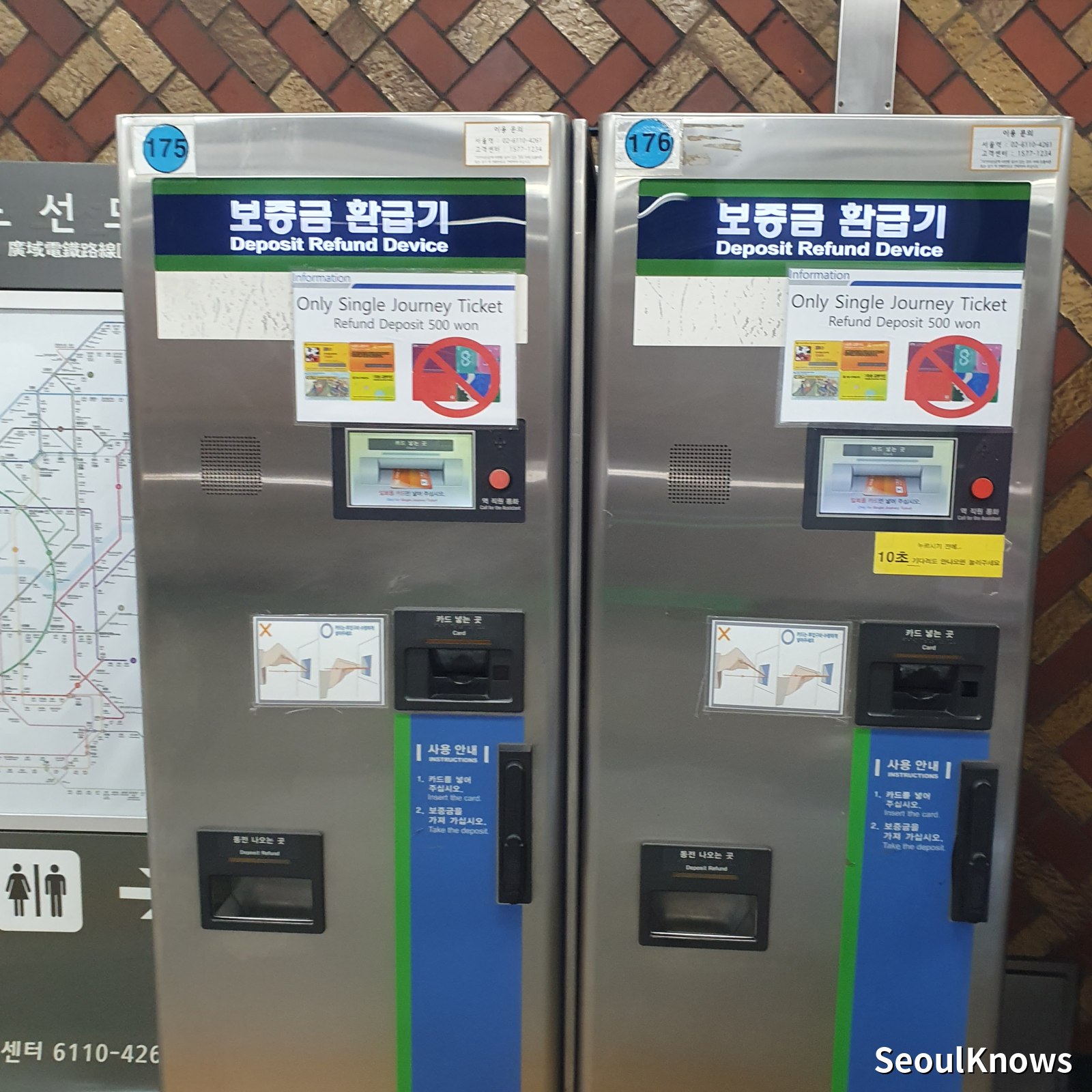
This is the step tourists forget. After you tap out and exit, look for a machine labeled “Deposit Refund Device” (usually right by the exit gates). Insert your yellow single-journey card and it returns your ₩500 deposit in coins. If you used a rechargeable card, there’s nothing to refund.
How fares work
Seoul uses distance-based pricing. The base fare covers the first 10 km; after that a small amount is added for each additional 5 km, so a long cross-city trip costs a little more than a short hop. With a transit card, transfers between subway lines and buses are free within 30 minutes, which makes cards much better value than single-journey tickets if you change lines. A useful 2026 update: on some lines you can re-enter the same station within 15 minutes without paying the base fare again (handy if you exit by mistake).
Quick tips for visitors
- Download Naver Map or KakaoMap for accurate subway routing (Google Maps transit is limited in Korea).
- A T-money or WOWPASS card saves money and time if you’ll ride more than a couple of times.
- Keep your single-journey card until after you refund the deposit.
- Stand on the right on escalators; let passengers exit before boarding.
- Rush hours (roughly 07:30-09:00 and 18:00-19:30) are very crowded, avoid if you have luggage.
Frequently asked questions
How much is a single Seoul subway ride?
The adult base fare is about ₩1,550 with a transit card and ₩1,650 for a single-journey ticket, plus a refundable ₩500 deposit on single-journey tickets. Longer trips cost a little more.
How do I get the ₩500 back?
After you exit, insert your yellow single-journey card into a “Deposit Refund Device” near the gates and it returns the ₩500 in coins.
Can I use a foreign credit card?
You can pay for single-journey tickets with cash or card at the machines, but Climate Card recharges accept Korean-issued cards only. A rechargeable T-money or WOWPASS card avoids this issue.
Is the Seoul subway in English?
Yes. Machines, signs, maps, and train announcements are all available in English, and stations have both names and numbers.
What are the subway operating hours?
Roughly 05:30 to around midnight, depending on the line and direction. Check the last-train times if you’re out late.
Fares and rules are current as of 2026 and may change; confirm current prices at the station. Photos taken at a Seoul Metro station.
Sources & last checked
Fares, discounts and transfer rules verified in August 2026 against the Seoul Metropolitan Government’s public transport fare guide. The base fare rose to ₩1,550 on 28 June 2025. Fares change every few years and single-journey machines are updated first — treat the numbers here as a guide and check the screen before you pay.
Keep reading
- Seoul Station guide — Lockers, food and KTX
- Suseo Station SRT guide — Booking high-speed rail in English
- Do you need an eSIM in Korea? — Sort data before you tap in