You got a Korean wedding invitation. The money envelope is the part that trips everyone up, here’s exactly what to bring, what to wear, and what actually happens on the day.
Three Types of Korean Weddings
Korean weddings vary quite a bit depending on the venue. Check your invitation to find out which type you’re attending, the experience is noticeably different depending on the setting.
① Standard Wedding Hall (웨딩홀)
The most common type. The ceremony takes place in a dedicated wedding hall and wraps up within about an hour. Guests then move to a large, separate dining area for a buffet-style meal. This space is enormous, you’ll be sharing it with hundreds of guests, sometimes from multiple weddings happening in the same venue on the same day. It’s lively, efficient, and distinctly Korean.
② Hotel Wedding
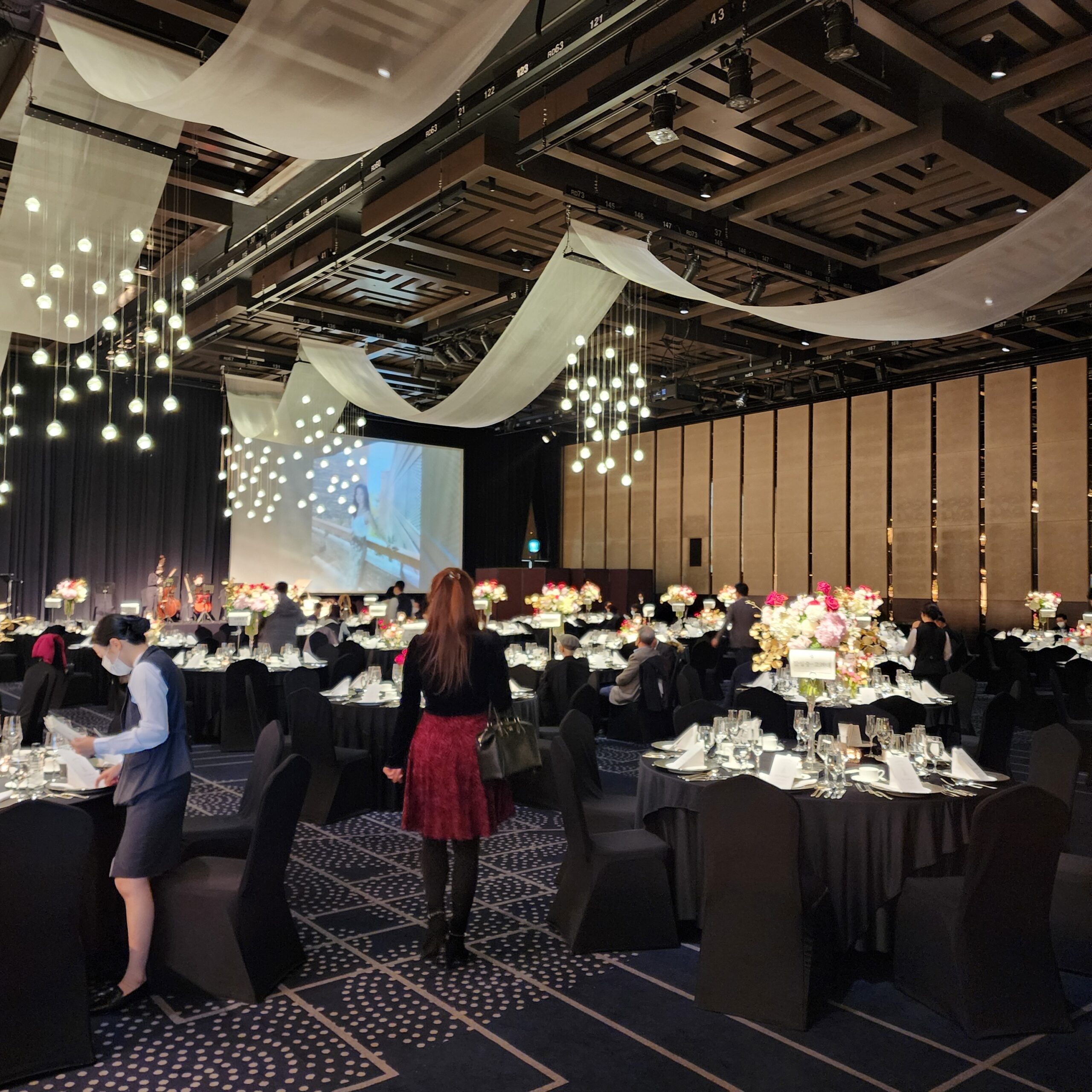
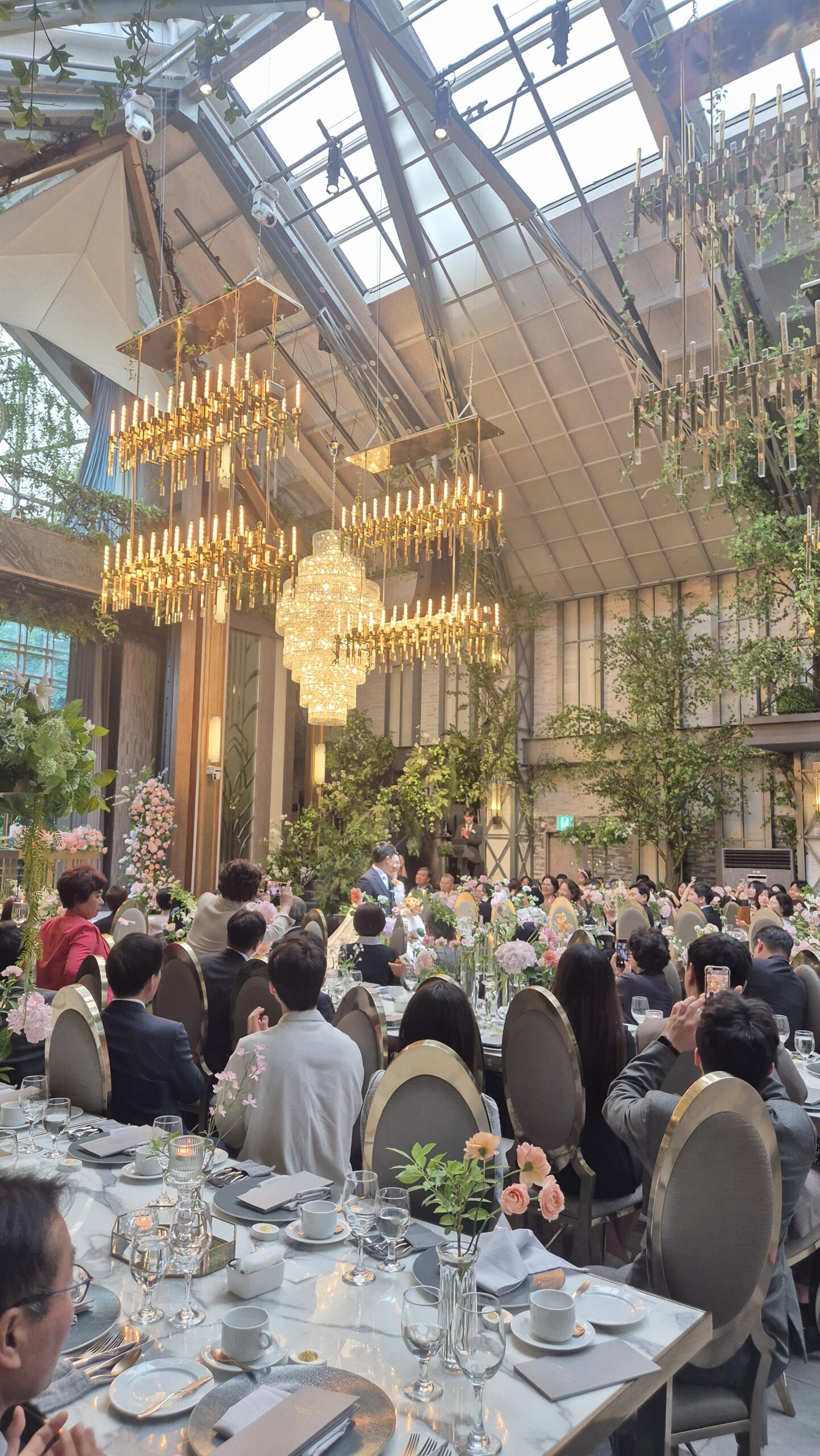
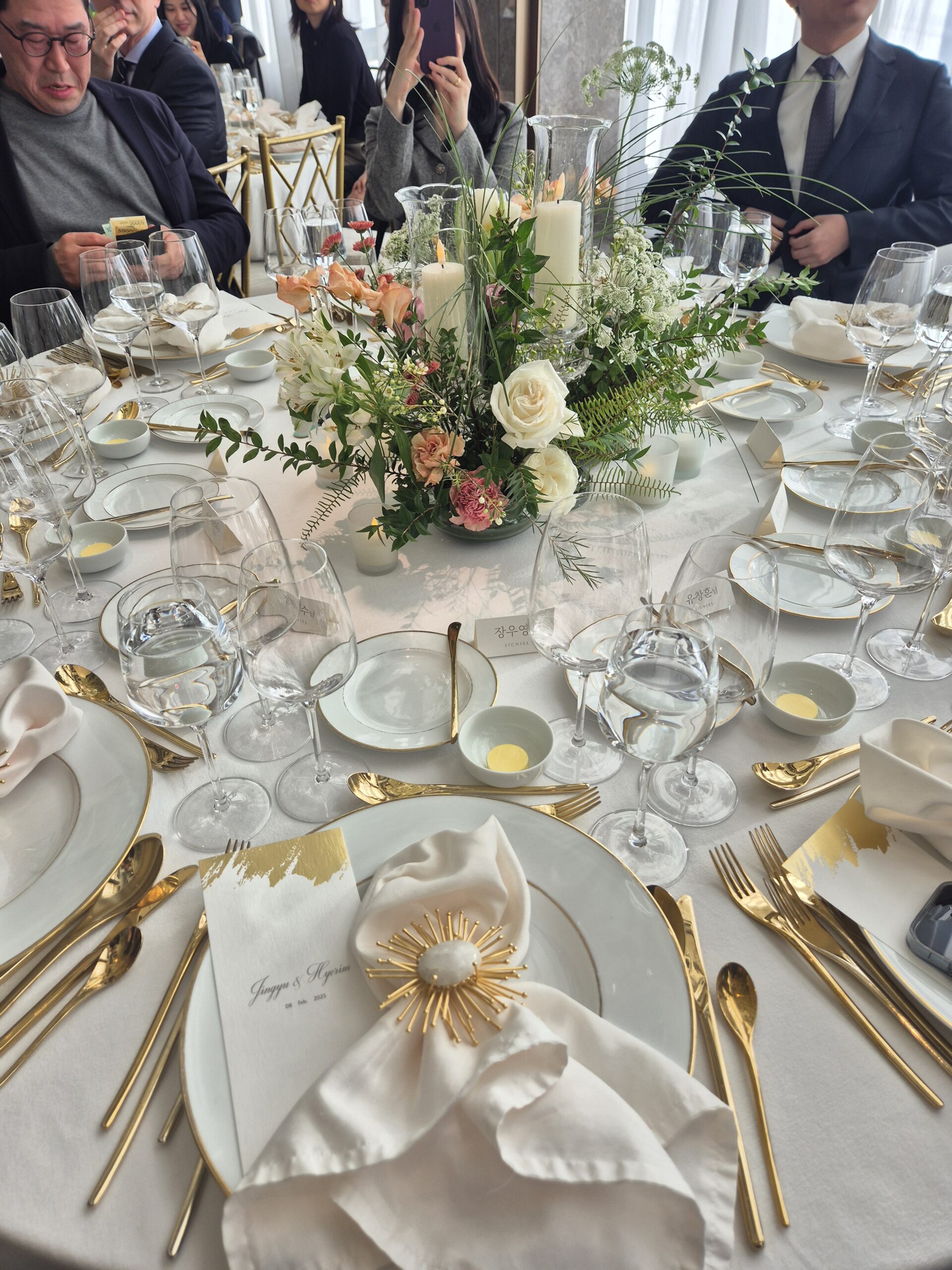
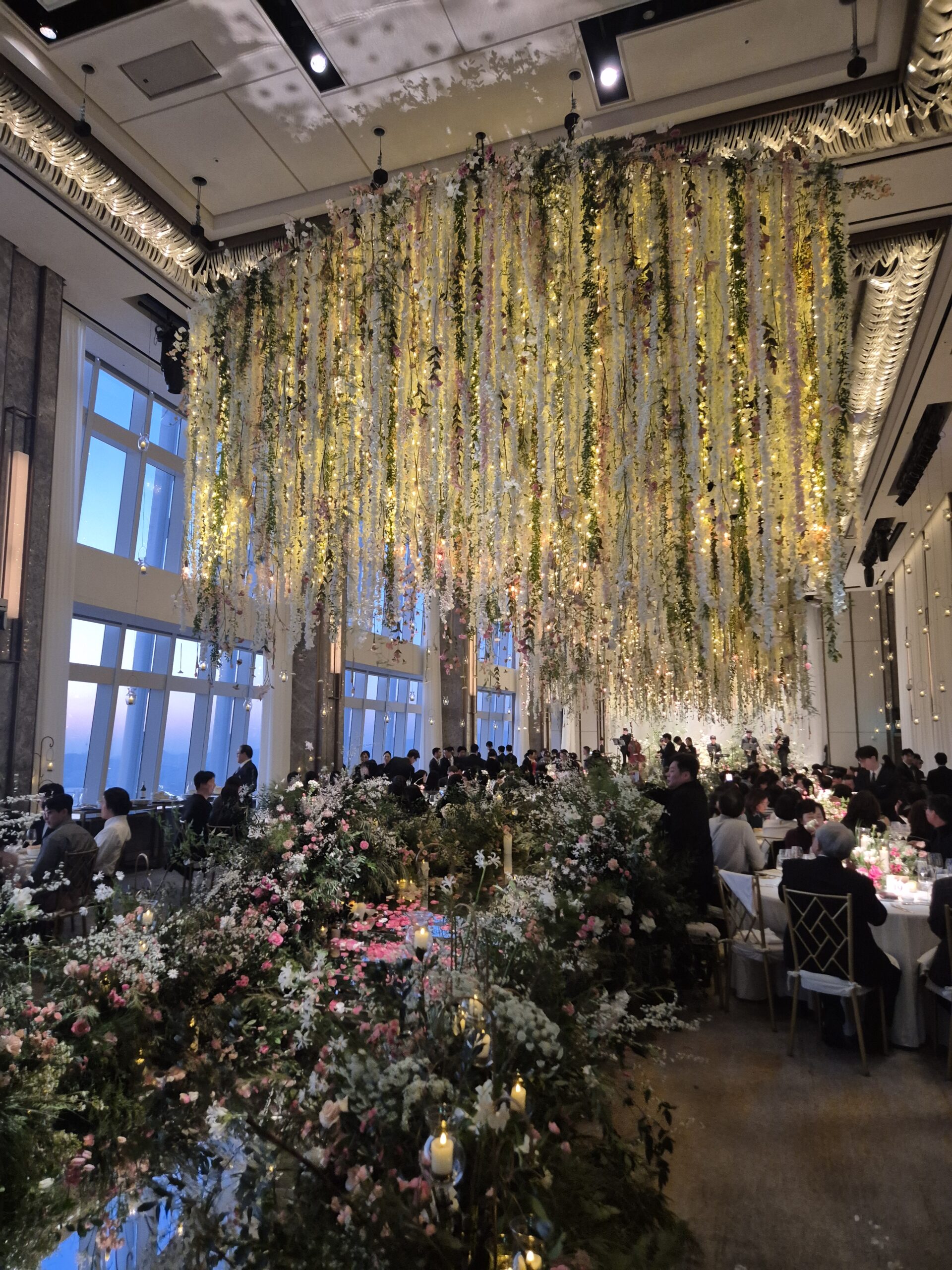
The most formal type. The ceremony is held in a hotel ballroom, and guests remain in the same space afterward for a seated, semi-course or course-style meal that’s served to the table. At hotel weddings, each seat typically has a name tag (네임택), so look for your name to find your assigned seat before the ceremony or reception begins. Unlike the open-seating buffet at a standard wedding hall, seating here is arranged in advance.
③ Outdoor Wedding
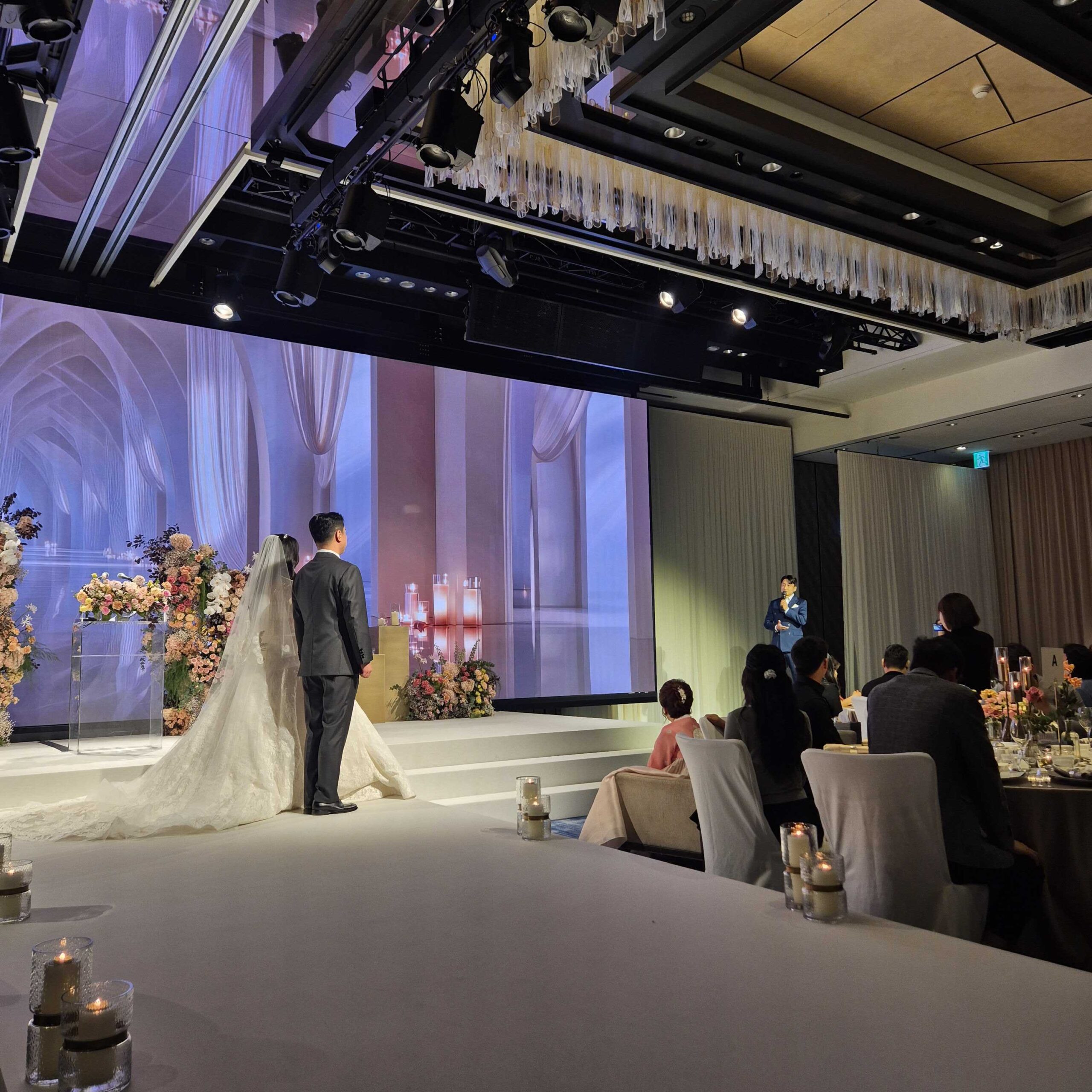
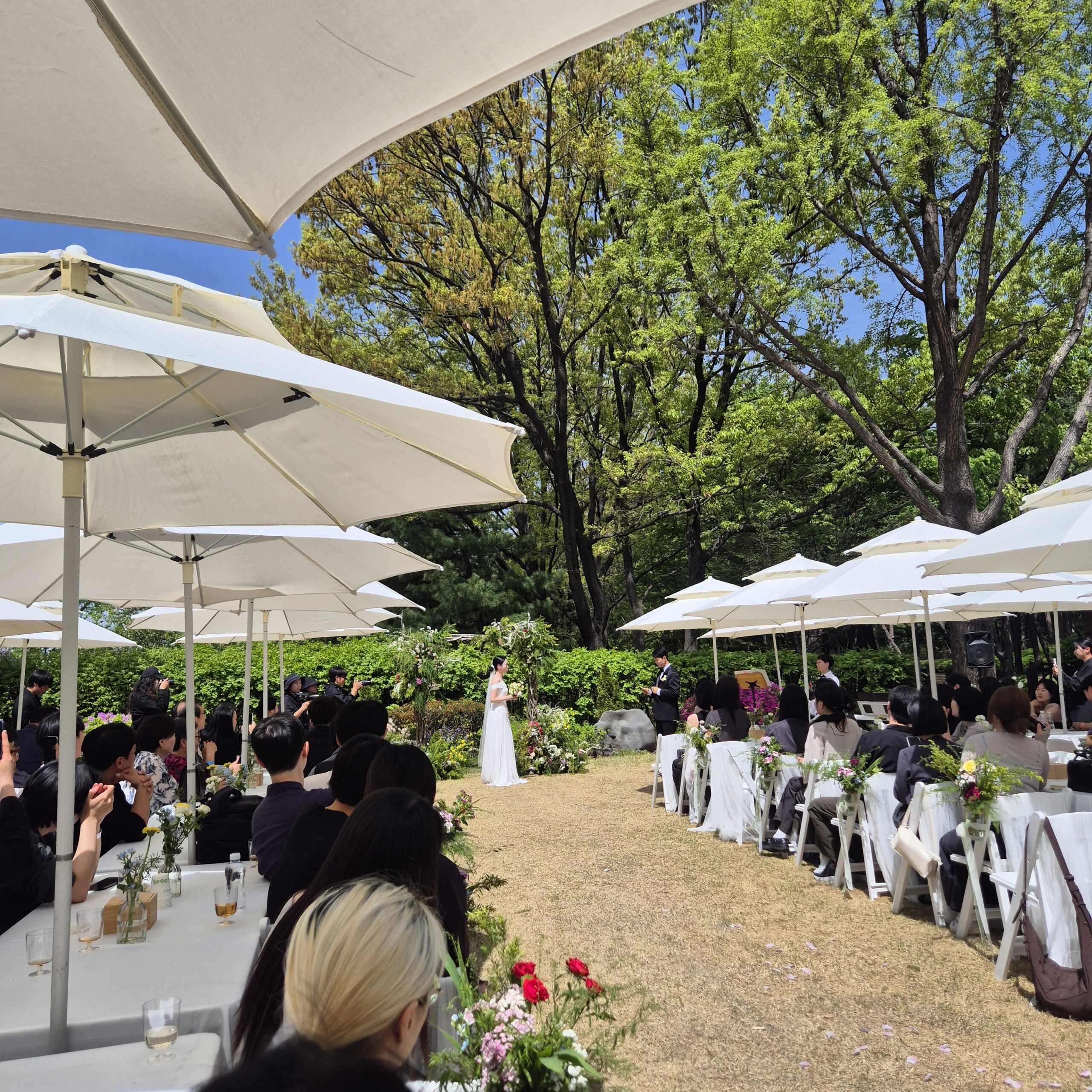
Held at gardens, parks, or resorts. Meals are typically buffet-style. This is a growing trend in Korea and tends to have a slightly more relaxed atmosphere compared to indoor venues.
What Are “1부” and “2부”?
Some weddings are divided into two parts: 1부 (the ceremony) and 2부 (the reception). The ceremony is the formal, structured part. The reception that follows is more relaxed, it’s where the couple mingles with guests, food is served, and the atmosphere becomes less formal. If both parts are listed on your invitation, you’re expected to attend both.
The Ceremony Order: Step by Step
You don’t need to memorise the order, just follow what everyone else does. This is what’s happening on stage:
- 신랑 입장, Groom’s Entrance
The groom enters first and takes his position at the altar. - 신부 입장, Bride’s Entrance
The bride enters, usually escorted by her father, guests often stand as she walks down the aisle. - 혼인서약서 낭독, Reading of Vows
The bride and groom each read their wedding vows aloud. - 성혼선언문 낭독, Declaration of Marriage
The officiant formally declares the couple married. - 축가, Congratulatory Song
A close friend or performer sings for the couple, usually one of the more entertaining moments. - 신랑신부 행진, Recessional
The couple walks out together down the aisle. The ceremony is done.
chugui-geum (축의금): How Much Should You Give?
In Korea, guests give cash (축의금, chugui-geum) instead of physical gifts. You put it in an envelope and hand it to the reception desk at the entrance before the ceremony. Everyone does it, staff at the door are specifically there to receive envelopes.
| Situation | Amount |
|---|---|
| Not attending (colleague/acquaintance) | ₩50,000 |
| Attending the wedding | ₩100,000 minimum |
| Close friend or family member | ₩200,000+ |
A useful reference point: a single meal at a standard wedding hall buffet costs ₩50,000-₩100,000 per person these days. If you’re attending, giving at least ₩100,000 is the baseline of good etiquette, you’re effectively covering your own seat.
At a standard wedding hall: after handing in your envelope at the reception desk, you’ll receive meal tickets equal to the number of people in your party. Let the desk know how many guests you came with.
- Odd amounts are customary (₩50,000, ₩100,000, ₩200,000). Even numbers are historically associated with separation in Korean culture.
- Bring crisp, new bills, it’s a sign of care and respect.
- Sign the guestbook and hand over your envelope at the reception desk. Writing your name in English is completely fine.
- Prepare your cash before arriving. There isn’t always an ATM nearby.
Dress Code
Regardless of the venue type, business casual or formal attire is the standard for all Korean weddings. There’s no need to dress differently based on whether it’s a hotel or an outdoor venue.
- Men: a suit or dress slacks with a blazer. A tie is a polished touch but not strictly required.
- Women: a smart dress, blouse and skirt, or pantsuit. Pastels, navy, and burgundy tones work well.
Colors to avoid:
- White, the colour of funerals in Korea. Skip it entirely.
- All-black head to toe, reads the same way. A single black piece is fine; it’s the full combination that’s the problem.
- Smart casual in any other colour, you’re good.
Pyebaek (폐백): A Traditional Ritual Worth Knowing About
After the ceremony, the couple may hold a short private ritual called pyebaek (폐백). Wearing hanbok (traditional Korean clothing), the newlyweds bow deeply to both sets of parents and present them with food and symbolic gifts. It’s a meaningful family moment, and worth knowing exists, though it’s increasingly common for modern couples to skip it entirely.
Practical Tips for First-Timers
- Arrive at least 10 minutes early. Before the ceremony starts, the groom and his family are stationed at the 혼주석 (family greeting area) near the entrance to personally welcome arriving guests. This is your window to greet the family properly, don’t miss it by arriving late.
- Prepare cash in advance. Don’t rely on finding an ATM at or near the venue. Withdraw before you go.
- No separate gift needed. The cash envelope is your gift. Bringing a physical present on top of that would be unusual and unnecessary.
- At hotel weddings, find your name tag first. Seating is typically assigned, with name tags placed at each seat. Locate your table before things get busy.
- No need to rush the buffet. At standard wedding halls and outdoor venues, the buffet space is large and well-stocked, take your time. While you eat, the bride and groom will make their way around to personally greet every table. At hotel weddings, this happens during the 2부 reception. Either way, you’ll get a moment to congratulate them in person.
- Take the flowers home. Korean wedding floral arrangements are expensive and elaborate, and couples typically have the flowers wrapped up and distributed to guests at the end of the reception. Don’t leave before checking whether flowers are being given out. It’s one of the best unexpected perks of attending a Korean wedding.
Frequently Asked Questions
Can I attend a Korean wedding without speaking Korean?
Absolutely. The ceremony is largely visual and easy to follow along. At the reception desk, simple gestures get the job done. Korean weddings are welcoming to foreign guests, especially at venues in central Seoul.
Do I need to RSVP?
Unlike Western weddings, formal RSVPs aren’t always required. However, it’s courteous to let the couple (or a mutual friend) know whether you’re attending, so they can account for the meal count.
What if I can’t attend?
It’s still polite to send ₩50,000 in cash as a gesture of congratulations, especially if you’re a colleague. You can hand it to a mutual friend going to the wedding, or deliver it to the couple directly beforehand.
How long should I stay?
Once you’ve had your meal and the couple has come around to greet your table, it’s perfectly acceptable to leave. Korean wedding receptions don’t have a formal end, guests naturally filter out after eating. There’s no expectation to stay until a specific moment.