
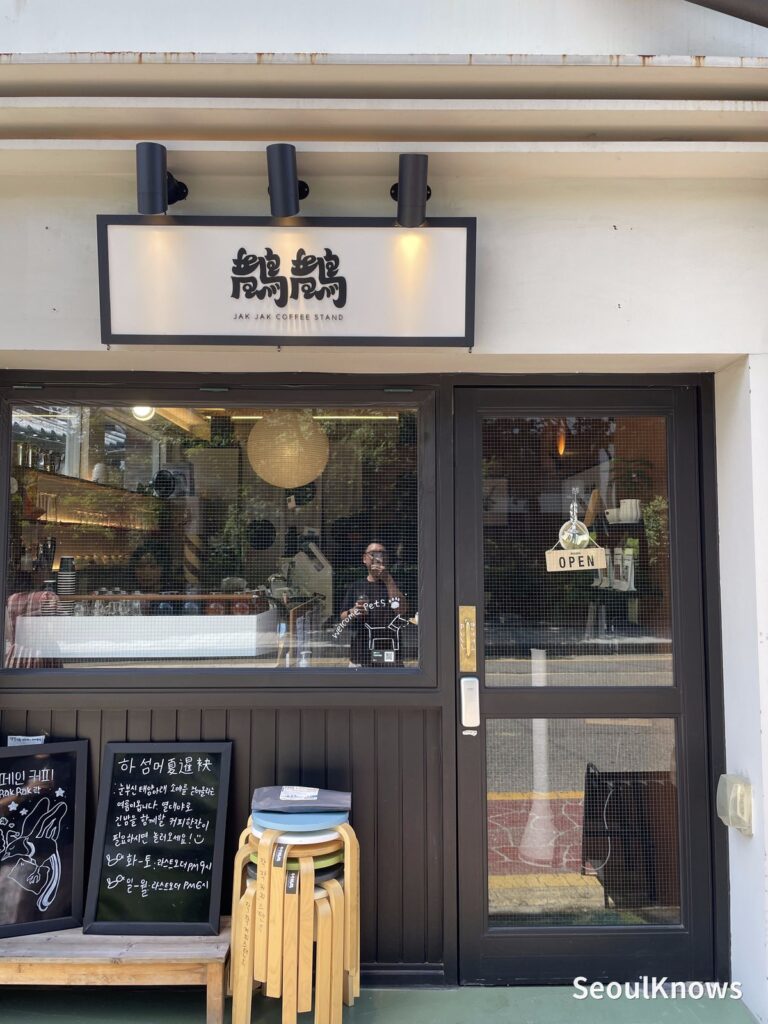
Gongdeok is where four lines meet, Line 5, Line 6, the Gyeongui-Jungang Line, and the AREX airport train from Incheon. Most people change trains here and move on. If you have twenty minutes, there is a reason to walk out of the station instead.
Jakjak Coffee Stand is a three-minute walk from Exit 1, right where the Gyeongui Line Forest Park begins. It opened earlier this year, it is small enough to miss, and the beans are roasted by the owner’s parents in Ulsan and sent up to Seoul.
How to get there
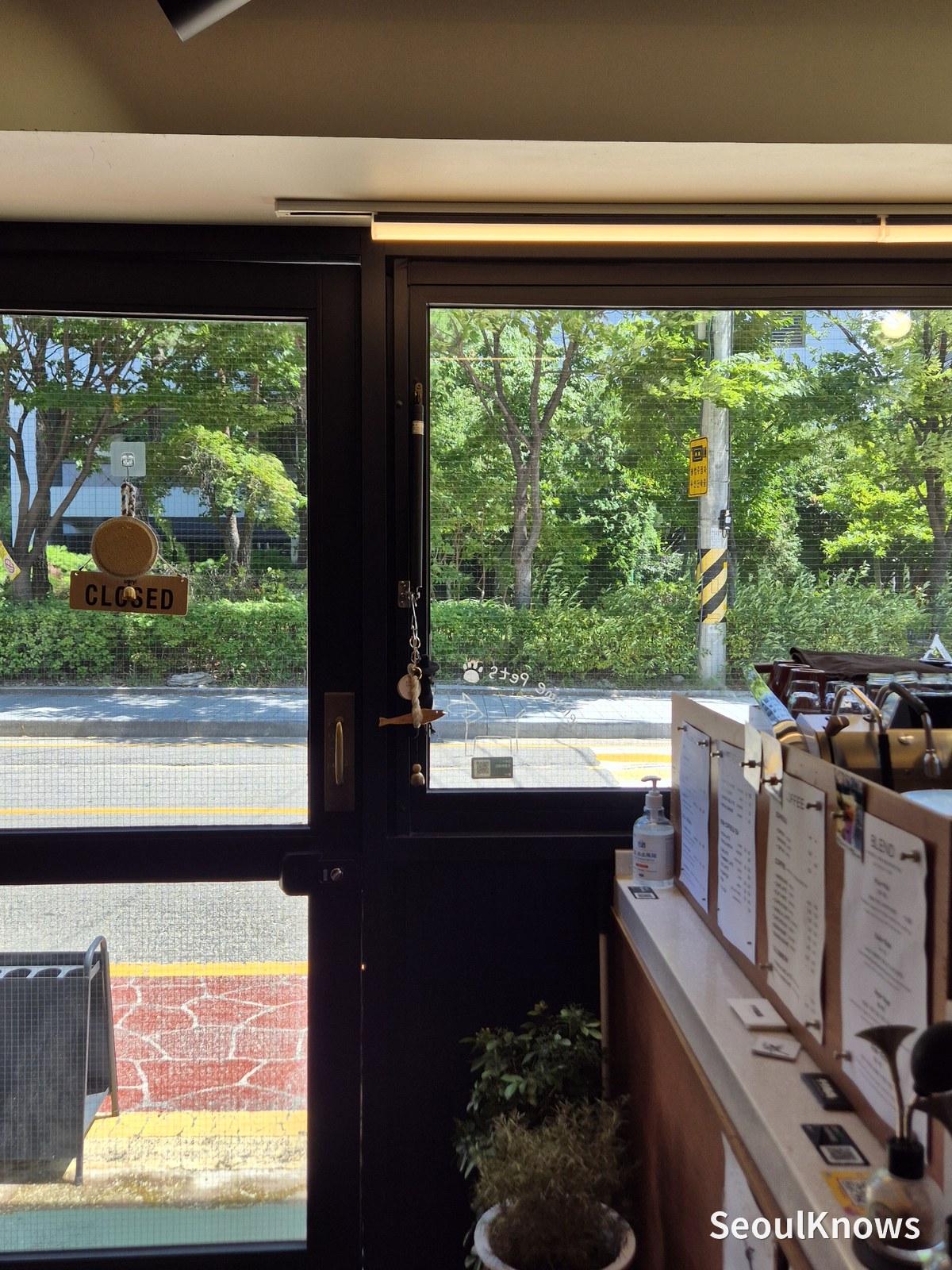
Gongdeok Station (공덕역), Exit 1, about a 3-minute walk. Head toward the Gyeongui Line Forest Park; the cafe is on the ground floor, across from Seoul Design High School.
Address: 2, Baekbeom-ro 26-gil, Mapo-gu, Seoul (서울 마포구 백범로26길 2 1층)
If you are coming straight from Incheon Airport, Gongdeok is a stop on the AREX all-stop train, you do not need to ride all the way to Seoul Station. There is no parking lot, so the subway is the way to go.
Why this one and not the chain next door
Three things set it apart.
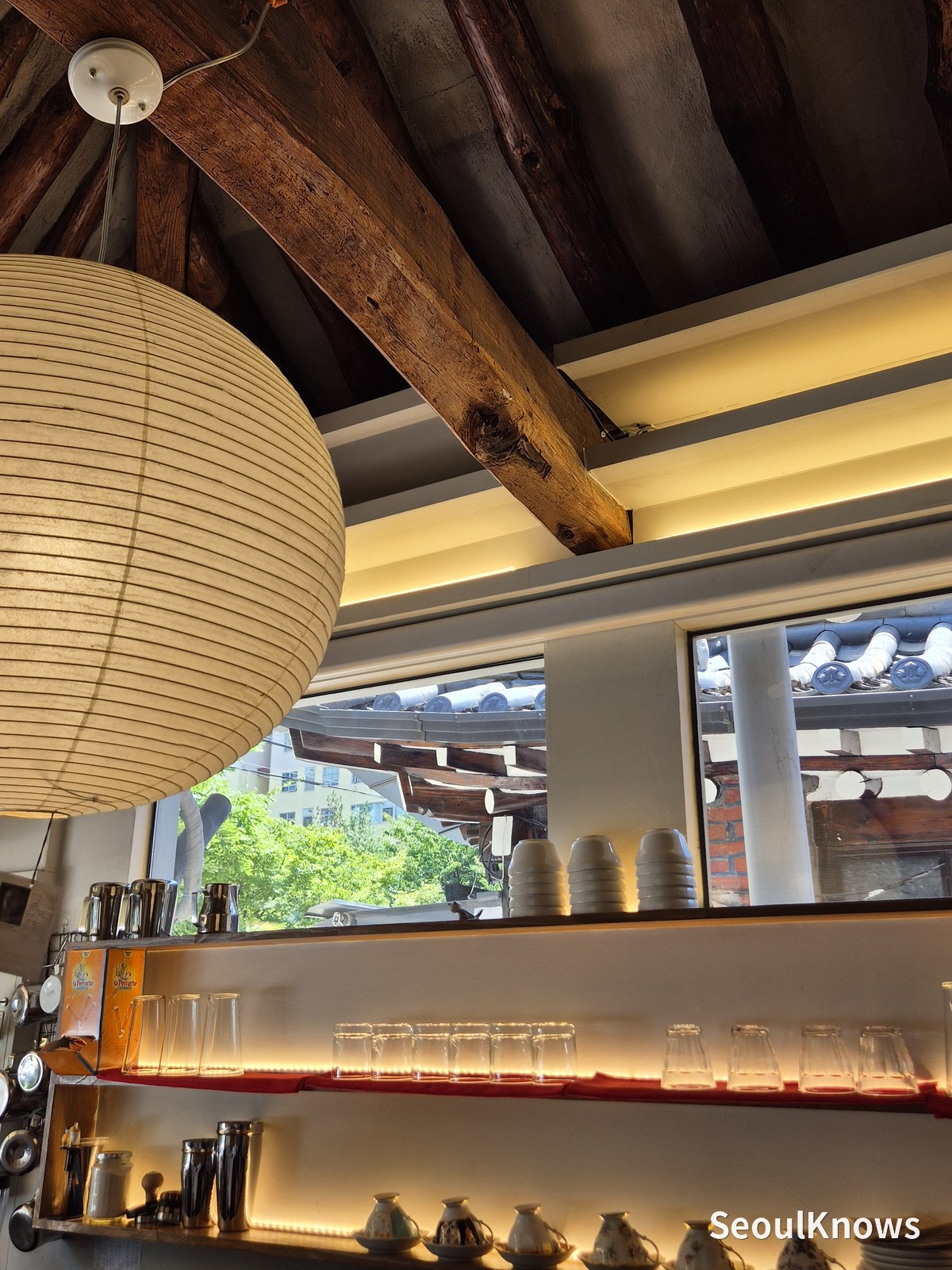
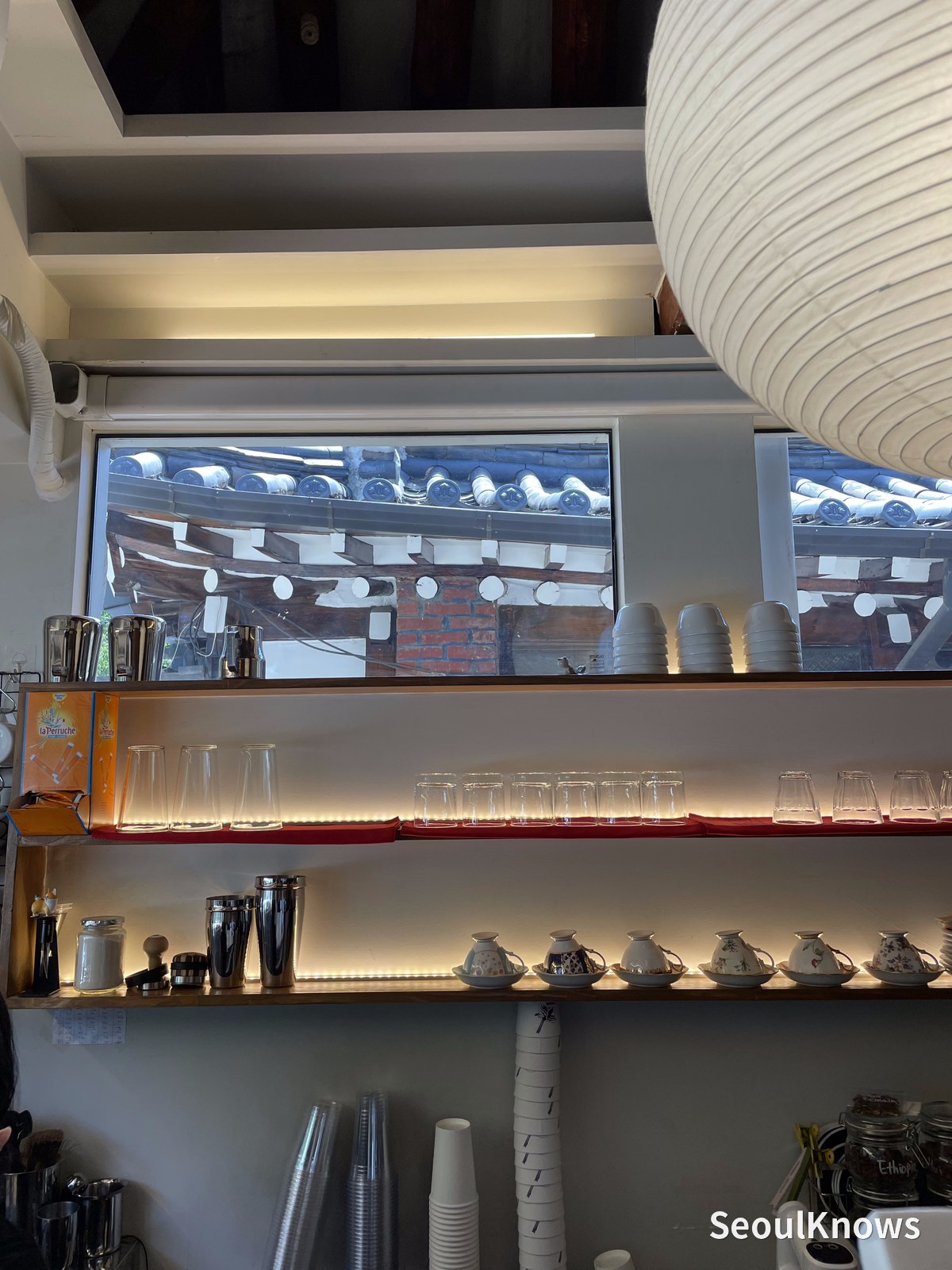
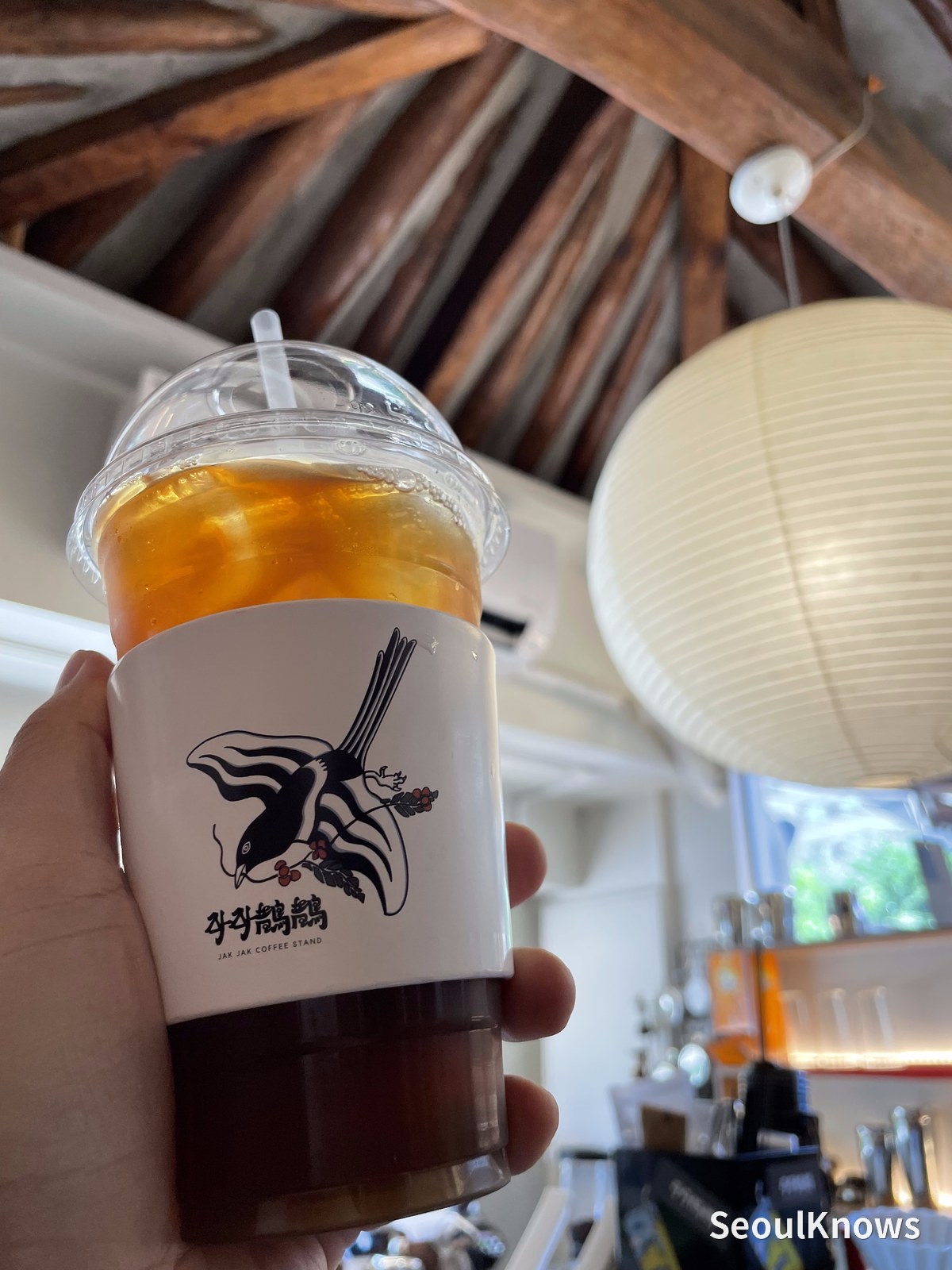
The room is a hanok. Exposed rafters, paper lanterns, timber walls, and a window that opens onto the park, with the tiled roof of the building opposite framed in it. It is a small space that does not feel small.
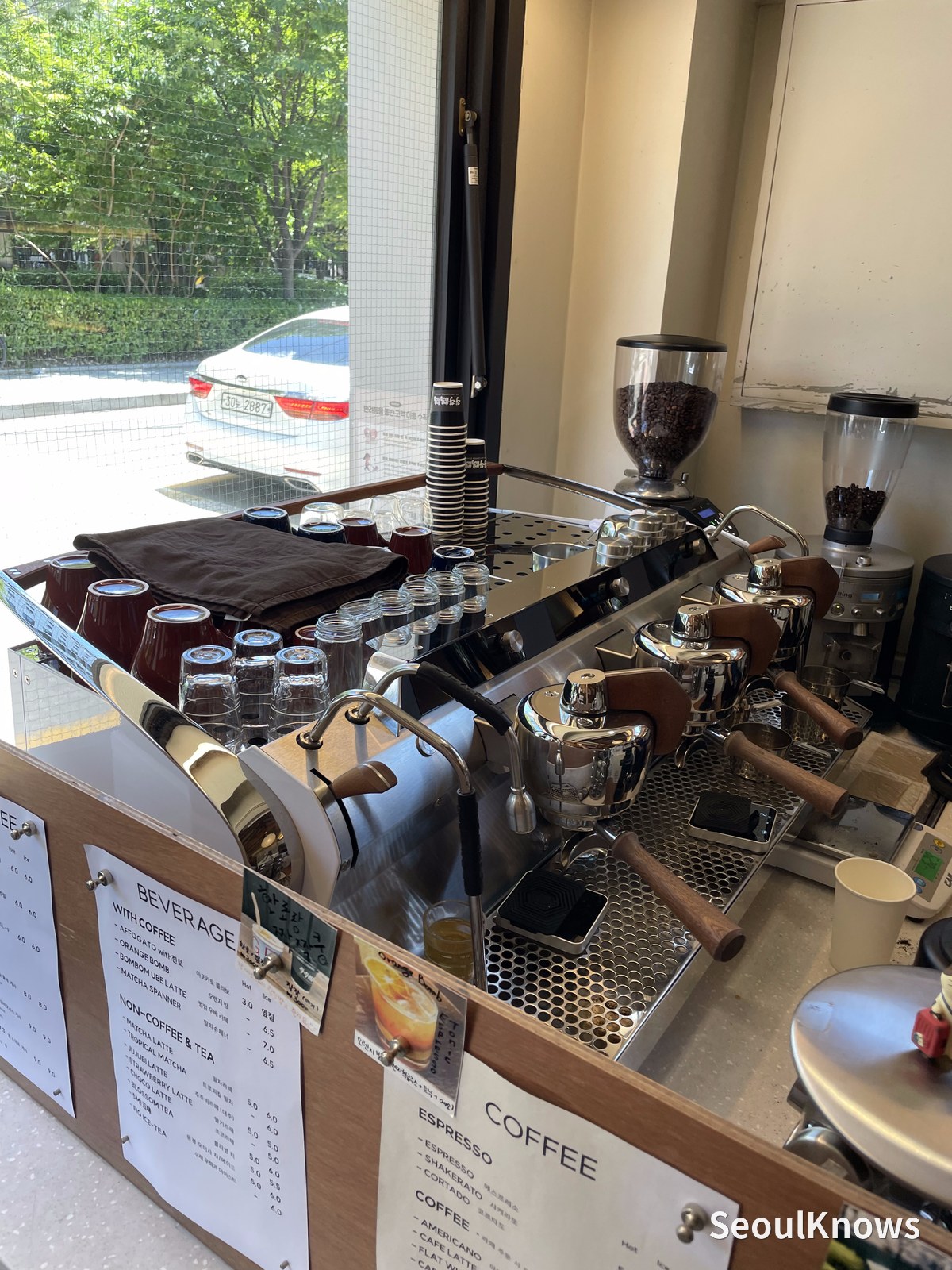
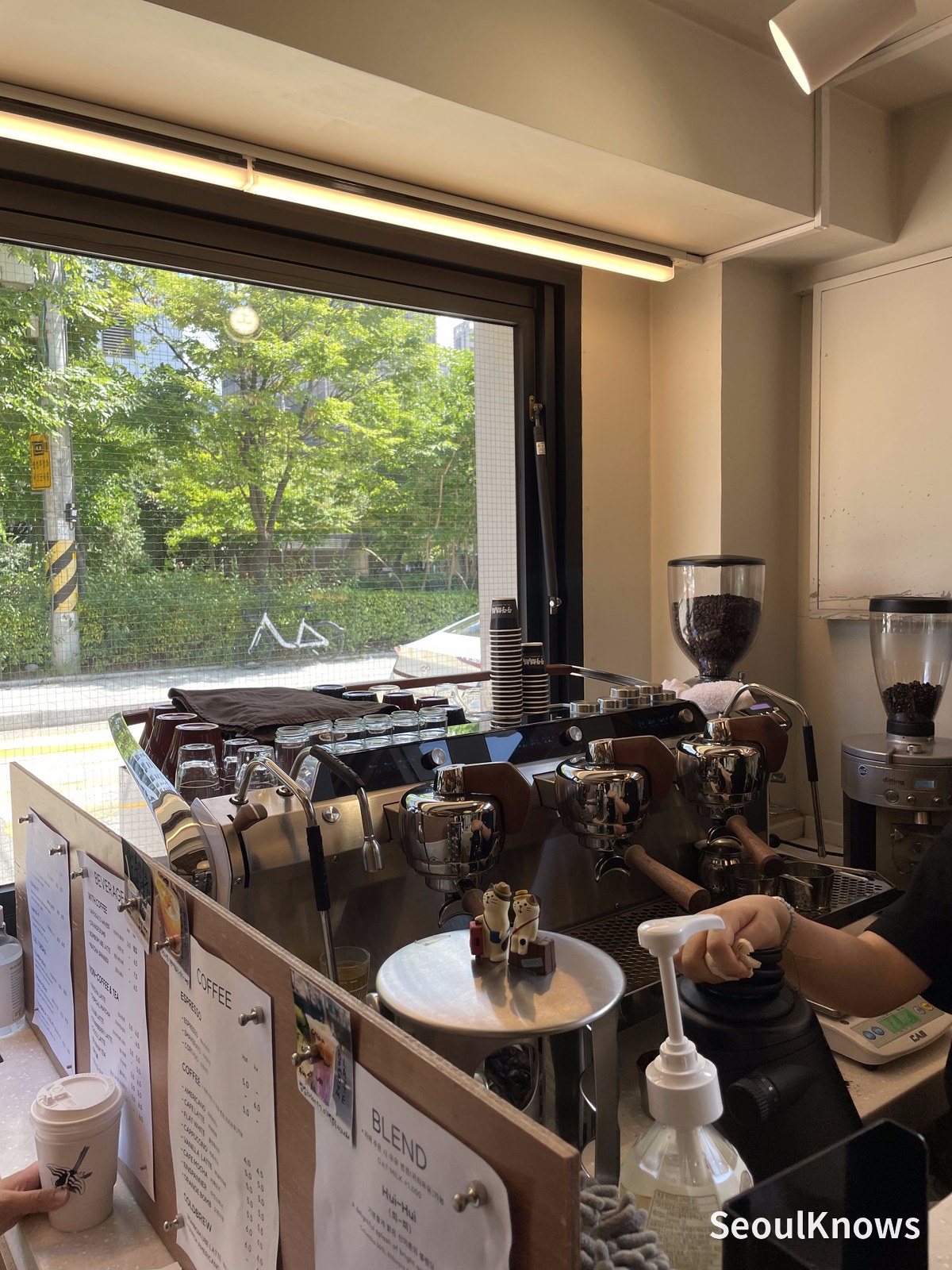
The beans are roasted in the family. The owner’s parents roast in Ulsan, about 300km south of Seoul, and send the coffee up. Roasting and brewing stay in one household, rare for a neighbourhood cafe, where buying wholesale beans is the norm. Inside, a three-group espresso machine sits behind the counter with a separate grinder for each blend.
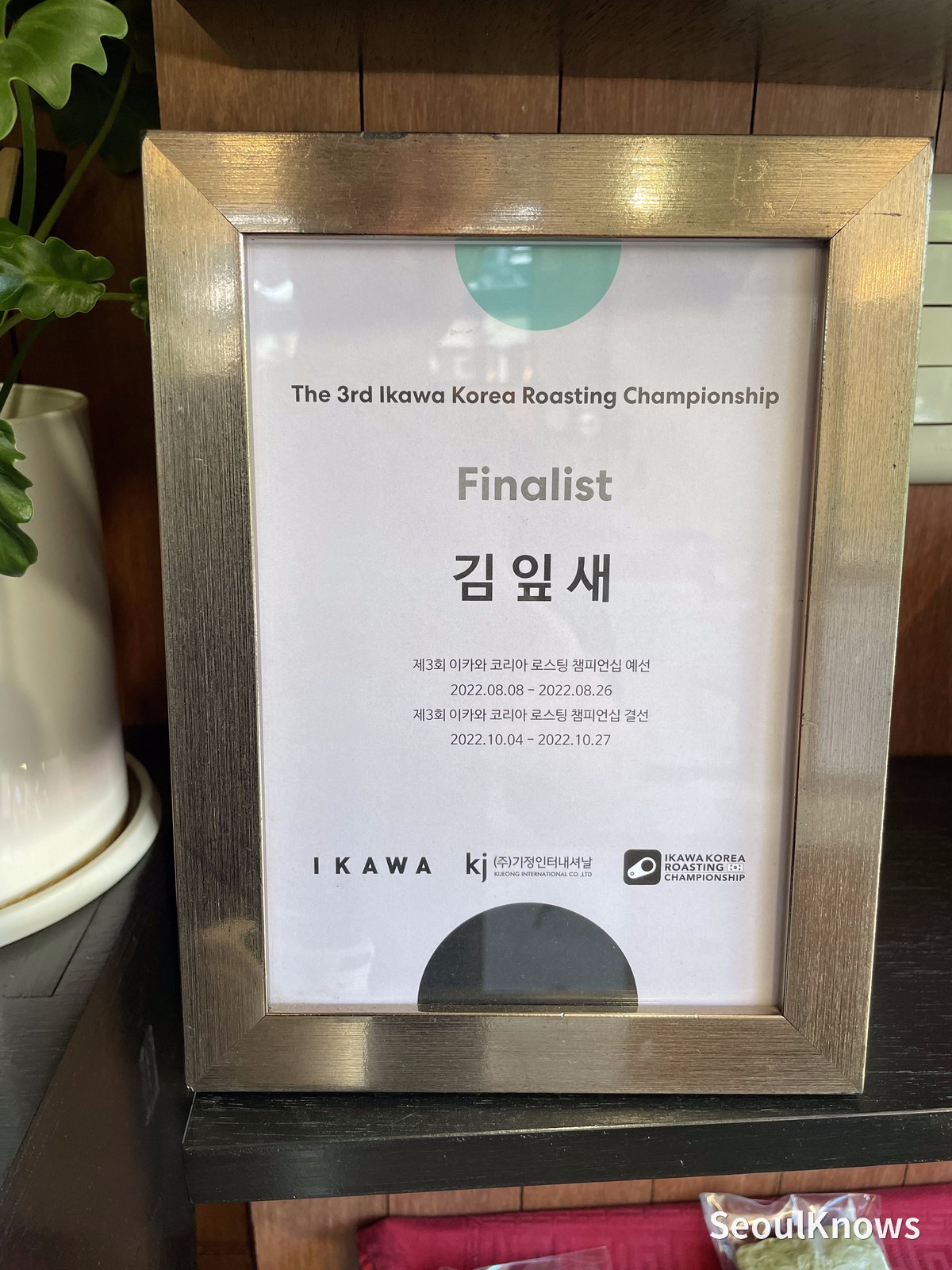
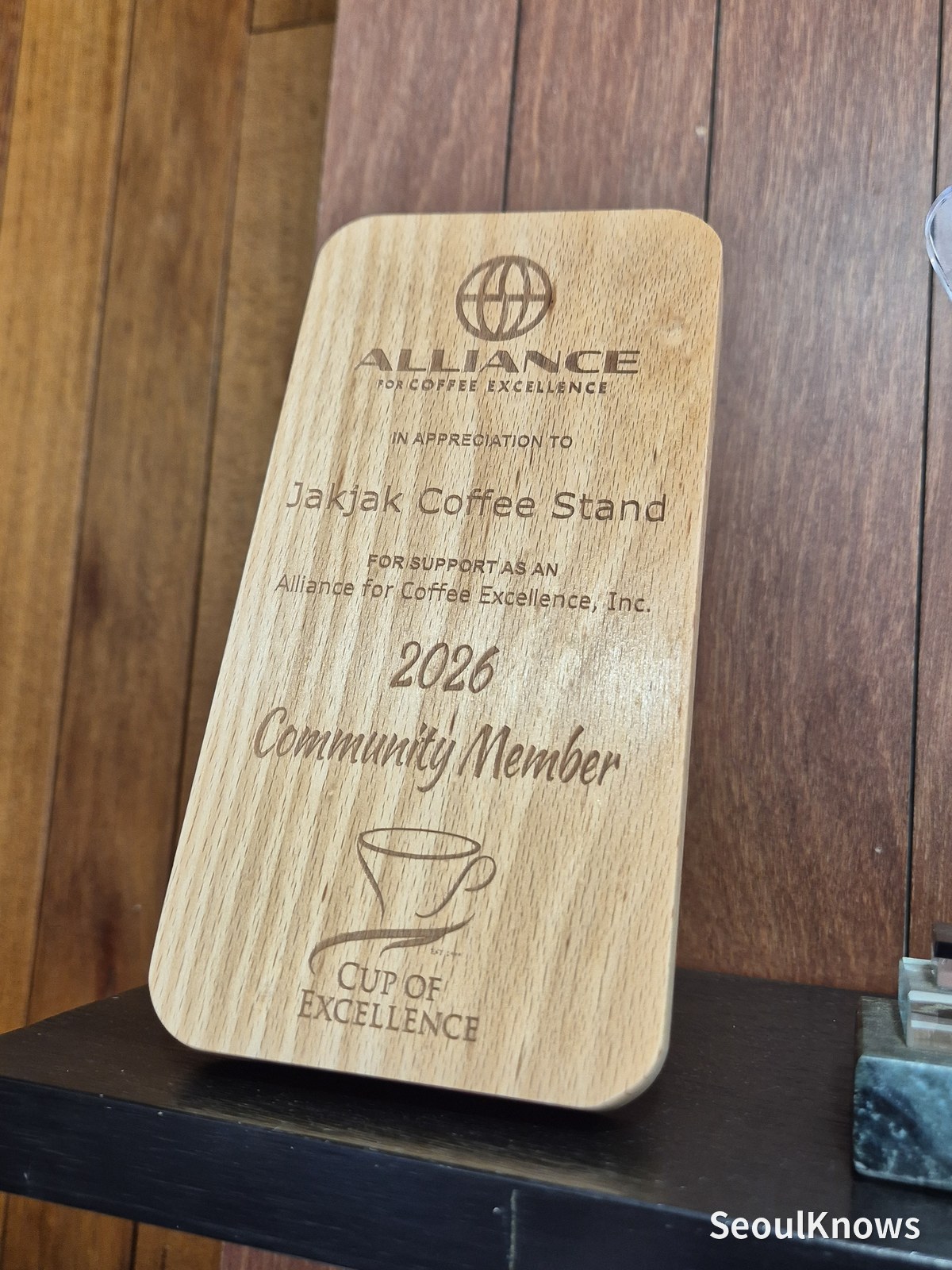
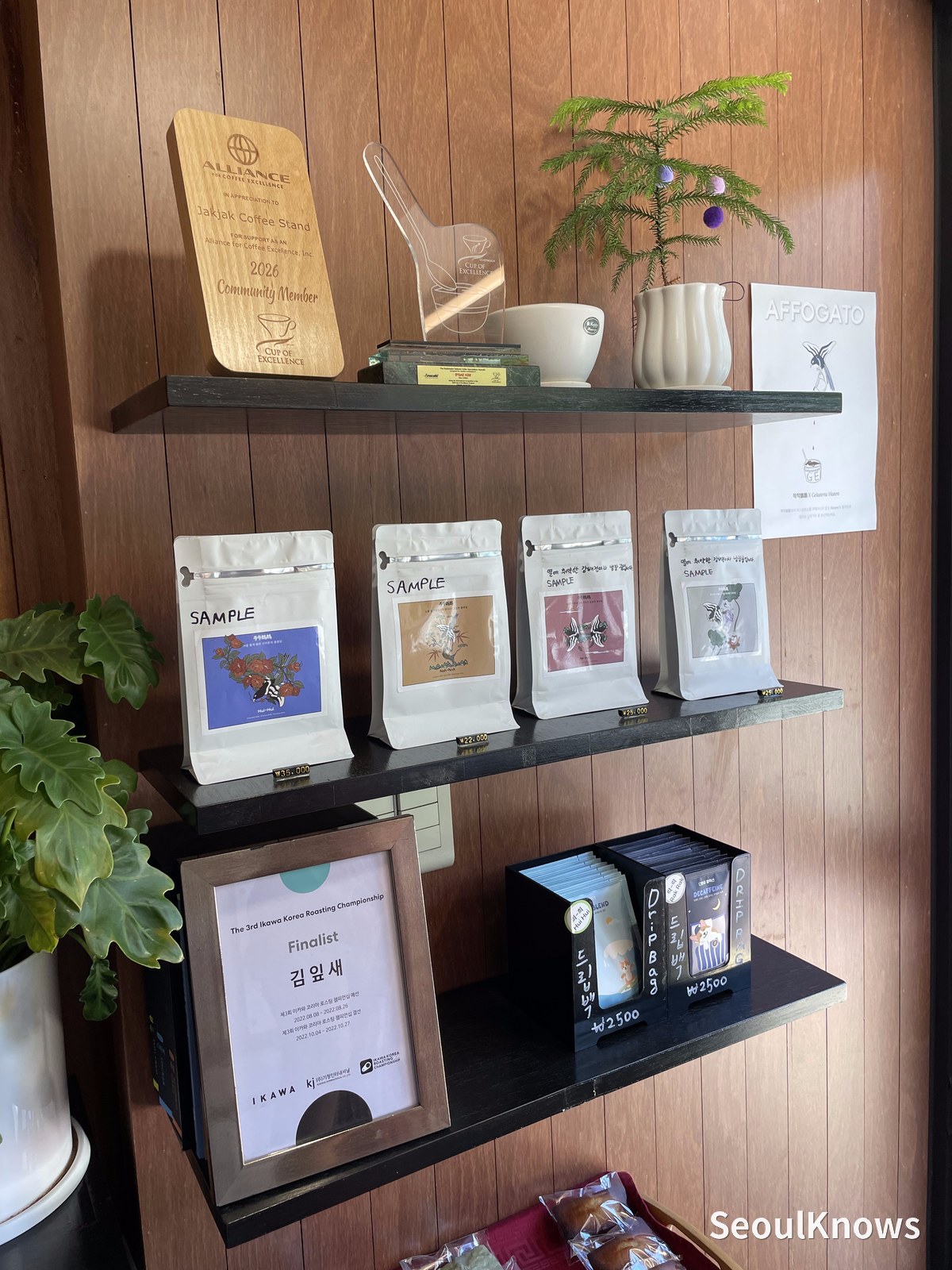
There is a record behind the counter. Two frames hang by the till: a finalist certificate from the 3rd Korea Roasting Championship, and an Alliance for Coffee Excellence 2026 Community Member plaque.
Smell the beans before you choose
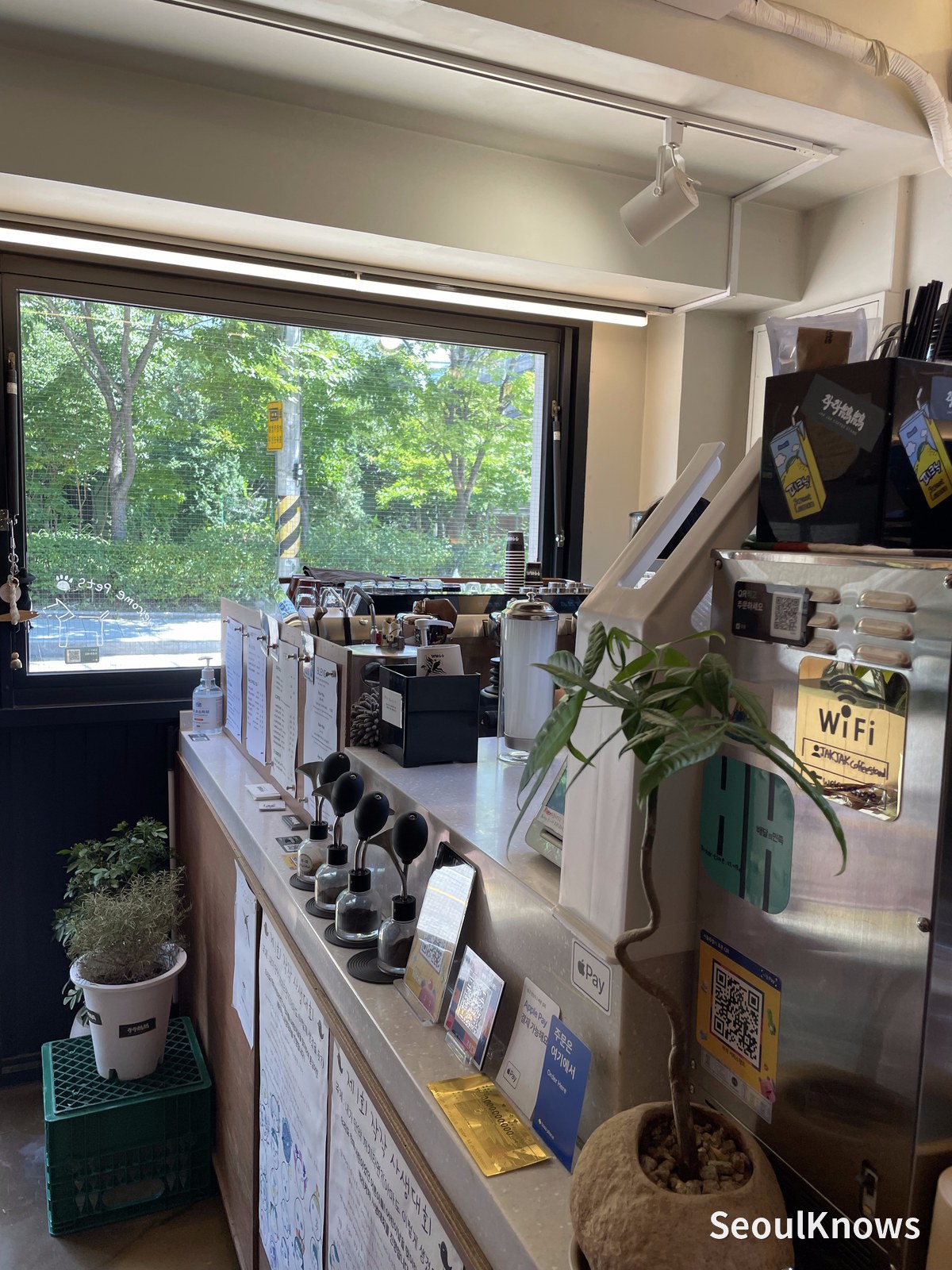
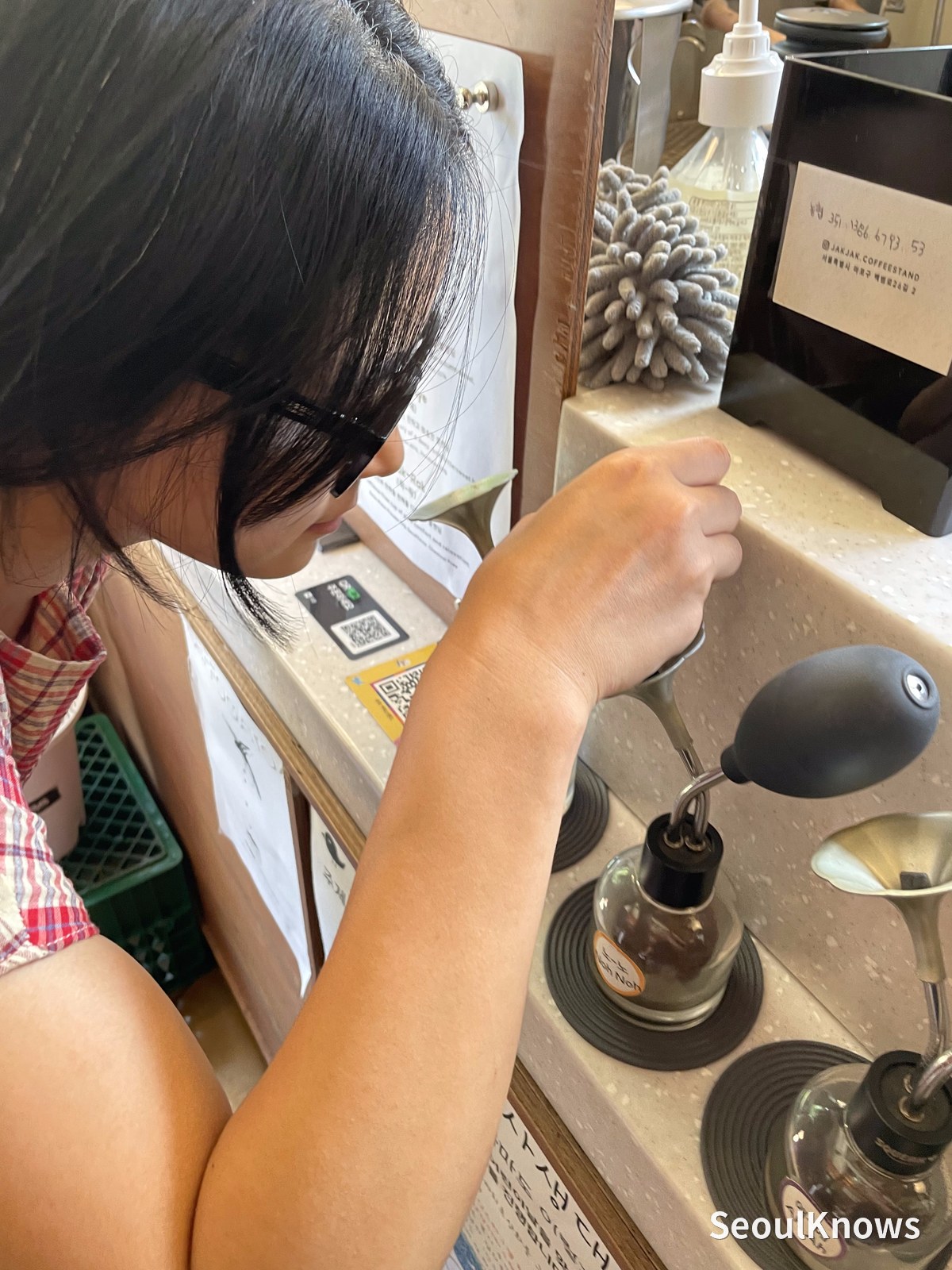
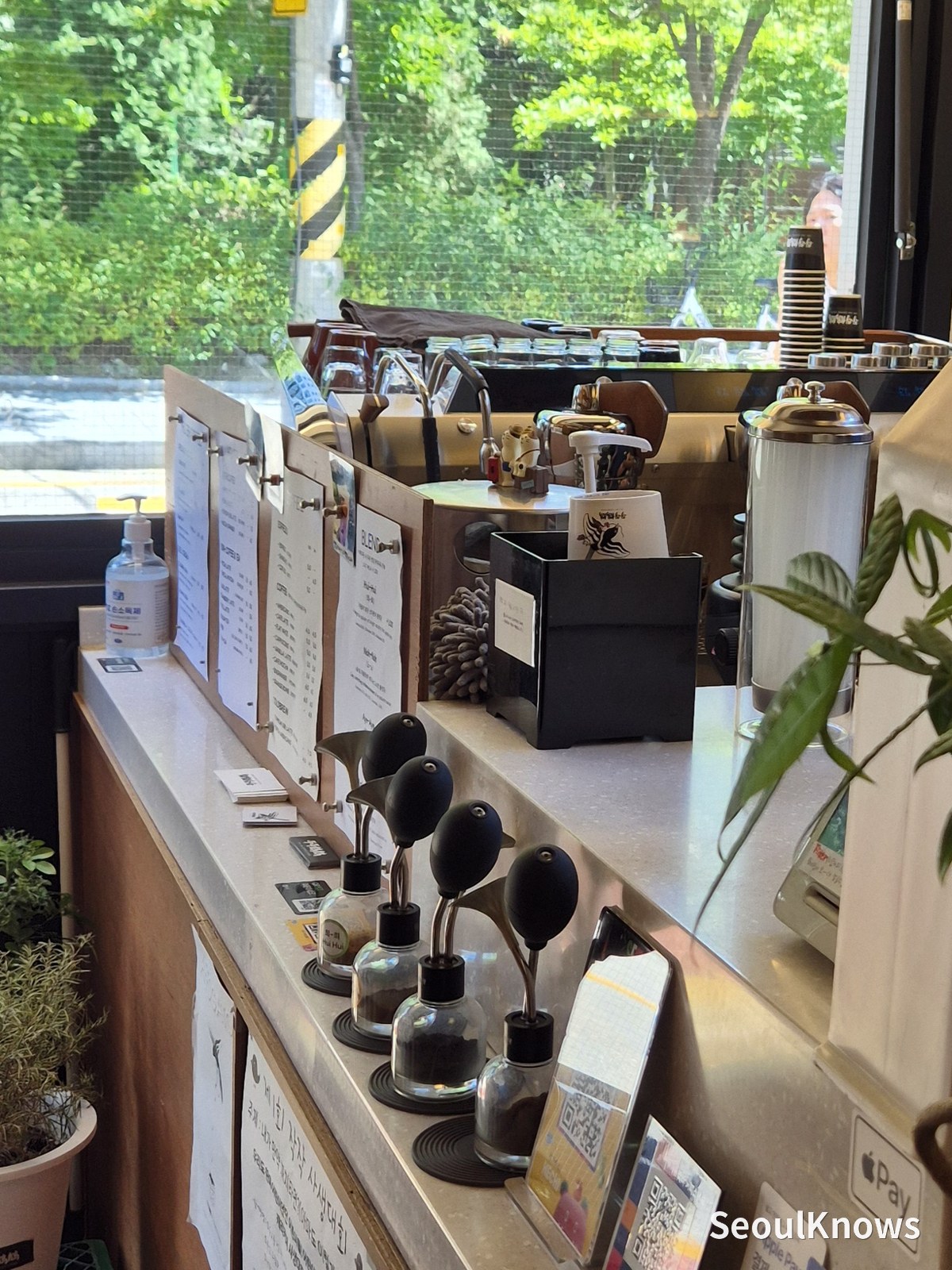
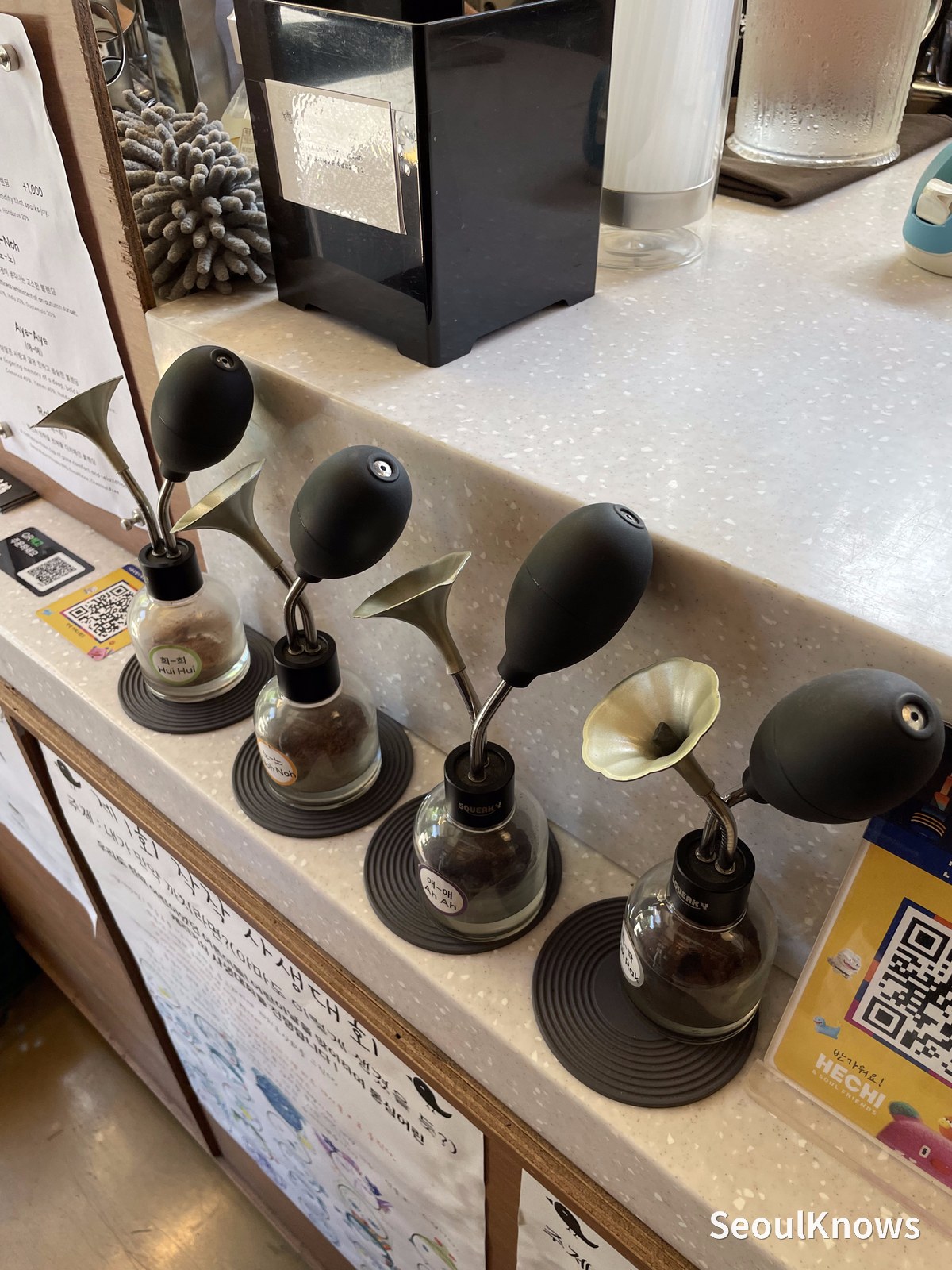
A row of glass jars runs along the counter. Each holds a different bean, with a rubber bulb on top, press it and the aroma comes up.
This solves the usual problem. A menu that says “Ethiopia G1, Bombe, wine natural” means very little unless you already know coffee. Press three bulbs and you will know which one you want: one smells like fruit, another like toasted nuts. Nobody has to translate anything.
Work along the row, then order. My mother, who does not drink much coffee, picked hers this way in about a minute.
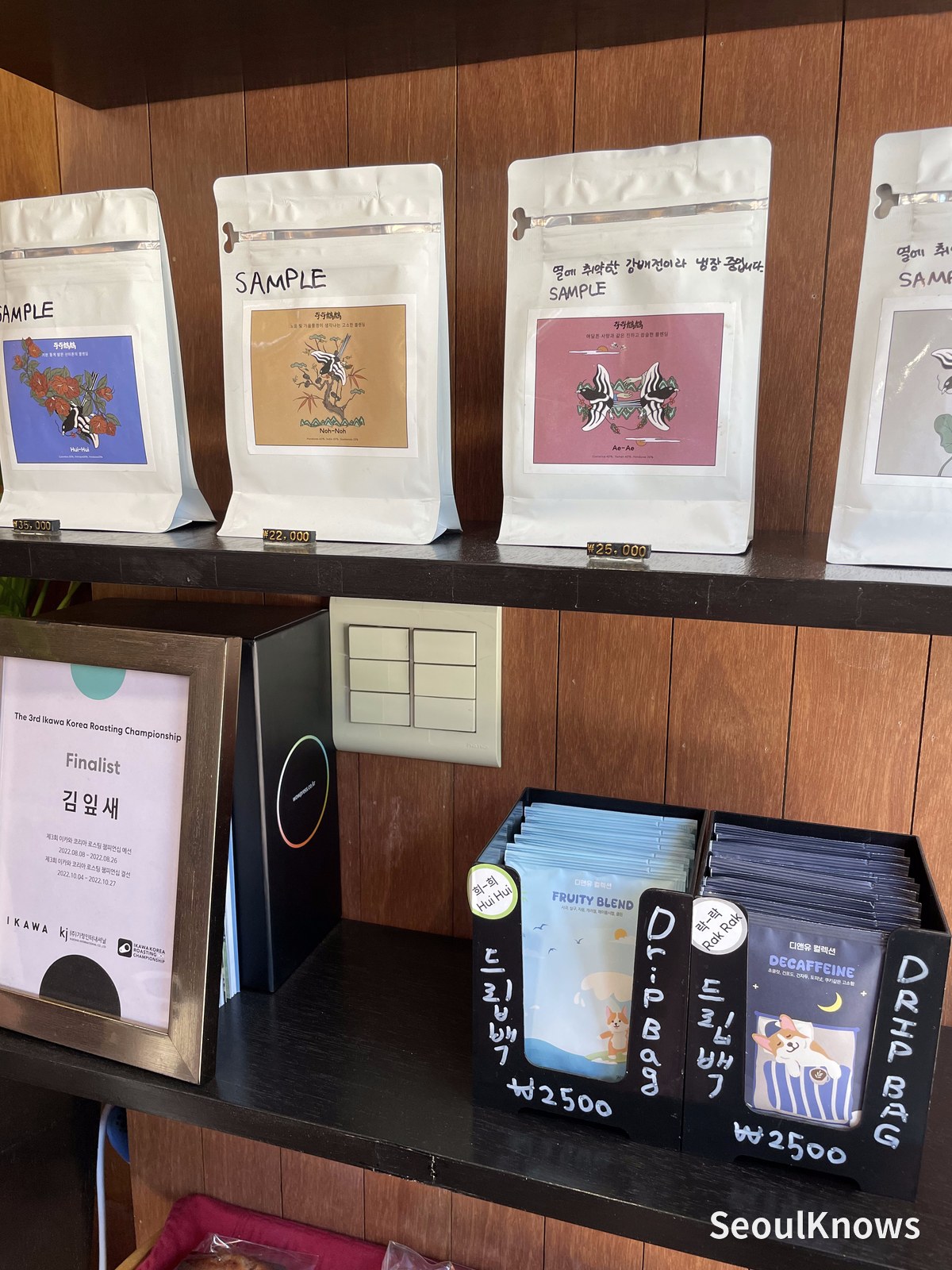
The beans themselves are on the shelf, sold by the bag, with drip bags at 2,500 won each, an easy souvenir if you liked what you smelled.
What to order, and what it costs
The menu is written in English as well as Korean, so ordering is straightforward.
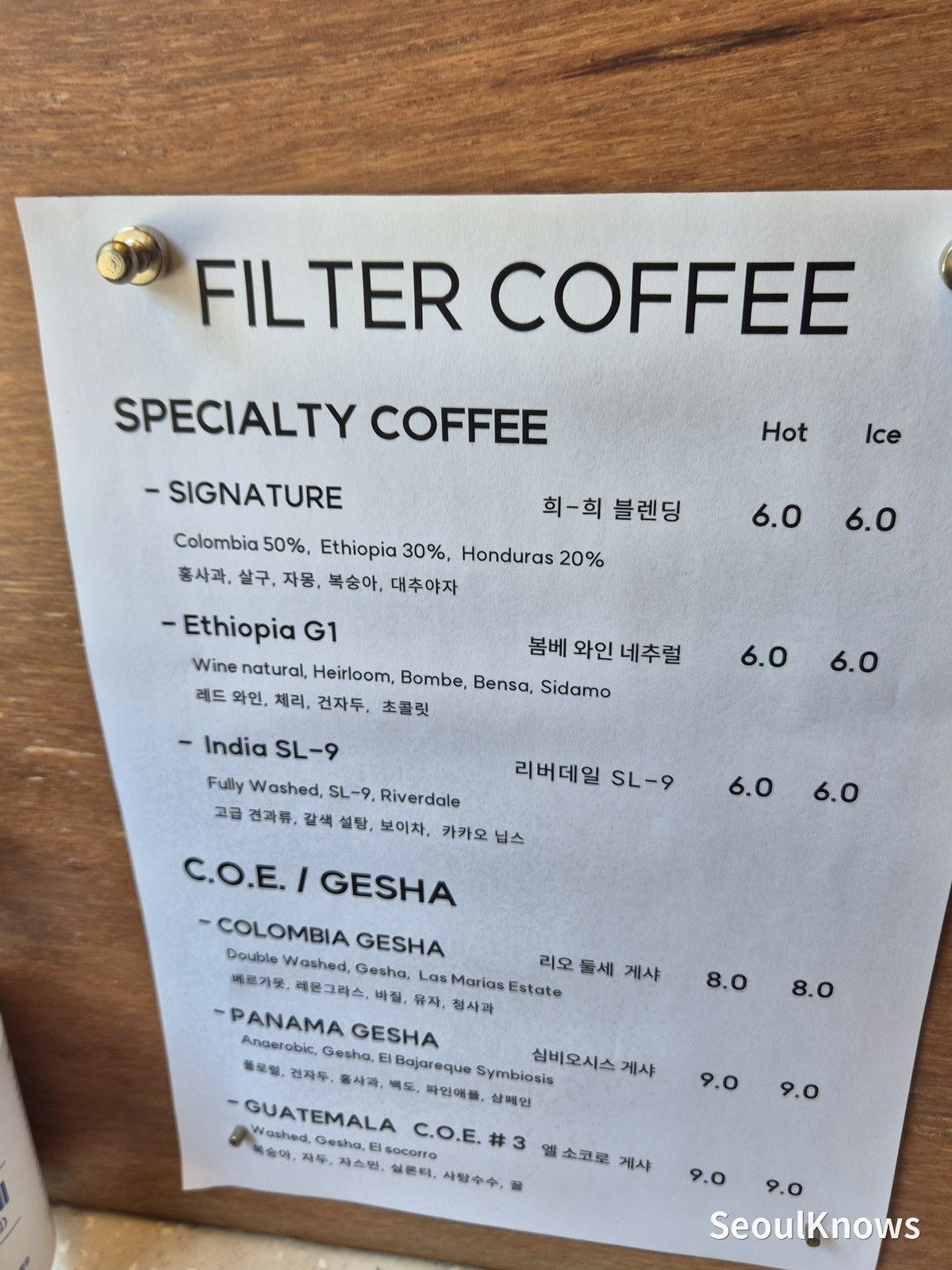
Filter coffee, 6,000 won (same price hot or iced). Three options: the house Hui-Hui blend (Colombia 50%, Ethiopia 30%, Honduras 20%), Ethiopia G1 Bombe wine natural, and India SL-9 Riverdale. This is what the place is built around, they brew it in front of you, one cup at a time, on a scale with the water temperature set.
Gesha and Cup of Excellence lots, 8,000 to 9,000 won. Colombia Gesha 8,000; Panama Gesha 9,000; Guatemala C.O.E. #3 El Socorro 9,000. Expensive by Seoul standards, cheap for what these beans go for elsewhere.
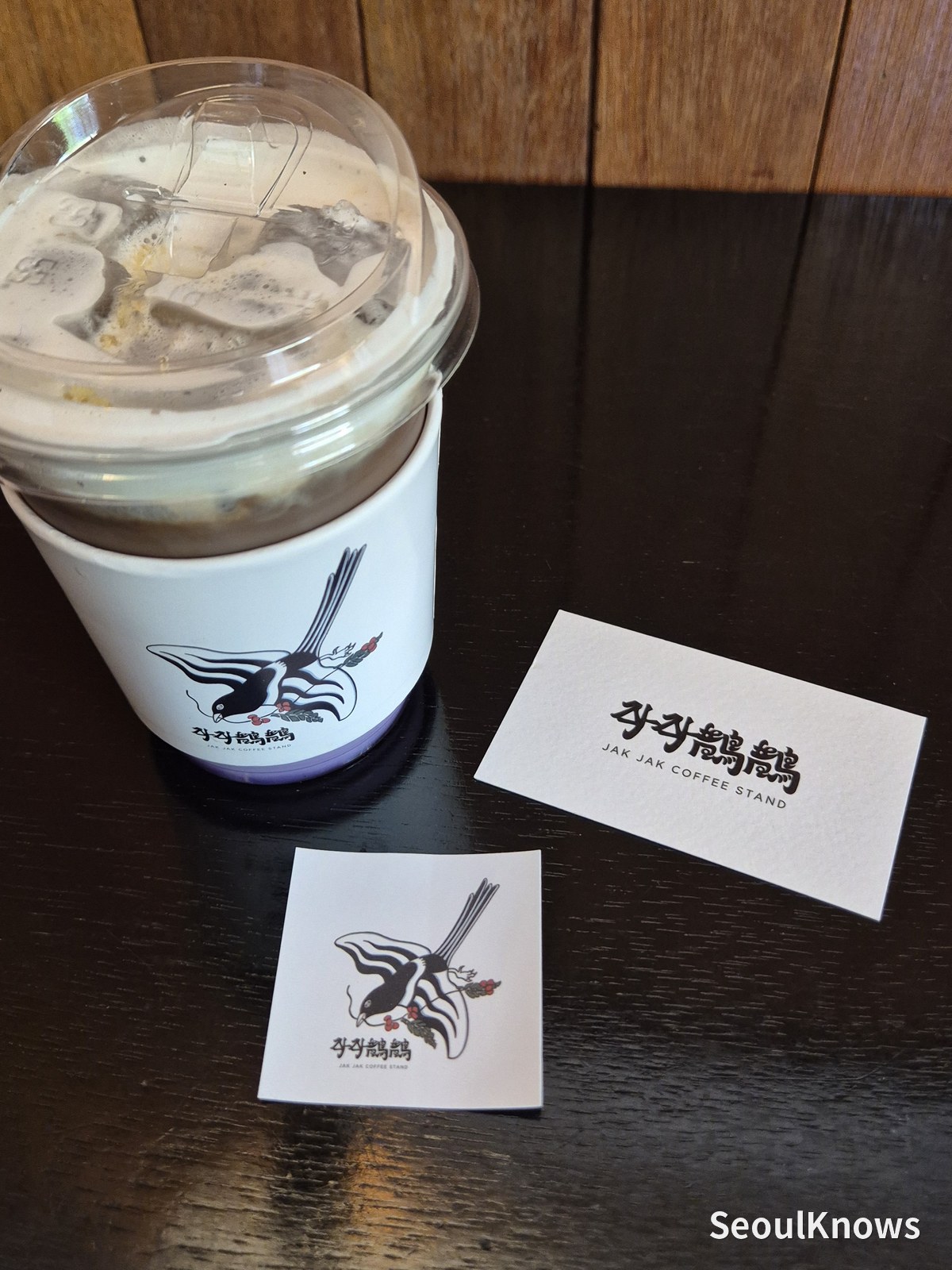
Signature drinks. Bombom Ube Latte 7,000, purple yam over espresso, layered, and not as sweet as it looks. Orange Bomb 6,500. Matcha Spanner 6,500. Affogato 3,000, made with ice cream from the shop next door.
Not coffee. Matcha latte 5,000-6,000, jujube latte 5,000, Mungyeong omija (Korean magnolia berry) tea or ade 5,000-6,000, house-made fig iced tea 6,000.
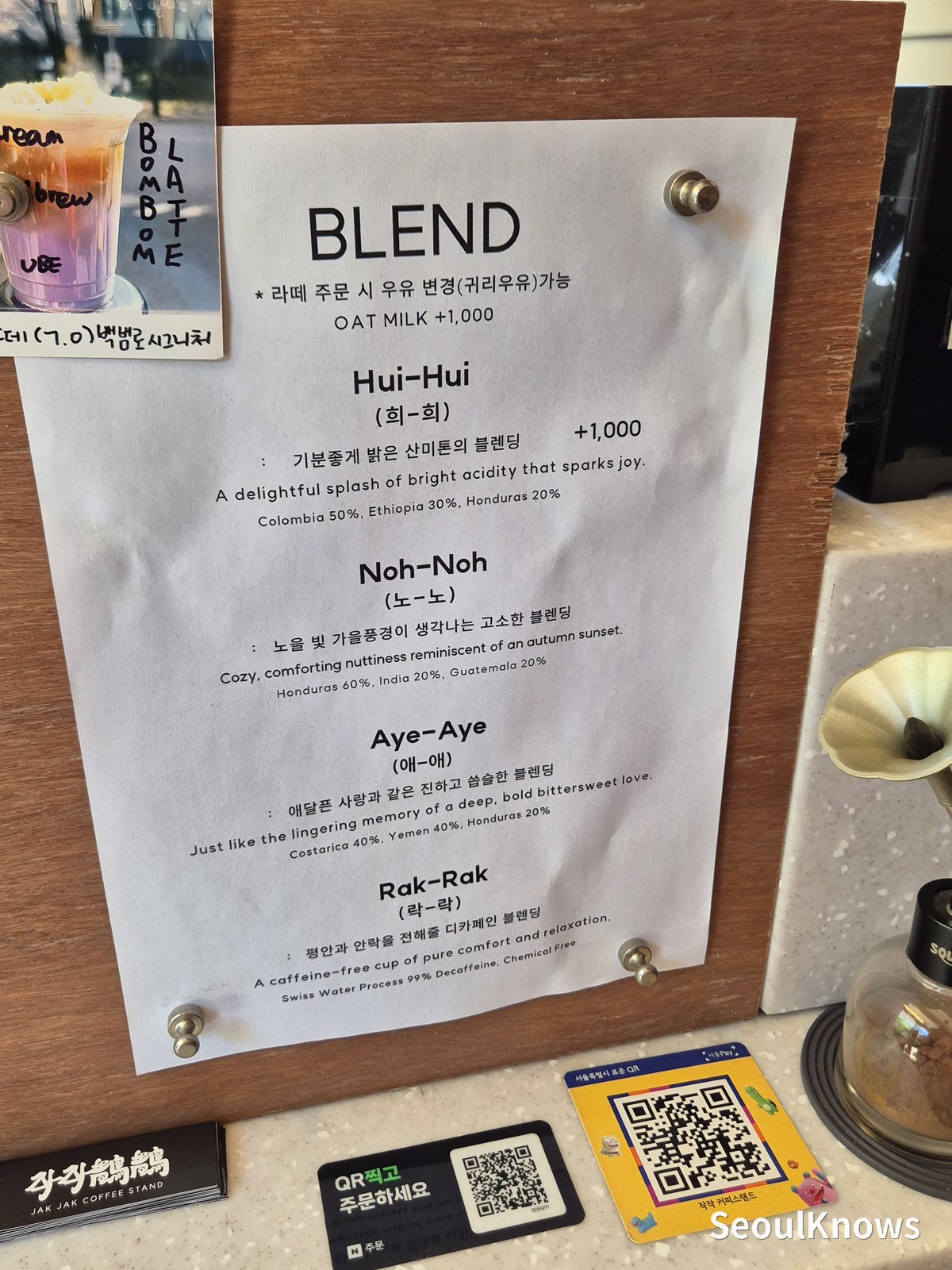
Espresso drinks let you pick the blend: Hui-Hui (bright, acidic), Noh-Noh (nutty), Aye-Aye (dark and bitter), or Rak-Rak. Hui-Hui costs 1,000 won extra; oat milk is also +1,000.
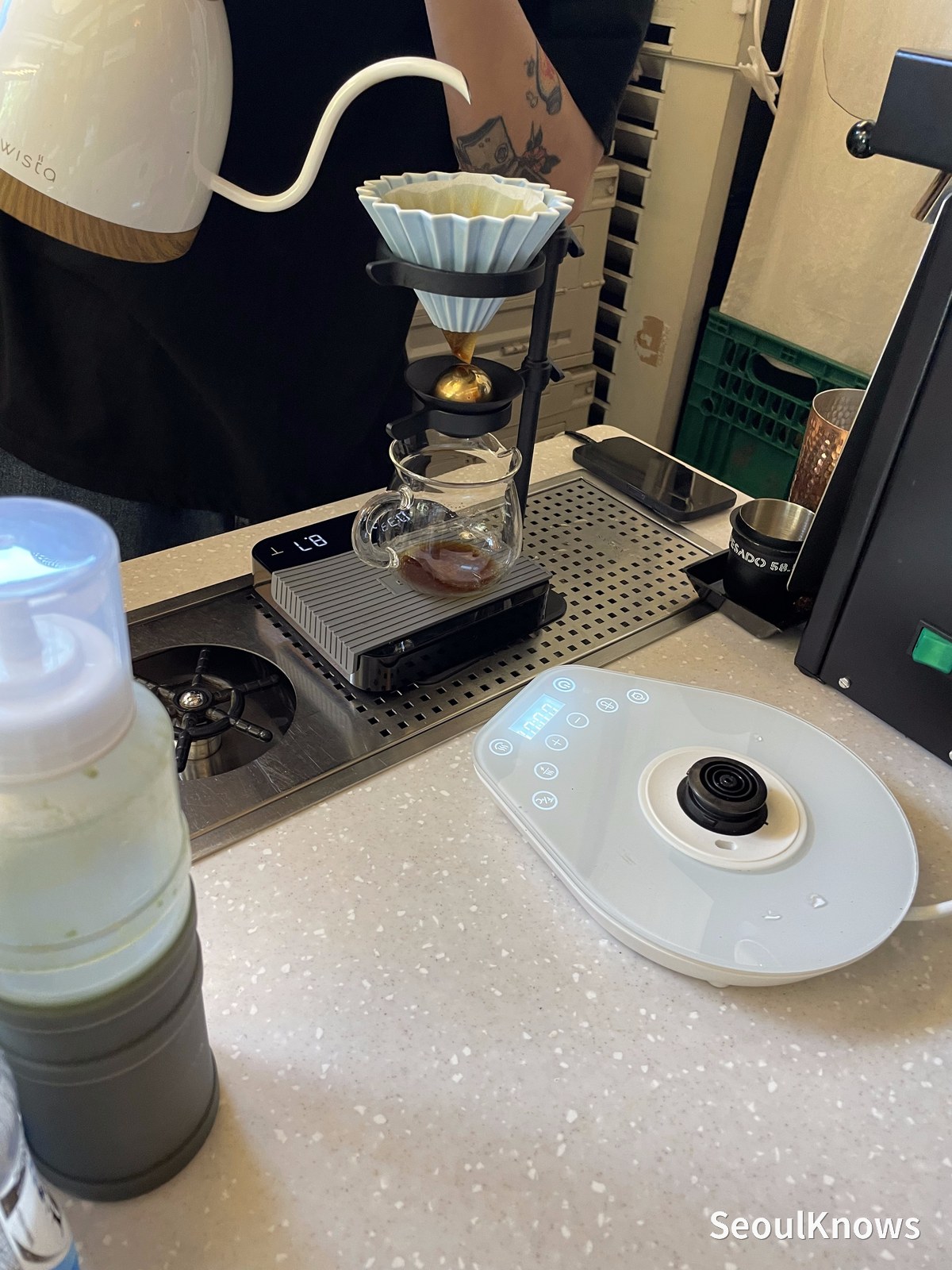
Order the filter coffee and it is brewed in front of you, beans weighed, water temperature set, the stream poured thin and slow. When it is done they tell you what to expect before you taste it, and they are right.
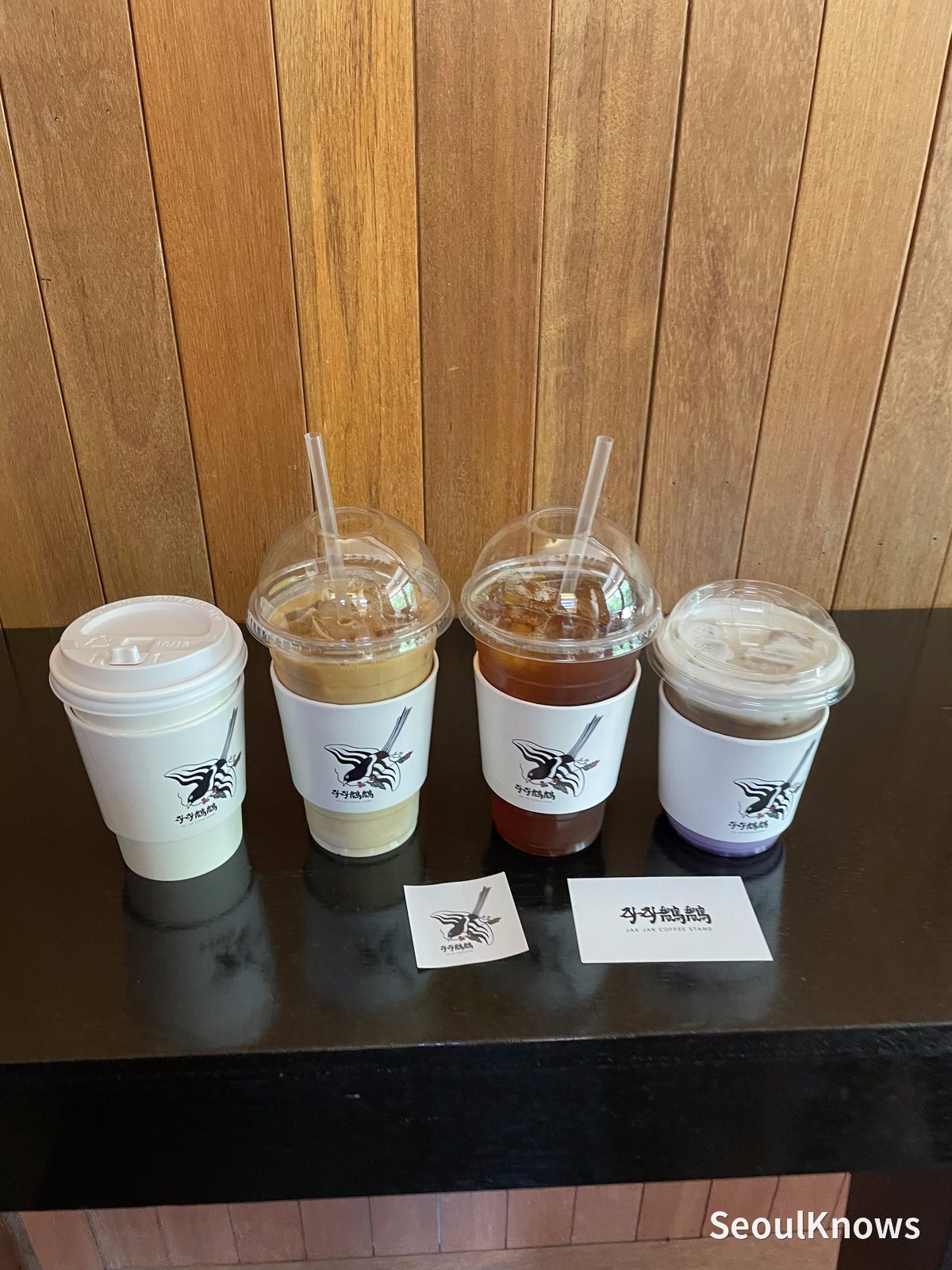
Between four of us we had the ube latte, an iced latte, an iced filter coffee and a hot latte. The iced filter came out a clear amber, aroma before bitterness, and it changed again as the ice melted. Side by side with the latte, the two looked like they came from different shops.
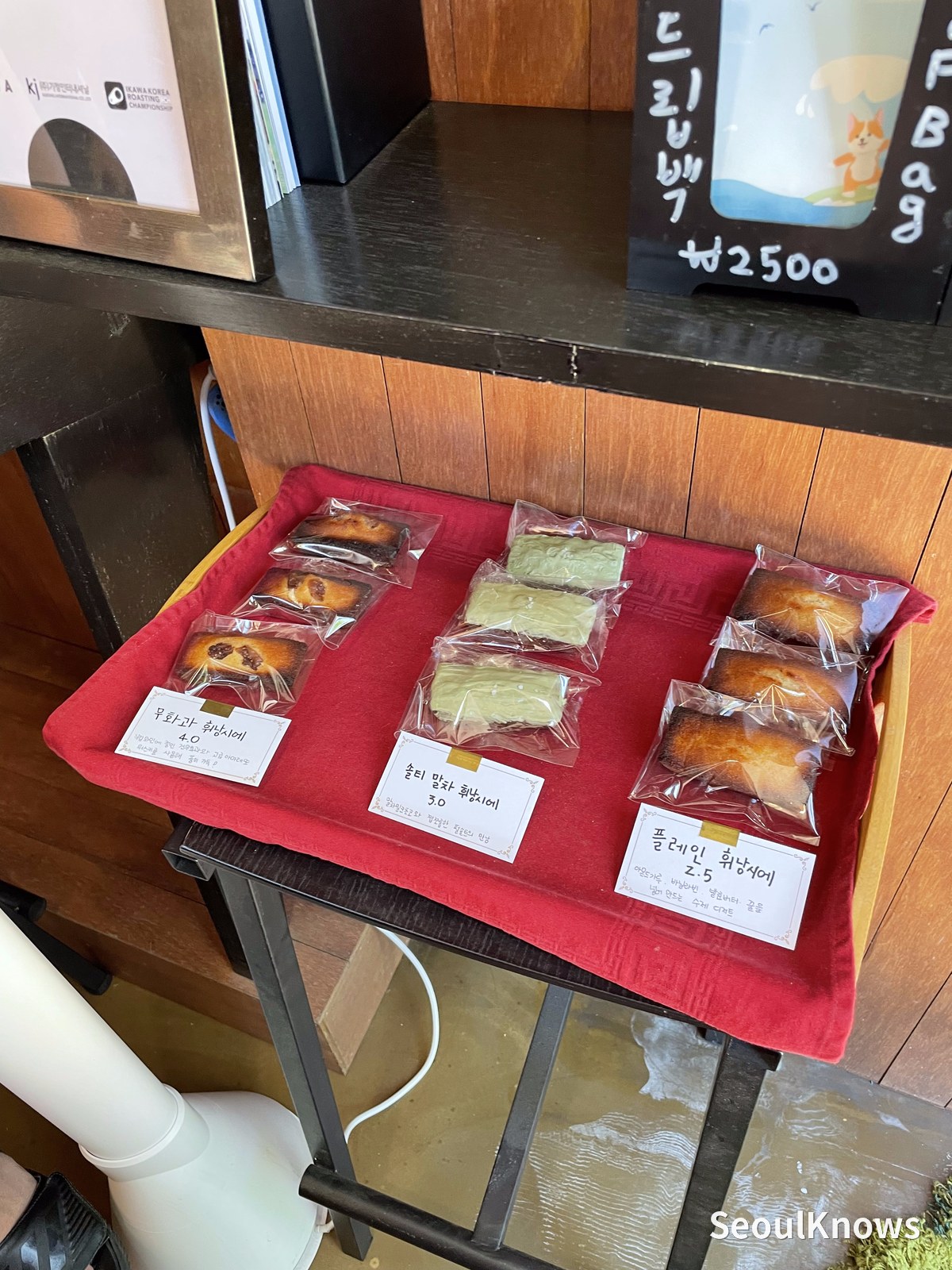
There are house-made financiers too, plain and fig as regulars, the rest rotating. The coffee runs strong, so a little something sweet alongside works well.
Hours
Monday 07:30-18:00 (last order 17:30)
Tuesday-Saturday 07:30-21:00 (last order 20:30)
Sunday 10:00-18:00 (last order 17:30)
They open at 7:30am on weekdays, which makes this a genuine option before a morning train.
Make it a walk
The Gyeongui Line Forest Park is a former railway turned into a long, thin green corridor. From Gongdeok it runs north-west, and if you keep walking you end up in Yeonnam-dong, next to Hongdae, a good hour on foot, less if you cut in partway.
Coffee at the Gongdeok end and a walk to Yeonnam is one of the easier half-days in Seoul that costs almost nothing.
FAQ
Is there an English menu?
Yes. The menu boards carry English names and origin details alongside the Korean.
Can I sit and work here?
Not really. There are only a handful of window seats and a steady stream of takeaway customers. It is a place for a good cup, not a long session.
I don’t know anything about coffee. Will I be lost?
No. Use the aroma jars on the counter, and if you want something easy on the palate, ask for Noh-Noh, the nutty blend.
Is it far from Incheon Airport?
Gongdeok is a stop on the AREX all-stop train from Incheon Airport Terminal 1 and 2, then a 3-minute walk. Check the AREX timetable for the current journey time.
Can I buy beans to take home?
Yes. Whole beans are sold by the bag, and drip bags are 2,500 won each.
Is there parking?
No dedicated parking. Come by subway.