
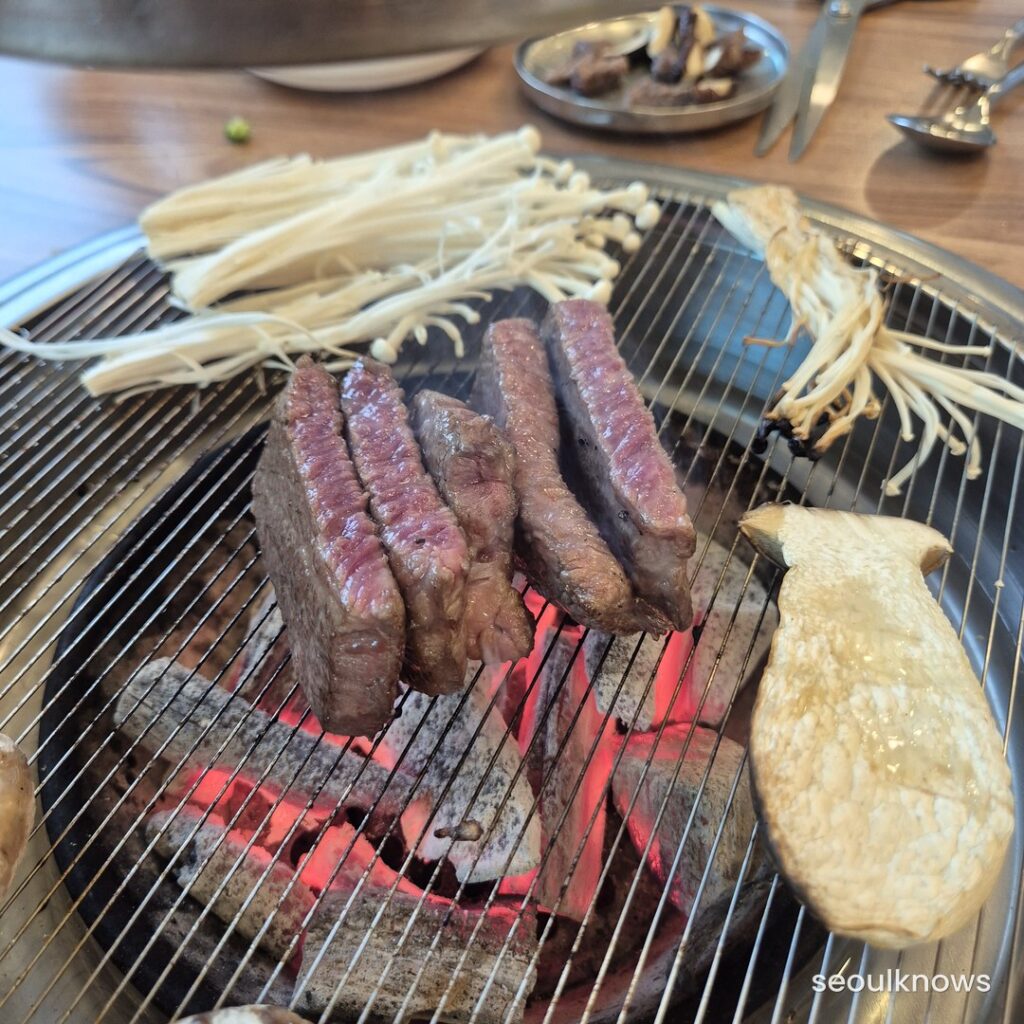
Grilling your own meat at the table is something you have to try in Korea. But your first time can be confusing: Do I grill it myself? What are all these vegetables? How do I make a wrap? Here is how it works, from the moment you sit down to the very last bite — do this and you will enjoy it like a local.
What Is Korean BBQ?
There is a grill in the middle of the table and you cook raw meat right there. Side dishes and wrap vegetables are usually free and refillable. Meat is sold by portion (about 150–200g), usually a 2-portion minimum.
What to Order
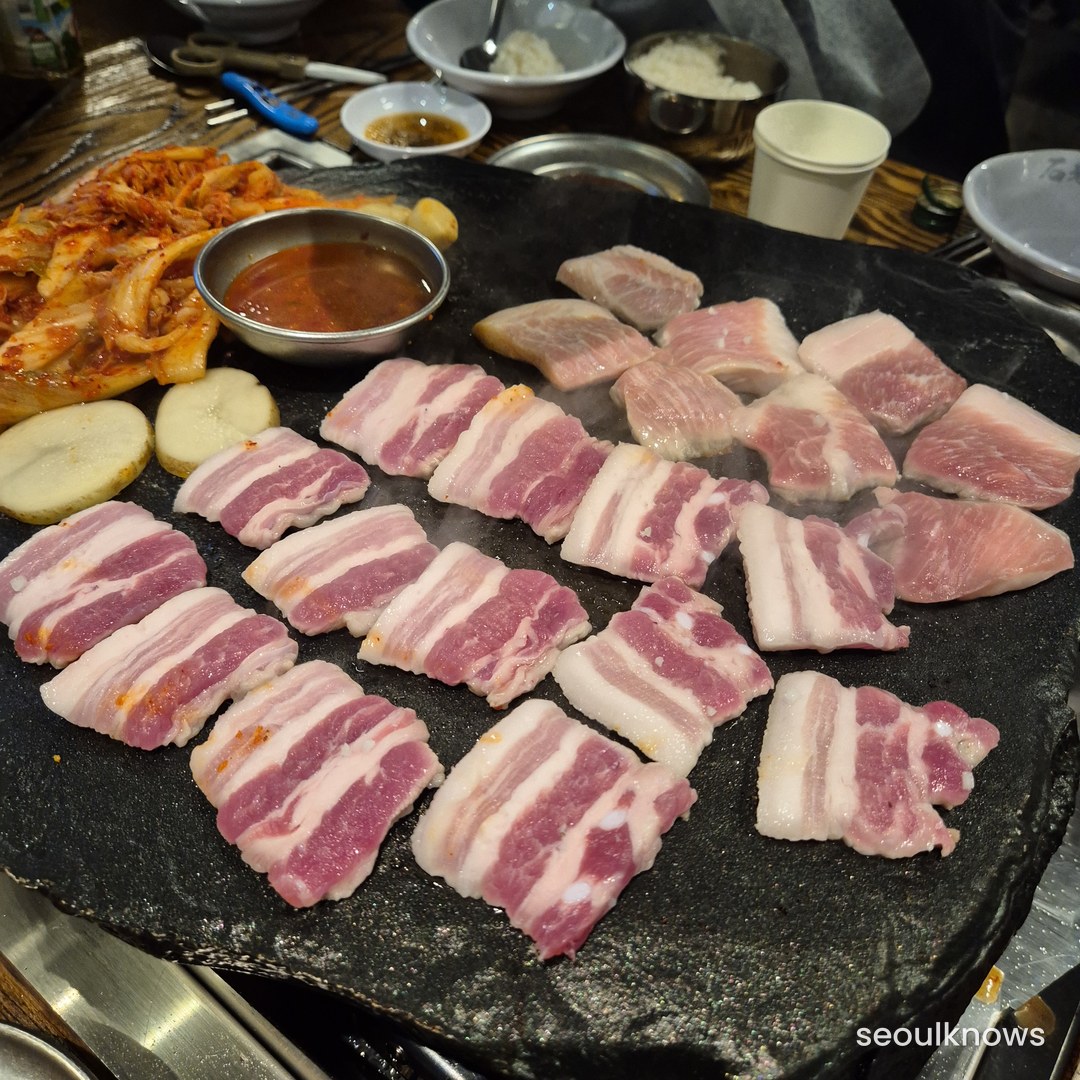
Samgyeopsal (pork belly) — the most popular cut, crispy outside and juicy inside. Start here if unsure.
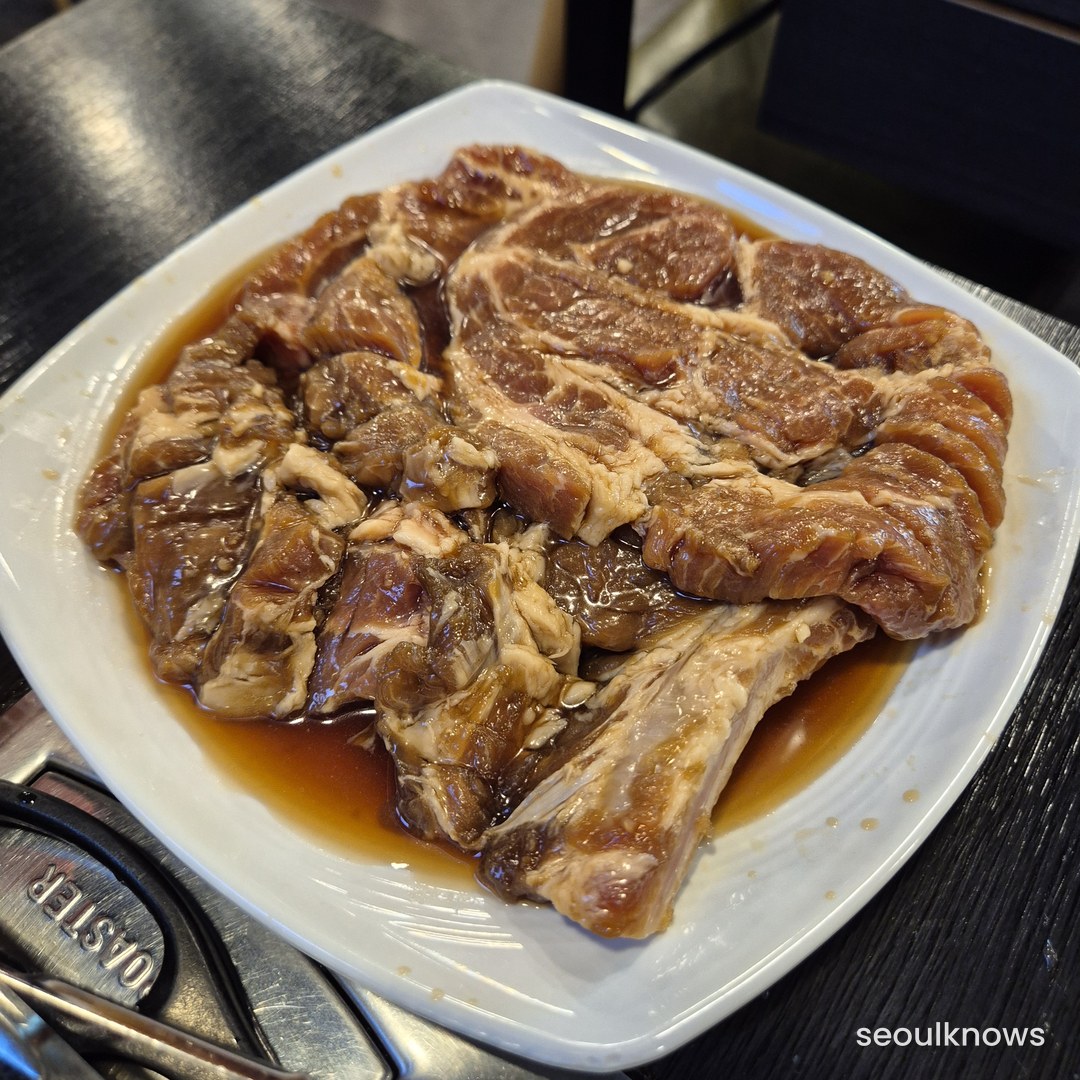
Dwaeji-galbi (marinated pork ribs) — marinated in a soy-and-sugar sauce; slightly sweet and savory, and especially easy on first-time palates.
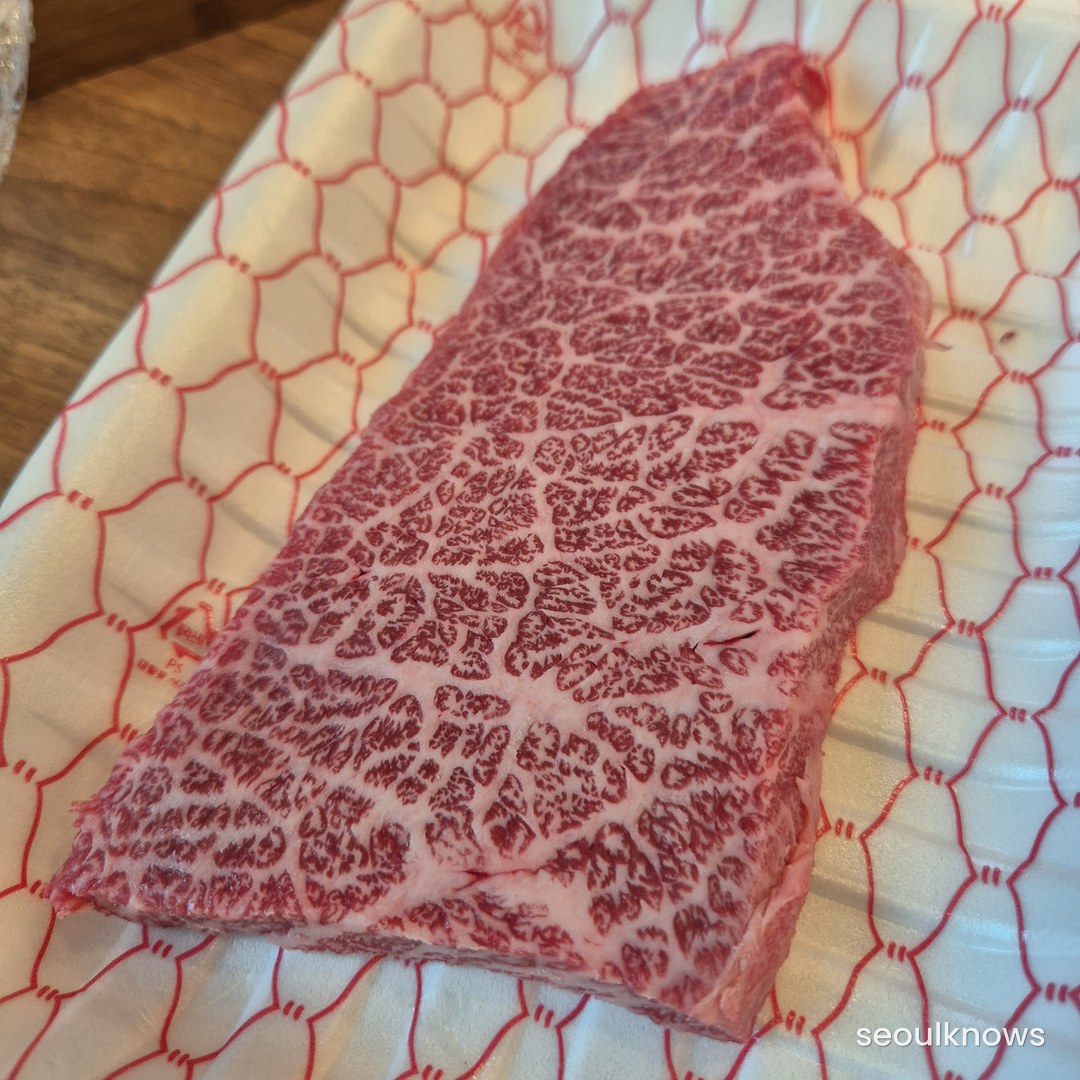
Hanwoo (premium Korean beef) — Korea’s prized beef, eaten lightly with salt or a sesame-oil dip, no marinade, to taste the beef itself. Pricier, but a “try it once” experience.
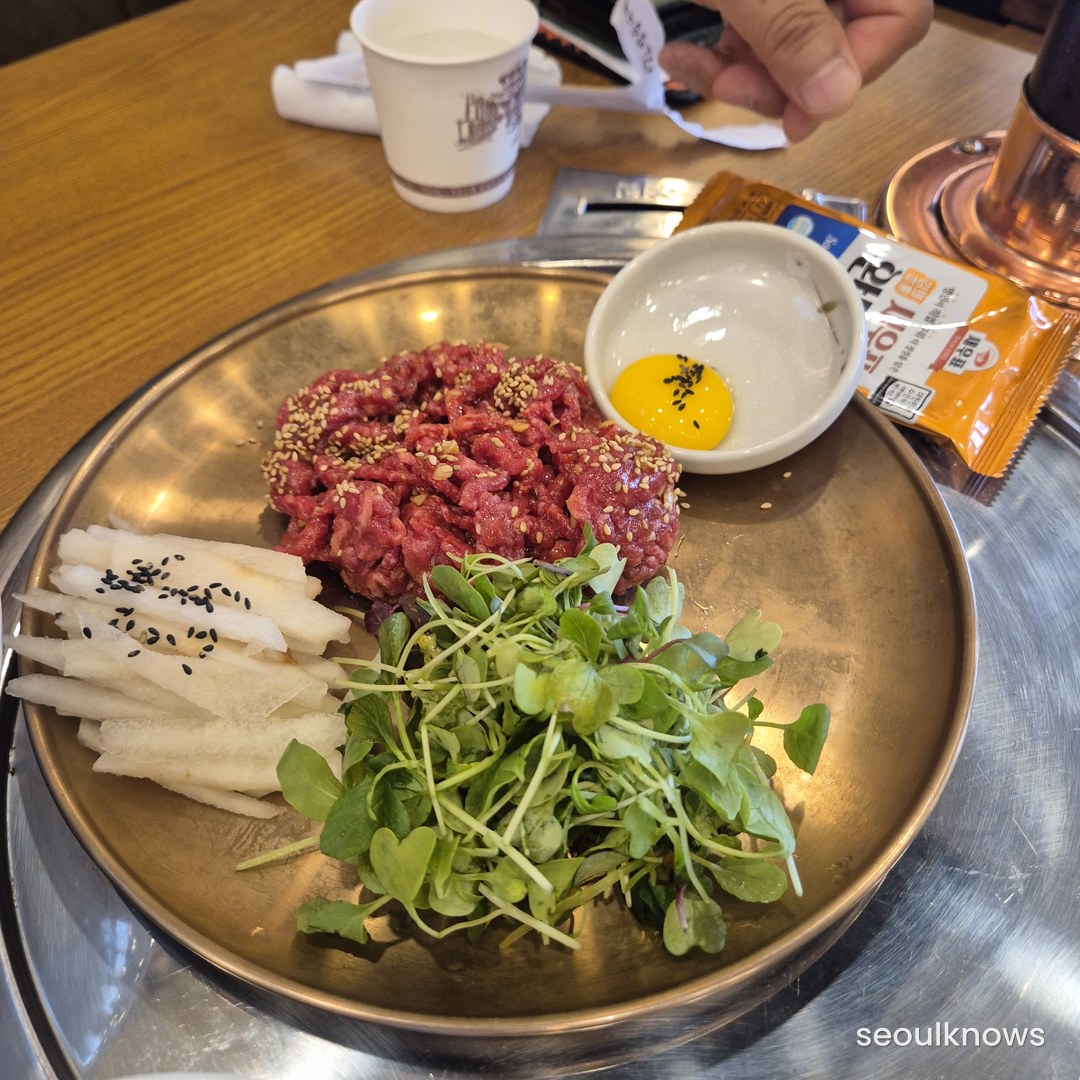
On the side — Yukhoe (beef tartare). Most BBQ places have it: thinly sliced raw beef with sesame oil, pear and egg yolk. A great starter before you grill. It is unfamiliar if you are new to raw beef, but worth trying at a fresh spot.
Who Grills the Meat?
This is what most visitors wonder. The answer: it depends on the restaurant. At some places you grill it yourself — placing, flipping and cutting the meat with tongs and scissors. At others, the staff grill it for you, cooking each piece at the perfect moment and cutting it at your table.
Good news for first-timers: these days many Koreans actually prefer places where the staff grill for you. It is foolproof and lets you relax and talk. So do not worry about “grilling it right” — especially for hanwoo and galbi, where timing matters, pick a place with table-side grilling and you will nail it. It is perfectly normal to ask, “Do we grill it ourselves, or do you grill it for us?”
- Plain meat (samgyeopsal, hanwoo): dip lightly in salt or the sesame-oil sauce.
- Marinated meat like dwaeji-galbi burns fast (sugar in the marinade) — lower the heat and flip it often. If the grill blackens, ask for a new plate: “pan galajuseyo.”
- Do not pile it all on at once; grill in small batches.
The Ssam Wrap — the Heart of KBBQ
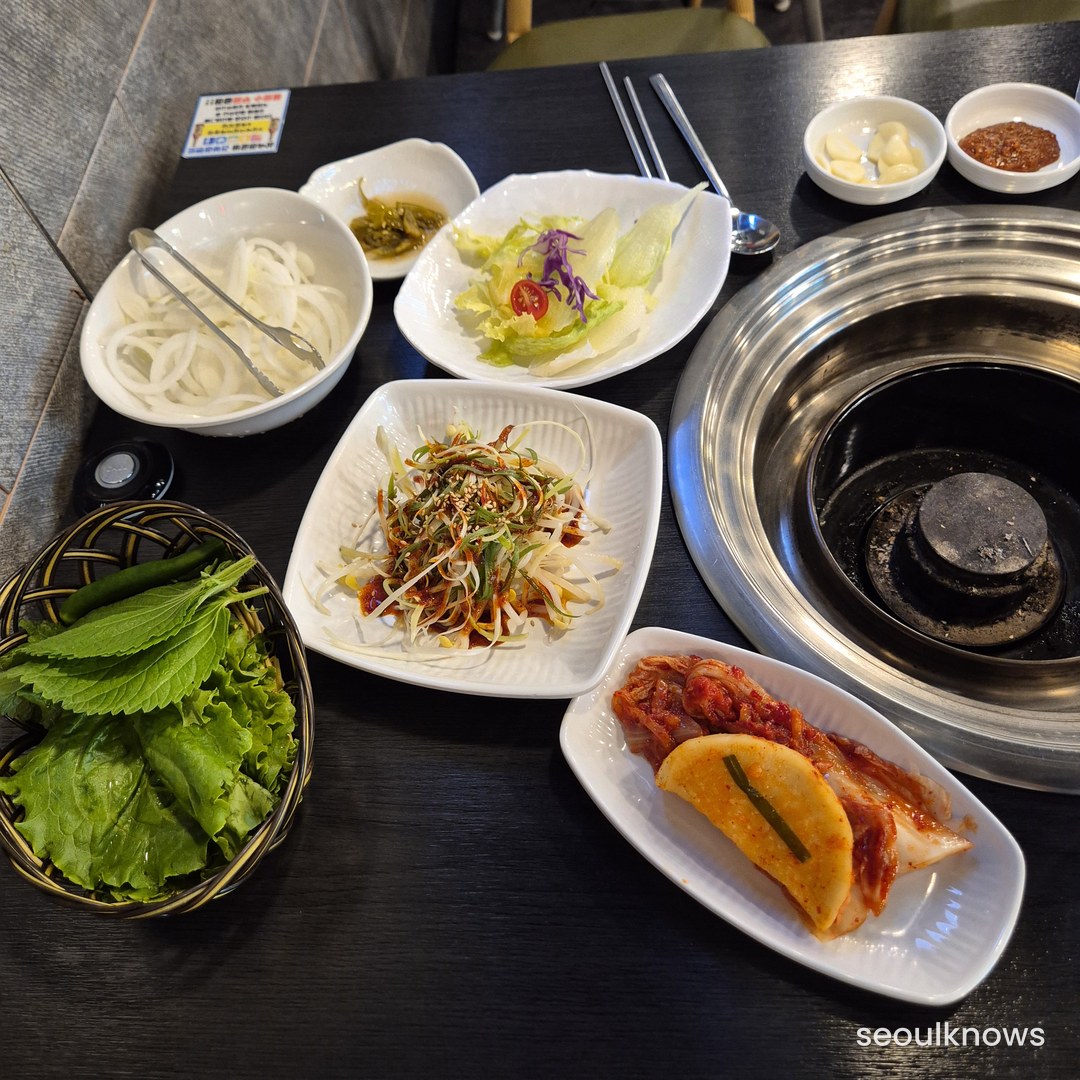
You will usually get both lettuce and perilla leaves (kkaennip). Lettuce is mild and works for everyone; perilla has a strong, herbal aroma that can be surprising the first time — start with lettuce and try perilla once to see if you like it.
How you wrap is up to you:
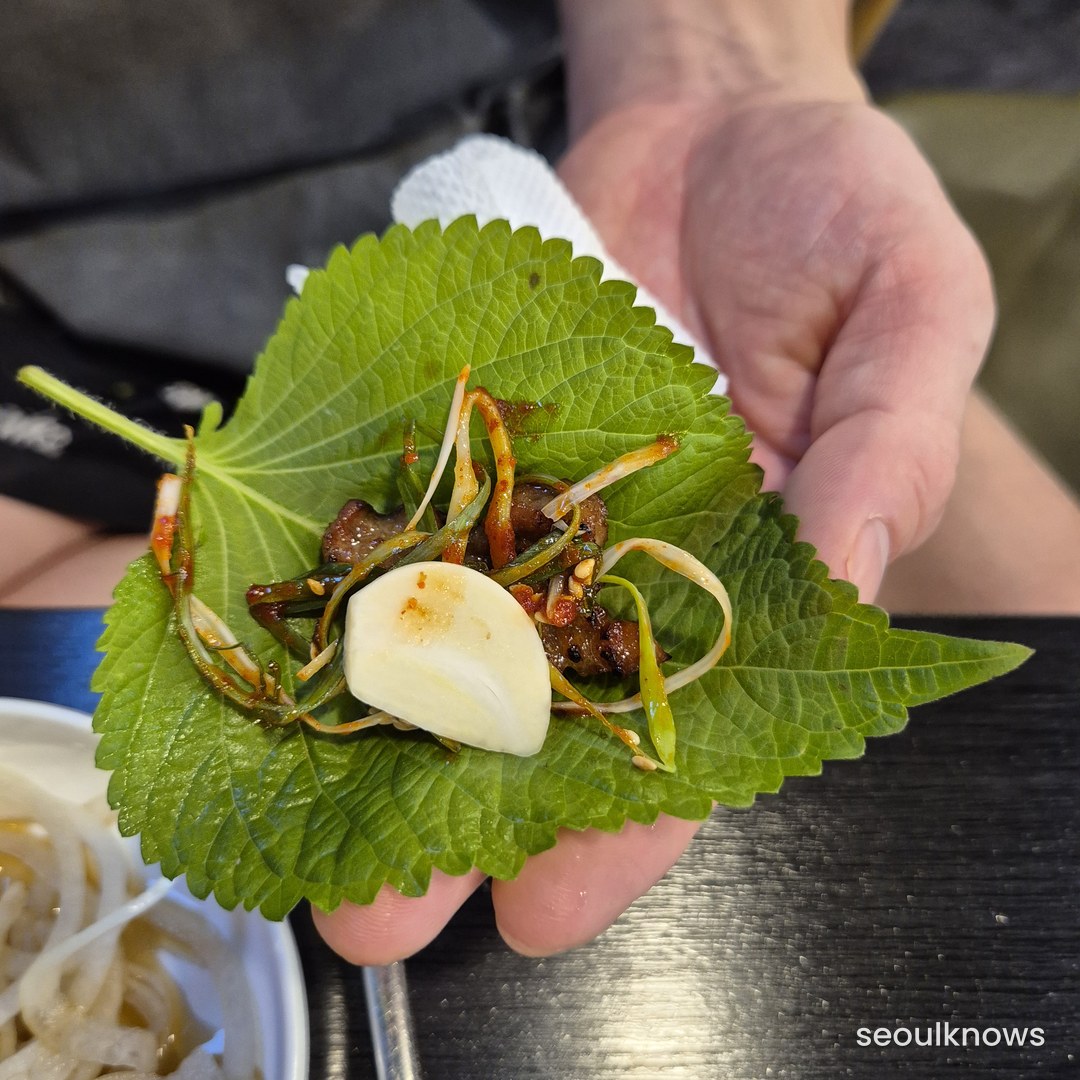
- Basic: lettuce (or perilla) + a piece of meat + a little ssamjang + garlic, scallion salad, chili.
- Pickled radish (ssammu) only: roll the meat in a thin pickled-radish sheet for something light and tangy.
- With soy-pickled onions on the side.
- Full stack: layer lettuce + perilla + ssammu, then pile on garlic, chili, ssamjang and meat, and eat it all in one bite — the true local move.
However you wrap it, eat it in one bite (do not bite it in half — that is the etiquette).
Sauces
Ssamjang (soybean + chili paste) is essential for wraps. The sesame-oil salt dip is for dipping plain meat. Side dishes are usually free to refill.
How Locals Finish — the Real Highlight
Finishing with a carb is a must.
Bokkeumbap (fried rice) is cooked right on the same grill you used for the meat: rice, kimchi and chopped leftover meat fried together, soaking up the smoky, savory flavor. Staff often fry it for you, sometimes with seaweed and sesame oil.
Naengmyeon (cold noodles) is the other way to finish. Chewy buckwheat noodles served cold — a perfect palate cleanser after rich meat. There are two kinds:
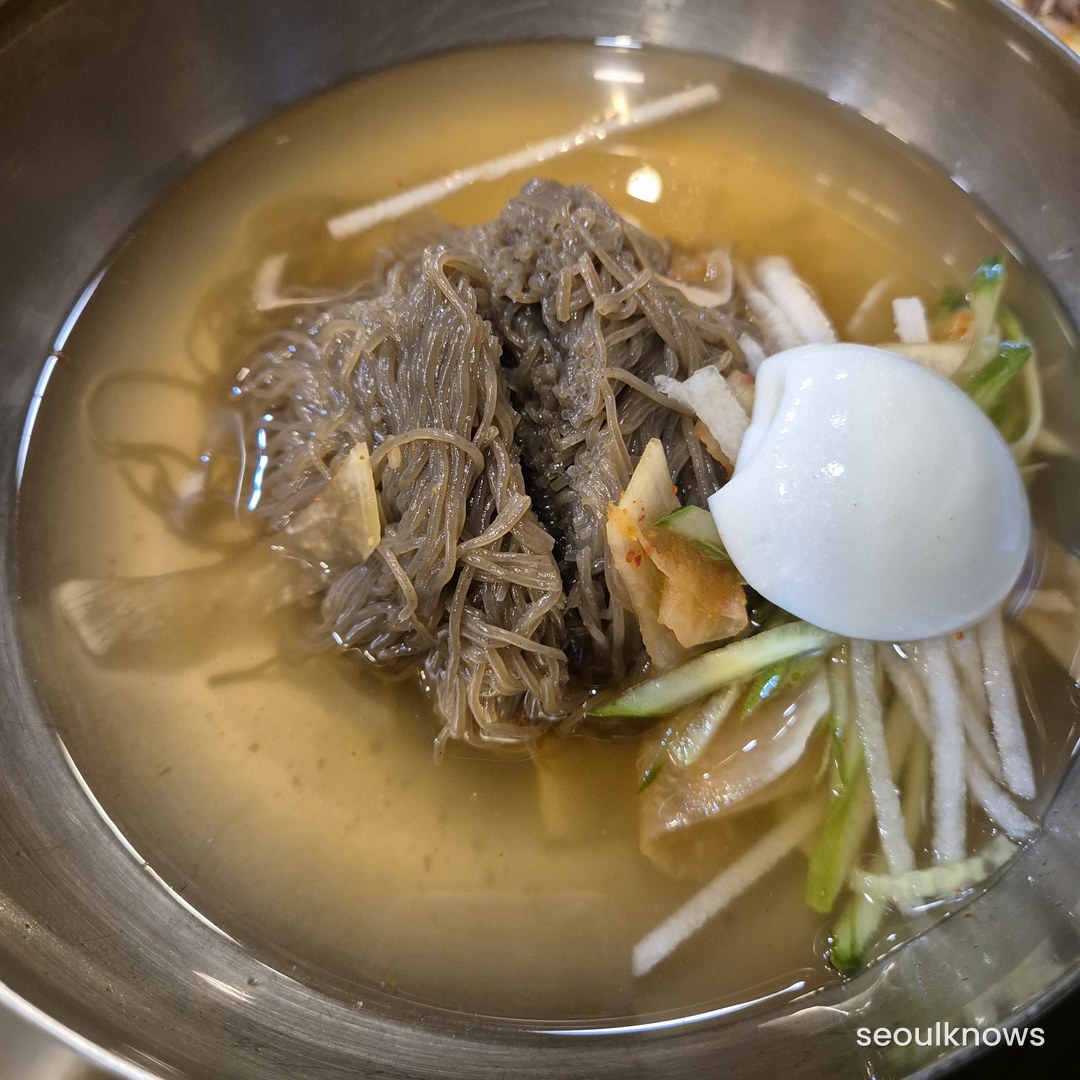
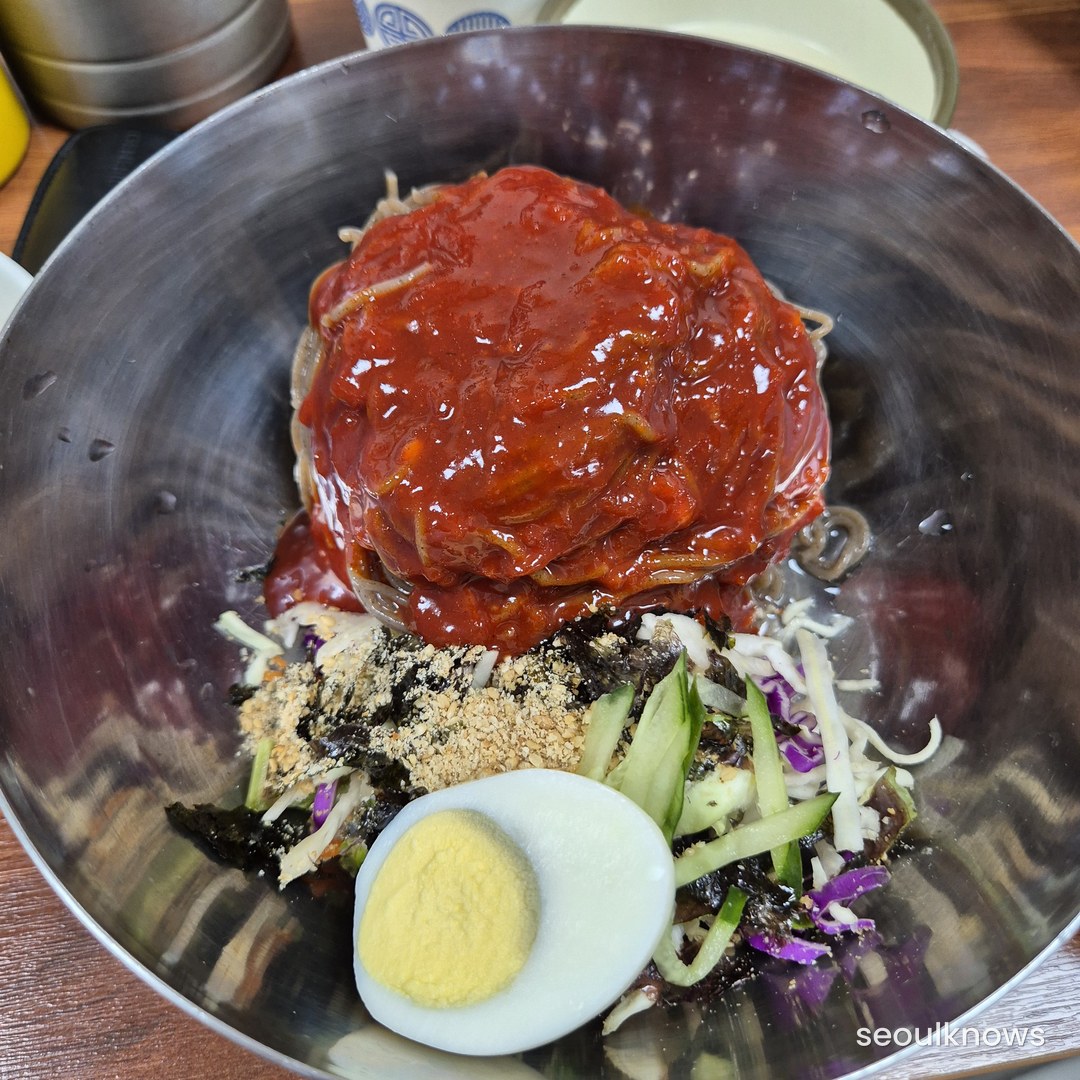
- Mul-naengmyeon — noodles in an icy, tangy-refreshing clear broth. Mild (not spicy); the easy pick for first-timers. Comes with radish, cucumber and boiled egg.
- Bibim-naengmyeon — no broth, tossed in a sweet-and-spicy gochujang sauce. For spice lovers.
The noodles are chewy, so cut them with the scissors, and a little mustard and vinegar makes them better. Prefer a hot soup instead? Order doenjang-jjigae (soybean-paste stew) with rice to finish.
Etiquette Quick Tips
- Eat each ssam in one bite.
- Drinking: when an elder or your host pours you a drink, receive the glass with both hands and turn slightly away to sip; pour for others with both hands on the bottle too.
- Do not grab meat before it is fully cooked.
- Ask for a fresh grill plate when it chars.
- BBQ places are everywhere — a busy local spot is usually a safe bet.
FAQ
What is the proper way to eat Korean BBQ?
Grill the meat (or let staff grill it), cut it with scissors, then wrap a piece in lettuce with ssamjang, garlic and scallion, and eat it in one bite.
Do I have to grill the meat myself?
Not always. Many restaurants have staff grill and cut it at your table — increasingly popular even with locals — so first-timers do not need to worry.
Do you eat Korean BBQ with your hands?
Yes — the lettuce or perilla wrap (ssam) is eaten by hand in a single bite. Use tongs and scissors for the meat.
How do you order Korean BBQ?
Meat is sold by portion (about 150–200g), usually a 2-portion minimum. Start with samgyeopsal and dwaeji-galbi, or splurge on hanwoo.
What is yukhoe?
Korean-style beef tartare — thinly sliced raw beef with sesame oil, pear and egg yolk, often served as a starter.
How do Koreans finish a BBQ meal?
With carbs: fried rice (bokkeumbap) cooked on the grill, or cold noodles — mul-naengmyeon (icy broth) or bibim-naengmyeon (spicy).
Related guides on SeoulKnows
- Samgyetang: Korea’s ginseng chicken soup
- Yongridan-gil: Seoul’s coolest food street
- What is the Blue Ribbon Survey? Korea’s restaurant guide explained

Written by WY, a Seoul-based local sharing honest, first-hand guides to Korea. Every guide starts with a real visit — I went, I paid attention, and I wrote down what I found. More about me →