
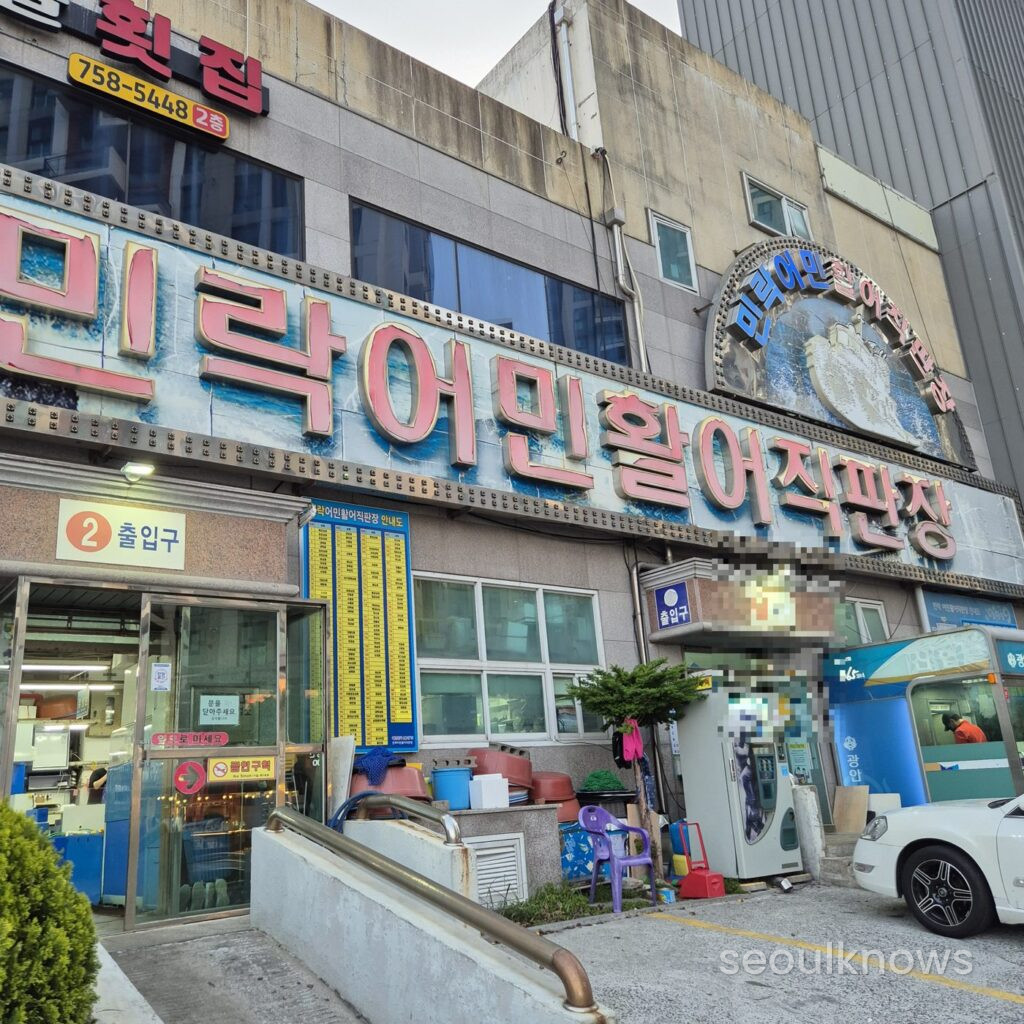

If you want to eat raw fish the way Busan locals actually do, not in a polished sushi restaurant, but at a working fish market, Millak Live Fish Market (민락어민활어직판장) is the place. It sits at the eastern end of Gwangalli Beach, right under Gwangan Bridge, and it’s where I took my team for a work dinner on a Busan trip. It’s mostly full of locals and known for value: eight of us ate extremely well, with a huge spread of fresh fish and all the trimmings, for somewhere around ₩250,000-300,000 total.
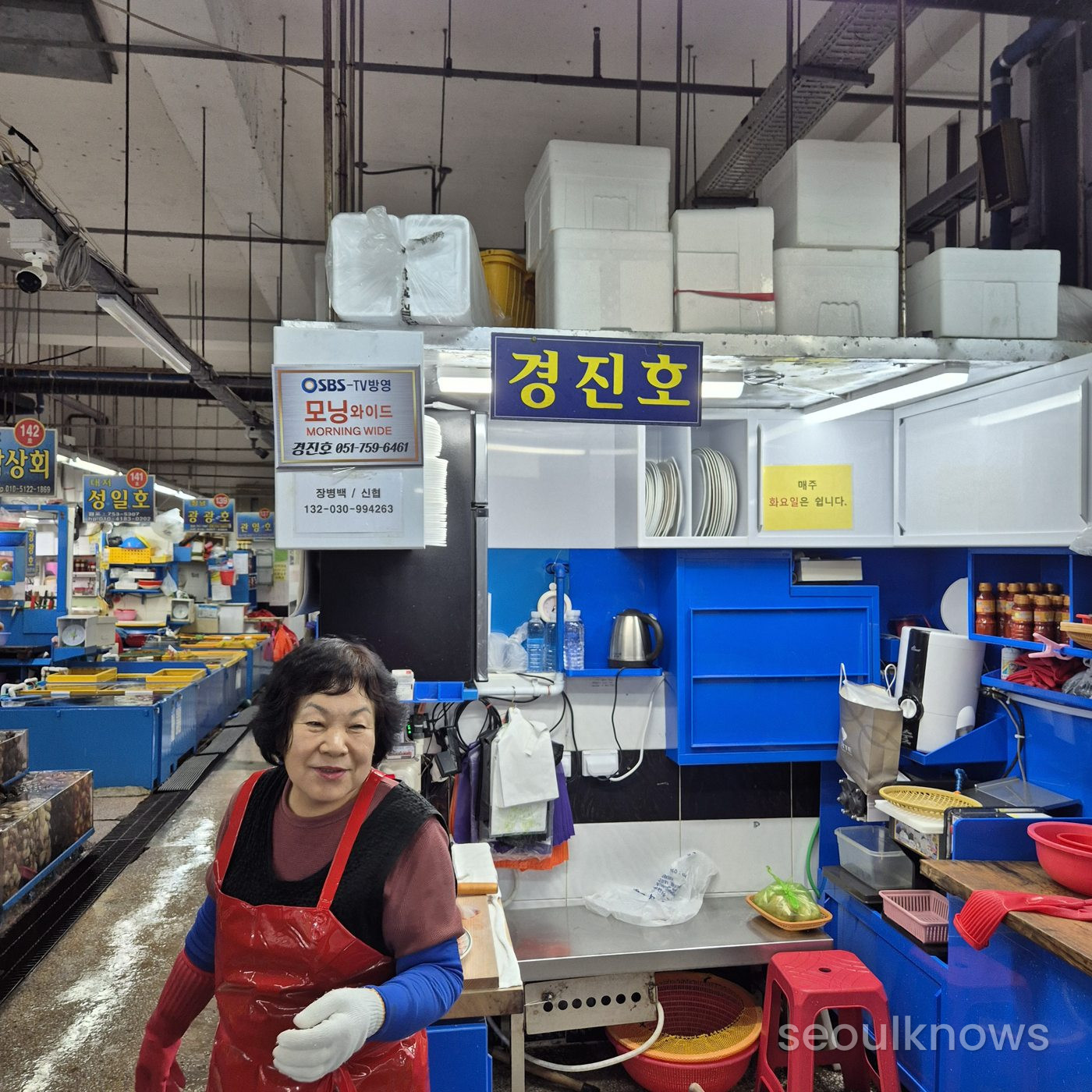
Full disclosure: the stall we used, Gyeongjinho, is actually run by my aunt. That’s why I keep coming back, but everything below is exactly how I found it as a customer.
How a Korean Live-Fish Market Works
This is worth understanding before you go, because it’s different from a normal restaurant. The market is a two-floor building. The first floor is a row of fishmonger stalls, each with its own number and name, with tanks of live fish out front. Half the fun is just walking the aisles and looking, flatfish, rockfish and amberjack swimming in the tanks, alongside sea squirts, sea cucumber and live octopus. You browse, you point, you pick the fish that looks good that day.
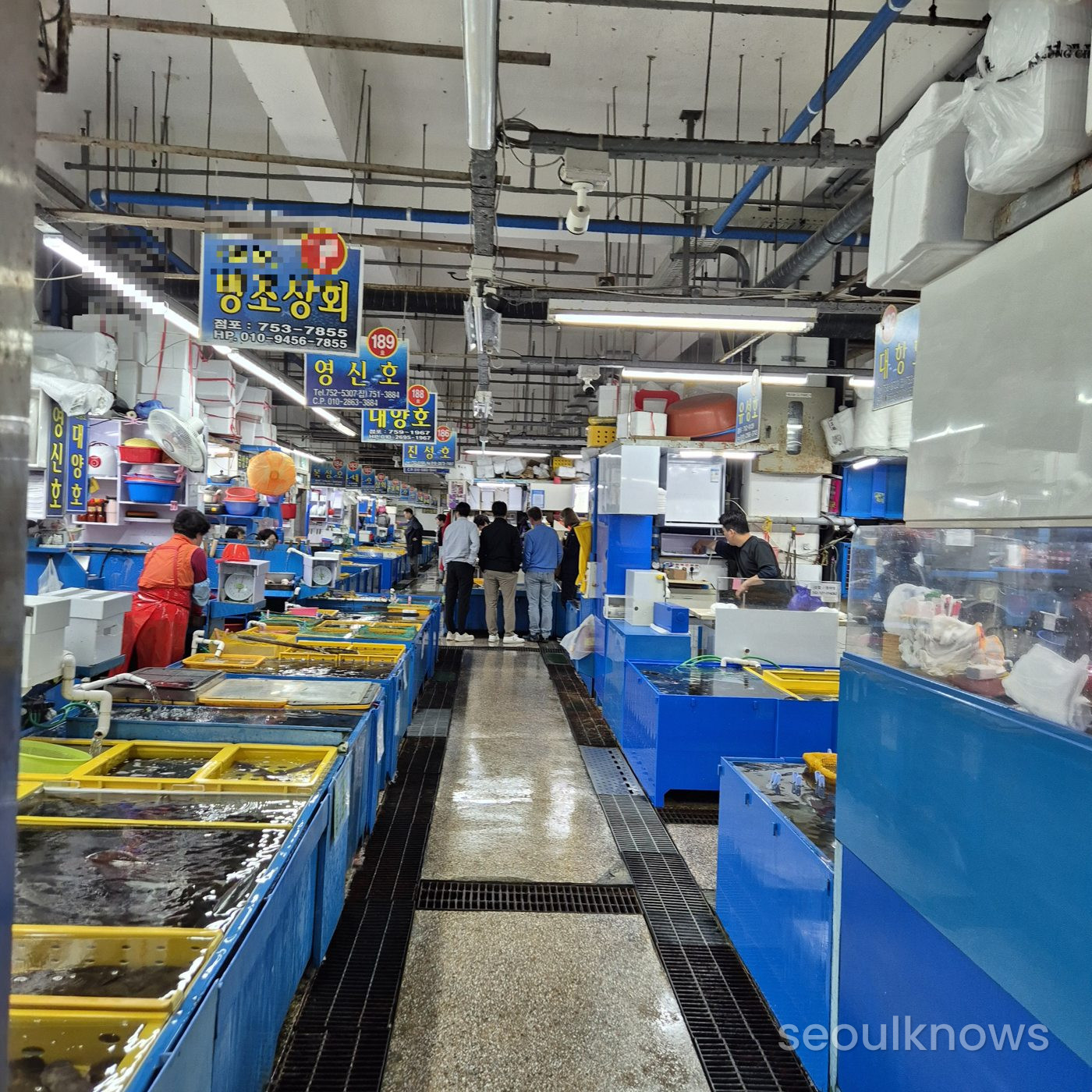
Once you choose, the owner nets your fish and slices it fresh right there, in front of you. Watching a fish go from the tank to a plate of sashimi in a few minutes is the whole point, you can’t get fresher than that. Then you carry your plate upstairs to the second floor, a big dining hall (a chojang-jip) where you sit and eat. Upstairs charges a small per-person fee that covers your table, all the side dishes, and the spicy fish stew at the end.
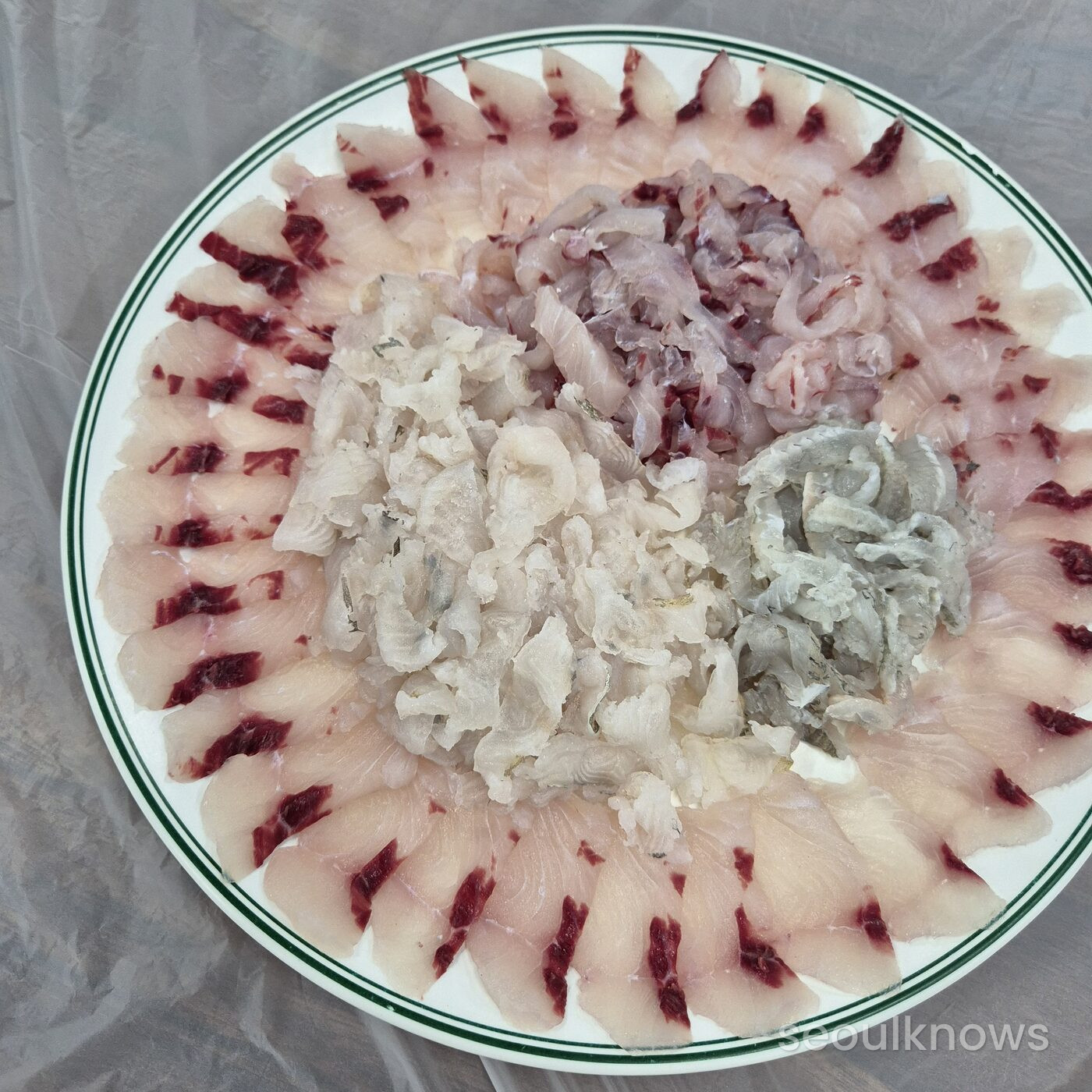
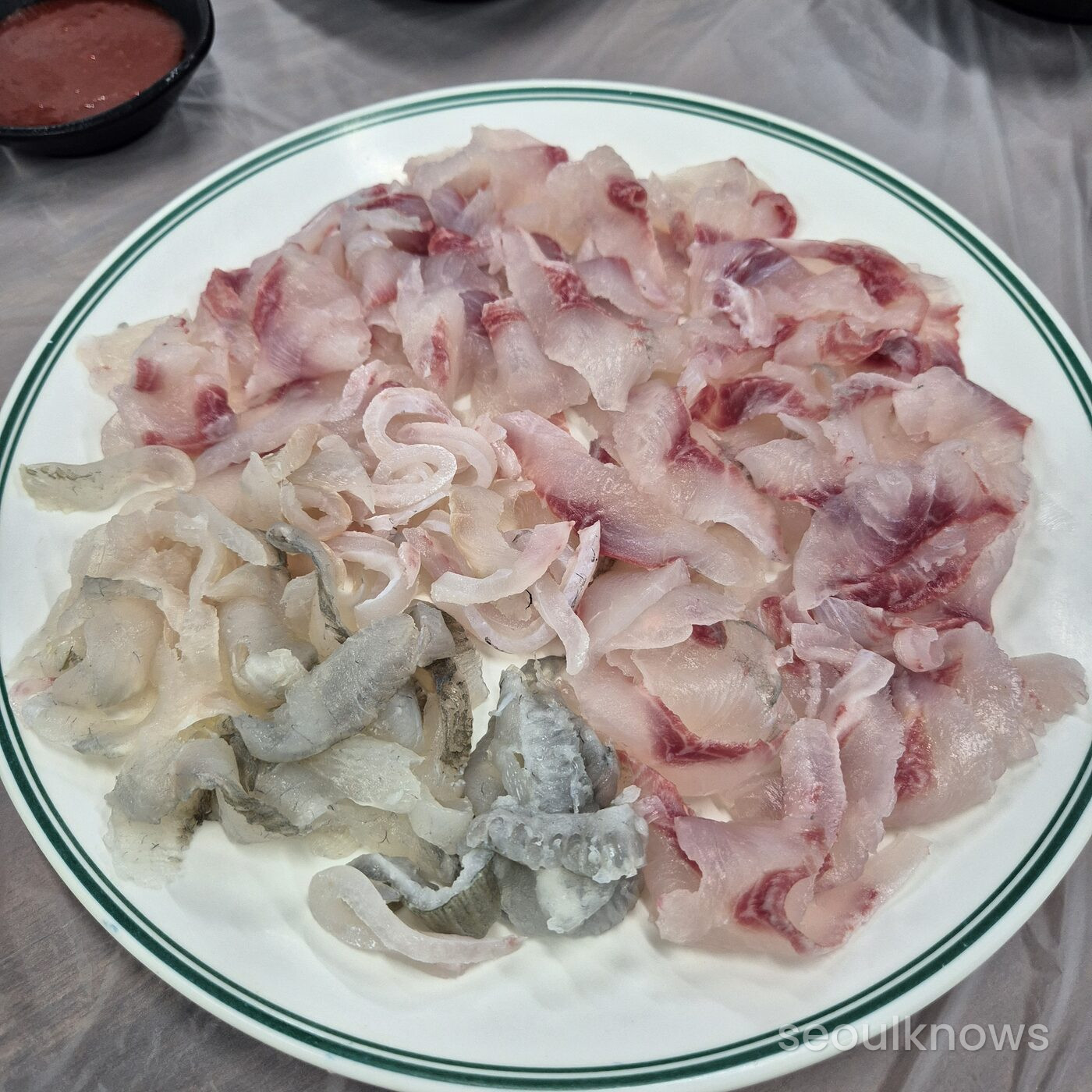
The fish itself is hwareo-hoe, “live fish” sashimi. Koreans generally prize raw fish sliced while it’s still ultra-fresh, so the texture is firm and springy with a bit of chew. That’s a real contrast to the Japanese style, where fish is often aged a little to turn soft and melt-in-the-mouth. Neither is better, they aim at different things, but that bouncy, just-caught texture is what Korean hoe is all about.
Gyeongjinho, Stall No. 79
We chose Gyeongjinho (경진호), Stall No. 79 ahead of time. It’s been featured on Korean TV, and the owner is friendly, easy to order with even through a language gap. Decades behind the same counter show in the knife work; the slicing is fast and clean. We just gave a budget for eight people and let her build the platter, which is the easy way to do it if you’re not sure what to order.
Once a week we send one email: hotels, food and the practical stuff, from someone who actually lives here. No filler.
Upstairs: The Dining Floor
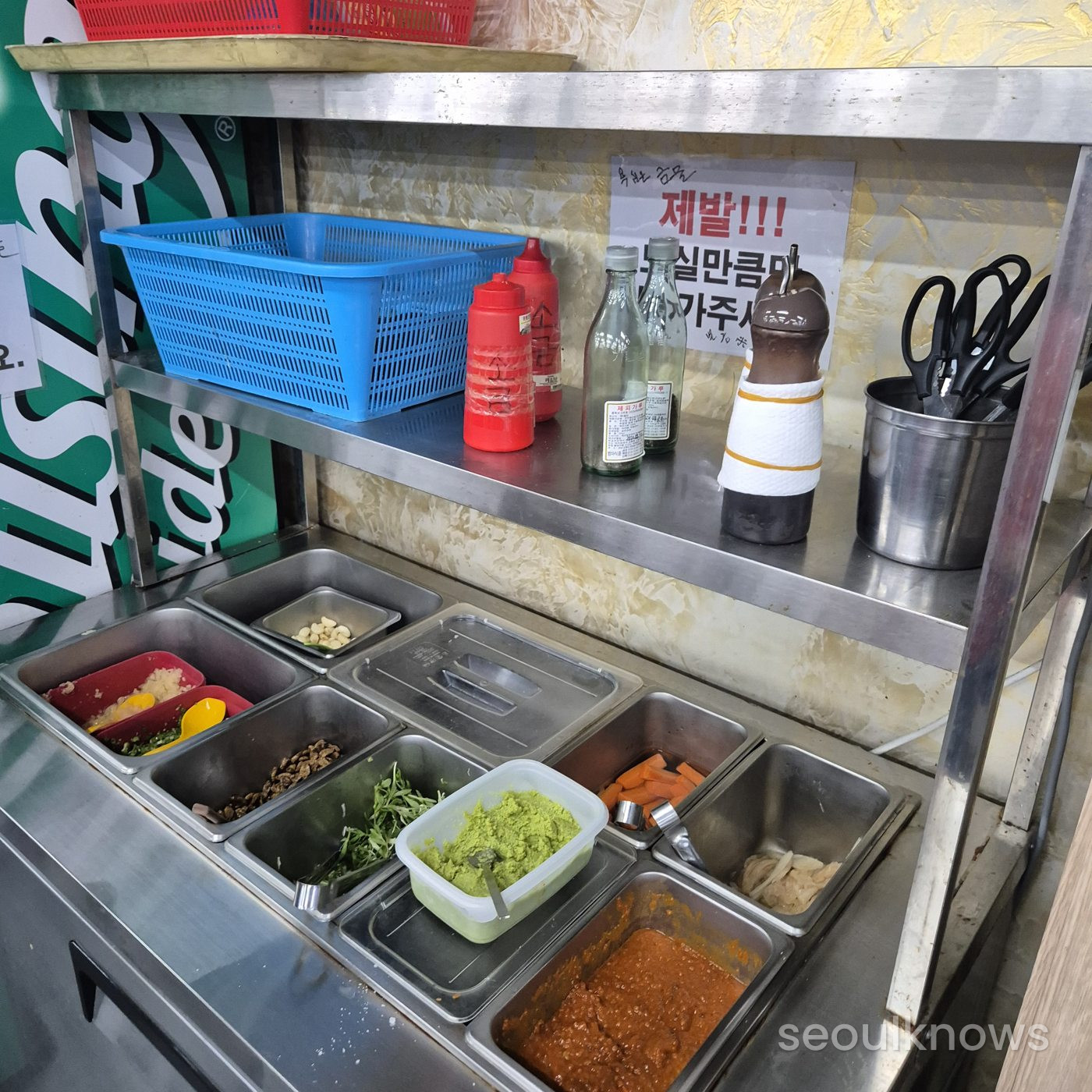
The second-floor hall is huge and was busy with groups. The table charge is ₩6,000 per person, and it’s where you actually sit and eat, bring your fish up and you’re ready to go. There’s a self-bar with everything you need to refill freely: I like ssamjang with sesame oil and minced garlic mixed in, and it was all there. Because we were a group, we asked Gyeongjinho to arrange seating in advance and they set us up at a window, which matters here, because the windows look straight out at Gwangan Bridge.
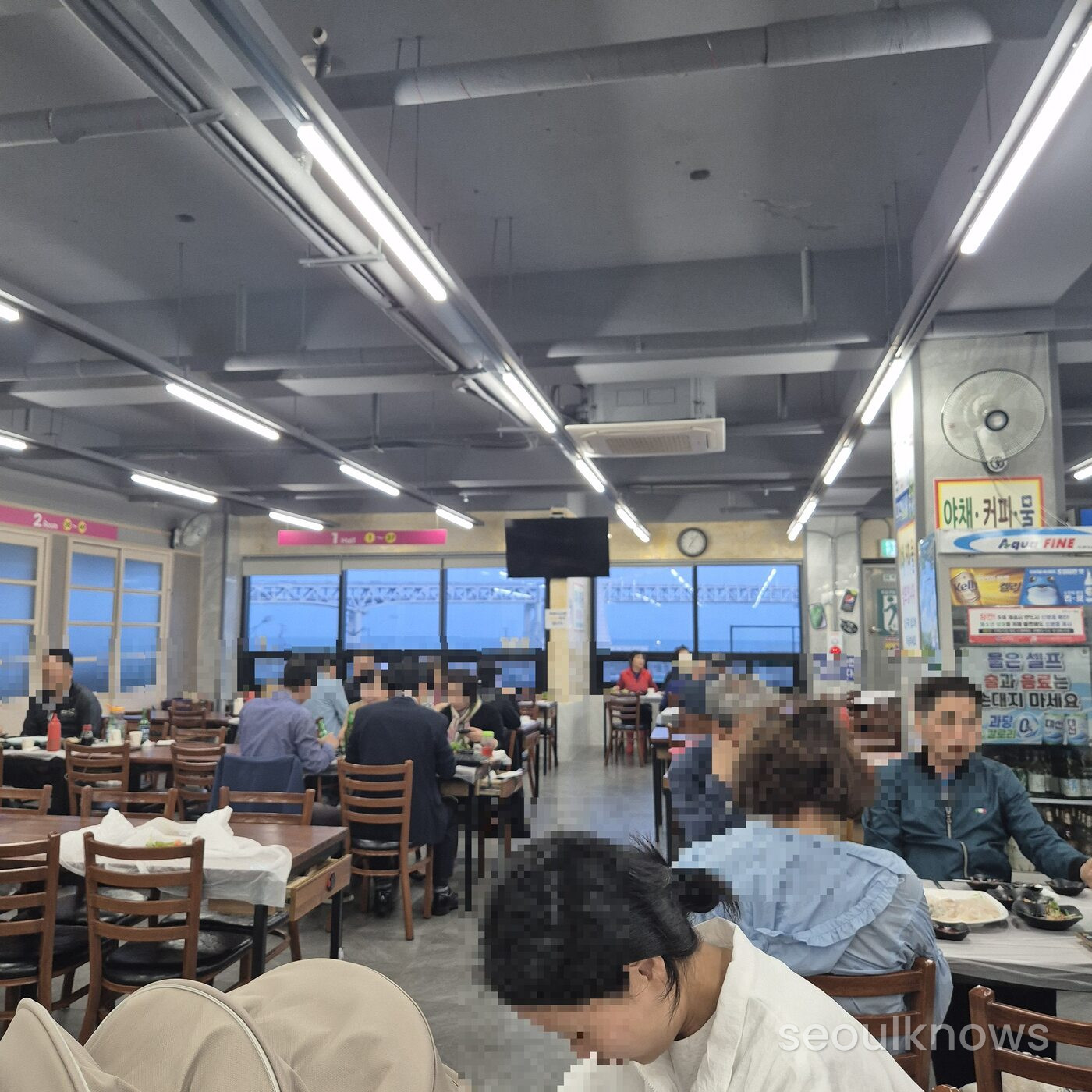
By day you’d get the full sweep of the bridge and the sea; even in the evening, eating fresh fish with Gwangan Bridge lit up outside is hard to beat for a group dinner.
How Koreans Eat Hoe
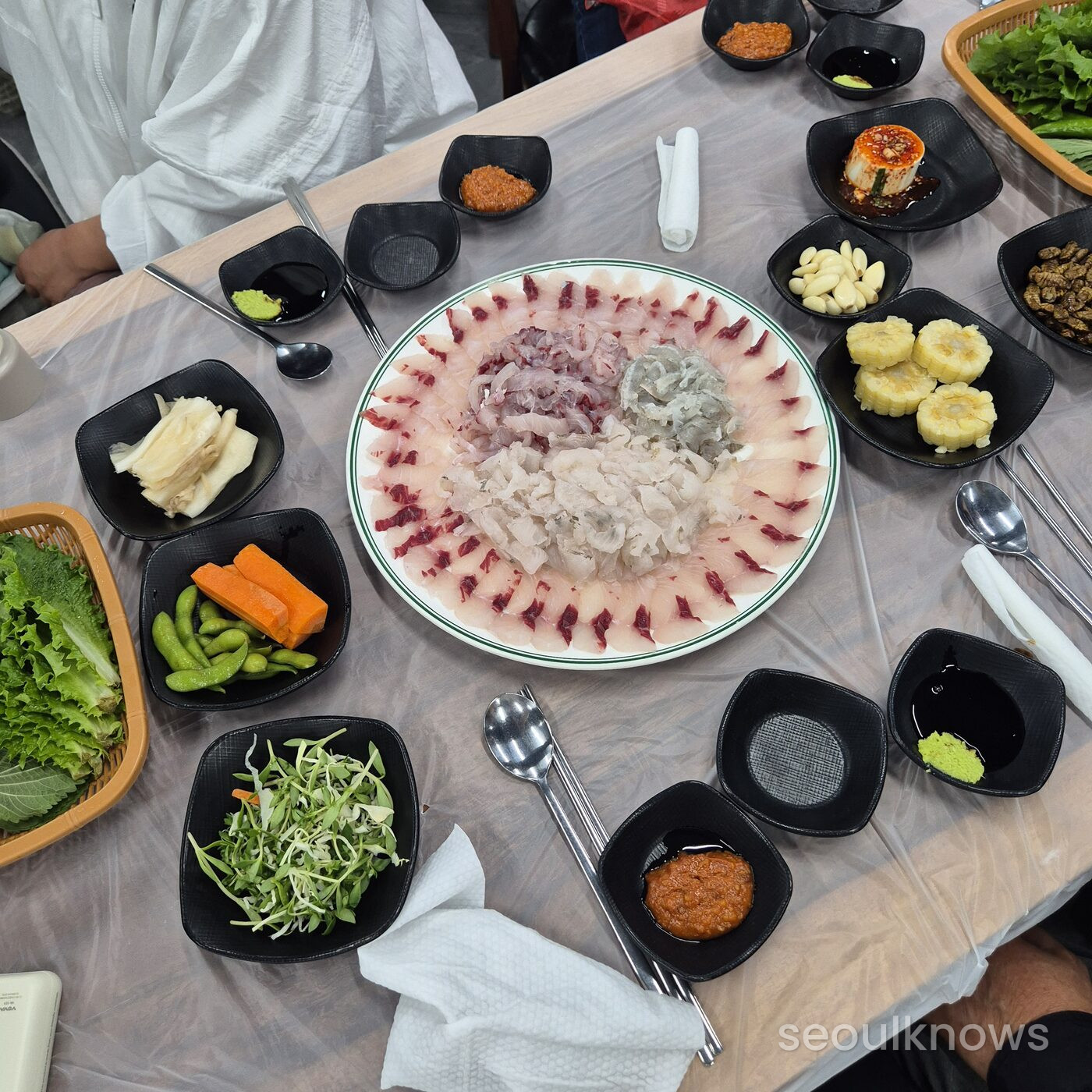
If you’ve only had sashimi the Japanese way, the Korean approach is a little different and worth trying. Instead of just soy and wasabi, the table comes with chojang (a sweet-and-tangy red-pepper sauce) and ssamjang, along with raw garlic, sliced chili, and sesame-oil-and-salt. The classic move is ssam: lay a slice of fish on a lettuce or perilla leaf, add a dab of sauce and a sliver of garlic, and wrap it into one bite. The sides are generous, and one I especially liked was the baek-kimchi (white, non-spicy kimchi), it goes surprisingly well with raw fish.
Don’t Skip the Maeuntang
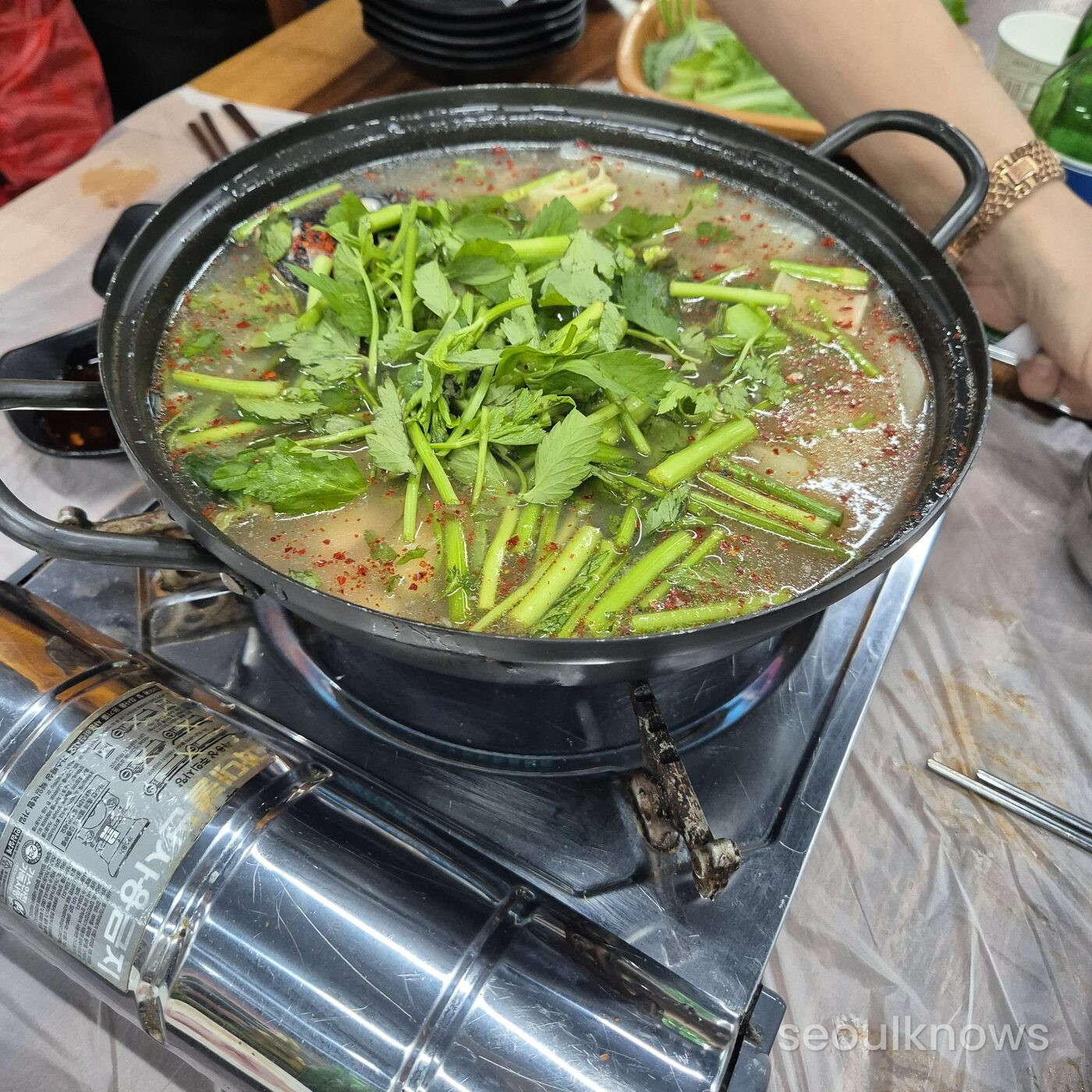
Every good hoe meal in Korea ends the same way: maeuntang, a spicy fish stew. The kitchen makes it from the bones and trim of your fish, and the market’s version is excellent, we dropped some leftover slices in too. After a table full of cold, clean raw fish, a bubbling, spicy, savory stew to finish is exactly right.
Practical Information
Where: Millak Live Fish Market (민락어민활어직판장), Millak-dong, Suyeong-gu, Busan, at the eastern end of Gwangalli Beach, beside Gwangan Bridge.
Stall: Gyeongjinho (경진호), Stall No. 79, first floor.
Getting there: About 15 minutes by taxi from Haeundae. Easy to combine with a Gwangalli Beach evening.
Stall phone: 051-759-6461
| Hours | Daily 10:00 – 21:30 |
| Upstairs table charge | ₩6,000 per person (sides + maeuntang included) |
| Tip | Call the stall ahead to pre-order, so your fish is sliced and your seats are ready upstairs |
The Verdict
Millak is the Busan raw-fish experience I’d send a first-timer to: a real market, live fish, a friendly stall, and a per-person charge that keeps it honest. Go with a group, browse the tanks, let the stall owner build your platter, save room for the maeuntang, and grab a window seat for the Gwangan Bridge view. For value and atmosphere together, it’s hard to beat.
Planning a visit, or want help ordering at Gyeongjinho (Stall No. 79)? Leave a comment below and I’ll help where I can.
Planning the trip? See our guide to where to stay in Busan.
Keep reading
- Noryangjin Fish Market, Seoul — How the Seoul version works
- Where to stay in Haeundae — Nine Busan hotels we stayed in
- Jagalchi cruise — Another Busan waterfront half-day