
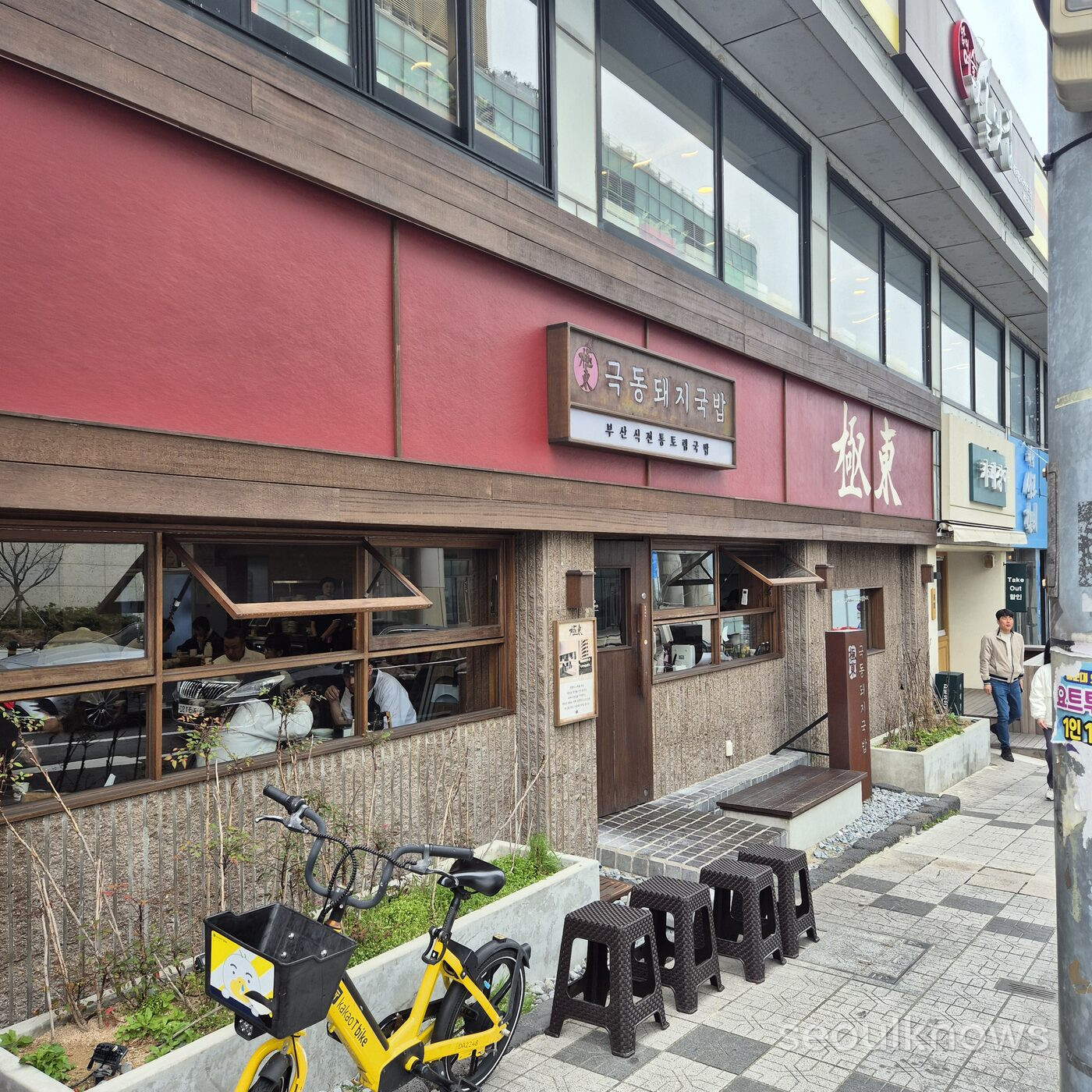
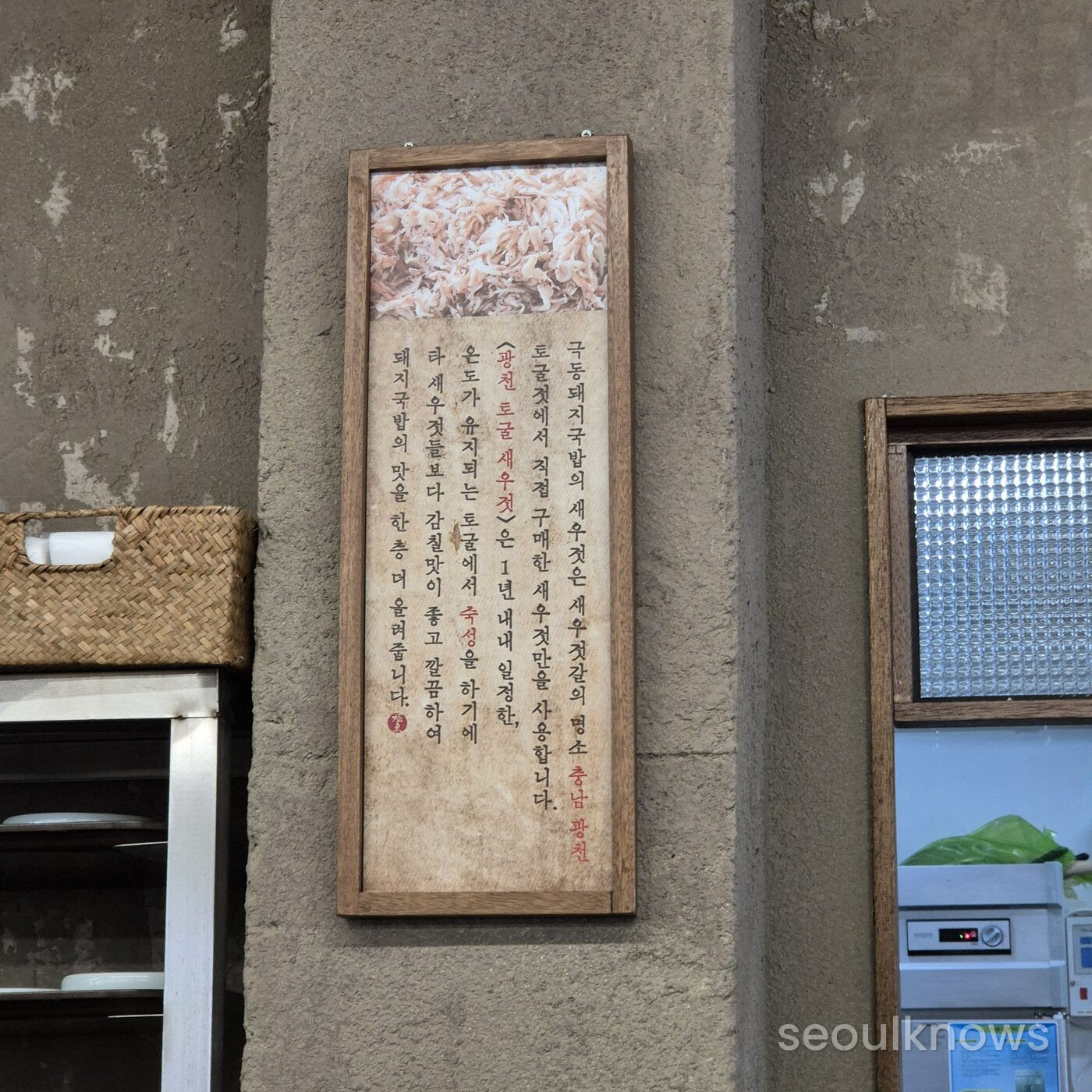
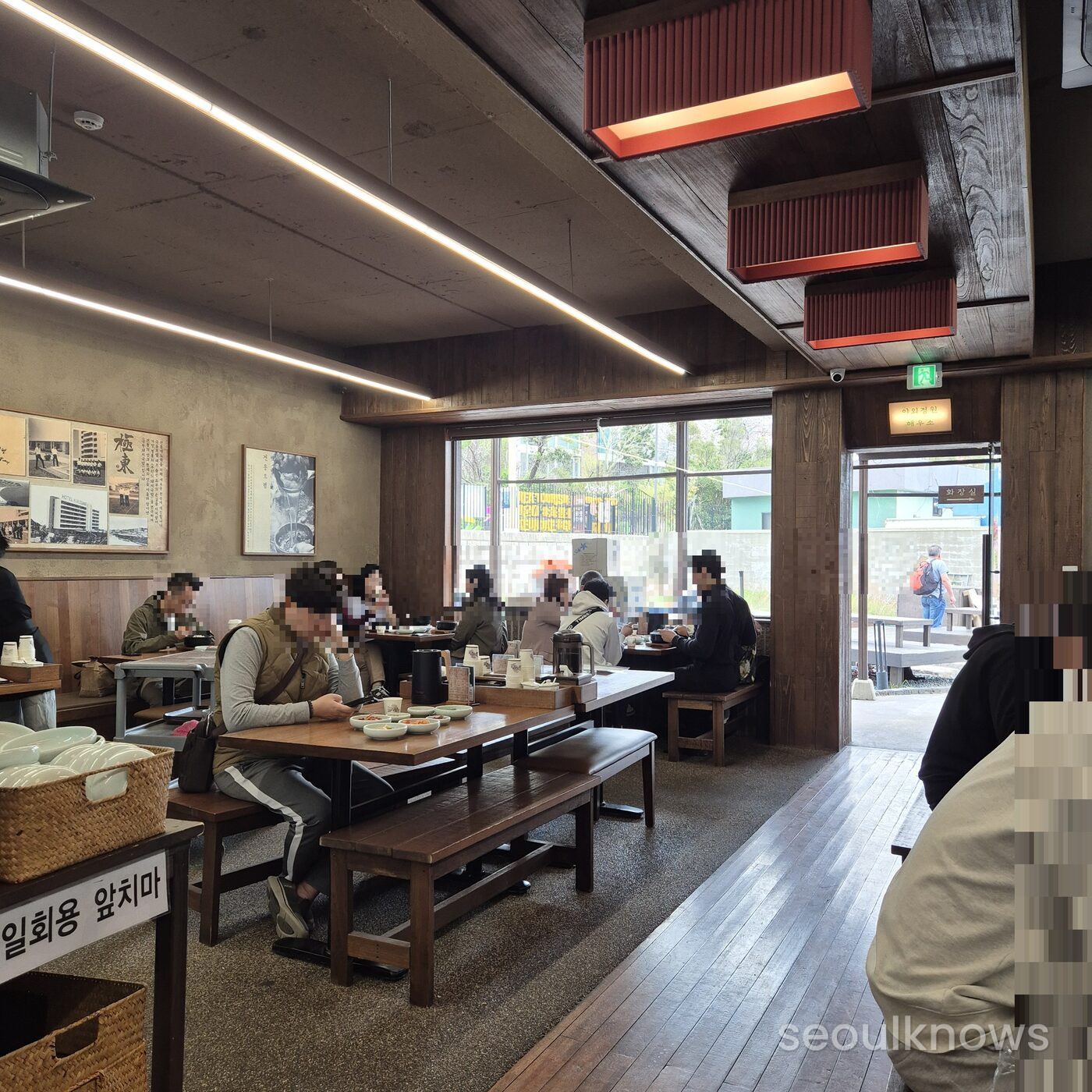
We were staying around LCT and Signiel, and this gukbap place was right out front, busy enough that it was clearly doing something right. So we walked over. It turned out to be more than a neighborhood spot: the kitchen carries on the recipe of a chef from the old Geukdong Hotel, Busan’s first luxury hotel, which is where the name comes from. The walls are lined with framed stories about the soup, and the room is tidy and calm rather than the usual loud gukbap canteen.
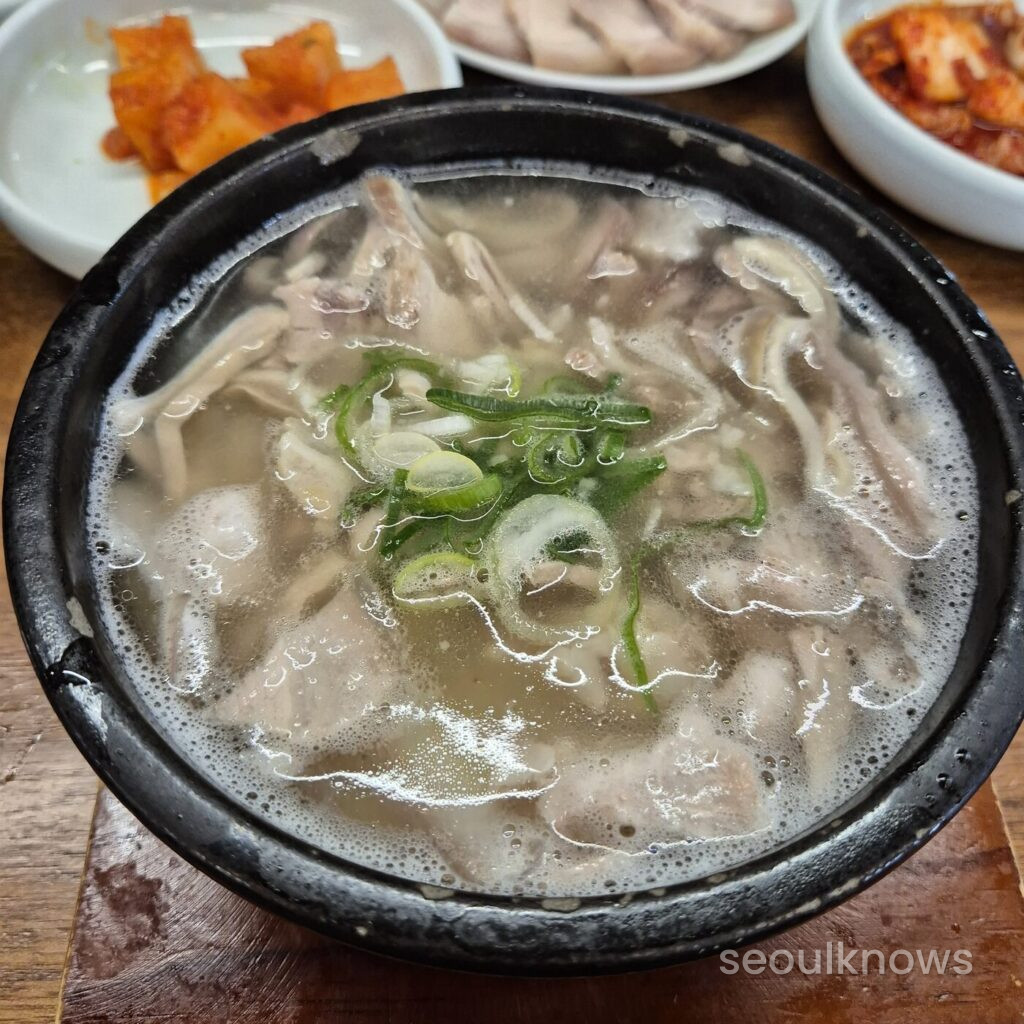
If you’ve only ever been told that dwaeji-gukbap is a “milky pork bone soup,” this place will surprise you. Gukdong’s broth is clear.
What Is Dwaeji-Gukbap?
Dwaeji-gukbap is a pork-and-rice soup, and it’s the soul food of Busan. Pork bones and meat are simmered for hours into a broth, then served with tender slices of boiled pork and a bowl of rice.
It spread here during the Korean War (1950-1953), when people from all over the country crowded into Busan and cooks made a cheap, filling soup from pork bones and the cuts that were left over. A little could feed a lot of people. Decades later it’s eaten nationwide, but it still belongs to Busan, there’s a gukbap shop on practically every block. As the local line goes: if ramen is to Japan, dwaeji-gukbap is to Busan.
Clear Broth, Not Cloudy
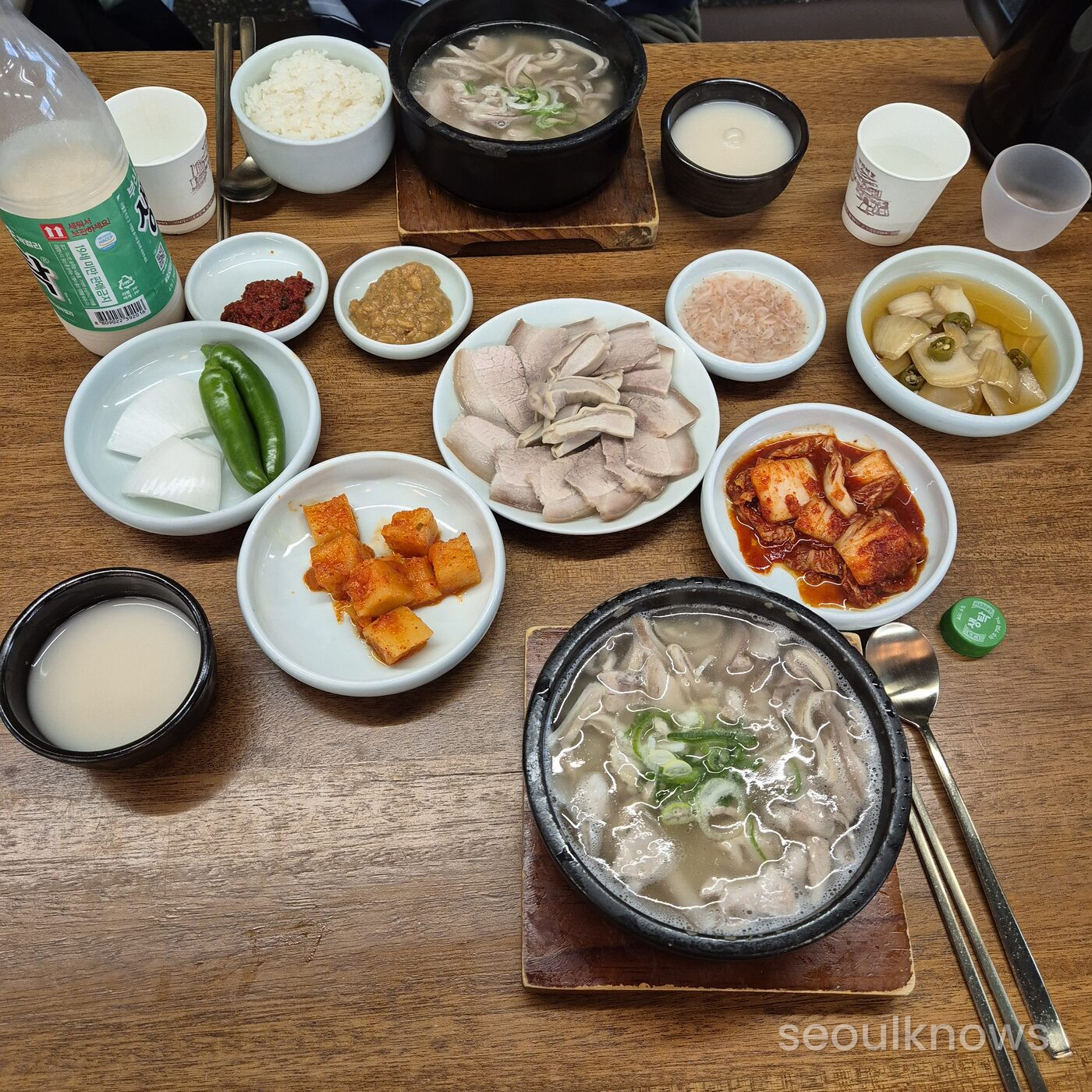
Most dwaeji-gukbap comes in a milky, cloudy bone broth. Gukdong is different. The soup is a clear, see-through style, you can see straight to the bottom of the bowl. My first reaction was, “pork soup, this clear?” But one sip in, it’s clean and light with no porky smell, and there’s a surprising amount of depth underneath. The pork is generous and tender, soft enough that you don’t think twice about it.
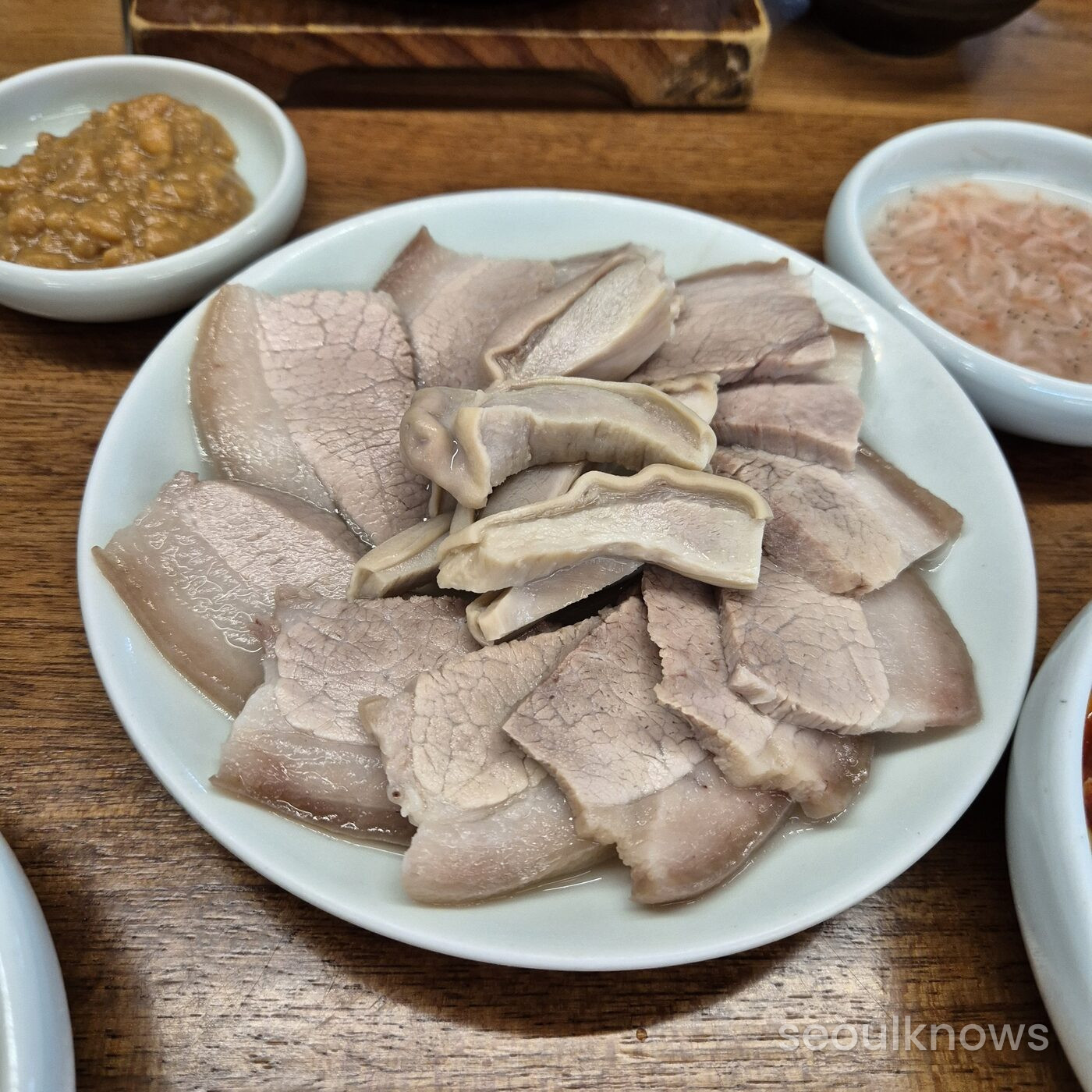
They also pour makgeolli here, Korea’s traditional unfiltered rice wine. A glass of it alongside the pork, or a plate of suyuk (boiled pork), is a classic Korean pairing, and it works beautifully: the slightly sweet, tangy wine cuts right through the richness of the meat.
How to Eat It
There’s no single correct way, but this is the order that works:
- Season the broth to taste with salted shrimp (saeu-jeot).
- Add chives (buchu) for freshness and aroma.
- Stir in a little chili paste (dadaegi) if you want some heat.
- Eat the pork on its own, or tip the rice into the broth and mix. Both are good.
Once a week we send one email: hotels, food and the practical stuff, from someone who actually lives here. No filler.
The Side Dishes and the Self-Bar
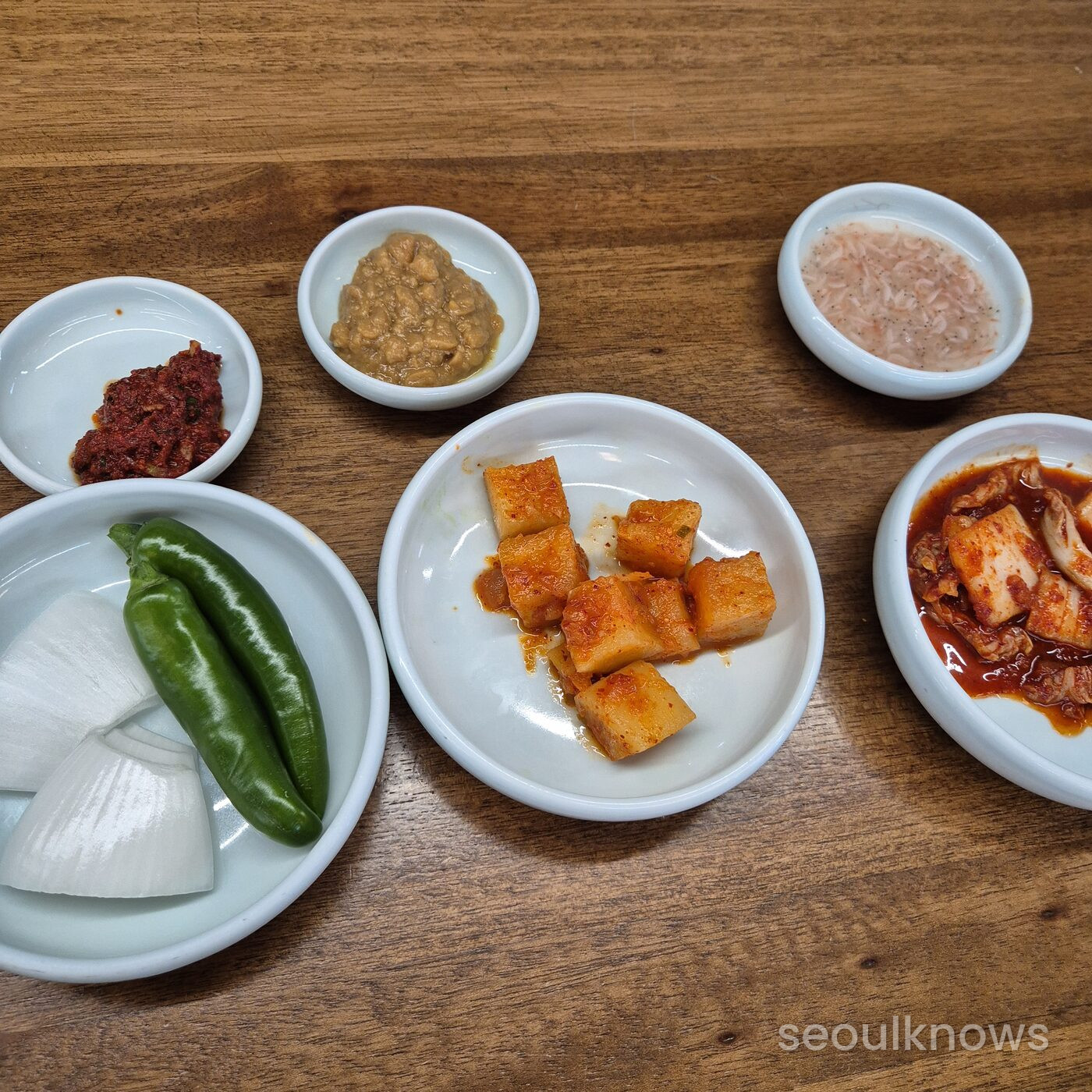
The standard banchan comes with your order, radish kimchi, cabbage kimchi, green chili, onion, chili paste, ssamjang, and salted shrimp. Beyond that, there’s a self-bar where you help yourself to as much as you want.
One thing worth knowing: the chives are only at the self-bar, so you have to go grab them yourself. If you like buchu in your gukbap, and you should try it, don’t wait for it to arrive at the table. The self-bar also has plates, forks, spoons, ladles, disposable aprons, and scissors.
Practical Information
Address: 17 Dalmaji-gil 62beon-gil, Haeundae-gu, Busan (1F)
Getting there: A short walk from Haeundae Beach and the Blue Line Park, and close to LCT and Signiel.
Parking: No dedicated lot, park in a nearby alley.
Price: Dwaeji-gukbap ₩11,000
| Hours | Daily 08:00 – 21:00 |
| Last order | 20:30 |
| Note | May close early if ingredients run out |
The Verdict
If your only image of dwaeji-gukbap is a cloudy white bowl, Gukdong is worth a stop just to taste the clear version, clean, no off-smell, and easy to finish. Add the chef’s pedigree and the calm, considered room, and it’s an easy recommendation if you’re riding the Blue Line Park or staying near Signiel or LCT.
Planning the trip? See our guide to where to stay in Busan. Curious how locals pick restaurants like this one? Here’s how Korea’s Blue Ribbon Survey works.
Keep reading
- Where to stay in Haeundae — Nine Busan hotels we stayed in
- Millak Fish Market — Busan seafood, done properly
- Korean drinking street guide — What to do after the gukbap